This article was automatically translated from the original Turkish version.
+1 More
False Scorpion
Scientific Name(s) | Pseudoscorpiones | ||||||||
|---|---|---|---|---|---|---|---|---|---|
Area(s) | moist enclosed areas under stones and tree bark leaf litter Soil | ||||||||
Diet(s) | Small arthropods | ||||||||
Distribution(s) | Found worldwide observed in various regions. in Türkiye | ||||||||
Distinguishing Feature | Chelate pedipalps | ||||||||
Class | Arachnida | ||||||||
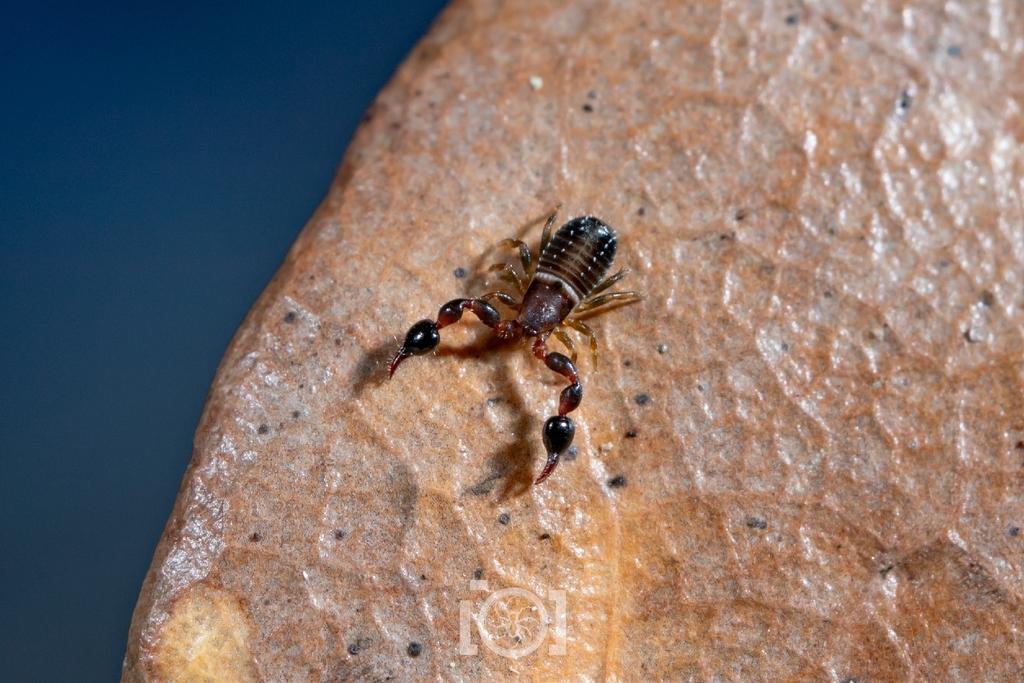
False scorpions (Pseudoscorpiones) are small invertebrates belonging to the class arachnids (Arachnida) within the phylum Arthropoda. They resemble scorpions in appearance but lack a tail and stinger. Typically measuring a few millimeters in length, these creatures form a unique group within arachnids due to their body structure and prey-capturing methods.
False scorpions are classified under the order Pseudoscorpiones. This order encompasses various families and genera and exhibits a wide global distribution. Their systematic position has been determined by considering their evolutionary relationships with other arachnid orders such as spiders and true scorpions.

False Scorpion - e-dergi Tübitak
The body of false scorpions consists of two main parts: the cephalothorax (prosoma) and the abdomen (opisthosoma). Their most distinctive features are the pedipalps located at the front, which resemble the pincers of a scorpion. These pincers are used for capturing prey and defense. Unlike true scorpions, they lack tail segments and venomous stingers. In some species, venom glands are present on the pedipalps and are used to immobilize prey.
False scorpions prefer moist and sheltered microhabitats. Common habitats include soil layers, leaf litter, beneath tree bark, between rocks, and caves. They can also be found in human dwellings, such as libraries, storage areas, and old buildings. Several species have been documented in different regions of Türkiye.
These animals are carnivorous and feed on small arthropods. Mites, small insects, and larvae are their primary prey. They capture prey using their pedipalps and digest it externally by injecting digestive fluids. False scorpions are generally solitary and exhibit strong hiding behavior.
Reproduction in false scorpions typically occurs through spermatophore transfer. The male deposits a spermatophore that the female can take up. After fertilization, the female carries the eggs in a protective sac. Development is direct, with the young passing through several nymphal stages before reaching adulthood.
False scorpions contribute to balancing populations of small arthropods in the ecosystems they inhabit. In this way, they play a functional role in maintaining natural biological balance.
Accessed November 26, 2025.
Balıkesir Üniversitesi. "Türkiye Pseudoscorpiones Türleri Üzerine Bir Çalışma." Accessed January 13, 2026.
Iowa State University Extension. "Pseudoscorpions." Accessed January 13, 2026.
TÜBİTAK Bilim ve Teknik. "Yalancı Akrepler." Bilim ve Teknik. Accessed January 13, 2026.
Türkiye Yaban Hayatı. "Yalancı Akrep (Pseudoscorpiones)." Accessed January 13, 2026.

False Scorpion
Scientific Name(s) | Pseudoscorpiones | ||||||||
|---|---|---|---|---|---|---|---|---|---|
Area(s) | moist enclosed areas under stones and tree bark leaf litter Soil | ||||||||
Diet(s) | Small arthropods | ||||||||
Distribution(s) | Found worldwide observed in various regions. in Türkiye | ||||||||
Distinguishing Feature | Chelate pedipalps | ||||||||
Class | Arachnida | ||||||||
No Discussion Added Yet
Start discussion for "False Scorpion (Pseudoscorpiones)" article
Classification and Systematics
Morphological Features
Habitats and Distribution
Feeding and Behavior
Reproduction and Development
Ecological Importance