


This article was automatically translated from the original Turkish version.
+1 More
Foundation Date | 4 May 1985 | ||||||||
|---|---|---|---|---|---|---|---|---|---|
Opening Date(s) | 3 July 1988 | ||||||||
Vehicle Type Transported | Motor Vehicles | ||||||||
Owner | General Directorate of Highways | ||||||||
Passage | Bosphorus Strait | ||||||||
Location | Sarıyer Beykoz | ||||||||
Design | Freeman Fox & Partners BOTEK Boğaziçi Technical Consulting A.Ş. | ||||||||
Bridge Type | Suspension Bridge | ||||||||
Number of Lanes | 4+4+2 | ||||||||
Number of Piers | 4 | ||||||||
Length(s) | 1510 m | ||||||||
Width | 39 m | ||||||||
Height(s) | 105 m | ||||||||
Average Daily Vehicle Count | 234774 vehicles | ||||||||
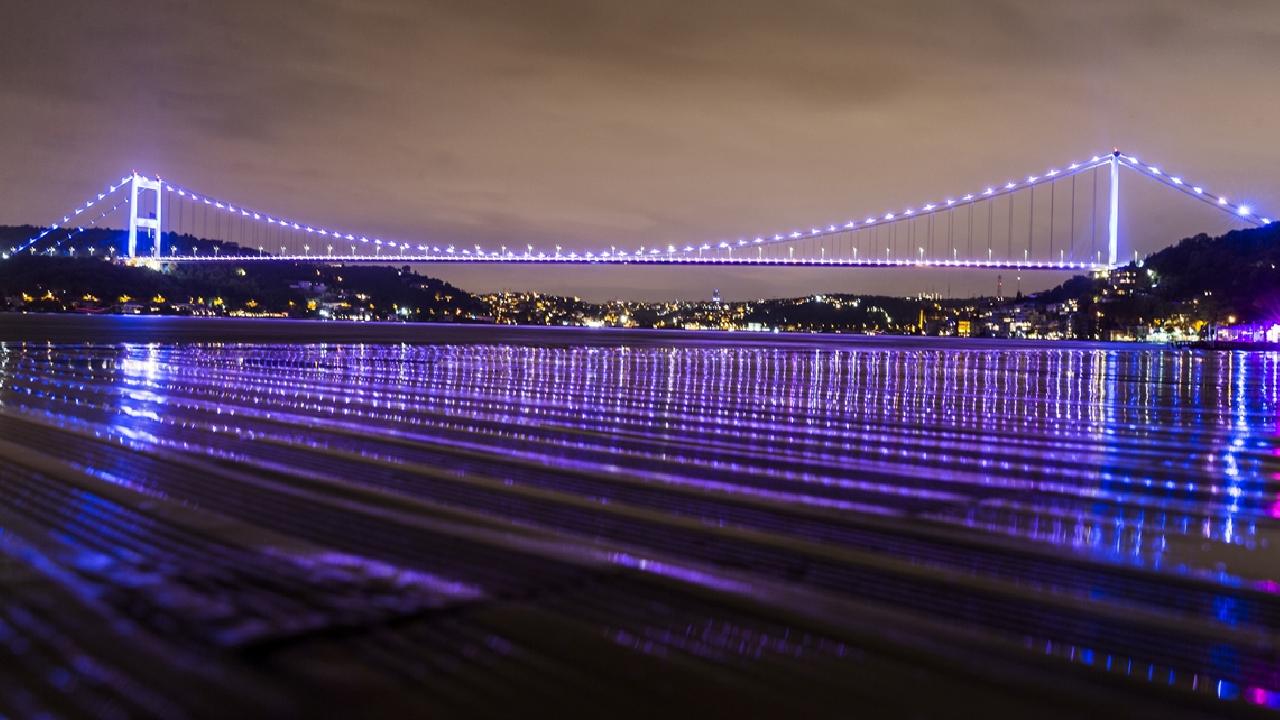
Fatih Sultan Mehmet Bridge is the second suspension bridge over the Bosphorus in Istanbul. Constructed after the Bosphorus Bridge, this bridge connects the Hisarüstü neighborhood on the European side with the Kavacık neighborhood on the Asian side. Its foundation was laid in 1985 and construction was carried out by an international consortium comprising companies from Japan and Türkiye. The bridge was inaugurated on 3 July 1988 by then President Kenan Universe.
Bridge Type:
The Fatih Sultan Mehmet Bridge is a steel suspension bridge. In the suspension system, the deck (road platform) is suspended from two main anchor cables via vertical suspension cables, and these main cables are supported by the towers. The ends of the cables are anchored to anchor blocks.
Location and Length:
The bridge is located at the second narrowest point of the Bosphorus, between Rumelihisarı and Anadolu Hisarı.
Width and Number of Lanes:
The bridge is 39 metres wide.
Support System and Materials:
Wind and Seismic Resistance:
The bridge is designed to withstand winds of up to 200 km/h.
Additionally, due to its location within Istanbul’s active earthquake zone, it possesses high seismic resistance characteristics. Wind and oscillation calculations for the bridge were performed accordingly.
Maintenance and Insulation:
The deck and cables are protected against corrosion with special coatings. Regular monitoring of the bridge’s structural integrity is conducted using systems such as:
Electrical and Lighting Systems:
The bridge’s lighting system remains active throughout the night to ensure driving safety and aesthetic appeal. Maintenance access paths, electricity lines, and surveillance systems have been specially designed.
Load Capacity:
The bridge plays a vital role in easing heavy city and intercity traffic in Istanbul. Located on Highway 2 (O-2), the bridge provides uninterrupted connectivity between Europe and Asia. It holds particular importance in directing heavy truck traffic as part of the TEM Motorway. The Fatih Sultan Mehmet Bridge is open exclusively to motorized vehicles; it is closed to pedestrian and bicycle traffic.

The bridge is named after Fatih Sultan Mehmet, the Ottoman sultan who conquered Istanbul in 1453. This name reflects the historical importance of Istanbul’s conquest. The Fatih Sultan Mehmet Bridge is not merely a transportation structure; it is also regarded as a symbol of Türkiye’s advancement in engineering and international cooperation.
The Fatih Sultan Mehmet Bridge is continuously renewed through maintenance and repair works. In 2015, comprehensive maintenance restored the bridge’s support system and road surfaces. As one of the three bridges connecting the two shores of Istanbul, the FSM Bridge accommodates hundreds of thousands of vehicles daily. It continues to fulfill, both physically and symbolically, the role of a bridge between Asia and Europe.
Anadolu Ajansı. "Boğaziçi'nin İkinci Gerdanlığı 32 Yıldır Hizmet Veriyor." Anadolu Ajansı, July 3, 2020. https://www.aa.com.tr/tr/ekonomi/bogazicinin-ikinci-gerdanligi-32-yildir-hizmet-veriyor/1898624.
Anadolu Ajansı. "Fatih Sultan Mehmet Köprüsü’nden 36 Yılda 2,1 Milyar Araç Geçti." Anadolu Ajansı, April 11, 2024. https://www.aa.com.tr/tr/ekonomi/fatih-sultan-mehmet-koprusunden-36-yilda-2-1-milyar-arac-gecti/3264631.
General Directorate of Highways. "Fatih Sultan Mehmet Köprüsü Tarihçesi." Accessed April 14, 2025. https://www.kgm.gov.tr/SiteCollectionDocuments/KGMdocuments/Bolgeler/1Bolge/FatihSultanMehmetTarihce.pdf.
TRT Haber. "Otoyol ve Köprülerden 1 Milyar 80 Milyon Araç Geçiş Yaptı." TRT Haber, January 3, 2025. https://www.trthaber.com/haber/ekonomi/otoyol-ve-koprulerden-1-milyar-80-milyon-arac-gecis-yapti-893569.html.

Foundation Date | 4 May 1985 | ||||||||
|---|---|---|---|---|---|---|---|---|---|
Opening Date(s) | 3 July 1988 | ||||||||
Vehicle Type Transported | Motor Vehicles | ||||||||
Owner | General Directorate of Highways | ||||||||
Passage | Bosphorus Strait | ||||||||
Location | Sarıyer Beykoz | ||||||||
Design | Freeman Fox & Partners BOTEK Boğaziçi Technical Consulting A.Ş. | ||||||||
Bridge Type | Suspension Bridge | ||||||||
Number of Lanes | 4+4+2 | ||||||||
Number of Piers | 4 | ||||||||
Length(s) | 1510 m | ||||||||
Width | 39 m | ||||||||
Height(s) | 105 m | ||||||||
Average Daily Vehicle Count | 234774 vehicles | ||||||||
No Discussion Added Yet
Start discussion for "Fatih Sultan Mehmet Bridge" article
Technical Specifications:
Traffic and Transportation:
Name and Significance:
Current Status: