


This article was automatically translated from the original Turkish version.
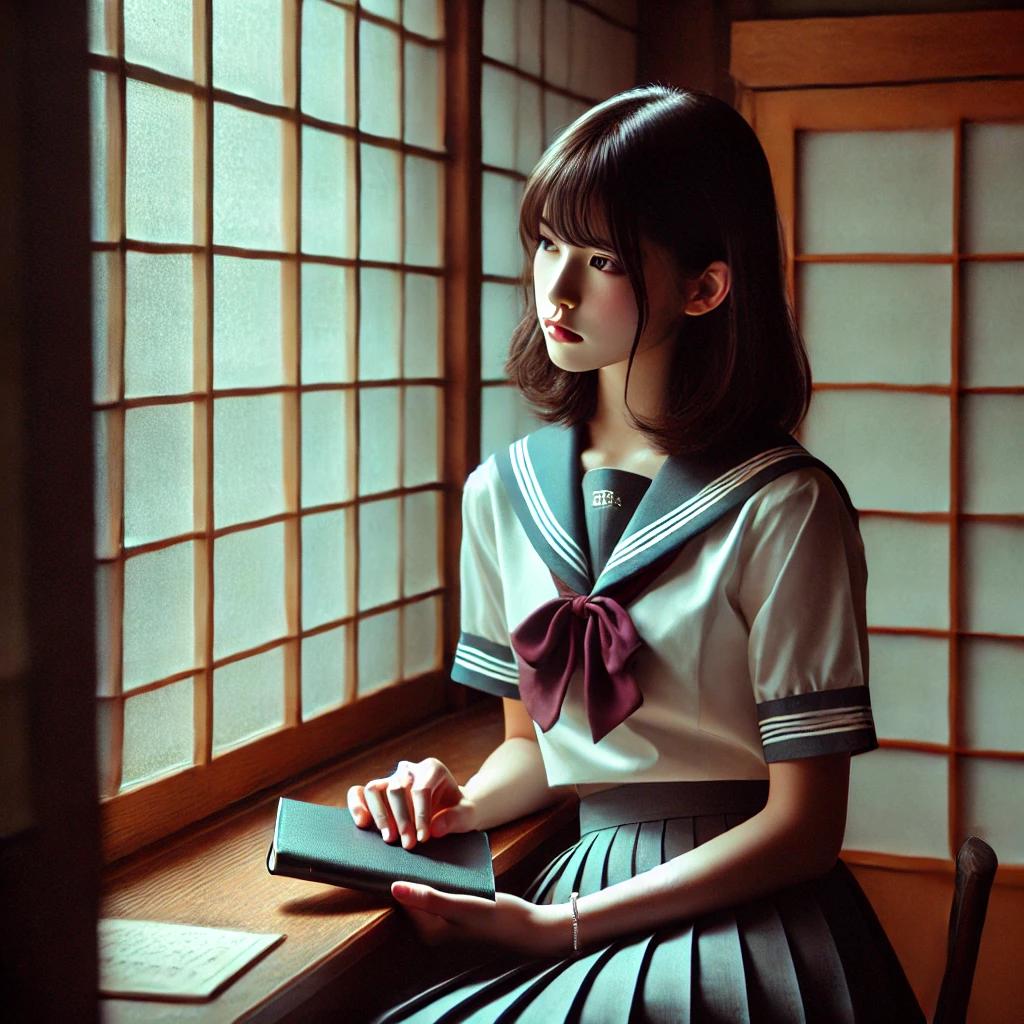
I am like a free bird.
Author(s) | Osamu Dazai (太宰 治) | ||||||||
|---|---|---|---|---|---|---|---|---|---|
Title(s) | Seito Shōjo (生徒諸君) | ||||||||
Language(s) | Japanese | ||||||||
Genre | Novel / Short Story | ||||||||
Year(s) | 1948 | ||||||||
Osamu Dazai is one of the most compelling writers of 20th century Japanese literature. His own life’s tragedies and melancholic spirit carpet works are profoundly reflected in his writing. The novel “Seito Shōjo” is a psychologically rich work that centers on the inner world of a young girl, her social pressures and personal quest. This novel explores the identity crises and internal conflicts experienced by young women in the aftermath of war in transformation Japan.
The novel “Seito Shōjo” is narrated from the perspective of Kahoru, a high school student. The diary-style work reveals the protagonist’s inner world, her relationships with her family and surroundings, and her unrest in the face of societal expectations.
Kahoru is a highly intelligent and sensitive young girl. She is troubled by the roles imposed on her by Society. Although she performs well at school, the pressure to meet her family’s and teachers’ expectations leads to deep psychological conflicts reason. Her relationship with her mother is complex; the mother figure embodies the traditional Japanese female role, while Kahoru, in the midst of modernization, believes women deserve the right to a more liberated individual.
Throughout the novel, transformations occur in Kahoru’s emotion world. Themes of loneliness, despair, and freedom search are treated with intense focus. Kahoru’s inner world gradually leads her to a state of pessimism. Author, through its detailed exploration of the character’s psychology, lays bare the alienation felt by the individual against the social structure.
Kahoru is the protagonist and narrator of the novel. As a high school student, she is intelligent, inquisitive and emotionally sensitive. Her discomfort with societal norms drives her into deep contemplation. The internal conflicts and sense of isolation she experiences form the core psychological elements of the novel.
Kahoru’s mother represents the traditional Japanese family structure. She is disciplined and authoritarian, insisting that her daughter receive a proper education and grow into a socially acceptable individual. However, these expectations clash with Kahoru’s desire for freedom, resulting in a tense dynamic on between mother and daughter.
The Father character plays a minor role in the novel. He is portrayed primarily as an authority figure who generally supports his wife’s decisions.
The place figure Kahoru encounters at school reflects the rigidity and discipline approach of the Japanese education system. Teachers hold high expectations of students and represent an educational philosophy that prioritizes collectivism over individuality.
One of the novel’s most prominent themes is the struggle of a young girl to conform to roles prescribed by society. As Kahoru resists the expectations of her mother and surroundings, she finds herself engulfed in profound loneliness. Traditional Japanese perceptions of womanhood hinder her search for autonomy.
Alienation, a recurring theme in Osamu Dazai’s works, plays a central role in this novel. Kahoru feels alienated from both her family and society. The fluctuations in her inner world and psychological turmoil reinforce this theme.
The rigidity of the Japanese education system and the pressure exerted on students is another key important element. Kahoru’s teachers and family exert significant pressure for academic success. However, this pressure negatively affects her personal development and self-confidence.
Osamu Dazai structures the novel as Kahoru’s diary. This narrative form allows the reader to directly experience Kahoru’s thoughts. The diary-style narration enables a deep exploration of the character’s inner world and creates a atmosphere sincere.
Dazai’s style is melancholic and introspective. Throughout the novel, frequent use of interior monologue provides a detailed portrayal of Kahoru’s psychological transformations. The author’s simple yet powerful language enables the reader to form a strong vine with the character.
Dazai, Osamu. Seito Shōjo (Öğrenci Kız). Tokyo: Chikuma Shobō, 1948.
Keene, Donald. Dawn to the West: Japanese Literature of the Modern Era. New York: Columbia University Press, 1984.
Rubin, Jay. Modern Japanese Writers and the Ethics of Identity. Honolulu: University of Hawaii Press, 2002.

I am like a free bird.
Author(s) | Osamu Dazai (太宰 治) | ||||||||
|---|---|---|---|---|---|---|---|---|---|
Title(s) | Seito Shōjo (生徒諸君) | ||||||||
Language(s) | Japanese | ||||||||
Genre | Novel / Short Story | ||||||||
Year(s) | 1948 | ||||||||
Subject of the Novel
Characters
Kahoru
Mother
Father
Teacher
Themes of the Novel
Social Pressure and Female Identity
Alienation and Inner Conflict
Education and Discipline
Narrative Technique and Style