
+1 More

Ferhan Şensoy
Birth | February 26, 1951, Wednesday, Samsun | ||||||||
|---|---|---|---|---|---|---|---|---|---|
Death | August 31, 2021, Istanbul | ||||||||
Profession(s) | Poet Performer Writer Actor | ||||||||
Theater Company | Ortaoyuncular | ||||||||
Education | National Theatre School of Montreal La Comédie Française | ||||||||
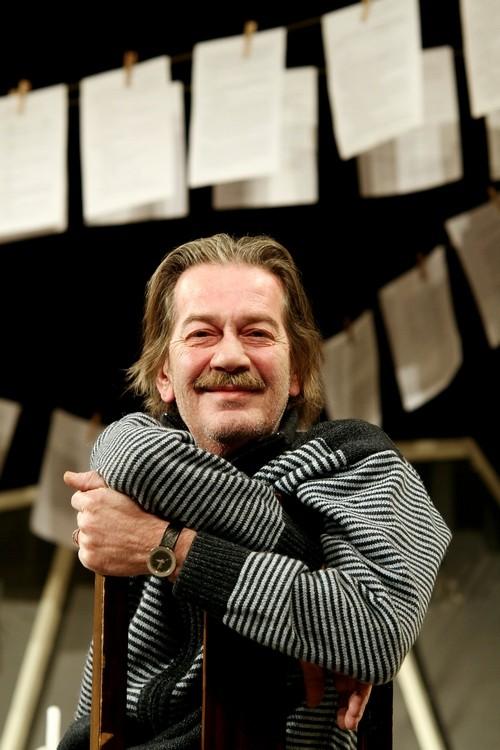
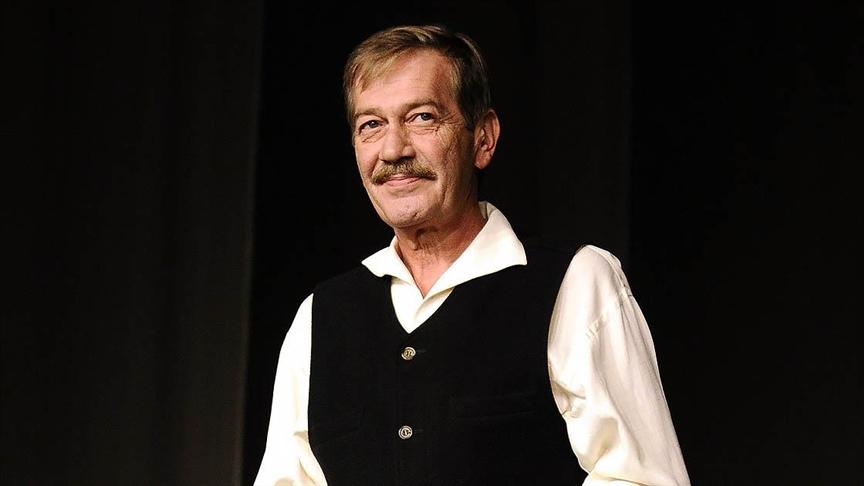
Ferhan Şensoy (b. 26 February 1951, Çarşamba – d. 31 August 2021, İstanbul) was a Turkish playwright, actor, director, poet and novelist. He is known for works that blended traditional Turkish theatre with modern narrative forms, and for developing a distinctive theatrical language that combined humor, satire and social critique. His influence on Turkish stage arts is evident through the company he founded, Ortaoyuncular, and the Ses Tiyatrosu in İstanbul.
Ferhan Şensoy was born in 1951 in the Çarşamba district of Samsun. His father, Hilmi Şensoy, was a journalist, and his mother, Müjgan Şensoy, was a primary school teacher. He completed his primary and secondary education in Samsun, and finished his high school studies at Galatasaray High School and later at Çarşamba High School.
In the early 1970s, he traveled to Canada where he received theatre training at the National Theatre School of Montreal and La Comédie Française. During this period, he was deeply influenced by French and Quebec theatre, which shaped his literary and staging sensibilities.
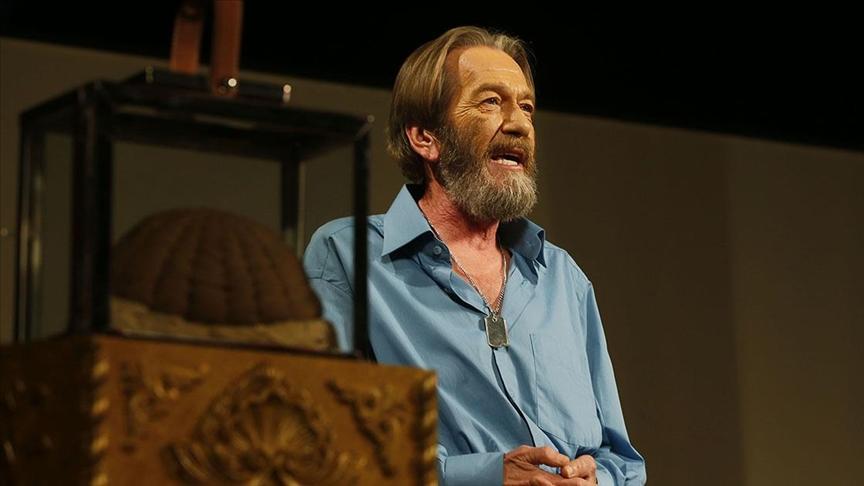
Ferhan Şensoy (AA)
Şensoy’s artistic career began in the 1970s, with his first major breakthrough coming through the play “İstanbul’u Satıyorum”. In 1980, he founded the Ortaoyuncular company, which brought traditional Turkish theatrical forms—such as ortaoyunu, meddah and tuluat—into a modern theatrical context.
In 1989, he adopted the restored Ses Tiyatrosu as his main stage. The unique theatrical language he developed, known as the “Ferhangi” style, quickly became a distinctive genre in its own right.
In addition to theatre, Ferhan Şensoy was active in television and film. He served as both writer and actor in the TRT program “Varsayalım İsmail”. He also appeared as a screenwriter and actor in several feature films.
Şensoy was also a prolific literary figure, producing essays, novels, poetry and theatre texts.
He carved out a unique place in Turkish literature through his cultural insight, linguistic playfulness and mastery of satire.
In Turkish theatre, the kavuk is a symbolic object traditionally regarded as a mark of mastery in the folk theatre forms of tuluat and ortaoyunu. According to this tradition, a theatre artist who embodies a specific artistic philosophy and level of excellence receives the kavuk symbolically from the previous holder. This tradition has been maintained in the modern era through successive transfers among İsmail Dümbüllü, Münir Özkul, Ferhan Şensoy, Rasim Öztekin, and most recently Şevket Çoruh.
After the death of İsmail Dümbüllü, the kavuk was inherited by Münir Özkul. In 1989, Özkul decided to retire from the stage due to health issues and symbolically passed the kavuk to the actor and playwright Ferhan Şensoy. The transfer ceremony was held publicly at the Ses Tiyatrosu in İstanbul.
In the years following this transfer, Ferhan Şensoy continued his theatrical work under the banner of the Ortaoyuncular Theatre, incorporating elements of traditional Turkish theatre while interpreting the tradition through contemporary forms.
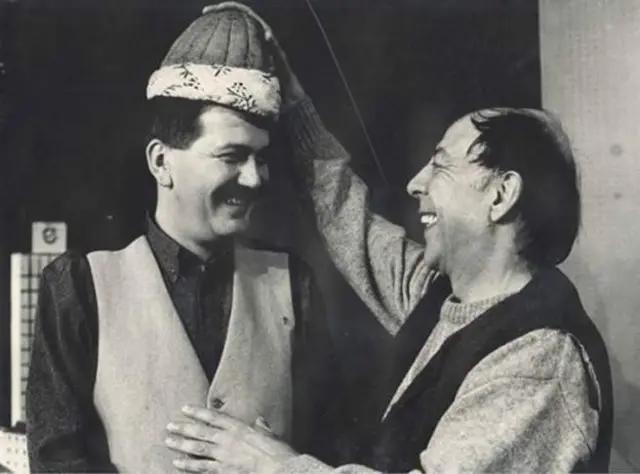
1989 Kavuk Transfer (BBC)
In 2016, Ferhan Şensoy passed the kavuk to actor Rasim Öztekin, citing his own health condition and reduced capacity to continue active stage performances as reasons. This transfer was also formally announced in a ceremony at the Ses Tiyatrosu.
In 2020, Rasim Öztekin transferred the kavuk to theatre actor Şevket Çoruh. Thus, the kavuk tradition has become a symbolic transmission across generations.
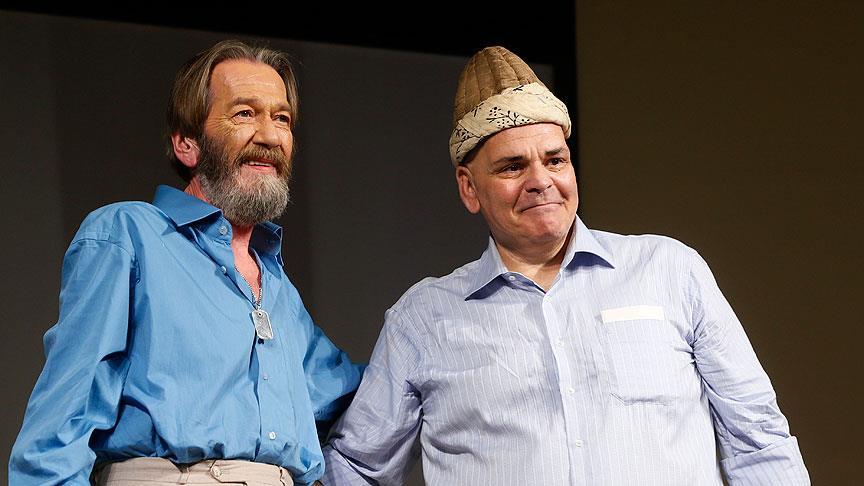
2016 Kavuk Transfer (
Ferhan Şensoy died on 31 August 2021 in İstanbul at the age of 70, after long-standing health problems. His funeral was held at the Ses Tiyatrosu in İstanbul, after which he was buried at Zincirlikuyu Cemetery.
Anadolu Ajansı. “Ferhan Şensoy kavuğu Rasim Öztekin’e devretti.” aa.com.tr. Accessed May 22, 2025. https://www.aa.com.tr/tr/kultur-sanat/ferhan-sensoy-kavugu-rasim-oztekine-devretti/571446
Anadolu Ajansı. “Yaşamı boyunca hiç durmayan ‘kavuklu’ tiyatrocu Ferhan Şensoy.” aa.com.tr. Accessed May 22, 2025. https://www.aa.com.tr/tr/kultur-sanat/yasami-boyunca-hic-durmayan-kavuklu-tiyatrocu-ferhan-sensoy/2351299
BBC Türkçe. “Ferhan Şensoy hayatını kaybetti.” Accessed May 22, 2025. https://www.bbc.com/turkce/haberler-turkiye-58394888
Ortaoyuncular. “Ferhan Şensoy.” *ortaoyuncular.com*. Accessed May 22, 2025. https://www.ortaoyuncular.com/tr/ferhan-sensoy/

Ferhan Şensoy
Birth | February 26, 1951, Wednesday, Samsun | ||||||||
|---|---|---|---|---|---|---|---|---|---|
Death | August 31, 2021, Istanbul | ||||||||
Profession(s) | Poet Performer Writer Actor | ||||||||
Theater Company | Ortaoyuncular | ||||||||
Education | National Theatre School of Montreal La Comédie Française | ||||||||
Life and Education
Artistic Career
Theatre
Notable Theatre Works
Television and Film
Literature
Some of his works:
The Kavuk Tradition and Ferhan Şensoy
Transfer from Münir Özkul to Ferhan Şensoy (1989)
Transfer from Ferhan Şensoy to Rasim Öztekin (2016)
Death