
+2 More

Year of Birth | 1905 | ||||||||
|---|---|---|---|---|---|---|---|---|---|
Ölüm tarihi | 1973-11-05 | ||||||||
Place of Death | Karacaahmet Cemetery | ||||||||
Profession(s) | Actor Tuluat Artist Comedian | ||||||||
Art Field | Orta Oyunu, Tuluat Theatre, Folk Comedy | ||||||||
Masters Who Influenced Him | Kel Hasan Efendi, Karagöz Hüseyin | ||||||||
Students He Trained | Münir Özkul (Kavuk Tradition) | ||||||||
Notable Works | Dümbüllü Tarzan, Keloğlan, Dümbüllü Memiş (Film Series) | ||||||||
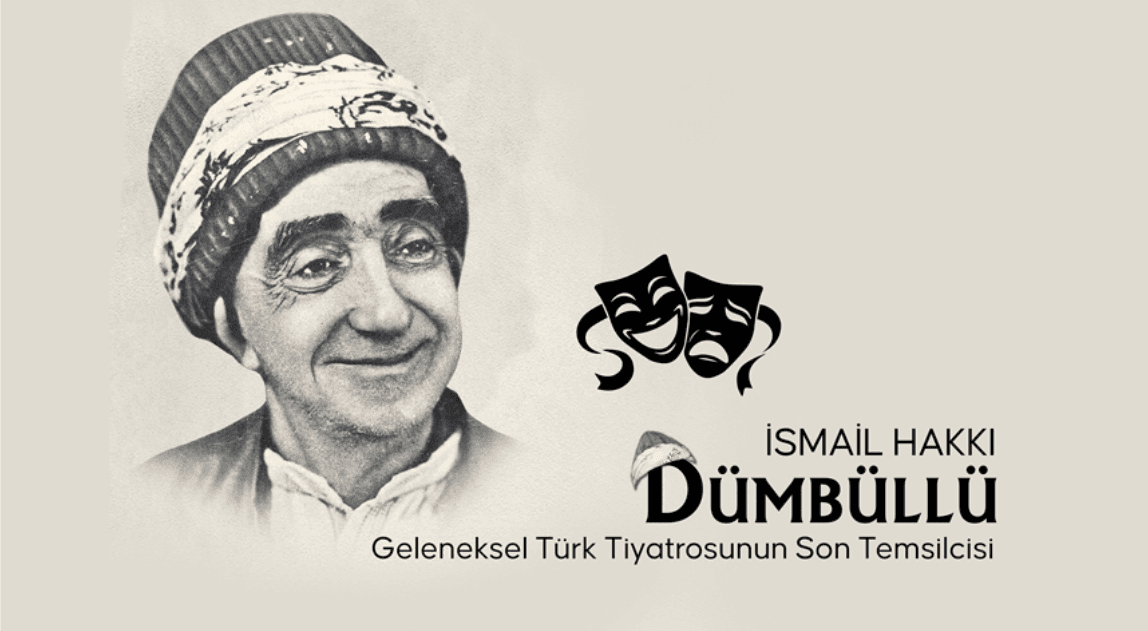
İsmail Hakkı Dümbüllü is regarded as the last great representative of the traditional tuluat and orta oyunu art forms during the transitional period of 20th century Turkish theatre. Through his work on both stage and screen, he ensured the visibility of the traditional folk comedian archetype within modern theatrical contexts and adapted the traditions of Karagöz, Orta Oyunu and Meddah to the aesthetics of the stage. Throughout his life, Dümbüllü defined himself as “the joy of the audience,” and he remains one of the most mature examples of improvisational performance.
He was born in 1897 in the Üsküdar district of Istanbul. His father was Zeynel Abidin Efendi and his mother was Fatma Azize Hanım. He completed his primary education at the Üsküdar İttihat-ı Terakki School and then enrolled at the Kuleli Military Secondary School. However, drawn by his passion for theatre, he abandoned his studies and turned to a stage career.
In Üsküdar, he trained by observing masters such as Karagöz Hüseyin and Hacivat İsmail, learning traditional performance styles. This period shaped his view of theatre not as a casual hobby but as a living domain of folk culture.
He gained his first stage experience around 1918 with the company of Karagöz Hüseyin Efendi. In the early 1920s, he joined the theatre of Kel Hasan Efendi, one of the most important tuluat masters of the era. For approximately ten years, he performed alongside Kel Hasan, mastering the disciplines of improvisation, gesture, facial expression, and direct audience engagement. During this time, he adapted the classic tuluat characters—Kavuklu, Pişekâr and Zenne—to his own comedic style. In 1928, he founded his own troupe with Tevfik İnce and debuted on stage at the Hilâl Theatre in Istanbul’s Direklerarası district. From 1933 onward, he toured extensively across many Anatolian cities, keeping the tradition of folk theatre alive.
Dümbüllü continued the tradition of assuming the symbolic “kavuk” in Orta Oyunu and tuluat performances. In 1968, he passed on both the kavuk and the fez to actor Münir Özkul, who became a compelling character on both cinema and stage.
As tuluat theatre began to withdraw from stages in the 1940s, Dümbüllü turned to cinema and radio. His earliest films, made between 1947 and 1950, include “Dümbüllü Memiş”, “Dümbüllü Tarzan”, “Keloğlan”, and “Yedi Köyün Zeynebi”. These films are regarded as pioneering efforts in adapting traditional folk humour to the cinematic form.
The most iconic symbol immortalizing İsmail Hakkı Dümbüllü is the “kavuk”. This hat was the signature of Kel Hasan Efendi, a master of Ottoman-era Orta Oyunu, and its transmission from master to apprentice represented a living tradition. Dümbüllü upheld this tradition and in 1968 passed on both the kavuk and the fez to actor Münir Özkul. This custom has endured as a cultural ritual symbolizing the continuity of folk theatre. After Özkul, the tradition was passed on to Rasim Öztekin and subsequently to Şevket Çoruh, ensuring that the “kavuk tradition” remains a living part of Dümbüllü’s cultural legacy.
Dümbüllü was an artist who brought the traditional folk theatre forms of Orta Oyunu and tuluat to both stage and cinema. He interpreted the structure of Orta Oyunu—devoid of sets, with no visible backdrops and built on improvisation—in a manner suited to his own character, thereby reaching a broad audience.
In film, he became known for starring in works such as “Dümbüllü Memiş”, “Keloğlan”, and “Dümbüllü Tarzan”, beginning in 1947.
From an artistic practice perspective, a significant aspect of his work was his direct engagement with the audience under the identity of the “folk comedian,” shaping the transition between tradition and modern theatre. Notably, he inherited the ancient tuluat codes from his master Kel Hasan and reinterpreted them with his own original style. Haldun Taner described Dümbüllü as “a true child of the people.”
Dümbüllü died on 5 November 1973 following a traffic accident. His funeral was held at the Karacaahmet Cemetery in Istanbul’s Üsküdar district.
İsmail Hakkı Dümbüllü represents a continuous link between the improvisational folk theatre forms of the late Ottoman period and the stage and cinema arts of the Republican era. His stage persona is the final exemplar of folk humour based on direct audience interaction and natural comedy. Dümbüllü is not merely viewed as an actor but also as a “cultural transmitter” who carried the memory of traditional theatre. Today, in academic studies on Orta Oyunu, Meddah and tuluat, he is cited as a representative of “performance forms before modernization.”
Anadolu Ajansı. "Tuluatın ustası: İsmail Hakkı Dümbüllü." Accessed November 4, 2025. https://www.aa.com.tr/tr/kultur/tuluatin-ustasi-ismail-hakki-dumbullu/3734550
Anadolu Ajansı. “Geleneksel Türk tiyatrosunun son temsilcisi: İsmail Hakkı Dümbüllü.” Accessed October 26, 2025. https://www.aa.com.tr/tr/kultur/geleneksel-turk-tiyatrosunun-son-temsilcisi-ismail-hakki-dumbullu/3043325
Bozcalı, S. “Dümbüllü (İsmail).” *İstanbul Ansiklopedisi*, Volume 9, pp. 4818-4820. Accessed October 26, 2025. https://istanbulansiklopedisi.org/handle/rek/9330

Year of Birth | 1905 | ||||||||
|---|---|---|---|---|---|---|---|---|---|
Ölüm tarihi | 1973-11-05 | ||||||||
Place of Death | Karacaahmet Cemetery | ||||||||
Profession(s) | Actor Tuluat Artist Comedian | ||||||||
Art Field | Orta Oyunu, Tuluat Theatre, Folk Comedy | ||||||||
Masters Who Influenced Him | Kel Hasan Efendi, Karagöz Hüseyin | ||||||||
Students He Trained | Münir Özkul (Kavuk Tradition) | ||||||||
Notable Works | Dümbüllü Tarzan, Keloğlan, Dümbüllü Memiş (Film Series) | ||||||||
Youth and Education
Career and Artistic Life
Cinema, Radio and the New Era
The Kavuk Tradition
Key Works and Contributions
Final Years and Legacy