

badge icon

This article was automatically translated from the original Turkish version.

Article

Fertilization Techniques

Inadequate supply of essential nutrients from the soil for plant growth and development leads to yield losses in agricultural production. To address this issue and ensure plants reach optimal growth conditions, fertilization practices are of great importance. Fertilization supports healthy plant development by correcting nutrient deficiencies in the soil and ultimately enhances agricultural productivity.


Plants require macronutrients and micronutrients in addition to carbon (C), hydrogen (H), and oxygen (O) to sustain vital physiological activities. Macronutrients are those absorbed in large quantities by plants, namely nitrogen (N), phosphorus (P), and potassium (K), as well as those needed in smaller amounts, such as calcium (Ca), magnesium (Mg), and sulfur (S). Micronutrients are elements required in much lower concentrations, including iron (Fe), manganese (Mn), zinc (Zn), copper (Cu), boron (B), molybdenum (Mo), and chlorine (Cl). Deficiency in any of these elements can cause disruptions in the plant’s growth cycle, physiological disorders, and reduced yields.


The natural composition of soil and its nutrient content may become insufficient over time due to factors such as crop rotation, crop type, and growing conditions. In such cases, applied fertilizers fulfill the plants’ nutritional needs from external sources and serve the function of maintaining and enhancing soil fertility. A proper fertilization strategy not only increases yield but also improves product quality and strengthens plant resistance to diseases and pests. These fundamental principles highlight the indispensable role of fertilization in modern agricultural practices.
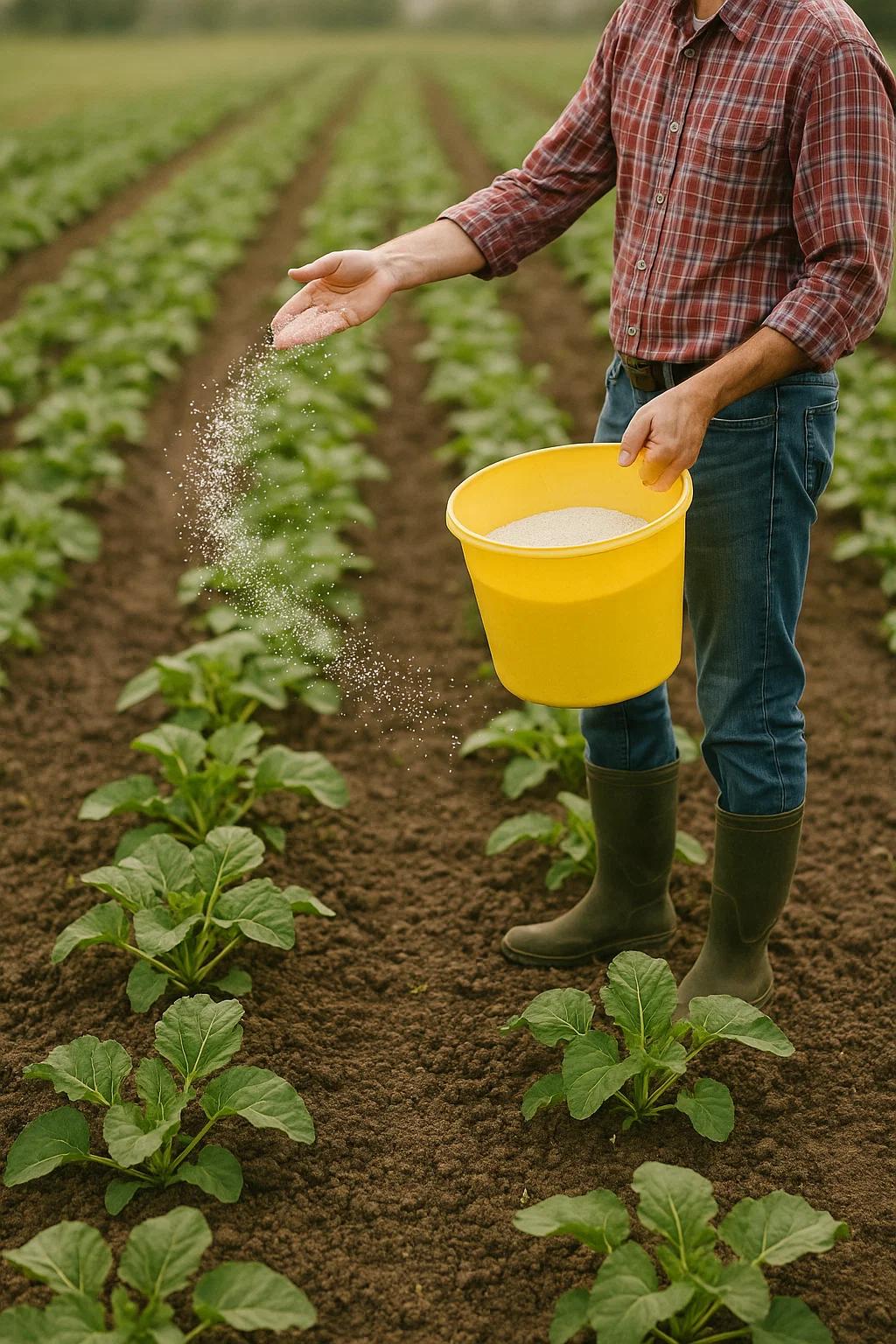

Organic Fertilization (generated by artificial intelligence)

Types and Characteristics of Fertilizers

Fertilizers used in agriculture vary according to the manner in which plant nutrients are supplied and their chemical composition. This diversity forms the basis for implementing fertilization tailored to the specific needs of plants and soil conditions.


Chemical (Mineral) Fertilizers: These are manufactured in factories and contain nutrients in specific proportions. They typically provide nutrients in water-soluble forms that plants can absorb directly. Major types of chemical fertilizers include:

  • Nitrogen Fertilizers: Provide nitrogen, which is vital for plant growth, development of green tissues, and photosynthesis. Examples include ammonium sulfate, urea, and ammonium nitrate.
  • Phosphorus Fertilizers: Essential for root development, flowering, and seed and fruit formation. Common examples are triple superphosphate (TSP), diammonium phosphate (DAP), and monoammonium phosphate (MAP).
  • Potassium Fertilizers: Influence water balance in plants, resistance to diseases and pests, product quality, and storage life. The most well-known are potassium chloride and potassium sulfate.
  • Compound (Mixed) Fertilizers: Contain multiple macronutrients, such as NPK, in specific ratios. They are available in various formulations (e.g., 15-15-15, 20-20-0) and selected based on the plant’s growth stage or soil analysis results.
  • Micronutrient Fertilizers: Contain elements such as iron, zinc, boron, and manganese, which plants require in very small amounts. They are used to correct specific nutrient deficiencies in plants.


Organic Fertilizers: Natural materials formed by the decomposition of plant and animal residues. They improve the physical, chemical, and biological properties of soil and ensure the gradual release of nutrients into the soil.

  • Manure (Farmyard Manure): Composed of animal excreta and bedding materials. It adds organic matter to the soil and contains a wide range of nutrients.
  • Compost: Organic matter produced by the controlled decomposition of plant and animal waste. It improves soil structure and provides nutrients.
  • Green Manures: Produced by growing specific plants (such as legumes or cereals), allowing them to reach a certain size, and then incorporating them into the soil. This increases the soil’s organic matter content and nitrogen levels.


Organomineral Fertilizers: Fertilizers that contain both organic matter and chemical nutrients. They combine the soil-improving effects of organic matter with the rapid and controlled nutrient supply of chemical fertilizers. These fertilizers offer the potential for a more balanced and sustainable approach to plant nutrition.


Each type of fertilizer has its own specific timing, dosage, and application technique. The selection of the appropriate fertilizer depends on many factors, including crop type, soil structure, climatic conditions, and target yield levels.

Fertilization Methods

Various fertilization methods are employed to deliver fertilizers to plants and ensure efficient use of nutrients in the soil. The choice of method varies according to the type of fertilizer, crop species, soil structure, climatic conditions, and existing farming systems.

Soil Applications

These methods involve directly mixing fertilizers into the soil or spreading them on the soil surface.

  • Broadcast Fertilization: The uniform spreading of solid fertilizers over the entire field, either before planting or during the plant growth period. This is typically done using disc fertilizer spreaders. The fertilizers applied to the surface are expected to infiltrate the soil through rainfall or irrigation.
  • Banding (Strip) Application: In row-crop systems, fertilizers are applied in bands alongside or beneath the seed row. This method ensures that the fertilizer is placed closer to the plant root zone, supporting early plant development.
  • Planting-Time Fertilization: Fertilizers are applied simultaneously with seed sowing. This ensures rapid access to nutrients during seed germination and the initial growth phase.
  • Localized (Spot) Fertilization: Fertilizer is placed directly into a specific pit or depression near the plant’s root zone, as in tree planting or seedling transplantation. This method is particularly suitable for crops grown in low numbers or high-value plants.
  • Deep Fertilization: Fertilizers are applied and mixed into deeper soil layers, typically using plows or subsoilers. This method is especially effective for nutrients with low mobility, such as phosphorus and potassium.

Foliar Applications (Foliar Fertilization)

This method involves applying plant nutrients, particularly to correct micronutrient deficiencies or when rapid effects are desired, directly through the leaves. The fertilizer is dissolved in water and sprayed onto the foliage. This approach provides an alternative solution when unfavorable soil conditions (such as pH or temperature) hinder nutrient uptake. However, foliar fertilization generally cannot meet the plant’s total nutrient requirements and is used as a supplement to primary soil fertilization.

Application via Irrigation Water (Fertigation)

This involves mixing fertilizers with irrigation water and delivering them to plants. It has become increasingly popular with the widespread adoption of drip irrigation systems. Advantages of fertigation include direct and controlled delivery of nutrients to the root zone, reduced labor costs, and minimized fertilizer losses. The quantity and ratio of nutrients can be easily adjusted according to the plant’s growth stage. This method is a key technique for enhancing efficiency, particularly in greenhouse and modern agricultural systems.


Each fertilization method has its own advantages and disadvantages. Factors such as field characteristics, the nutritional needs of the crop, and the farmer’s equipment capacity play a critical role in determining the most suitable fertilization method.

Fertilization Timing and Rate

Success in fertilization depends not only on selecting the correct fertilizer type but also on accurately determining the fertilization timing and the applied rate. Misjudging these factors can lead to both yield losses and environmental problems.

Fertilization Timing

A plant’s nutrient requirements vary according to its growth stages. Proper timing ensures the most efficient use of nutrients by the plant.

  • Before or During Planting: Phosphorus and potassium fertilizers, as well as slow-release nitrogen fertilizers, are typically applied during this period. This ensures adequate nutrition during seed germination and early plant development.
  • During Growth Stage (Top Dressing): Split applications of rapidly consumed nutrients, especially nitrogen, are made during the plant’s intensive growth phase. This supports continuous growth by meeting the plant’s ongoing nutrient needs.
  • Flowering and Fruit Set Stage: Demand for potassium and certain micronutrients may increase during this stage. Supplementation through foliar application or fertigation can be used.
  • Soil and Climatic Conditions: Fertilization timing is also influenced by climatic factors such as soil temperature, moisture levels, and expected rainfall. For example, fertilization may be avoided during periods of frost risk or delayed in anticipation of heavy rainfall to prevent nitrogen losses.

Fertilizer Rate

Accurately determining the fertilizer rate is critical to meet the plant’s nutritional needs while avoiding unnecessary costs and environmental burdens.

  • Soil Analysis: This is the most scientific approach to determining fertilizer rates. It identifies the current levels of nutrients, pH, and organic matter in the soil, helping to calculate the additional nutrients required by the plant. Fertilizer recommendations are made based on soil analysis results.
  • Plant Analysis: Measures nutrient concentrations in plant tissues to assess the plant’s current nutritional status. It can detect hidden deficiencies (those not visible to the eye) and optimize fertilization programs.
  • Crop Nutrient Requirements: Each crop species and variety has known nutrient requirements. The target yield level is also a key parameter in determining fertilizer rates. Higher yield targets require greater nutrient uptake, which must be accounted for.
  • Consequences of Insufficient and Excessive Fertilization: Insufficient fertilization limits plant growth, reduces yield, and negatively affects product quality. Excessive fertilization can cause salt stress, nutrient imbalances, and even toxicity in plants. Moreover, excess fertilizer leached or volatilized from the soil can lead to serious environmental problems such as contamination of groundwater and surface water. Therefore, fertilizer rates must be precisely calibrated.


Fertilization timing and rate are dynamic parameters that require continuous monitoring and adjustment. Proper management of these parameters forms the foundation of sustainable agricultural practices.

Environmental Impacts and Sustainable Fertilization Approaches

While fertilization is an integral part of agricultural production, improper or excessive application can cause significant negative environmental impacts. Therefore, sustainable approaches aimed at reducing the environmental footprint of fertilization are of great importance.

Environmental Impacts of Fertilization

  • Water Pollution: Leaching of nitrogen and phosphorus fertilizers from the soil (nitrate leaching) or runoff into surface waters can lead to eutrophication (uncontrolled proliferation of algae and aquatic plants due to excessive nutrient loading) in groundwater and surface water bodies (lakes, rivers, seas). This threatens aquatic life and degrades the quality of drinking water sources.
  • Soil Degradation: Excessive fertilizer use can disrupt the chemical balance of soil, increase salinity, and negatively affect microbial activity. Conditions such as ammonia volatilization can alter soil pH.
  • Air Pollution and Climate Change: Nitrous oxide ($N_2O$) released from nitrogen fertilizers is a potent greenhouse gas contributing to global warming. Ammonia ($NH_3$) emissions can lead to particulate matter formation in the atmosphere and contribute to acid rain.

Sustainable Fertilization Approaches

These approaches aim to maintain and enhance agricultural productivity while minimizing environmental harm.

  • Precision Agriculture: Utilizing satellite technology, GPS, and sensors to map nutrient needs across different areas of a field and apply fertilizers only where and when needed, in precise amounts. This method increases fertilizer use efficiency and delivers both economic and environmental benefits.
  • Soil and Plant Analysis-Based Fertilization: A fundamental requirement for responsible fertilization. Soil and plant analyses prevent unnecessary fertilizer use and ensure only deficient nutrients are replenished.
  • Promotion of Organic Fertilizer Use: The use of organic materials such as manure, compost, and green manures increases soil organic matter, promotes slow nutrient release, and improves soil health. This can reduce reliance on chemical fertilizers.
  • Improved Fertilizer Formulations: Controlled-release and slow-release fertilizers deliver nutrients gradually according to plant demand, reducing losses and improving fertilizer efficiency. Additionally, fertilizer inhibitors (urease inhibitors or nitrification inhibitors) can help minimize nitrogen losses.
  • Recycling of Plant Nutrients: Reusing agricultural residues, organic waste, and animal manures as plant nutrients reduces external fertilizer demand and supports a circular economy approach.
  • Balanced Nutrition and Integrated Nutrient Management: Meeting the plant’s full range of nutrient requirements in a balanced manner and combining different fertilization methods (chemical, organic, foliar) enhances productivity while optimizing environmental impacts.


Sustainable fertilization practices are critically important for environmental protection, efficient use of natural resources, and ensuring food security for future generations. These approaches form the foundation of modern agriculture.

Author Information

Avatar
AuthorAslı ÖncanDecember 4, 2025 at 1:46 PM

Tags

Discussions

No Discussion Added Yet

Start discussion for "Fertilization Techniques" article

View Discussions

Contents

  • Types and Characteristics of Fertilizers

  • Fertilization Methods

    • Soil Applications

    • Foliar Applications (Foliar Fertilization)

  • Application via Irrigation Water (Fertigation)

  • Fertilization Timing and Rate

    • Fertilization Timing

    • Fertilizer Rate

  • Environmental Impacts and Sustainable Fertilization Approaches

    • Environmental Impacts of Fertilization

    • Sustainable Fertilization Approaches

Ask to Küre