


This article was automatically translated from the original Turkish version.
Electricity was first introduced in the Ottoman Empire in 1902 at Yıldız Palace. Sultan Abdülhamid II was a monarch who closely followed technological advancements and took steps to ensure the use of electrical power within Ottoman territories. To this end, he collaborated with leading German engineers of the time to establish a dedicated dynamo plant within palace. This system not only met the lighting needs of the palace but also became the power source for telephone and telegraph lines. The introduction of electricity on Ottoman soil was regarded as one of the most significant steps in the empire’s modernization process.
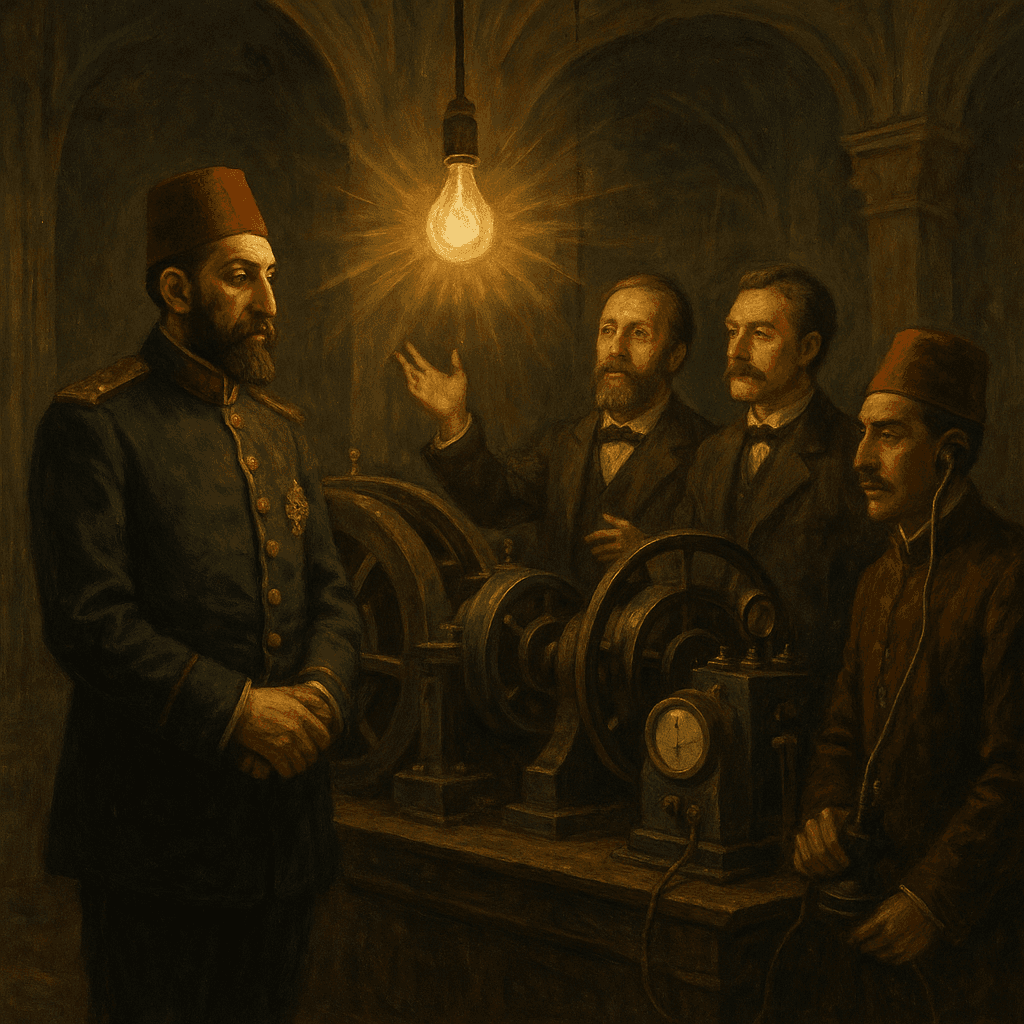
Use of electricity at Yıldız Palace (generated by artificial intelligence)
With the introduction of electricity at Yıldız Palace, key areas such as the Sultan’s private chambers, the Mabeyn Köşkü where state affairs were conducted, and official reception halls where important government meetings took place were illuminated by electric light. Until then, large chandeliers had been lit by gas lamps, but these now began to emit light through electric bulbs. This innovation represented a major transformation within the palace and was seen as evidence of the Ottoman State’s adaptation to technological progress.

Representative image of electricity use at Yıldız Palace (generated by artificial intelligence)
With the introduction of electricity in the Ottoman Empire, technological innovations began to enter palace life. During this period, the electric piano used at Yıldız Palace attracted attention as one of the most advanced technologies of the era. However, this new system also brought certain technical problems and safety risks. Sparks emitted by the piano caused a fire hazard within the palace, narrowly avoiding a major disaster.
While in exile in Thessaloniki, Sultan Abdülhamid II spoke to his personal physician Atıf Lord about this incident, acknowledging both the conveniences and benefits provided by electricity as well as its associated risks. In his own words:
Electric lighting was installed in Yıldız. It was very convenient and clean. But sometimes one side would fail, resulting in sudden darkness. For this reason, candles had to be available. Indeed, one night the Russian Emperor hosted a banquet in his palace. All the nobility came. The hall was lavishly decorated and illuminated by electricity. At that very moment, the lights suddenly went out. They were left in darkness, having previously neglected to prepare candles. Great panic ensued. Sometimes accidents and fires occurred due to faulty wiring, sparks flying, and entire rooms engulfed in flames. Once, in the chamber of a young lady, there was a piano powered by electricity. It played a piece with perfect harmony, as skillfully as the greatest pianist. There was a device that contained separate mechanisms for different pieces. When a particular piece was desired—for example, an operetta—it would be inserted and the button pressed, causing the piano to play automatically. I had ordered four such pianos, bringing them from Germany. One was in the lady’s room, and two were in the princes’ apartments. Later, I ordered another one, which cost me 200 liras. One day, while the lady was playing one of them, a spark emerged. Fortunately, the silk curtains prevented a fire, as I had previously instructed. The wires were immediately cut. A small spot on the wall had been scorched. Sometimes these systems were hazardous and dangerous. Time was needed.
These statements reveal that electrical systems in the Ottoman Empire had not yet been made safe through proper engineering and posed serious risks during this period. Although Sultan Abdülhamid II was a ruler who kept pace with technological developments, he was also aware that such innovations required careful planning for safety. He consistently emphasized the necessity of maintaining backup lighting systems and highlighted the importance of implementing preventive measures alongside the use of electricity.
The first introduction of electricity on Ottoman soil generated both great fascination and widespread suspicion. At the time, many people believed electricity to be a supernatural force, and rumors spread that it was "the work of jinn". Due to fears that touching electric switches could electrocute a person, it is said that palace staff wore gloves when operating them. Although the public initially met this new energy source with skepticism, they gradually came to accept it over time.
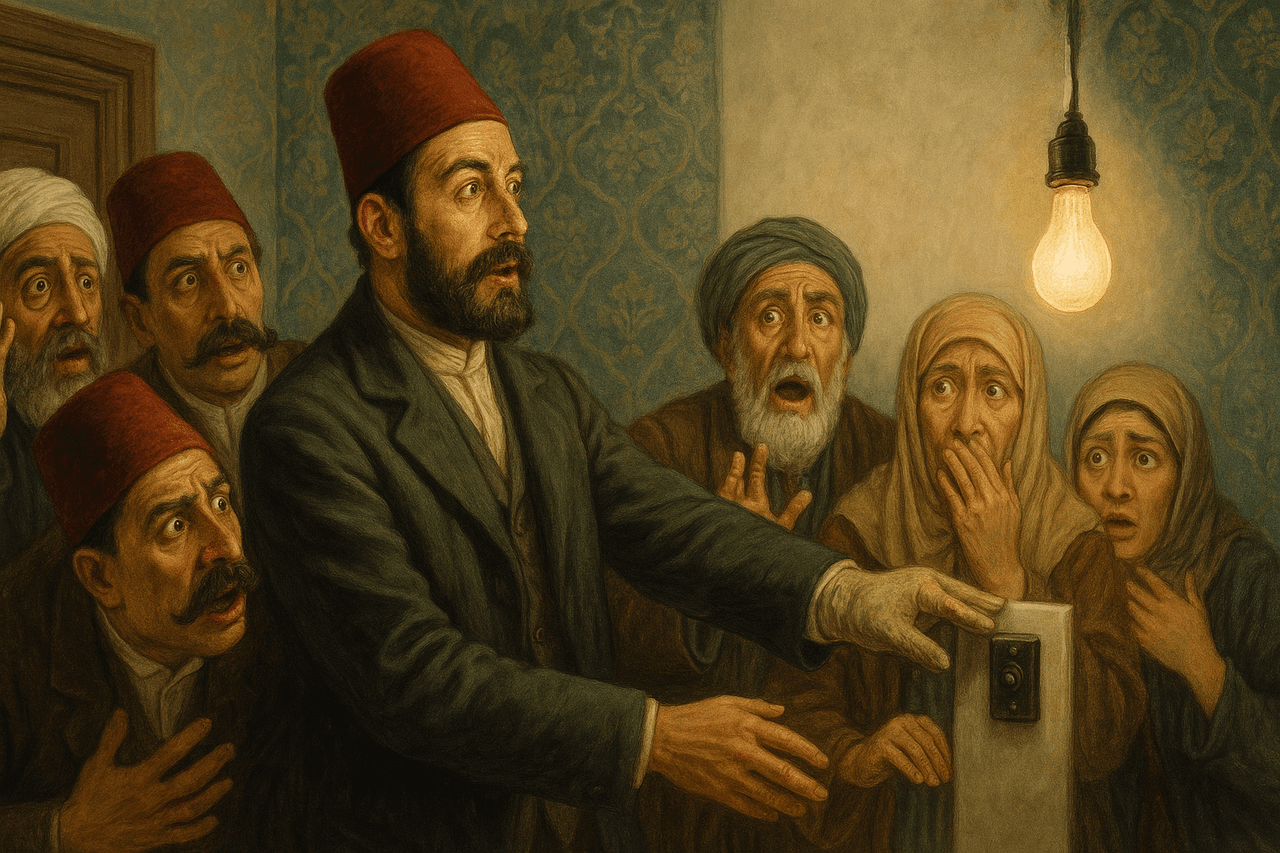
Representative image of public reaction to electricity (generated by artificial intelligence)
Following its introduction at Yıldız Palace, electricity began to spread to certain areas of Istanbul in the 1910s. Particularly in the districts of Galata, Pera (modern-day Beyoğlu), and Şişli, electricity use gained prominence. During this period, some homes and businesses were gradually illuminated by electric light. One of the most important developments in the widespread adoption of electricity in Istanbul was the introduction of electric trams in 1914.
These trams helped increase public awareness of the importance of electrical energy and facilitated public acceptance of this new power source. At the same time, street lighting gradually became more common, and Istanbul’s streets slowly emerged from darkness. Over time, electricity became an indispensable part of daily life in Ottoman society.
“Istanbul’un Aydınlatılmasında Elektrik Dönemi.” Istanbul Tarihi. Accessed April 4, 2025. https://istanbultarihi.ist/357-istanbulun-aydinlatilmasinda-elektrik-donemi.
“İETT Tarihi: Elektrik.” İETT Dergisi, no. 1 (1956): 18.
First Use of Electricity at Yıldız Palace (1902)
First Spaces Lit by Electricity
Electric Piano and Fire Risk at Yıldız Palace
Public Reaction to Electricity
The Spread of Electricity to Istanbul
