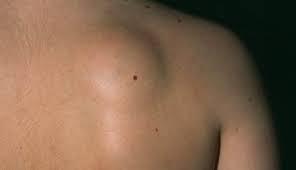

Follicular cysts of the skin and subcutaneous tissue are typically benign, encapsulated lesions arising from hair follicles or skin appendages. These cysts are of epithelial origin, exhibit slow growth, and commonly present as round, mobile masses palpable beneath the skin.
The most common follicular types are epidermoid cysts, pilar cysts, and steatocystomas, which may appear in different regions of the body with various clinical presentations. Cysts are usually asymptomatic but can become painful and inflamed when infected.
Epidemiology
- Age and sex: Can occur at any age but is more common in middle-aged individuals.
- Prevalence: Very common in the general population. Epidermoid cysts are among the most frequently encountered skin cysts.
- Location: The most commonly affected areas are the face, neck, back, scalp, and trunk.
Etiology and Pathogenesis
The development of follicular cysts is generally associated with obstruction of hair follicles or skin appendages leading to accumulation of keratin material. The following mechanisms may contribute to pathogenesis:
1. Follicular Obstruction and Keratin Accumulation
- Cyst formation occurs due to accumulation of keratin and other cellular debris following obstruction of hair follicles.
- This process often begins after inflammation or mechanical trauma.
2. Genetic Predisposition
- In certain autosomal dominant conditions such as steatocystoma multiplex, follicular cysts may occur in multiple locations.
3. Trauma and Infection
- Skin trauma or chronic infections may cause abnormal epithelial proliferation of hair follicles.
4. Sebaceous Gland Disorders
- Excessive sebaceous gland activity and sebum accumulation may contribute to cyst formation.
Clinical Variants
1. Epidermoid Cyst
- The most common type of follicular cyst.
- Contains keratin and lipid material.
- Most frequently found on the face, neck, back, and trunk.
- Typically painless unless infected, in which case erythema, tenderness, and drainage may occur.
2. Pilar Cyst (Trichilemmal Cyst)
- Most commonly located on the scalp.
- Distinguished from epidermoid cysts by a firmer capsule and lower risk of rupture.
- Often shows familial inheritance.
3. Steatocystoma Multiplex
- A genetic condition characterized by multiple sebaceous cysts.
- Appears in areas rich in sebaceous glands such as the chest, back, upper arms, and face.
- Content consists of sebaceous (fatty) material.
4. Dermoid Cyst
- Congenital in origin, forming during embryonic development.
- Typically found around the eyes and sacral region.
- Typically contains hair, fat, and other structures derived from skin appendages.
Diagnosis and Differential Diagnosis
Definition is usually established clinically, but in some cases ultrasound or histopathological examination may be required.
Diagnostic Methods
- Physical examination: Location, size, consistency, and mobility of the cyst are assessed.
- Dermoscopy: A central punctum is often visible in epidermoid and pilar cysts.
- Ultrasound: Helps determine whether the cyst contents are liquid or solid.
- Biopsy and Histopathology: Biopsy may be performed to confirm the diagnosis.
Differential Diagnoses
- Lipoma: Soft, painless, mobile tumor of adipose tissue
- Sebaceous cyst: Cysts resembling epidermoid cysts but containing predominantly sebaceous material
- Fibroma: Firm, fibroblastic benign tumors
- Hydrocystoma: Cysts originating from sweat glands
Treatment and Management
Follicular cysts are generally benign and do not require treatment. However, surgical or medical intervention may be necessary in cases of aesthetic concern, growth, infection, or symptomatic discomfort.
1. Medical Treatment
- Small, asymptomatic cysts typically require no treatment.
- Infected cysts may be treated with antibiotics such as clindamycin or cephalosporins.
2. Drainage and Injection
- Surgical drainage and corticosteroid injections may be performed for infected and inflamed cysts.
- This approach does not provide permanent resolution and carries a high risk of recurrence.
3. Surgical Excision
- The most effective treatment for recurrent, large, or symptomatic cysts.
- Performed under local anesthesia.
- Complete removal of the cyst wall is essential to prevent recurrence.
4. Laser and Minimally Invasive Techniques
- The cyst wall can be vaporized using carbon dioxide laser.
- May be used for small cysts causing cosmetic concerns.