Doğum tarihi | 1932-02-06 | ||||||||
|---|---|---|---|---|---|---|---|---|---|
Place of Birth | Paris, France | ||||||||
Ölüm tarihi | 1984-10-21 | ||||||||
First Feature Film | 400 Coup (1959) | ||||||||
Related Stream | French New Wave | ||||||||
François Truffaut (6 February 1932, Paris – 21 October 1984, Neuilly-sur-Seine) was a French director, screenwriter, producer, actor and film critic. He played a pivotal role in 20th century French cinema and is regarded as one of the founding figures of the French New Wave (La Nouvelle Vague). Truffaut’s filmography is distinguished by individual themes, literary adaptations and autobiographical elements.
Having endured various hardships during childhood, Truffaut became involved in cinema at an early age. With the support of film critic André Bazin, he wrote essays for the magazine Cahiers du Cinéma, using the publication to forge connections between film theory and practice, thereby shaping his career. His first feature film, Les Quatre Cents Coups (400 Blows), released in 1959, became one of the pioneering works of the French New Wave and earned him the Best Director award at the Cannes Film Festival that same year.
Emerging in the late 1950s in France, the French New Wave (La Nouvelle Vague) arose as a reaction against traditional cinematic narratives and the studio system. This movement sought to introduce formal and narrative innovations in cinema through low-budget, direct and personal storytelling. Truffaut stood among the movement’s leading figures alongside directors such as Jean-Luc Godard, Claude Chabrol, Éric Rohmer and Jacques Rivette. He applied the insights gained from his theoretical writings on cinema to his practical filmmaking.
Truffaut emerged as one of the directors who forged strong links between literature and cinema. His works focused on themes such as childhood, family relationships, personal conflicts and emotional experiences, often incorporating autobiographical elements in his narratives. His approach to filmmaking has been interpreted within the framework of the “auteur” theory, which positions the director as a creative subject.

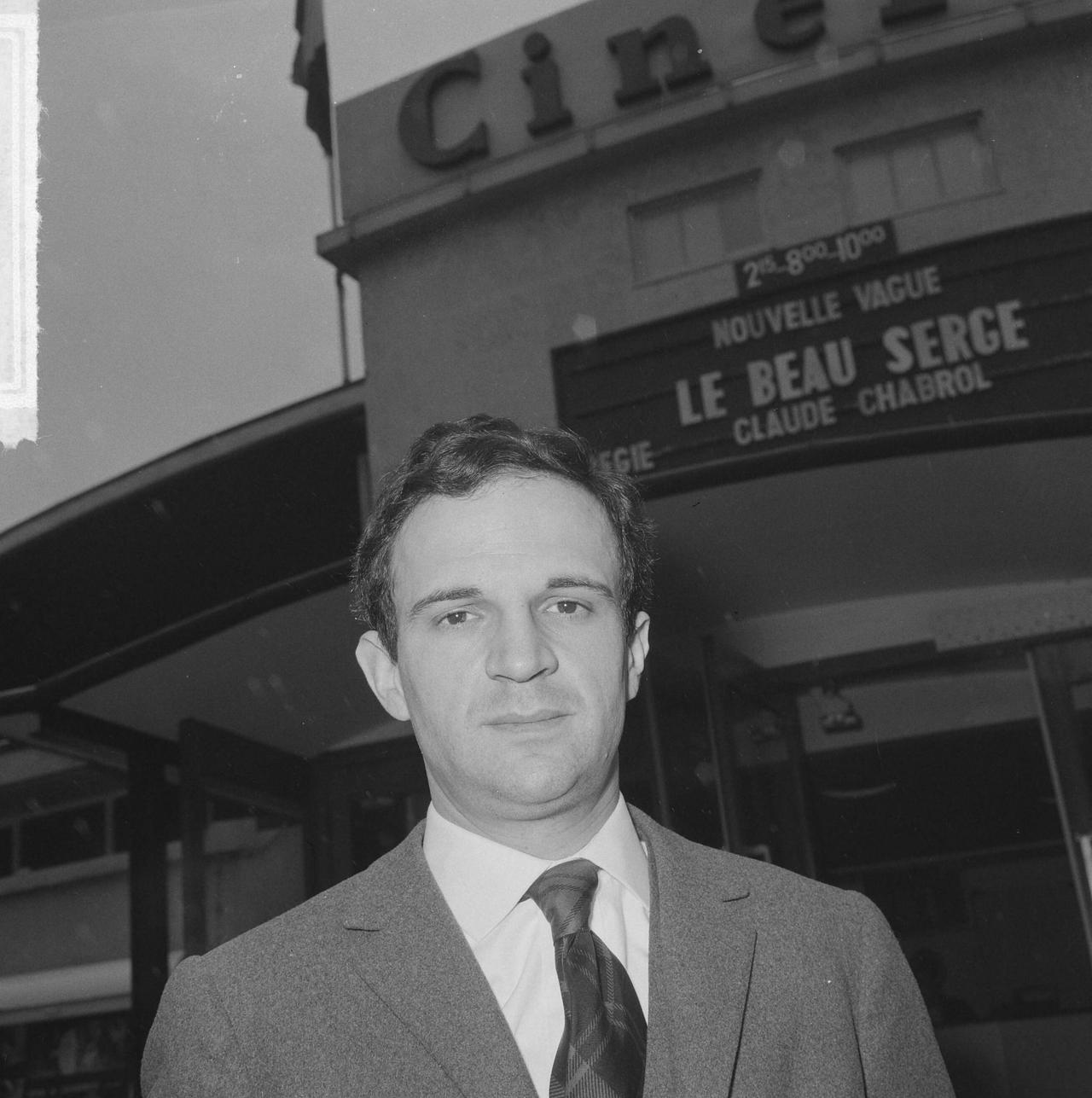
François Truffaut (National Archives)
One of François Truffaut’s most autobiographical projects is a five-film series centered on the character Antoine Doinel. Portrayed by Jean-Pierre Léaud, this character first appeared in Les Quatre Cents Coups (1959) and continued in L’Amour à Vingt Ans (1962), Baisers volés (1968), Domicile conjugal (1970) and L’Amour en fuite (1979). Through this series, the life journey of Antoine Doinel from childhood to adulthood is traced. The themes and narrative structure of the series reflect Truffaut’s personal experiences and the social transformations in 1960s and 1970s France.
François Truffaut showed great interest in Alfred Hitchcock’s directorial approach and published in 1966 a comprehensive interview he conducted with Hitchcock under the title Hitchcock/Truffaut. This work is regarded as a foundational text in film theory and directing techniques. The book was adapted into a documentary film of the same name in 2015 by Kent Jones.
Truffaut’s cinematic language is marked by its direct and unadorned narrative style. His filmography highlights themes such as individual freedom, belonging, social norms, childhood, love and family relationships. Truffaut adapted various literary works to cinema, continuing this tradition with Fahrenheit 451 (1966), based on Ray Bradbury’s novel of the same name. In his adaptations, narrative structure and character construction remained faithful to the structural qualities of the source texts while being translated into cinematic language.
1959 – Cannes Film Festival, Best Director
Awarded for Les Quatre Cents Coups (400 Blows). This work brought Truffaut international recognition.
1960 – Berlin Film Festival, OCIC Award
Recognized for the narrative style and original structure of Tirez sur le pianiste (Shoot the Piano Player).
1973 – New York Film Critics Circle Awards, Best Foreign Film
La Nuit Américaine (Day for Night) received widespread acclaim for its meta-cinematic reflection on filmmaking.
1974 – Academy Awards (Oscars), Best Foreign Language Film
La Nuit Américaine won the approval of Hollywood and became Truffaut’s most internationally acclaimed film.
1981 – César Awards, Best Film – Best Actress – Best Art Direction
Le Dernier Métro (The Last Metro) won a total of ten César Awards. It portrays theater life during World War II.
1984 – Cannes Film Festival, Golden Palm Nomination
Vivement Dimanche! (Sunday, Bloody Sunday) was Truffaut’s final film. With this film, which retained his signature style and energy, he once again entered the festival competition.
Les Quatre Cents Coups (400 Blows) – 1959
The beginning of Truffaut’s autobiographical narrative through the character Antoine Doinel. A symbol of the French New Wave.
Tirez sur le pianiste (Shoot the Piano Player) – 1960
An experimental work blending crime narrative with film noir aesthetics.
Jules et Jim – 1962
A cult film exploring a triangular relationship centered on themes of love, friendship and war.
La Peau Douce (The Soft Skin) – 1964
A drama about the conflict between fidelity, marriage and desire. Nominated for the Golden Palm at Cannes.
Fahrenheit 451 – 1966
This film, adapted from Ray Bradbury’s novel, is Truffaut’s only film shot in English. It depicts a dystopian society where books are banned.
La Mariée était en noir (The Bride Wore Black) – 1968
A Hitchcockian tale of revenge. Notable for its striking visual storytelling.
Baisers volés (Stolen Kisses) – 1968
The third film in the Antoine Doinel series. Offers an ironic perspective on the transition to adulthood and relationships.
La Sirène du Mississippi (The Siren of the Mississippi) – 1969
A story where romance intertwines with mystery. Starring Jean-Paul Belmondo and Catherine Deneuve.
Domicile conjugal (Married Life) – 1970
The fourth film in the Antoine Doinel series. Explores marital life and alienation.
Les Deux Anglaises et le Continent (The Two English Girls and the Continent) – 1971
A lyrical narrative on love, distance and time. Adapted from a novel by Henri-Pierre Roché.
Une belle fille comme moi (A Beautiful Girl Like Me) – 1972
A light film with elements of black humor about the life of a guilty woman.
La Nuit Américaine (Day for Night) – 1973
A film about filmmaking itself. Recognized with Oscar and BAFTA awards.
L’Histoire d’Adèle H. (The Story of Adèle H.) – 1975
A personal tragedy told through the obsessive love of Victor Hugo’s daughter Adèle.
L’Argent de poche (Small Change) – 1976
A portrayal of societal and family structures through the perspective of childhood.
L’Homme qui aimait les femmes (The Man Who Loved Women) – 1977
An exploration of the inner world of a man whose fascination with women reaches obsessive proportions.
La Chambre Verte (The Green Room) – 1978
A concentrated, melancholic narrative centered on death and mourning. One of Truffaut’s most personal films.
L’Amour en fuite (Love on the Run) – 1979
The fifth and final film in the Antoine Doinel series. A reflective summation of the entire narrative arc.
Le Dernier Métro (The Last Metro) – 1980
The theater world under Nazi occupation in France. Won ten César Awards.
La Femme d’à côté (The Woman Next Door) – 1981
The rekindling of an old love and its tragic outcome. Starring Gérard Depardieu.
Vivement dimanche! (Sunday, Bloody Sunday) – 1983
Truffaut’s final film. A black-and-white crime comedy that carries the imprint of Jeanne Moreau.
Les Mistons – 1957
Truffaut’s first short film. It portrays a group of adolescents infatuated with a woman. The film offers a precursor to themes later expanded in 400 Blows.
Antoine et Colette – 1962
One of five short films in the anthology L’Amour à Vingt Ans (Love at Twenty). Truffaut uses this film to depict Antoine Doinel’s adolescence. It is the second chapter of the Doinel series.
Archive.nytimes.com. “François Truffaut, New Wave Director, Dies at 52.” Accessed August 6, 2025. https://archive.nytimes.com/www.nytimes.com/books/99/04/18/specials/truffaut-obit.html
BFI (British Film Institute). “François Truffaut.” Accessed August 6, 2025. https://www.bfi.org.uk/francois-truffaut
BFI (British Film Institute). “Where to Begin with François Truffaut.” Accessed August 6, 2025. https://www.bfi.org.uk/features/where-begin-with-francois-truffaut
Beyazperde. "François Truffaut." Accessed August 6, 2025. https://www.beyazperde.com/sanatcilar/sanatci-629/
Cinephilia & Beyond. “A Conversation with François Truffaut.” Accessed August 6, 2025. https://cinephiliabeyond.org/conversation-francois-truffaut-window-mind-practices-pillar-french-new-wave/
Criterion Channel. "Directed by François Truffaut." Accessed August 6, 2025. https://www.criterionchannel.com/directed-by-francois-truffaut
Criterion Collection. “François Truffaut: Original Auteur.” Accessed August 6, 2025. https://www.criterion.com/current/posts/3051-francois-truffaut-original-auteur
F This Movie! "Director Essentials: François Truffaut." Accessed August 6, 2025. http://www.fthismovie.net/2024/11/director-essentials-francois-truffaut.html
Festival de Cannes. "My Life a Screenplay: The Unpublished Letters of François Truffaut." Accessed August 6, 2025. https://www.festival-cannes.com/en/2024/my-life-a-screenplay-the-unpublished-letters-of-francois-truffaut/
Film Comment. "The Literary Sophistication of François Truffaut." Accessed August 6, 2025. https://www.filmcomment.com/article/the-literary-sophistication-of-francois-truffaut/
Golden Globes. "François Truffaut." Accessed August 6, 2025. https://goldenglobes.com/person/francois-truffaut/
HERO Magazine. “François Truffaut.” Accessed August 6, 2025. https://hero-magazine.com/article/201193/francois-truffaut
Hitchcock.zone. "François Truffaut." Accessed August 6, 2025. https://the.hitchcock.zone/wiki/Fran%C3%A7ois_Truffaut
IMDb. "François Truffaut - Filmografi." Accessed August 6, 2025. https://www.imdb.com/list/ls527173049/
Independent Cinema. "François Truffaut and the Antoine Doinel Series: Parallel Lives of a Director and His Character." Accessed August 6, 2025. https://www.bagimsizsinema.com/francois-truffaut-ve-antoine-doinel-serisi-bir-yonetmen-ve-karakterinin-paralel-hayatlari.html
MUBI. "François Truffaut." Accessed August 6, 2025. https://mubi.com/tr/cast/francois-truffaut
Nationaal Archief. "François Truffaut - Fotoğraf 1." Accessed August 6, 2025. https://www.nationaalarchief.nl/onderzoeken/fotocollectie/aa993d44-d0b4-102d-bcf8-003048976d84?searchKey=26cdf49e6b263851aa43e1236d254e7e
Nationaal Archief. "François Truffaut - Fotoğraf 2." Accessed August 6, 2025. https://www.nationaalarchief.nl/onderzoeken/fotocollectie/aa993ee8-d0b4-102d-bcf8-003048976d84?searchKey=26cdf49e6b263851aa43e1236d254e7e
Nationaal Archief. "François Truffaut - Fotoğraf 3." Accessed August 6, 2025. https://www.nationaalarchief.nl/onderzoeken/fotocollectie/aa9941b8-d0b4-102d-bcf8-003048976d84?searchKey=26cdf49e6b263851aa43e1236d254e7e
New Wave Film. "François Truffaut – French New Wave." Accessed August 6, 2025. https://www.newwavefilm.com/french-new-wave-encyclopedia/francois-truffaut.shtml
New Yorker. “Talking About Truffaut.” Accessed August 6, 2025. https://www.newyorker.com/culture/richard-brody/talking-about-truffaut
Newsmuseum. “François Truffaut.” Accessed August 6, 2025. https://www.newsmuseum.pt/en/protagonistas/francois-truffaut
Sadibey. “Filmler Yaşamdan Daha Önemliydi: François Truffaut.” Accessed August 6, 2025. https://sadibey.com/2013/02/09/filmler-yasamdan-daha-onemliydi-francois-truffaut/
The Guardian. “When Hitchcock Met Truffaut.” Accessed August 6, 2025. https://www.theguardian.com/film/2015/may/12/when-hitchcock-met-truffaut-hitchcock-truffaut-documentary-cannes

Doğum tarihi | 1932-02-06 | ||||||||
|---|---|---|---|---|---|---|---|---|---|
Place of Birth | Paris, France | ||||||||
Ölüm tarihi | 1984-10-21 | ||||||||
First Feature Film | 400 Coup (1959) | ||||||||
Related Stream | French New Wave | ||||||||
The French New Wave and Truffaut’s Place
The Antoine Doinel Series
Dialogue with Hitchcock
Cinematic Style and Themes
Major Awards Won
Feature Films
Short Films