Doğum tarihi | 1930-05-28 | ||||||||
|---|---|---|---|---|---|---|---|---|---|
Ölüm tarihi | 2022-09-02 | ||||||||
Education | Harvard University Cornell University | ||||||||
Çocuk | Nadia Drake | ||||||||
Annesi | Winifred Drake | ||||||||
Babası | Richard Drake | ||||||||
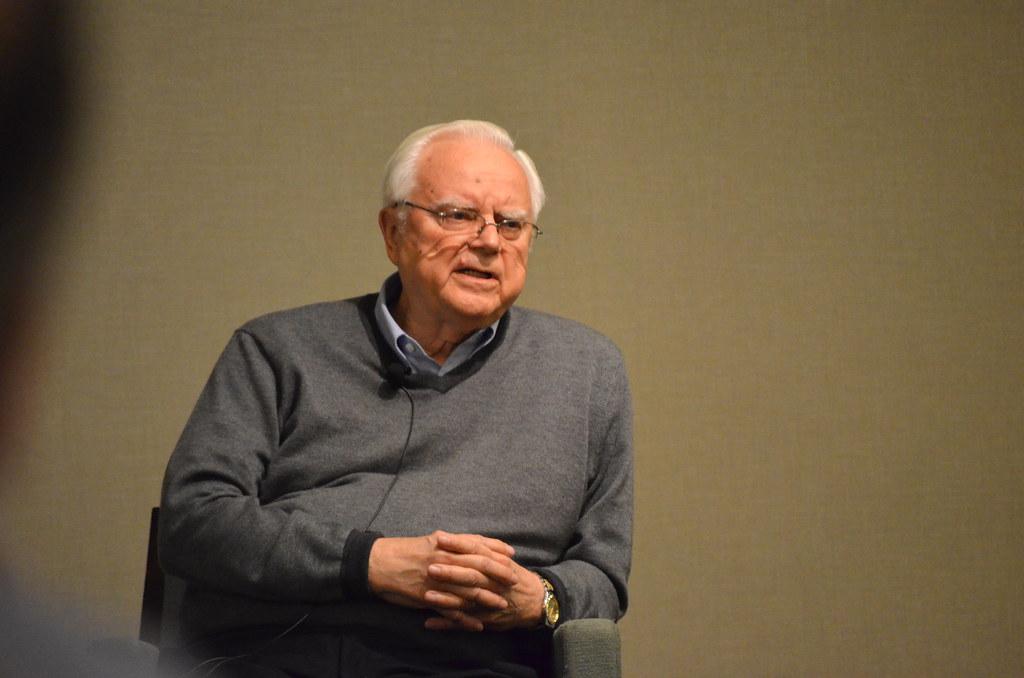
Frank Donald Drake (30 May 1930 – 2 September 2022) is recognized as an American astrophysicist and astronomer. Drake is regarded as one of the pioneers of modern SETI (Search for Extraterrestrial Intelligence), known particularly for his contributions to applying scientific methods to the study of extraterrestrial life and evaluating the possibilities of communication. Drake became a significant figure in astrophysics and radio astronomy through his scientific approach and experimental methodology.

Frank Drake. (nrao.edu)
Frank Drake was born on 30 May 1930 in Chicago, Illinois, United States. His interest in science was evident from childhood, particularly in astronomy and mathematics. He completed his undergraduate studies at Harvard University, where he focused on physics and astronomy. He later earned his doctorate in astronomy at the University of California, Berkeley. During his doctoral research, he concentrated on radio astronomy and the observation of celestial objects.
Drake’s academic career began in the late 1950s and early 1960s with a focus on radio astronomy. While working at Cornell University and the National Radio Astronomy Observatory, he conducted important experiments involving radio telescopes and the analysis of the electromagnetic spectrum.
In 1960, Drake initiated Project Ozma, a landmark study recognized as the first scientific effort to detect radio signals from extraterrestrial civilizations. The project embodied Drake’s experimental approach to radio astronomy and SETI.
Drake’s work is especially significant for establishing the methodological foundations of SETI. In 1961, he developed the Drake Equation to quantitatively assess the likelihood of extraterrestrial life. This equation uses astronomical, biological and sociocultural parameters to estimate the number of technologically advanced civilizations in our galaxy.
Although initially regarded as speculative, the Drake Equation provided the scientific community with a systematic framework for investigating extraterrestrial life. Its parameters include variables such as star formation rates, the probability of planets harboring life, the likelihood of life emerging, and the communication capacity of technological civilizations.
Drake also served as a consultant in the design and construction of the Arecibo Observatory. In 1974, he transmitted the Arecibo Message, one of the first radio messages deliberately designed by humanity, marking a turning point in the study of extraterrestrial communication.
Throughout his life, Drake held various academic and research positions at numerous institutions. He served in teaching and research roles at Cornell University, the University of California, and the National Radio Astronomy Observatory. He played an active role in the founding of the SETI Institute and contributed to coordinating its scientific research.
During his professional career, Drake published numerous articles in the fields of radio astronomy and astrobiology and presented papers at international conferences. His work on applying scientific methods to the search for extraterrestrial life became a reference in academic circles.
Frank Drake received numerous awards and academic honors for his scientific contributions, including those bestowed by the American Astronomical Society and other international astronomical organizations. These recognitions acknowledged his scientific methodology and his contributions to radio astronomy and the search for extraterrestrial life.
Frank Drake maintained a personal life closely aligned with his scientific pursuits. He passed away on 2 September 2022. Drake’s scientific legacy has left a lasting imprint in both scientific literature and popular science, particularly through his systematic research methods in SETI and the Drake Equation.
Drake’s work laid the foundation for quantitative investigations into the possibility of extraterrestrial life and shaped the framework of scientific discourse on the subject. His methodological approach continues to be referenced in contemporary research in radio astronomy and astrobiology.
NASA. "Commemorating the Anniversary of the Drake Equation." NASA, November 2, 2022. Accessed August 16, 2025. https://www.nasa.gov/centers-and-facilities/ames/commemorating-the-anniversary-of-the-drake-equation/.
University of California Academic Senate. “Frank Drake.” *In Memoriam*, 2022. Accessed August 16, 2025. https://senate.universityofcalifornia.edu/in-memoriam/files/frank-drake.html.
“Frank Drake – Biography, Facts and Pictures.” *Famous Scientists*, November 26, 2016. Accessed August 16, 2025. https://www.famousscientists.org/frank-drake/.
“Frank Drake.” *İTÜ Astronomi*, 2022. Accessed August 16, 2025. https://astronomi.itu.edu.tr/tarihte-bugun/frank-drake/.
“Frank Drake.” Flickr, 2012. Accessed August 16, 2025. https://www.flickr.com/photos/79186985@N02/7791047088.
“Frank Drake.” National Radio Astronomy Observatory, 2022. Accessed August 16, 2025. https://public.nrao.edu/gallery/frank-drake/.

Doğum tarihi | 1930-05-28 | ||||||||
|---|---|---|---|---|---|---|---|---|---|
Ölüm tarihi | 2022-09-02 | ||||||||
Education | Harvard University Cornell University | ||||||||
Çocuk | Nadia Drake | ||||||||
Annesi | Winifred Drake | ||||||||
Babası | Richard Drake | ||||||||
Early Life and Education
Academic Career
SETI and Scientific Contributions
Academic and Professional Roles
Awards and Honors
Personal Life and Legacy