


This article was automatically translated from the original Turkish version.
+1 More
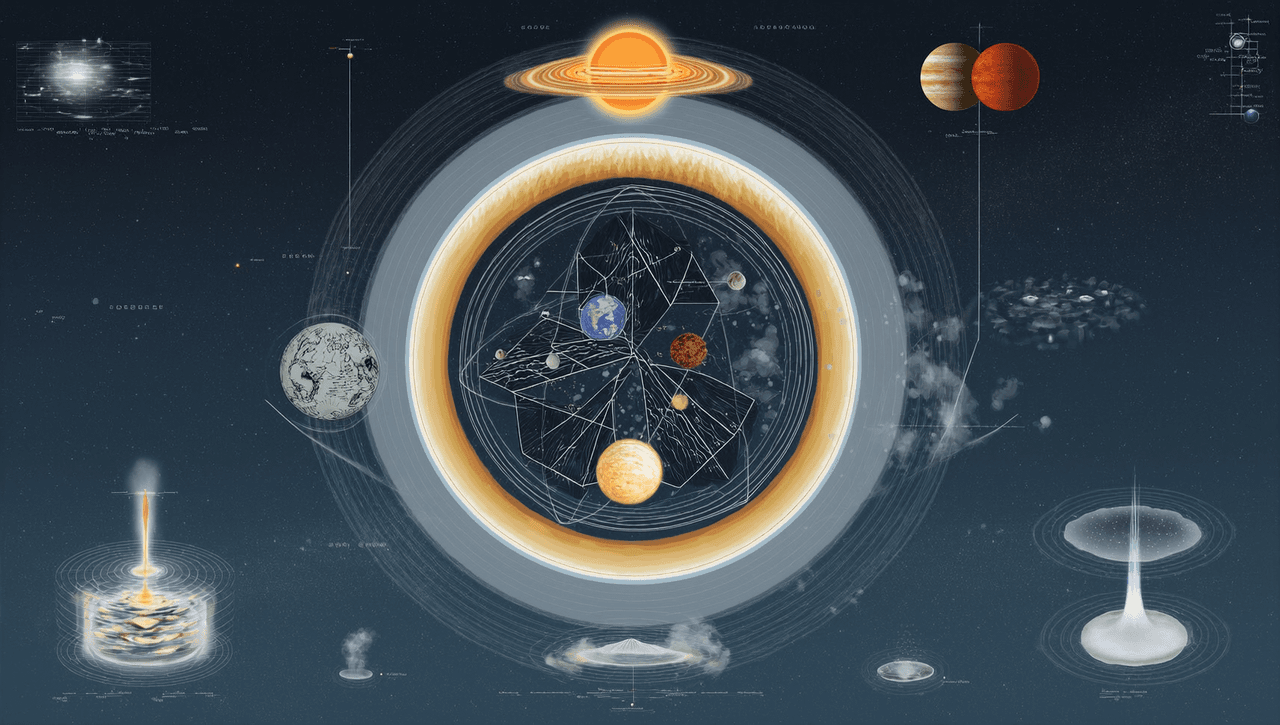
Astrobiology (Generated with Artificial Intelligence)
Focus Areas | Habitable environments, Biosignatures, Origin of life, Planetary chemistry, Extremophile research | ||||||||
|---|---|---|---|---|---|---|---|---|---|
Method(s) | Planetary observations Analog field studies Laboratory simulations Sample return analyses Spectroscopy | ||||||||
Solar System Targets | Mars, Europa, Enceladus, Titan, Ganymede, Ceres | ||||||||
Earth Analogs | Hydrothermal vents, Dry deserts, Saline lakes, Subsurface rocks, Polar ice caps | ||||||||
Biosignatures | Organic molecules, Mineral textures, Gas mixtures, Chemical imbalances | ||||||||
Astrobiology is an interdisciplinary scientific field that studies the phenomenon of life in the universe as a whole. Its fundamental questions revolve around how life originated, under what conditions it can exist, and whether life exists beyond Earth. Consequently, it integrates methods and concepts from astrophysics, planetary science, geology, chemistry, biology, molecular genetics, and engineering. Data obtained from space missions are combined with laboratory and field studies on Earth to expand our understanding of the origins of life on our planet and to search for traces of habitable environments within and beyond the Solar System.
Astrobiology is defined as the scientific discipline that examines, on a universal scale, the origin, distribution, and future of life. Its distinction from traditional biology lies in its approach to life not merely as a phenomenon unique to Earth but as an integrated process linked to star formation, the emergence of planetary systems, planetary surface and interior processes, chemical evolution, and cosmic material cycles. While the chemical and environmental conditions of early Earth are studied, the geology, atmospheres, and potential oceans of other planets and moons are evaluated for their habitability potential. In addition, biosignatures—such as gas mixtures, organic molecules, or mineral arrangements that could indicate life—are sought and defined.
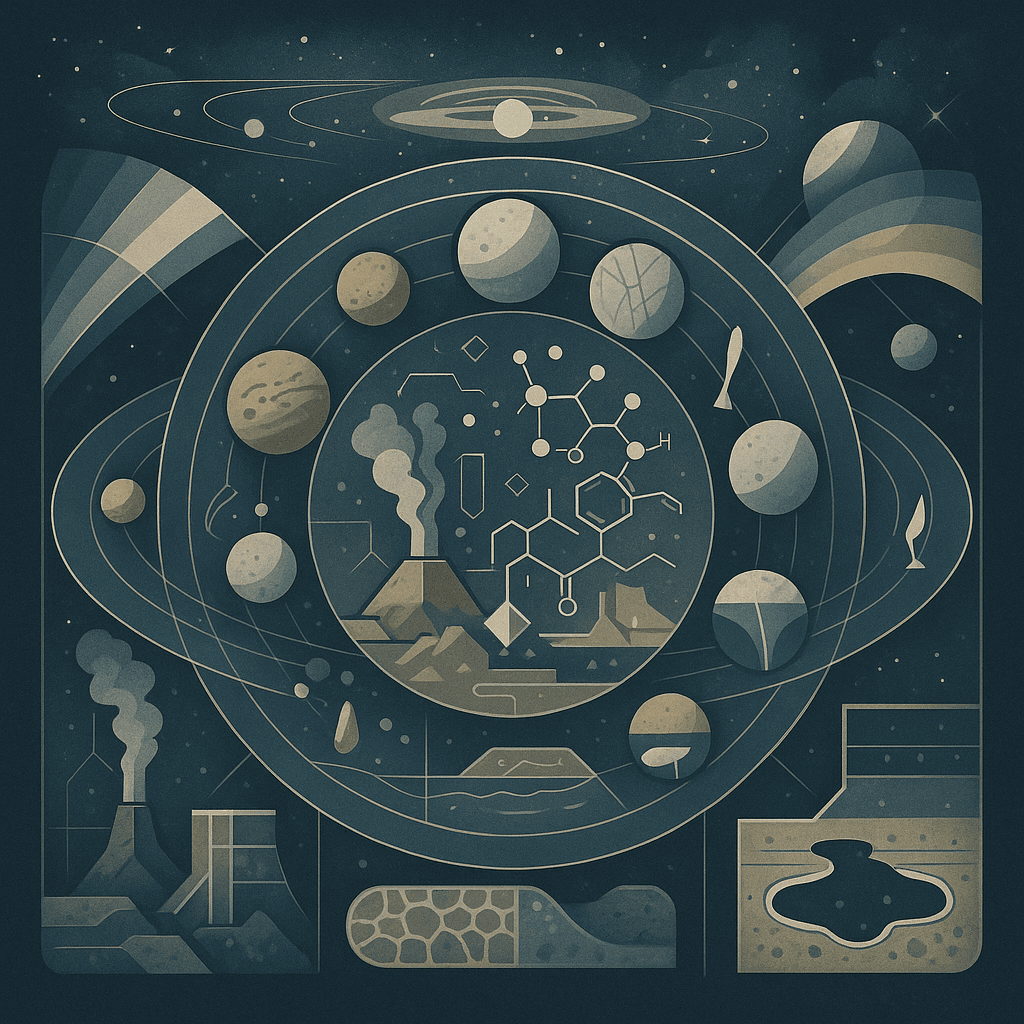
Astrobiology (Generated by Artificial Intelligence.)
The institutional history of astrobiology stems from the convergence of advances in biology with the advent of spaceflight. On one hand, biochemical models were developed to explain molecular organization of life, the storage of genetic information, and the functioning of cellular processes. On the other hand, the first human and robotic space missions were launched. This simultaneity led to the integration of new perspectives on the origin of life with the technological capacity to reach space, transforming the search for extraterrestrial life into a formalized program.
In its early phase, this field was known as “exobiology” and was shaped by direct attempts to detect life using the first landers sent to planets. Experiments conducted by the first landers on Mars were designed to test the possibility of biological activity on the planet’s surface. The ambiguous results and the realization that the Martian surface was far harsher than anticipated caused a brief pause in the field. However, over the following decades, more detailed analysis of Martian geology and the discovery of microorganisms thriving in extreme conditions on Earth re-established astrobiology as a central research axis.
One of the central questions in astrobiology is how the transition from non-living matter to living systems occurred. Early Earth is believed to have presented a complex environment characterized by water-covered surfaces, an atmosphere enriched by volcanic activity, intense meteorite bombardment, and oceans containing diverse chemical solutions. Within this environment, essential elements for life—carbon-rich organic compounds, water, nitrogen-containing species, and phosphorus—came together through various processes.
Studies of chemical evolution investigate how simple organic molecules could have progressed toward more complex macromolecular structures. Focus is placed on precursors of nucleic acids, amino acids, lipid-like compounds, and small energy-carrying molecules. Laboratory experiments and theoretical models aim to demonstrate that RNA-like information carriers and simple encapsulating membrane structures could have emerged in the early stages, providing a chemical environment conducive to selection and replication. Astrobiology tests these scenarios against conditions derived from planetary formation processes and the presence of organic matter in celestial bodies.
The astrobiological perspective focuses on how planets form in order to understand life. Stars originate through gravitational collapse in cold regions of gas and dust known as molecular clouds. During this process, solid particles on the micrometer scale condense alongside gas, forming disks that orbit young stars. These disks are the environments where planets and smaller bodies are born.
Volatiles essential for life—carbon, hydrogen, oxygen, and nitrogen—are found both in gaseous form and within icy mantles coating these dust particles. It has been shown that during the early stages of star formation, water and simple organic molecules can form as ice and bind to the surfaces of solid grains. Over time, these particles collide and coalesce into larger bodies, planetesimals, and eventually planets. The abundance of water and organic molecules observed in meteorites and comets within the Solar System indicates that these early chemical processes delivered building blocks to planets. Thus, astrobiology accepts that a significant portion of the material initiating life was provided during star and planet formation.
Habitability is the concept of evaluating whether a planet or moon can sustain biochemical processes as we know them. Key conditions include the presence of liquid water, suitable energy sources, availability of essential chemical elements, and long-term stability. The region around a star where surface liquid water can remain stable is called the habitable zone. However, astrobiology does not limit habitability to this orbital band alone; it also considers internal heating, tidal forces, subsurface oceans beneath icy crusts, and thick atmospheric layers.
Evidence suggests that on early Earth, bodies of water appeared relatively quickly and that geological records show signs of simple life forms from very early periods. This implies that, given suitable conditions, the transition from prebiotic chemistry to biological systems may not require extremely long timescales on a cosmic scale.
Study of extreme environments on Earth plays a pivotal role in astrobiology. The discovery of microorganisms thriving in high-temperature deep-sea hydrothermal vents, hypersaline lakes, highly acidic or alkaline environments, beneath thick ice sheets, in deep rock fractures within the Earth’s crust, and in regions exposed to high radiation levels has demonstrated that biological activity can persist under conditions once considered “uninhabitable.”
Such environments serve as analog laboratories for extraterrestrial conditions such as the Martian surface, subsurface oceans of icy moons, high-radiation planetary environments, and arid deserts. Scientists meticulously characterize mineral structures, isotope ratios, patterns of organic compounds, and microscopic tissue patterns in these regions that could serve as biosignatures, guiding the design of sensors and experiments for future space missions.
The primary astrobiological targets within the Solar System are Mars, icy moons, and some small bodies. Morphological evidence has revealed ancient river channels, lake beds, and delta-like sedimentary structures on Mars. Rovers that landed on its surface have detected clay minerals, carbonate types, and organic molecular residues in craters representing ancient lake environments, indicating that early Mars may have hosted neutral or mildly alkaline aqueous conditions favorable for microbial life. Current missions are preparing by storing carefully selected rock and sediment samples for future return to Earth for direct laboratory analysis.
Jupiter’s icy moons and some of Saturn’s moons also occupy a central position in astrobiology. Gravitational measurements, magnetic field data, and surface geomorphology support the existence of global subsurface oceans beneath their icy crusts. On some moons, plumes of water vapor and ice particles erupting from surface fractures indicate dynamic material exchange between the interior ocean and the surface. In such environments, water comes into contact with minerals at deep rocky basins, potentially enabling geochemical cycles that could support life through chemical energy sources.
Comets, with their nuclei composed of ice and dust, preserve examples of early Solar System chemistry. Space probes and sample return missions have shown that these bodies are rich in water, carbon monoxide, carbon dioxide, and numerous organic compounds. Amino acids and nucleic acid components found in meteorites suggest that some of life’s fundamental building blocks may have been delivered to planets from space. Astrobiology links these findings to scenarios of water and organic material transport to planets.
In recent years, the discovery of thousands of planets orbiting other stars has fundamentally expanded the scale of astrobiology. Some of these planets, detected via photometric and spectroscopic methods, are rocky and located within their star’s habitable zone. Information on planetary radius, mass, and orbit allows estimation of the likelihood of stable or intermittent surface liquid water.
New telescopes and spectrometers are designed to analyze the atmospheres of these planets. The presence of carbon dioxide, water vapor, and other key gases in atmospheric composition aids in testing planetary climate models. From an astrobiological standpoint, the primary goal is to investigate whether gases associated with biological processes—such as oxygen, ozone, and methane—coexist in balanced and sustained concentrations. Such a combination could indicate a chemical imbalance difficult to explain by purely abiotic processes, offering indirect evidence of possible biological activity.
Astrobiology programs are organized around specific thematic axes. These include identifying abiotic sources of organic compounds, understanding the emergence and function of macromolecules, tracing the increase in complexity of early life forms, identifying regions with habitable environments and potential biosignatures, and modeling the formation processes of habitable worlds.
Within this framework, key questions emerge: What steps did prebiotic chemistry follow on early Earth? How and through what pathways did water and organic compounds reach and accumulate on planets? How did interactions between planetary surfaces and atmospheres influence the emergence of life? How do habitability limits vary across systems with different types of stars? Are alternative forms of life based on different chemical foundations theoretically possible? Answers to these questions serve both to deepen our understanding of Earth’s history and to shape observational strategies.
Astrobiology is inherently interdisciplinary. Geologists study planetary surface processes, astronomers investigate star and disk formation, chemists model organic chemical pathways, biologists explore genomic development and microbial metabolism, engineers develop instruments, and computational modelers simulate complex systems. This collaboration is essential both in Earth-based field studies and in the design of space missions.
Space agencies establish research networks and coordination mechanisms to unite diverse research groups. Consortia focused on the origin of life, networks dedicated to ocean worlds, initiatives centered on life detection techniques, and communities studying exoplanetary systems are examples of this interdisciplinary structure. These networks develop shared strategies spanning from laboratory experiments to the selection of targets for space telescopes.
The search for life in astrobiology is closely tied to the identification of biosignatures and the elimination of false positives. A biosignature is an overarching term for gas compositions, molecular arrangements, mineral structures, or microscopic tissue features that may indicate present or past biological activity. It is often difficult to prove that a gas mixture, mineral assemblage, or pattern of organic compounds can be explained solely by biological processes. Therefore, astrobiology requires detailed modeling and observation of non-biological natural processes as well.

Astrobiology (Generated by Artificial Intelligence.)
Parallel to this, planetary protection principles are essential. Minimizing microbial contamination from Earth to other celestial bodies is necessary not only to preserve potential indigenous life signatures but also to avoid masking them. Similarly, detailed quarantine and testing protocols are developed to safely manage the interaction of samples returned from other celestial bodies with Earth’s biosphere. Thus, both scientific integrity and biological safety are maintained.
The future of astrobiology will be shaped by both missions targeting the Solar System—such as landings and sample returns—and by remote-sensing telescopes. Drilling and exploration tools designed to access the surfaces and subsurface oceans of icy moons, detailed laboratory analysis of rock and soil samples returned from Mars, and higher-resolution studies of analogous environments on Earth will be central to this progress.
At the same time, space telescopes capable of more precisely dissecting starlight will enable the detection of subtle compositional differences in distant planetary atmospheres. With these advances, the evaluation of atmospheric imbalances, surface conditions, and climate dynamics that may indicate signs of life will become more concrete.
For now, there is no direct evidence for the existence of extraterrestrial life. However, accumulated knowledge regarding planetary formation processes, the cosmic distribution of volatile compounds, the resilience of extremophilic life forms, and the abundance of planets in habitable zones suggests that life may not be a unique exception in the universe but rather a natural outcome under specific conditions. Astrobiology positions itself as a dynamic research field that continuously develops observational, experimental, and theoretical tools to test this possibility.
Astrobiology Strategy. "NASA Astrobiology Program." Accessed November 18, 2025. https://astrobiology.nasa.gov/about/astrobiology-strategy/
Astrobiology at NASA. "Astrobiology @ NASA" NASA, Accessed November 18, 2025. https://astrobiology.nasa.gov/research/astrobiology-at-nasa/
Bergin, Edwin A. “Astrobiology: An Astronomer’s Perspective.” AIP Conference Proceedings 1638 (2014): 5–34. Accessed November 18, 2025. http://dx.doi.org/10.1063/1.4904143
Domagal-Goldman, Shawn D., et al. “The Astrobiology Primer v2.0.” *Astrobiology* 16, no. 8 (August 2016): 561–653. Accessed November 18, 2025. https://doi.org/10.1089/ast.2015.1460
History of Astrobiology. "NASA Astrobiology Program." Accessed November 18, 2025. https://astrobiology.nasa.gov/about/history-of-astrobiology/

Astrobiology (Generated with Artificial Intelligence)
Focus Areas | Habitable environments, Biosignatures, Origin of life, Planetary chemistry, Extremophile research | ||||||||
|---|---|---|---|---|---|---|---|---|---|
Method(s) | Planetary observations Analog field studies Laboratory simulations Sample return analyses Spectroscopy | ||||||||
Solar System Targets | Mars, Europa, Enceladus, Titan, Ganymede, Ceres | ||||||||
Earth Analogs | Hydrothermal vents, Dry deserts, Saline lakes, Subsurface rocks, Polar ice caps | ||||||||
Biosignatures | Organic molecules, Mineral textures, Gas mixtures, Chemical imbalances | ||||||||
Scope
Historical Development
The Origin of Life
Astrobiology in the Context of Star and Planet Formation
The Concept of Planetary Habitability
Extremophiles on Earth and Analogous Environments
Astrobiological Targets within the Solar System
Exoplanets
Research Themes and Strategic Questions
Institutional and Interdisciplinary Structure
Biosignatures and Planetary Protection in the Search for Life