


This article was automatically translated from the original Turkish version.
+1 More
Location | Gabar Mountain Türkiye Şırnak | ||||||||
|---|---|---|---|---|---|---|---|---|---|
Year of Discovery(ies) | 2023 | ||||||||
Responsible Institution | Türkiye Petrolleri Anonim Ortaklığı (TPAO) | ||||||||
Reserve Size | Approximately 1 billion barrels (official announcement) | ||||||||
Crude Oil Type | Light, high quality (high API gravity) | ||||||||
Initial Daily Production Capacity | 5,000 barrels | ||||||||
Target Production Capacity | 100,000 barrels per day | ||||||||
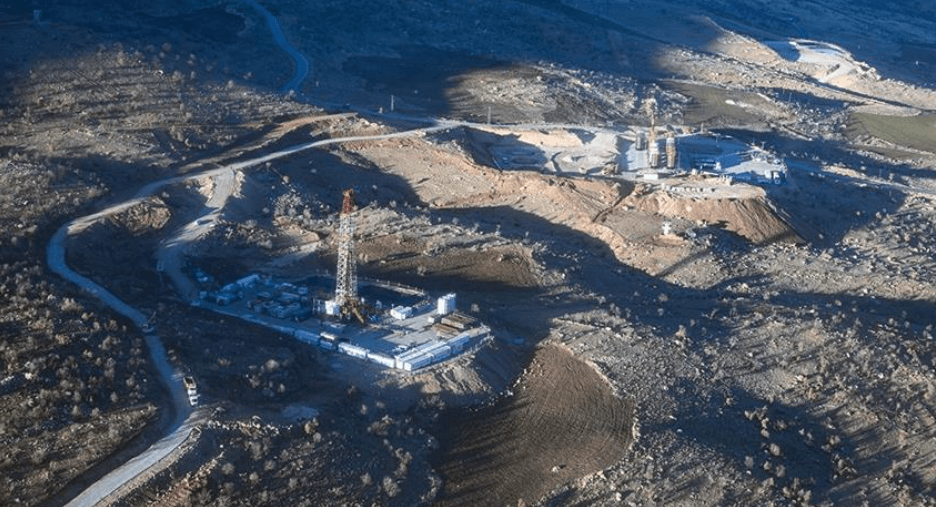
Gabar Mountain Oil is the name given to a high-quality crude oil reserve discovered in 2023 in the Gabar Mountain region within the borders of Şırnak Province, Türkiye. This discovery is recorded as one of Türkiye’s largest onshore oil finds.
Gabar Mountain Drilling Site(TRT News)
Oil exploration activities in Gabar Mountain were initiated within the framework of Türkiye’s policies aimed at identifying domestic energy resources. Work carried out by the Turkish Petroleum Corporation (TPAO) began in late 2022 with geological and geophysical surveys conducted in the region. During this phase, data on subsurface structures were collected using three-dimensional seismic imaging techniques.
Based on the seismic data obtained, drilling operations commenced in 2023. The first production test was conducted at the well named Şehit Aybüke Yalçın-1; analyses confirmed the presence of economically viable crude oil. Subsequent drilling operations yielded similar results.
On 2 May 2023, in an announcement made by then President Recep Tayyip Erdoğan, the oil reserve in the Gabar Mountain region was estimated at approximately one billion barrels. The same announcement stated that initial production would begin at a rate of 5,000 barrels per day, with plans to increase this capacity to 100,000 barrels per day over time.
Due to the region’s historical security risks, enhanced security measures were implemented during exploration and production activities. Additionally, investments were made in transportation routes, energy transmission lines, and other infrastructure elements to ensure the sustainability of drilling operations.
The drilling rig was named after Şehit Aybüke Yalçın, a teacher who lost her life in a terrorist attack in Şırnak in 2017. The naming was carried out to honor those who sacrificed their lives in the fight against terrorism and to acknowledge the security challenges faced in the region. This designation was chosen to preserve the memory of this loss among the local population and to imbue the operations with spiritual significance.
The oil discovered in the Gabar Mountain area is classified as light crude oil according to technical categorization. The API (American Petroleum Institute) gravity, used to determine the specific gravity of oil, indicates that the oil from this field has high values. This implies that the oil has low viscosity and is therefore relatively easier to refine. Light crude oil is economically preferred because it yields a higher proportion of refined products such as gasoline and diesel compared to heavy crude oil.
Production began in 2023 with a limited number of wells. The initial production capacity was set at 5,000 barrels per day, with plans to expand operations through the drilling of additional wells in the field. Turkish Petroleum Corporation (TPAO) has stated that the regional production capacity is targeted to be incrementally increased in the medium term to reach 100,000 barrels per day. Achieving this goal depends on the development of the field’s production infrastructure and the completion of new well investments.
The geological structure of the reservoir formation directly affects production rates and well efficiency. Geological modeling studies in the region have shown that the reservoir rocks retain oil within porous structures and provide favorable conditions for production. However, production volumes are refined through permeability assessments of the rocks, well production tests, and long-term observations.
In evaluating the commercial potential of the reserve, logistical factors such as transportation, storage, and delivery to refineries also play a critical role. Efforts are underway to improve infrastructure elements such as pipeline connections and road access near the field.
The oil deposits at Gabar Mountain are regarded as a strategic asset for Türkiye’s energy supply. Türkiye meets a significant portion of its energy demand through imports; therefore, an increase in domestic oil production is expected to positively impact the current account balance and energy security.
In addition, it is anticipated that the discovery will stimulate economic activity in Şırnak and its surroundings, create employment opportunities, and encourage infrastructure investment. From a regional development perspective, this represents a significant opportunity.
The initial production target for the Gabar Mountain oil field is approximately 5,000 barrels per day. Production activities are being carried out as planned, with drilling and extraction operations proceeding according to schedule. The quality characteristics and production volumes of the oil from the field are continuously monitored to assess the efficiency of production processes.
Plans are in place to gradually increase production capacity over time, with a long-term goal of raising daily output to 100,000 barrels. Achieving this increase requires upgrading existing infrastructure, drilling new wells, and optimizing production technologies.
Data on the field’s production performance are used as a reference in regional and national energy planning. The environmental and economic impacts of production processes are also monitored and regulated by relevant authorities.
Anadolu Ajansı. “Gabara Petrol Keşfinin Ardından 2 Yılda 480 Kilometre Yol Yapıldı.” AA, 2023. Accessed May 17, 2025. https://www.aa.com.tr/tr/gundem/gabara-petrol-kesfinin-ardindan-2-yilda-480-kilometre-yol-yapildi/3298359#:~:text=Ankara,3%20bin%20ki%C5%9Fiye%20istihdam%20sa%C4%9Flad%C4%B1.
Anadolu Ajansı. “Gabar’da Günlük Petrol Üretimi 30 Bin Varile Ulaştı.” *AA*, 2023. Accessed May 17, 2025. https://www.aa.com.tr/tr/ekonomi/gabarda-gunluk-petrol-uretimi-30-bin-varile-ulasti/3079451.
Anadolu Ajansı. “Gabar’da Günlük Petrol Üretimi 30 Bin Varile Ulaştı.” *AA*, 2023. Accessed May 17, 2025. https://www.aa.com.tr/tr/enerjiterminali/petrol/gabarda-gunluk-petrol-uretimi-30-bin-varile-ulasti/39727.
Energy and Natural Resources Ministry. "About theGabar Petrol Field." Energy Ministry, 2023. Accessed May 17, 2025. https://enerji.gov.tr/haber-detay?id=21320.
Energy and Natural Resources Ministry. "Current Developments in theGabar Petrol Field." *Energy Ministry*, 2023. Accessed May 17, 2025. https://enerji.gov.tr/haber-detay?id=21342.
TRT Haber. "Gabar Petrolünün Kuyudan Depolara Uzanan Yolculuğu." TRT Haber, 2023. Accessed May 17, 2025. https://www.trthaber.com/haber/ekonomi/gabar-petrolunun-kuyudan-depolara-uzanan-yolculugu-859816.html.
YouTube. "Gabar’da Petrol Üretimi." YouTube video, 2023. Accessed May 17, 2025. https://www.youtube.com/watch?v=BFttu0khGvA.

Location | Gabar Mountain Türkiye Şırnak | ||||||||
|---|---|---|---|---|---|---|---|---|---|
Year of Discovery(ies) | 2023 | ||||||||
Responsible Institution | Türkiye Petrolleri Anonim Ortaklığı (TPAO) | ||||||||
Reserve Size | Approximately 1 billion barrels (official announcement) | ||||||||
Crude Oil Type | Light, high quality (high API gravity) | ||||||||
Initial Daily Production Capacity | 5,000 barrels | ||||||||
Target Production Capacity | 100,000 barrels per day | ||||||||
Discovery Process and History
Naming of the Drilling Rig after Şehit Aybüke Yalçın
Reserve Characteristics
Economic and Strategic Importance
Current Production Status