



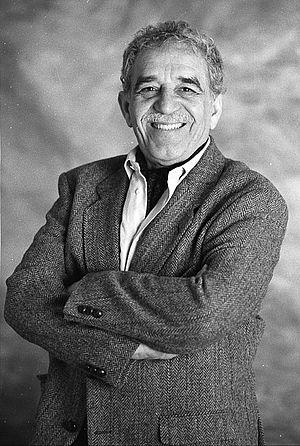
Gabriel García Márquez is a Colombian writer who played a pivotal role in the development of 20th century Latin American literature. One of the most important representatives of magical realism, he seamlessly integrated supernatural elements into everyday life in his works. Known in Latin America by the nickname “Gabo,” Márquez was awarded the Nobel Prize in Literature in 1982 for his novel One Hundred Years of Solitude.
Gabriel García Márquez was born on 6 June 1927 in the town of Aracataca in northern Colombia. He lived in Aracataca until the age of eight and was raised by his grandfather, Colonel Nicolás Márquez, and his grandmother, Tranquilina Iguarán. The observations he made during this period formed the foundation of the supernatural elements and folk beliefs present in his literary works.

Gabriel García Márquez (Los Angeles Times)
Although he began his university studies in Bogotá, Márquez abandoned his formal education to pursue journalism.
He began his career at the newspaper El Universal and later worked as a reporter, columnist, and critic for the Colombian newspapers El Heraldo and El Espectador. His journalistic activities in Colombia and Latin America also included involvement with Prensa Latina, the news agency founded by Fidel Castro in Cuba.
Through his interviews, reports, and analyses, Márquez gained insight into and conveyed the political, cultural, and social structure of Colombia. In 1954, he was sent by his newspaper to Rome and subsequently lived in New York and Barcelona.
Márquez pursued journalism and literature simultaneously throughout his life. This dual engagement allowed him to highlight the power of narrative and social awareness in his writing. His first novel, Leaf Storm, was published in 1955. The fictional town of Macondo, which serves as the backdrop for One Hundred Years of Solitude and other works, first appeared in this novel.

Gabriel García Márquez (Literary Agency)
Novels such as No One Writes to the Colonel, Autumn of the Patriarch, and The General in His Labyrinth present structures shaped by Latin America’s political atmosphere.
One Hundred Years of Solitude, published in 1967, established Márquez as an internationally recognized writer. Written using the technique of magical realism, this novel interweaves historical, mythological, and social elements to question the boundaries between individual memory and collective memory. One Hundred Years of Solitude is regarded as a text that reflects Latin America’s collective memory and earned Márquez the Nobel Prize in Literature in 1982.

Representative visual of the fictional town of Macondo from One Hundred Years of Solitude (generated by artificial intelligence)
Márquez, who explored the social, political, and historical fabric of Latin America in his works, published his final book, Living to Tell the Tale, in 2002, an autobiographical account of his life.
The influence of Márquez’s grandmother and grandfather on the formation of his literary identity was profound. The home where he lived with them was the setting for his earliest social observations and the shaping of his moral and political perceptions. His grandfather, Nicolás Márquez, was a liberal colonel who had fought in Colombia’s Thousand Days War and was a master storyteller. The noble elderly male figure found in No One Writes to the Colonel and One Hundred Years of Solitude was inspired by his grandfather.
Márquez described how his grandfather perceived his own imaginative power and talent:
“My grandfather painted one wall of his silver-smithing shop white and bought colored pencils and later a set of watercolors so I could draw as I pleased. While he crafted his fish, I drew whatever I wanted. Occasionally he would say that his grandson would become a painter, but since I believed only those who painted doors were called painters, I paid little attention.”
His grandmother, on the other hand, held superstitious beliefs. She recounted the most elaborate folk tales involving ghosts, spirits, and omens as if they were ordinary occurrences, without any indication of their fantastical nature. This approach profoundly influenced Márquez’s narrative style of presenting extraordinary events in a matter-of-fact manner and enriched the imagery in his writing.

Gabriel García Márquez (Los Angeles Times)
Political Life and Stance
Márquez was accused of having ties to a communist group in the 1980s and subsequently lived in exile in Mexico for over 30 years. In later years, he helped facilitate negotiations between the Colombian government and the country’s largest guerrilla movement, the Revolutionary Armed Forces of Colombia (FARC). His friendship with Fidel Castro is significant in understanding his political preferences and his approach to the relationship between literature and politics.
In 1999, Márquez was diagnosed with lymphoma, and in 2012 it was announced that he had been diagnosed with dementia. Gabriel García Márquez died at the age of 87 in his home in Mexico City on 17 April 2014.
Through the relationship he established between narrative form and historical reality, Gabriel García Márquez has acquired a unique place in literary history. By elevating magical realism beyond mere aesthetic fiction, he transformed it into an expression of collective memory.
"Gabriel García Márquez – Databases Explored." Gale. Accessed April 16, 2025. Link
"Ünlü Yazar Gabriel García Márquez Hayatını Kaybetti." Anadolu Ajansı. Accessed April 16, 2025. Link
Diler, Hatice Elif. *Magical Realism as a Sociopolitical Weapon: Gabriel García Márquez and Ben Okri*. PhD thesis, Fatih Üniversitesi, 2014. Link
Gabriel García Márquez. Agencia Literaria Carmen Balcells. Accessed April 16, 2025. Link
García Márquez, Gabriel. Anlatmak İçin Yaşamak. Çev. İnci Kut. İstanbul: Can Yayınları, 2003.
Gümüş, Şafak, and Nur Gülümser İlker. “Gabriel García Márquez Üzerine: Giriş.” In *Gabriel García Márquez Çalışmaları*, 7–16. İstanbul: Ihlamur Akademi, 2024. Link
Los Angeles Times. "Gabriel García Márquez, 87, Hospitalized in Mexico City." Los Angeles Times. Accessed April 16, 2025. Link
Vijayan, Vishal. “Gabriel García Márquez: A Living Legend in the World of Literature.” Master's thesis, English and Foreign Languages University, Hyderabad, 2013. Link

No Discussion Added Yet
Start discussion for "Gabriel García Márquez" article
Childhood and Education
Journalism
Literary Career
Influence of His Grandmother and Grandfather on His Writing
Death