

This article was automatically translated from the original Turkish version.
+2 More
Gadolinium
Periodic Table | 6 | ||||||||
|---|---|---|---|---|---|---|---|---|---|
Chemical Symbol | Gd | ||||||||
Atomic Number | 64 | ||||||||
Group | Lanthanides | ||||||||
Atomic Weight | (157.25) g/mol | ||||||||
Electron Configuration | [Xe] 4f⁷5d¹6s² | ||||||||
Appearance | Silvery-white metal | ||||||||
Density | 7.90 g/cm³ | ||||||||
Melting Point | 1313 °C | ||||||||
Boiling Point | 3273 °C | ||||||||
Atomic Radius | ~234 pm | ||||||||
Electronegativity | 1.20 | ||||||||
Electron Affinity | Unknown | ||||||||
Important Isotopes | ¹⁵⁸Gd (natural, stable, most abundant), ¹⁵⁷Gd (high neutron capture) | ||||||||
Year of Discovery(ies) | 1880 | ||||||||
Discoverer(s) | Jean Charles Galissard de Marignac | ||||||||
Etymology(s) | Named after Finnish chemist Johan Gadolin | ||||||||
Gadolinium is a silvery-white metal with atomic number 64, belonging to the lanthanide series. It was discovered in 1880 by the Swiss chemist Jean Charles Galissard de Marignac and named after the Finnish chemist Johan Gadolin. It is particularly used for its magnetic properties in nuclear reactors and medical imaging applications.
Gadolinium (Gd) is an element located in the 6th period of the periodic table within the lanthanide group. Its electron configuration is [Xe] 4f⁷5d¹6s². This half-filled 4f shell (with seven electrons) is responsible for gadolinium’s distinctive strong magnetic properties. It exists as a solid at room temperature, is relatively soft and malleable, and has a density of approximately 7.90 g/cm³.
Gadolinium was first isolated in 1880 by the Swiss chemist Jean Charles Galissard de Marignac using spectroscopic methods from a rare earth mineral sample then known as “didymium” (later found to be a mixture of praseodymium and neodymium) and from the mineral samarskite. Marignac named the oxide of this new element “gadolina.” Pure metallic gadolinium was not obtained until 1935 by Félix Trombe.
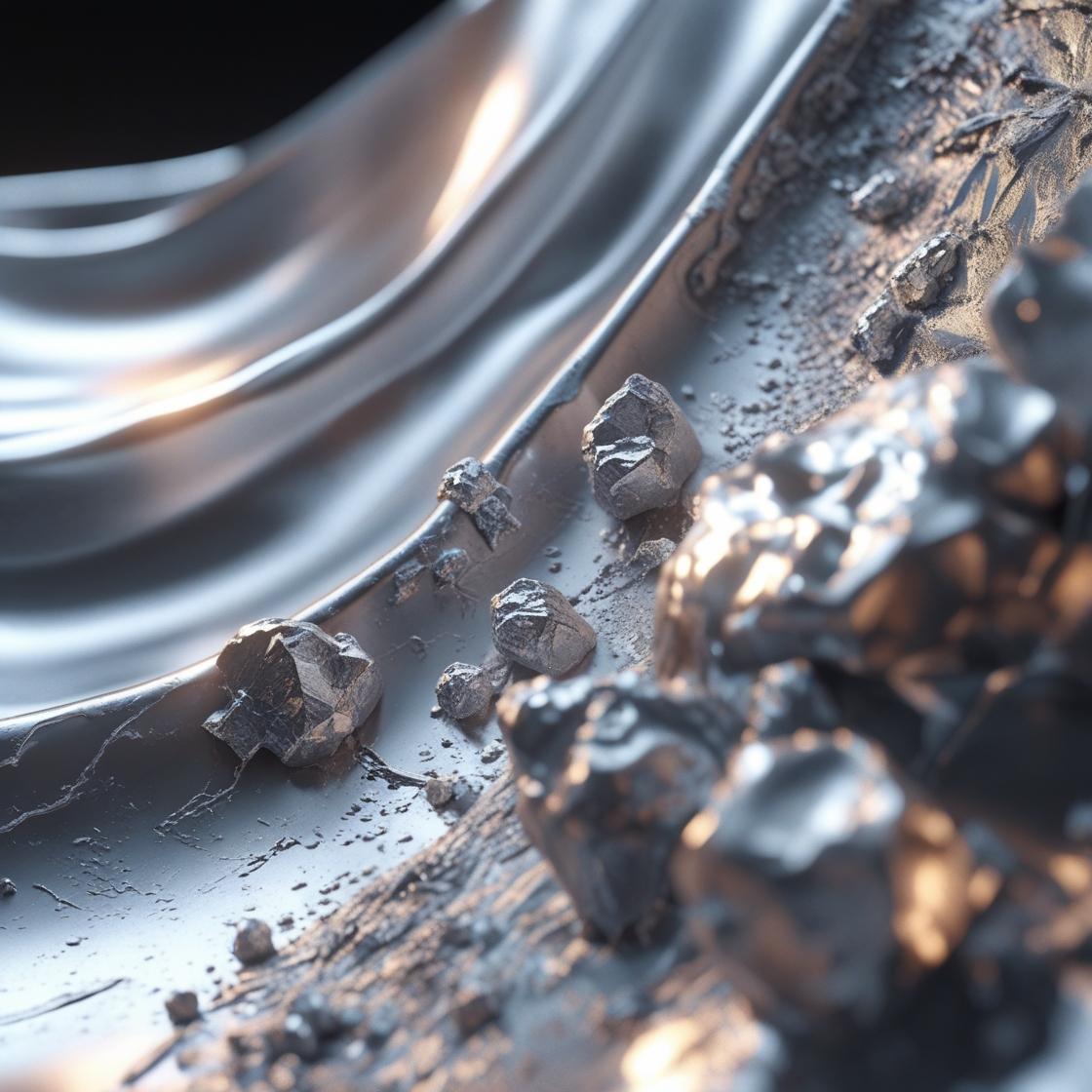
Gadolinium (Generated by Artificial Intelligence)
The element gadolinium is named in honor of the Finnish chemist and mineralogist Johan Gadolin (1760–1852), who is recognized for his pioneering work on rare earth elements. Gadolin discovered yttrium—the first rare earth element (more precisely, yttrium oxide)—in 1794. This naming was proposed by Jean Charles Galissard de Marignac.
Gadolinium occurs in various minerals alongside other lanthanide elements. Its primary sources include rare earth minerals such as monazite, bastnäsite, and gadolinite. Its abundance in the Earth’s crust is relatively low. Commercially, it is separated from other lanthanides through complex processes such as ion exchange and solvent extraction during the processing of these minerals.
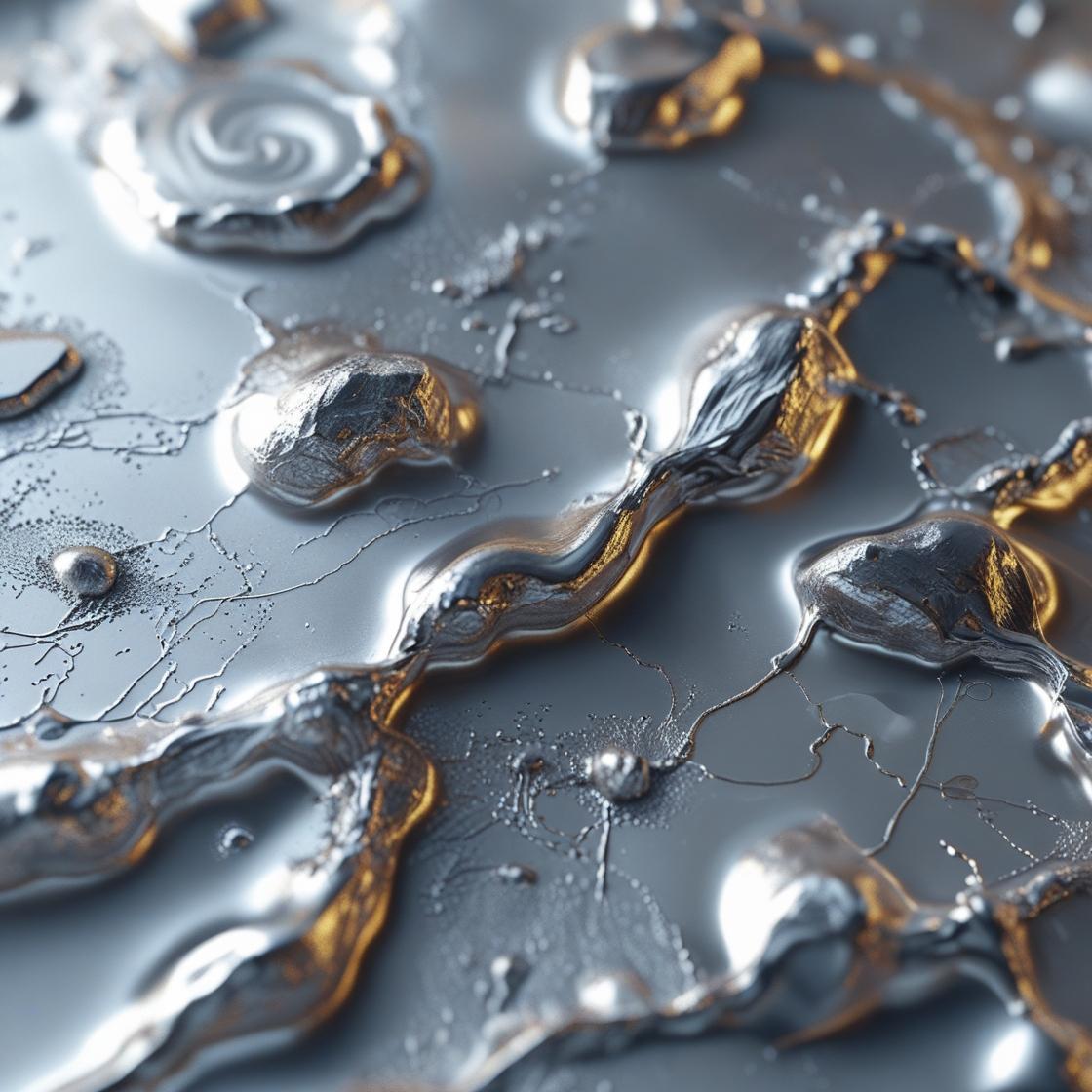
Gadolinium is a bright silvery-white metal. It is relatively stable in dry air but slowly oxidizes in moist air, forming a loose oxide layer on its surface. Its melting point is 1313 °C and its boiling point is 3273 °C. The atomic radius is approximately 234 pm and its electronegativity is 1.20. It reacts slowly with water and more rapidly with acids, releasing hydrogen gas. The most common and stable oxidation state in its compounds is +3. Gadolinium exhibits ferromagnetic properties near its Curie point of about 20 °C (293 K); above this temperature, it becomes paramagnetic. It is one of the elements with the highest thermal neutron capture cross sections, particularly the isotope ¹⁵⁷Gd.
Gadolinium has six stable isotopes found in nature (¹⁵⁴Gd, ¹⁵⁵Gd, ¹⁵⁶Gd, ¹⁵⁷Gd, ¹⁵⁸Gd, ¹⁶⁰Gd) and one very long-lived radioactive isotope (¹⁵²Gd). The isotope ¹⁵⁸Gd is noted as significant in sources, as it is the most abundant naturally occurring isotope of gadolinium (approximately 24.8%).
Gadolinium has several important applications due to its unique magnetic and nuclear properties:
Gadolinium has no known biological role. The toxicity of pure metallic gadolinium and its insoluble compounds is considered low. However, free gadolinium ions (Gd³⁺) are toxic. Therefore, when used in medical applications—as MRI contrast agents—gadolinium ions are bound to organic molecules in a process called chelation to facilitate rapid excretion from the body and reduce toxicity. In rare cases, particularly in patients with impaired kidney function, the use of certain gadolinium-based contrast agents can lead to a serious condition called nephrogenic systemic fibrosis (NSF). Like other reactive metals, gadolinium powder can pose a fire hazard.
National Center for Biotechnology Information. "Gadolinium." PubChem Compound Database. Accessed May 31, 2025. https://pubchem.ncbi.nlm.nih.gov/compound/23982.
TÜBİTAK Bilim Genç. "Gadolinyum." *Periyodik Tablo - Bilim Genç*. Accessed May 31, 2025. https://bilimgenc.tubitak.gov.tr/periyodik-tablo/gadolinyum.

Gadolinium
Periodic Table | 6 | ||||||||
|---|---|---|---|---|---|---|---|---|---|
Chemical Symbol | Gd | ||||||||
Atomic Number | 64 | ||||||||
Group | Lanthanides | ||||||||
Atomic Weight | (157.25) g/mol | ||||||||
Electron Configuration | [Xe] 4f⁷5d¹6s² | ||||||||
Appearance | Silvery-white metal | ||||||||
Density | 7.90 g/cm³ | ||||||||
Melting Point | 1313 °C | ||||||||
Boiling Point | 3273 °C | ||||||||
Atomic Radius | ~234 pm | ||||||||
Electronegativity | 1.20 | ||||||||
Electron Affinity | Unknown | ||||||||
Important Isotopes | ¹⁵⁸Gd (natural, stable, most abundant), ¹⁵⁷Gd (high neutron capture) | ||||||||
Year of Discovery(ies) | 1880 | ||||||||
Discoverer(s) | Jean Charles Galissard de Marignac | ||||||||
Etymology(s) | Named after Finnish chemist Johan Gadolin | ||||||||
Classification and Basic Properties
Discovery
Origin of the Element’s Name
Natural Occurrence
Physical and Chemical Properties
Isotopes
Applications
Biological Importance/Effects and Precautions