


This article was automatically translated from the original Turkish version.
Did you know that one of our cities has been included in UNESCO’s Creative Cities Network? Gaziantep is a city where history, culture, geography, and flavor have all merged into one pot. It is possible to explore the city center in a single day, but if you allocate two days, you can savor the experience and fully enjoy the local flavors.
In Gaziantep, restaurants, hans, and historical structures are concentrated in the city center. Therefore, you can visit all major sites on foot without needing a car. Most of the restaurants and historical sites frequently seen on social media are located in the area known locally as Kale Altı, which saves you considerable time.
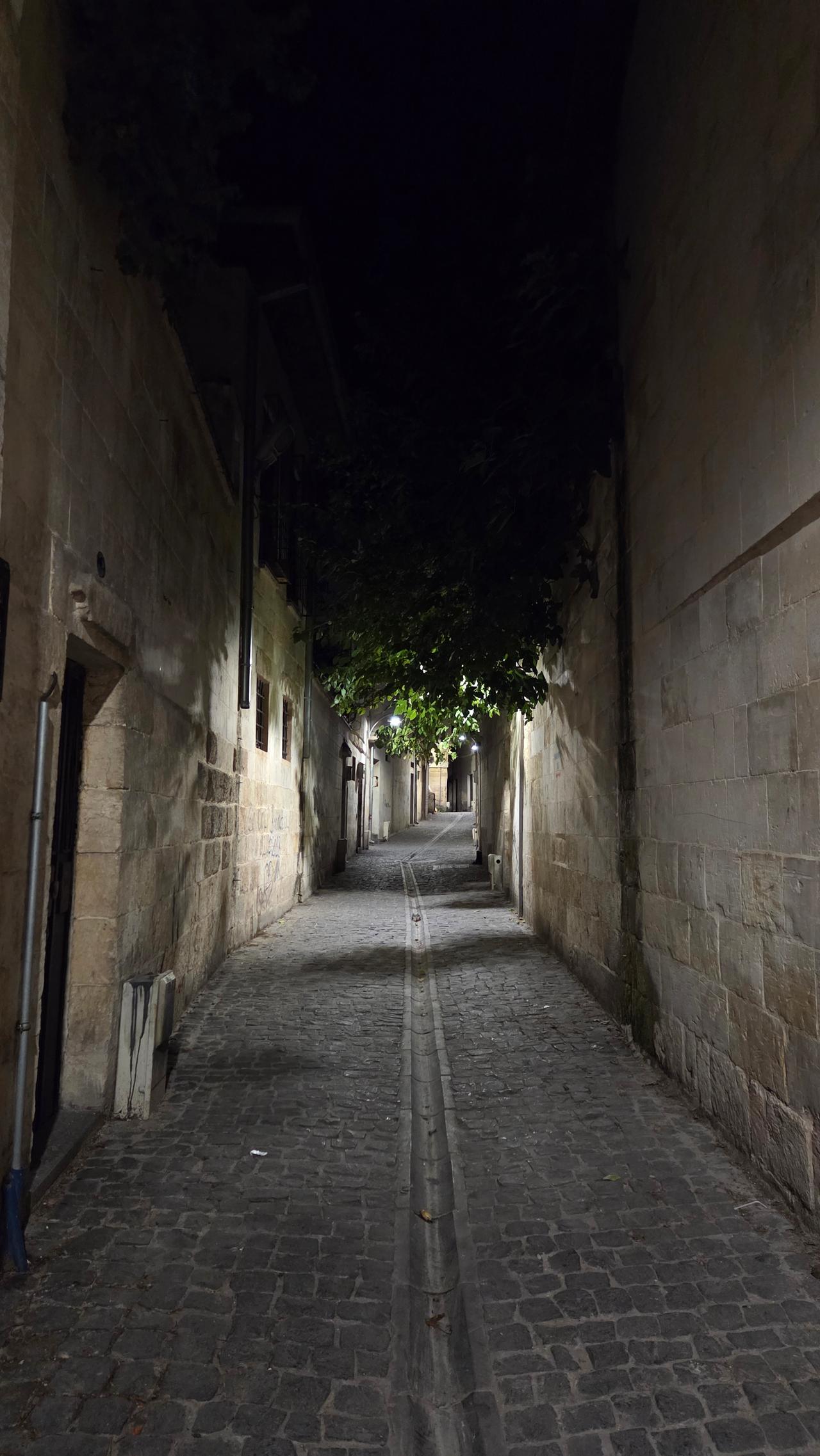
A Street in the Center (Photo: Sümeyra Uzun)
Located right at the heart of the city, the castle transports you into the depths of history with its grandeur. Its foundations are said to date back to the Chalcolithic period (approximately 6,000 years ago). Built as an observation tower during the Roman era, it took its current form under Byzantine Emperor Justinianus (AD 527–565). Its circular structure with 12 towers is striking; Evliya Çelebi recorded 36 towers during his time. It was later restored by the Mamluks, Dulkadiroğulları, and Ottomans. After restoration work began in 1989, it was opened to visitors. When we visited, unfortunately, it was under renovation due to earthquake damage, but the surrounding area is still worth exploring.
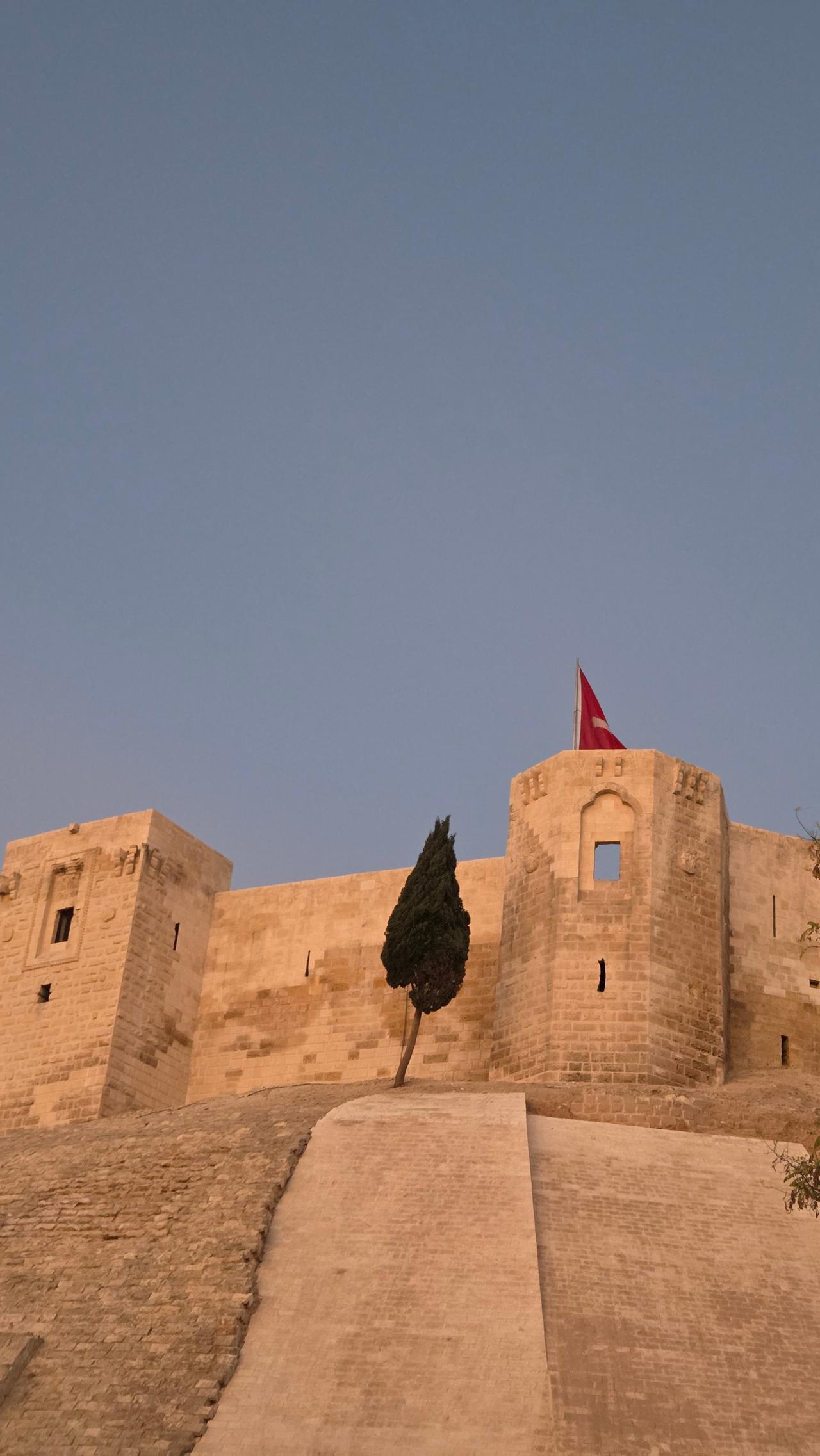
Gaziantep Castle (Photo: Sümeyra Uzun)
Directly opposite the castle, this small and modest mosque is known locally as İki Şerefeli because of its two-tiered minaret. It was built before 1677 by Şirvani Seyit Mehmet Efendi, who is believed to be a descendant of Hz. Hüseyin. According to legend, gold and silver were buried beneath its foundation to enable its reconstruction if it were ever destroyed. Its pulpit can be hidden into a niche in the wall using a sliding mechanism.
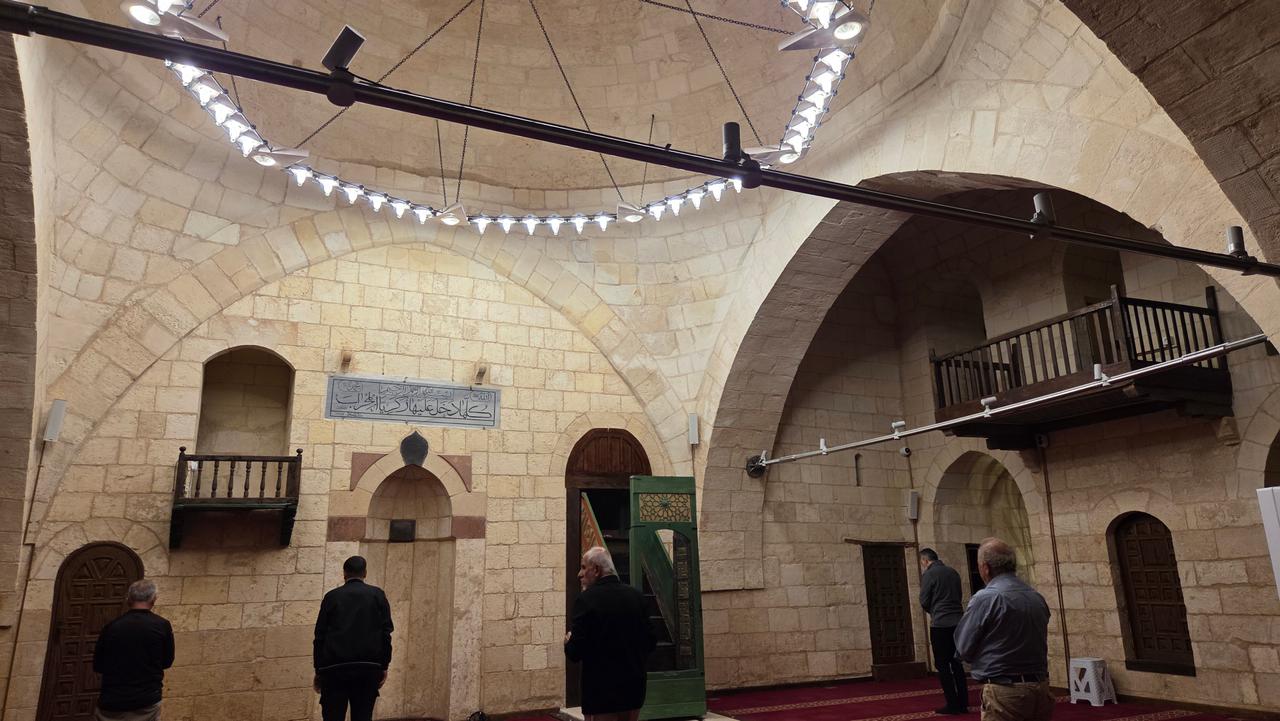
Şirvani Mehmet Efendi (İki Şerefeli) Camii (Photo: Sümeyra Uzun)
About a 20-minute walk from the castle. Originally built in 1892 as Valide Meryem Church, it was later used as a prison before being converted into a mosque. It is one of the city’s largest mosques. The building, constructed in Gothic style, stands out for its stonework. Its original bell, weighing one ton, is now exhibited at the Gaziantep Museum. The mosque is locked outside prayer times. When we visited after the evening prayer, the prayer hall was closed. You can walk around the courtyard and view the interior from the entrance. Of course, do not miss attending a prayer time.
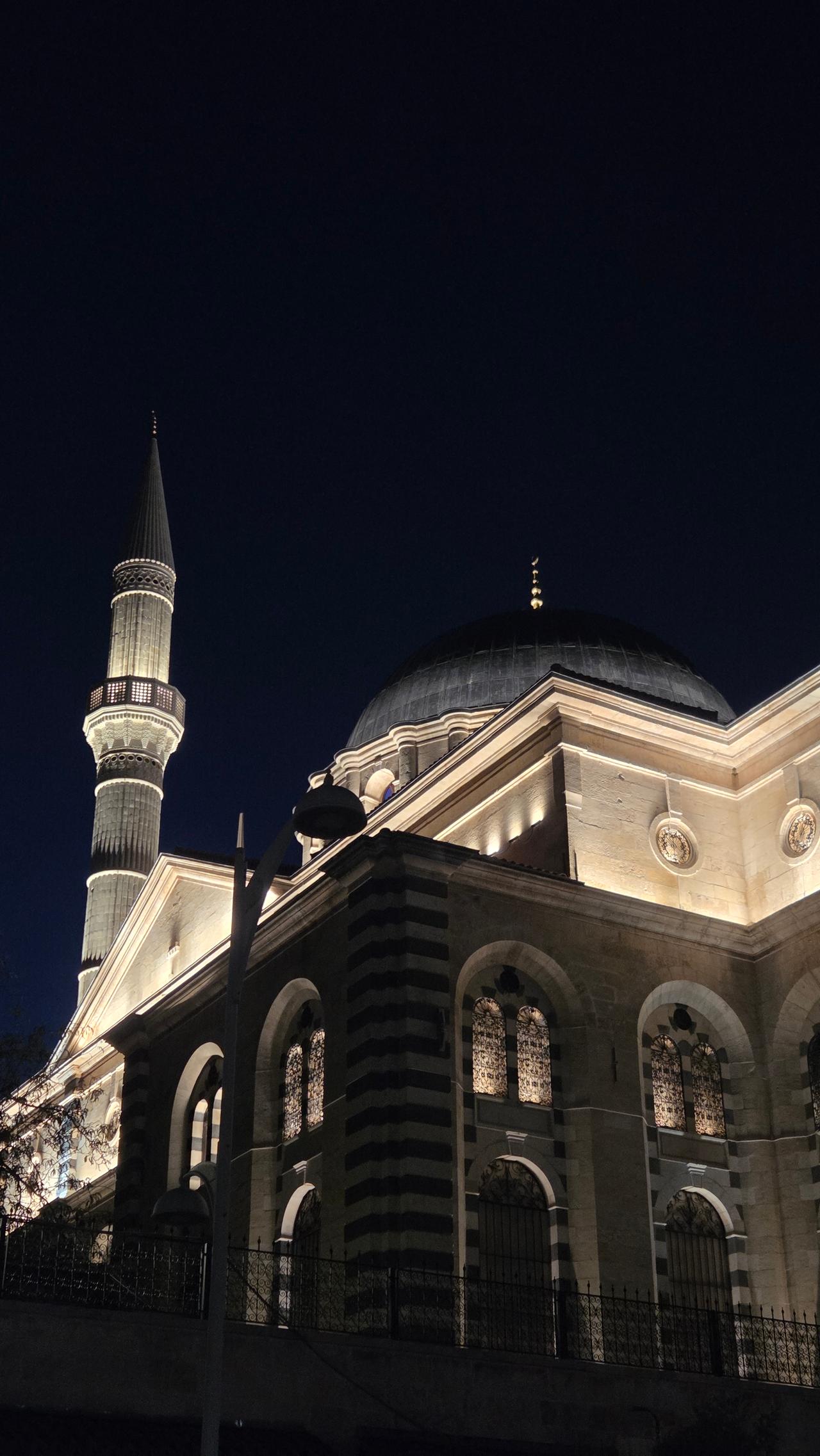
Kurtuluş Camii (Photo: Sümeyra Uzun)
I would say this is the soul of Gaziantep. As you wander among wooden-shuttered shops, you feel as if you are traveling back in time. Handcrafted copper items—cezve pots, trays, and more—are all made with exceptional craftsmanship. A small tip: Do not make your first purchase from the shop you enter; compare prices and always bargain. Also, do not forget to carry cash.
Immediately following Bakırcılar Çarşısı. With a 250-year history, it is one of the city’s most authentic markets. It got its name Almacı because goods were once sold by the grain. Here you will find spices, dried fruits, pestil, sweets—anything you could want. Prices are reasonable and quality is high. My recommendation: Be sure to buy the green almond candy!
Numerous historical hans are scattered throughout the city center. Each has a different concept, but most contain cafés. Be sure to visit Yeni Han, located to the left before reaching Bakırcılar Çarşısı, because it houses a 500-year-old cave! Today it functions as a café. Do not leave the city without seeing a cave preserved within the urban fabric and turned into a café.
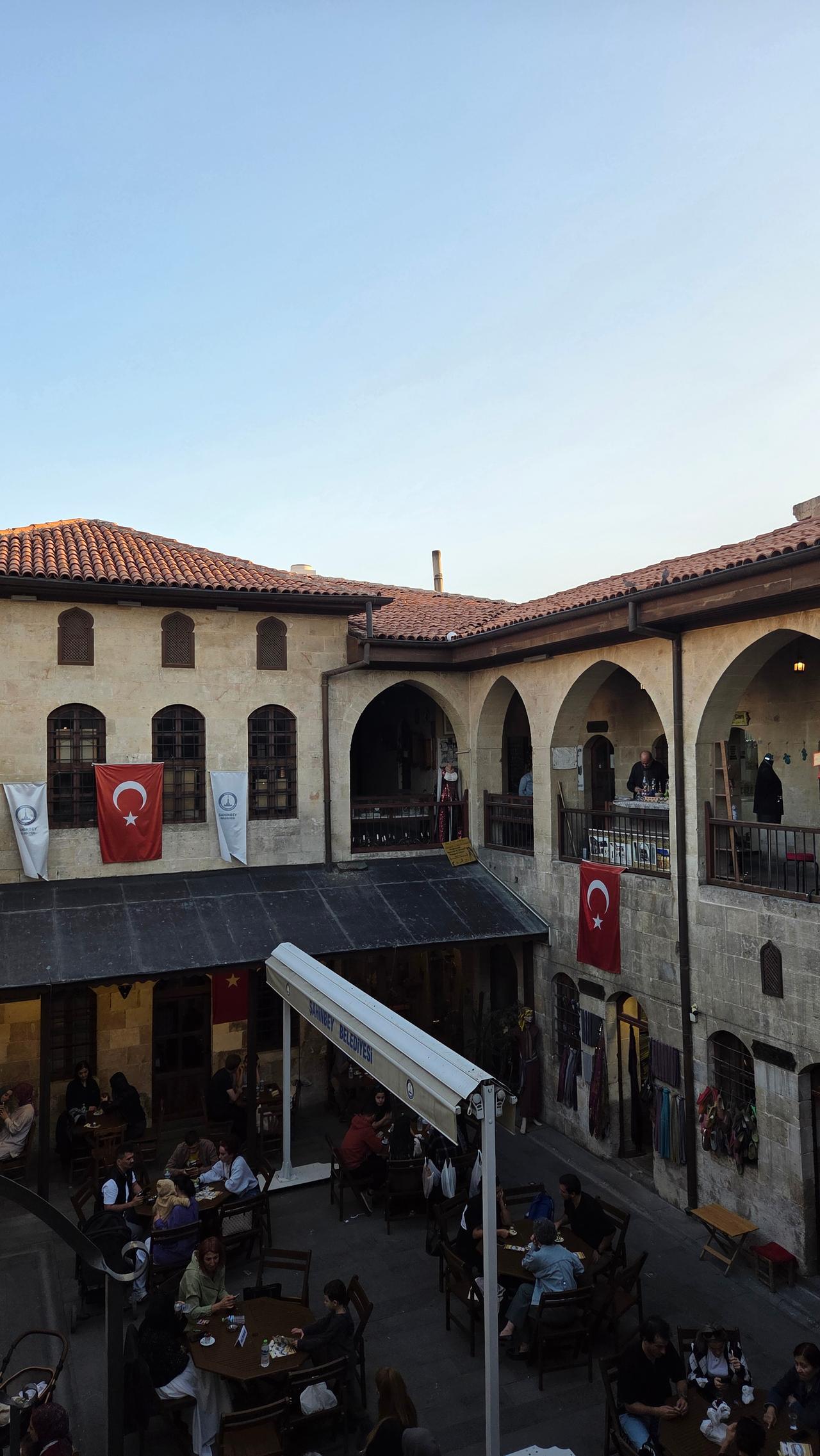
Gümrük Han (Photo: Sümeyra Uzun)
Located a short distance from the center, it is absolutely worth a brief taxi ride. The museum turned out to be much larger than I expected. A separate room has been dedicated to the Gypsy Girl Mosaic; you pass through a soundproofed corridor into a dark room where the mosaic is revealed directly before you. The museum consists of two buildings, and you can walk across glass bridges between the mosaics. Arriving early in the morning helps reduce crowds, but encountering tour groups is unavoidable. My advice: Follow the tour groups. Let them ascend to the second floor to see the Gypsy Girl Mosaic first, then go up immediately after them and examine the mosaic in quiet solitude. My favorite aspect of the museum is being able to approach the mosaics as closely as you wish. Unlike other museums, there are no barriers in front of the mosaics—you can examine each piece in detail at your leisure.
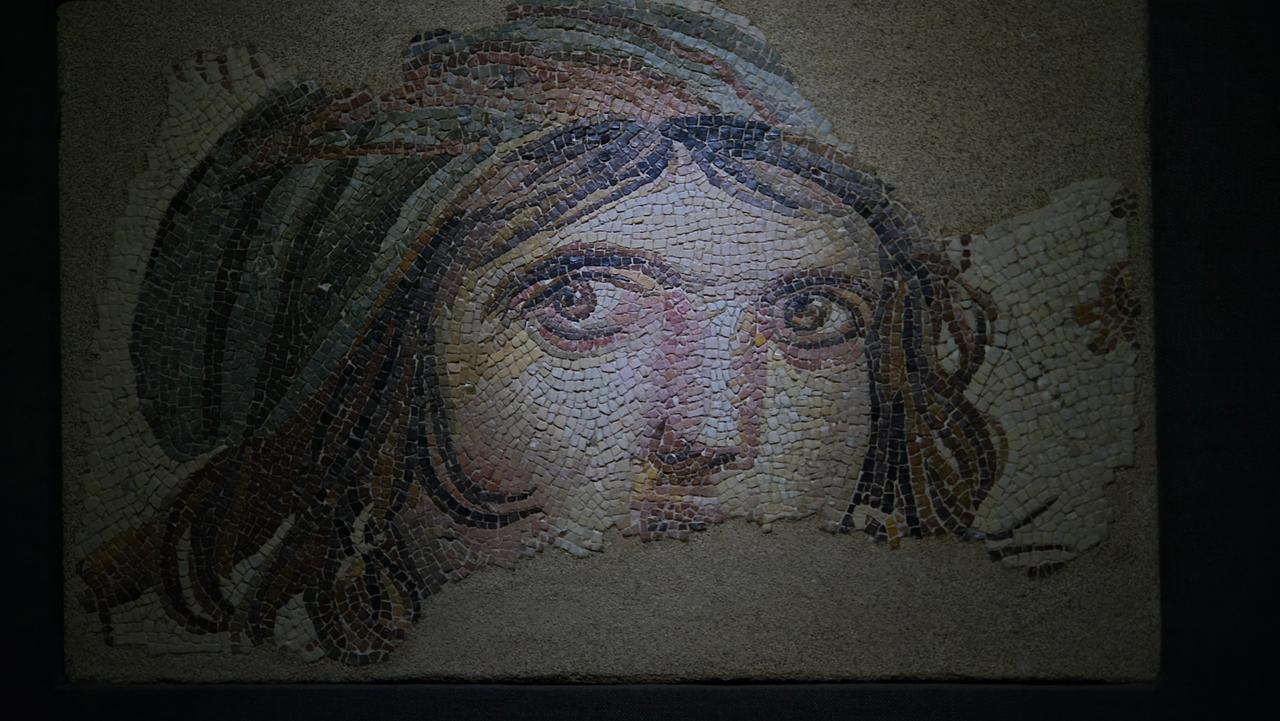
Gypsy Girl Mosaic (Photo: Sümeyra Uzun)
These are the essential sights in the city center. But now, you might be wondering: What should we eat? Will we be left hungry?
Contrary to popular belief, Gaziantep cuisine does not stand out because of its spices. Instead, it presents dishes in their simplest and most flavorful form. The city’s atmosphere rises not on oxygen but on kebab smoke.
For breakfast, there are specific beyran soup shops in the center. These soup vendors typically open at 5 a.m. Some even close by 7 a.m. Their motto is: Beyran is drunk in the morning. According to local residents, drinking this soup prevents illness. They say it is full of antioxidants. Let me share this story: At one time, a foreign private hospital opened in Gaziantep. Over time, no patients came. The management, puzzled, conducted a citywide survey and discovered that locals rarely suffered from seasonal illnesses. People attributed this to their consumption of beyran. Beyran is precisely such a soup. It comes in three varieties: plain, spicy—which locals simply call “normal”—and “atom.” If you drink the atom version, your stomach might abandon you from the heat—I believe this.
When you hear “Antep,” kebabs and liver come to mind first, but it is worth knowing that Gaziantep’s most famous dishes are pot-cooked meals. The city offers these regional delicacies in two main places. One is the Center for Culinary Arts (MSM). Run by the Gaziantep Metropolitan Municipality, this venue serves the city’s traditional dishes. The place excels in taste and hygiene. Even the bread served at your table is an experience! Kebabs are available everywhere, but when you are here, be sure to try authentic home-style dishes.
A small note: In Gaziantep, different establishments may share the same name. Always verify the location of any place recommended to you; otherwise, you may find yourself in a completely different place.
Around the castle, there are excellent restaurants serving kebabs and meat dishes. Be sure to try küşleme and patlıcan kebabı here. The city’s lahmacun is also legendary. The filling in Gaziantep lahmacun is so rich that in Istanbul, the same amount would yield three or four lahmacuns.
Baklava, katmer, and künefe are, of course, legendary, but let me tell you about a delicacy no one mentions: Şekerli Böörek. Yes, you heard correctly. This sweet resembles pide; beneath it is unsalted cheese, and on top, sugar and Antep pistachios. Say its full name because in Antep, it is pronounced: Bööörek! Try it, then pray for me.
Finally, do not forget to stop by Tahmis Kahvesi for a coffee break.
