This article was automatically translated from the original Turkish version.
+1 More
Registration Number | 1566 | ||||||||
|---|---|---|---|---|---|---|---|---|---|
Registration Date | 15.04.2024 | ||||||||
Application Number | C2023/000254 | ||||||||
Application Date | 17.10.2023 | ||||||||
Name of the Geographical Indication | Gelibolu Cheese Helva | ||||||||
Product / Product Group(s) | Cheese helva/Bakery and confectionery products sweets dough products | ||||||||
Type of Geographical Indication | Trademark | ||||||||
Applicant/Registrant(s) | Gelibolu Chamber of Agriculture | ||||||||
Address of the Registrant | Yazıcızade Mah. General Dursun Bak Cad. No:13 Gelibolu ÇANAKKALE | ||||||||
Geographical Boundary | Gelibolu district of Çanakkale province | ||||||||
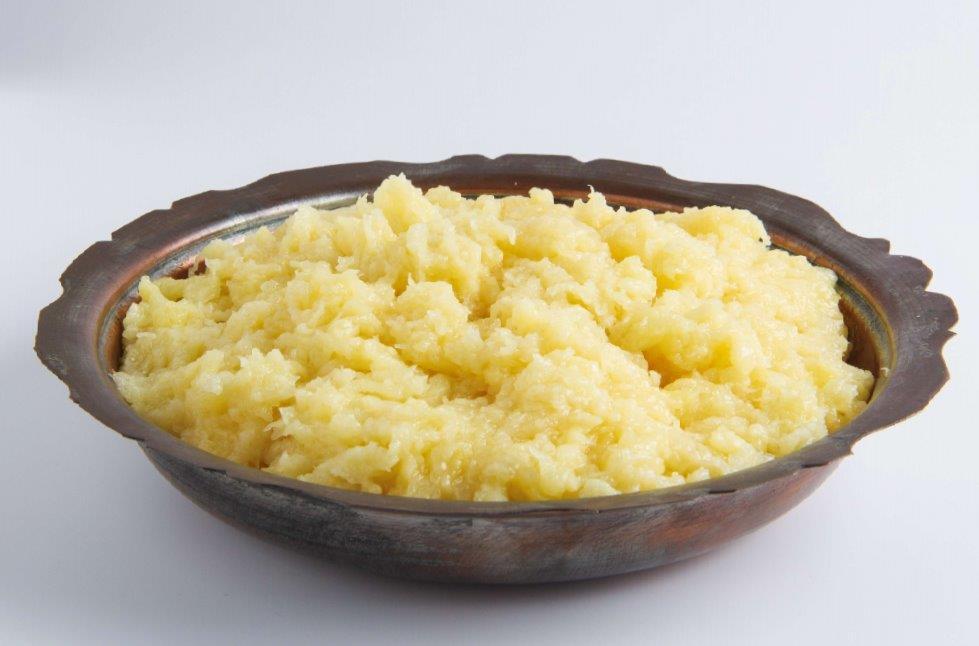
Gelibolu Cheese Halva is a traditional dessert produced in the Gelibolu district of Çanakkale Province and registered with a geographical indication mark. It is prepared by cooking fresh cheese made without teleme and/or salt, mixed with wheat flour and powdered white sugar. The product has a glossy appearance, a color ranging from cream to yellowish tones, and a fibrous texture. This halva contains no additives or flavoring agents and can be served hot or cold, either on its own or accompanied by walnuts, pistachios, kaymak, or ice cream.
Gelibolu Cheese Halva is a local dessert produced exclusively in the Gelibolu district of Çanakkale Province and registered with a geographical indication mark. It is made by combining fresh cheese produced without teleme and/or salt, wheat flour, and powdered white sugar in specific proportions, using traditional methods. This dessert is characterized by its glossy appearance and a color ranging from cream to yellowish tones, with a dominant flavor of fresh cheese. The consistency and color of the product are directly influenced by the cooking process and the skill of the producer. The use of additives, flavoring agents, or similar components is not permitted in its production.
The basic ingredients used in the production of Gelibolu Cheese Halva are:
The production process begins by heating the fresh cheese over low heat to release its moisture. Wheat flour is then gradually added and the mixture is stirred until it achieves a homogeneous consistency. This step eliminates the raw flour odor and allows the mixture to release its natural fats. Cooking is completed when the mixture no longer sticks to the pot. At this stage, powdered sugar is added gradually while continuing to stir. Due to the crystalline structure of the sugar, a fibrous texture (stringing) forms in the mixture, giving the halva its final form. The resulting product is then left to rest and cool before being served.
Gelibolu Cheese Halva can be consumed either hot or cold. It may be served with additional components such as walnuts, pistachios, kaymak, or ice cream. This dessert holds an important place in the culinary culture of Çanakkale Province and is consumed as part of daily meals as well as prepared and served during guest hospitality, gift-giving, and special occasions such as festivals and holidays.
The product must be stored in a cool, odor-free, dry environment, protected from direct sunlight. For long-term storage, refrigeration under cold chain conditions is recommended.
All production stages of Gelibolu Cheese Halva must be carried out within the boundaries of the Gelibolu district of Çanakkale Province. The dessert’s history dates back to the 1300s and is deeply integrated into the local culinary culture. Furthermore, the craftsmanship required in its preparation—including achieving a homogeneous dough consistency and obtaining the correct texture and color—establishes a direct link between the product and its place of origin.
The product was registered as a geographical indication mark in the Geographical Indications Register on 15 April 2024 under registration number 1566. The registering institution is the Gelibolu Chamber of Agriculture. The designation “Gelibolu Cheese Halva” and the geographical indication emblem must appear on the product’s packaging. In cases where these marks cannot be placed on the packaging, they must be visibly displayed at the establishment where the product is served.
The product may be placed on the market with appropriate labeling in accordance with relevant food regulations, using packaging suitable for food contact or in bulk under hygienic conditions. Decorative embellishments may be added optionally during presentation.
Inspections are conducted by a minimum three-member inspection team composed of representatives from the Gelibolu Chamber of Agriculture, the Gelibolu Chamber of Trades and Crafts, and the Gelibolu District Directorate of Agriculture and Forestry, under the coordination of the Gelibolu Chamber of Agriculture. Inspections are carried out at least once per year; additional inspections may be conducted if deemed necessary or upon complaint. During inspections, the ingredient list, production method, market placement, and usage of the indication mark are reviewed. Any non-compliance is reported to the relevant individuals or institutions. The inspection process is carried out in accordance with Law No. 6769 on Industrial Property, and the results are reported to the Turkish Patent and Trademark Office.
Turk Patent and Trademark Office. "Gelibolu Peynir Helvası." Turk Patent and Trademark Office. Accessed July 20, 2025. https://ci.turkpatent.gov.tr/Files/GeographicalSigns/5e6089e0-0c1c-4fff-b6ed-bec6941a968b.pdf
Turkish Patent and Trademark Office. "Gelibolu Peynir Helvası." Turkish Patent and Trademark Office. Accessed July 20, 2025. https://ci.turkpatent.gov.tr/cografi-isaretler/detay/10282

Registration Number | 1566 | ||||||||
|---|---|---|---|---|---|---|---|---|---|
Registration Date | 15.04.2024 | ||||||||
Application Number | C2023/000254 | ||||||||
Application Date | 17.10.2023 | ||||||||
Name of the Geographical Indication | Gelibolu Cheese Helva | ||||||||
Product / Product Group(s) | Cheese helva/Bakery and confectionery products sweets dough products | ||||||||
Type of Geographical Indication | Trademark | ||||||||
Applicant/Registrant(s) | Gelibolu Chamber of Agriculture | ||||||||
Address of the Registrant | Yazıcızade Mah. General Dursun Bak Cad. No:13 Gelibolu ÇANAKKALE | ||||||||
Geographical Boundary | Gelibolu district of Çanakkale province | ||||||||
No Discussion Added Yet
Start discussion for "Gelibolu Cheese Halva" article
Distinctive Characteristics
Ingredients and Production Method
Serving and Consumption
Storage Conditions
Geographical Boundary and Production Link
Registration and Usage
Market Placement
Inspection Process