

 Recently Added:
This article was automatically translated from the original Turkish version.
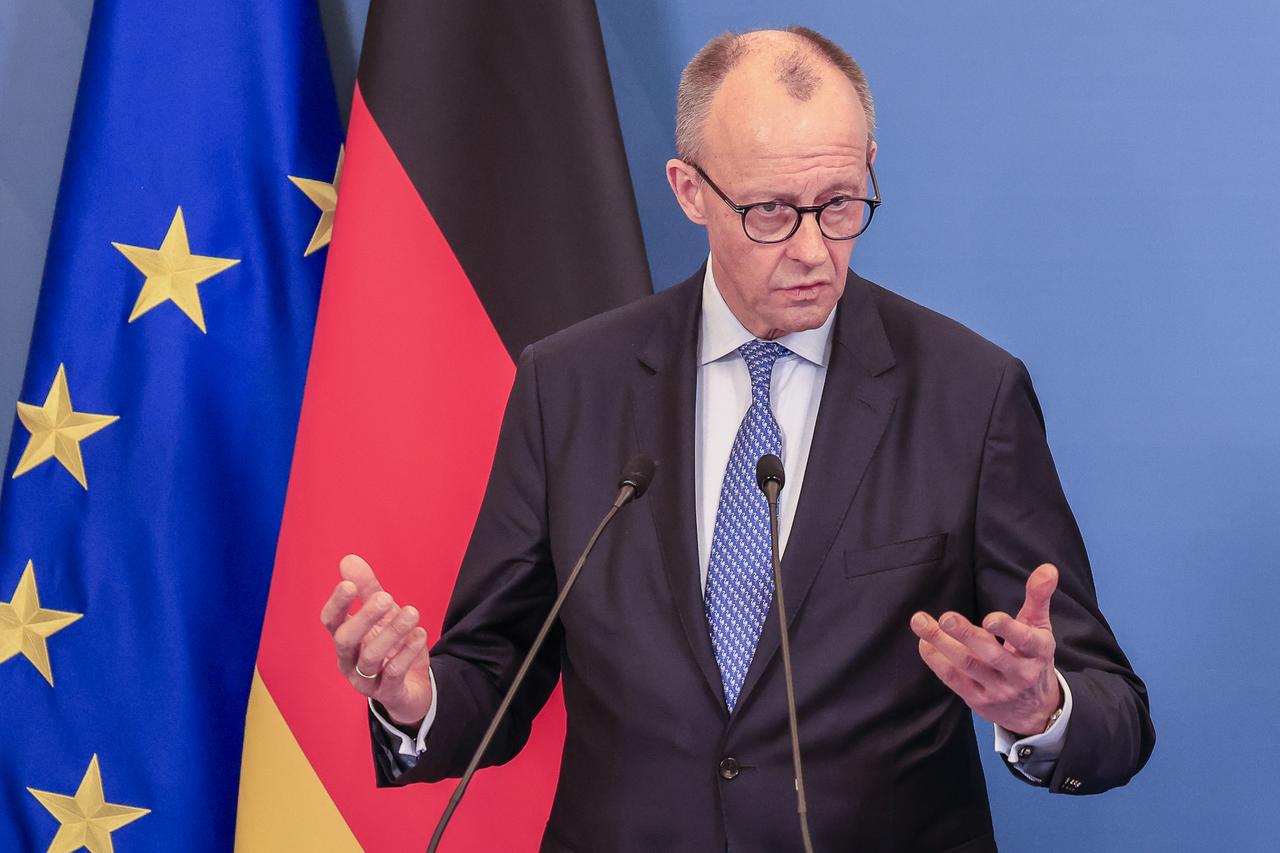
German Chancellor Friedrich Merz’s official visit to China from 24 to 27 February 2026 is a diplomatic engagement in which trade investment security and geopolitical issues are addressed through high-level talks between the leaders of the two countries.
This visit is the first to China since Friedrich Merz assumed office in May 2025 and is ongoing as of 25 February 2026.
German Chancellor Friedrich Merz meeting with Chinese President Xi Jinping 25 February 2026 - (DRM News)
German Chancellor Friedrich Merz’s visit to China takes place at a time when U.S. President Donald Trump’s tariff policies and unilateral political moves have affected the transatlantic alliance. The United States’ tariff policies have created uncertainty in the global trading system. Chinese media have claimed that the United States’ policies of “unilateralism and protectionism” are prompting European countries to reassess their foreign relations. It has also been noted that Merz seeks to deepen economic ties with China.
German Chancellor Friedrich Merz arrived in Beijing on 24 February 2026. The visit spans the period from 24 to 27 February. On 25 February Merz met with Chinese Premier Li Qiang. On the same day he met with Chinese President Xi Jinping in Beijing.
Merz and Li Qiang attended a signing ceremony held at the Great Hall of the People in Beijing. Following the talks five agreements were signed covering climate change and green transition prevention of animal diseases protocol on poultry products and sports cooperation in football and table tennis.
During his meeting with Xi Jinping Merz stated “There are challenges and we must discuss them today but the framework within which we operate is very strong and we have worked together very well over the past decade.”
In his remarks Xi Jinping said “The more turbulent and interconnected the world becomes the more necessary it is for China and Germany to strengthen strategic communication and enhance mutual strategic trust.”
Xi also emphasized that the two countries should be “reliable partners supporting each other” and act as “defenders of free trade”.
Chinese Premier Li Qiang said during the talks “As two of the world’s largest economies and influential nations China and Germany must strengthen mutual trust in cooperation jointly safeguard multilateralism and free trade and strive to build a fairer and more equitable global governance system.”
Economic issues are among the top priorities of German Chancellor Friedrich Merz’s visit to China. The bilateral trade balance between Germany and China is one of the main topics under discussion.
In 2025 the total volume of goods trade between the two countries reached 251.8 billion euros. During the same period Germany’s goods trade volume with the United States amounted to 240.5 billion euros. As a result China has once again become Germany’s largest trading partner as it was between 2016 and 2023.
In 2025 Germany’s imports from China reached 170.6 billion euros while its exports to China amounted to between 81.3 and 81.8 billion euros. As a result the bilateral trade deficit rose to approximately 89 billion euros.
It has been reported that German industrial companies experienced over 120000 job losses in 2025. According to data from the German Economic Institute direct German investments in China increased by 55.5 percent year-on-year in 2025 reaching 7 billion euros.
During his talks with Chinese counterparts Merz emphasized the need for trade relations to be balanced and fair. In a statement prior to his meeting with Xi Jinping he said “Protectionist calls in Europe are being raised louder due to the sharp increase in Chinese imports.”
Merz also stated in the same speech “I want as little protectionism as possible. A moderate appreciation of your currency will strengthen domestic demand in China and facilitate continued trade without such barriers.” Merz added “It is important to reduce market-distorting subsidies and consolidate markets in areas where we observe excess capacity.”
Chinese Premier Li Qiang emphasized during the talks the importance of preserving multilateralism and free trade.
The transformation of the automotive sector in the Chinese market is also on the economic agenda. In 2020 German brands held a 24 percent share of the Chinese automobile market but by 2025 this share had declined to 13 percent. During the same period Chinese car manufacturers’ market share rose from 35 percent to 65 percent.
China’s position in the global supply of rare earth elements and critical minerals is of strategic importance for Germany’s automotive and renewable energy equipment production. This issue is among the economic topics discussed during the visit.
Alongside economic issues German Chancellor Friedrich Merz’s visit to China also addressed security and geopolitical matters. German Federal Government Deputy Spokesperson Sebastian Hille stated that Merz would discuss security geopolitics trade and human rights with his Chinese counterparts and that the Russia-Ukraine War would also be on the agenda.
The Ukraine issue was raised during Merz’s talks with Chinese officials. Chinese President Xi Jinping stated that a solution to the Ukraine issue must be sought through dialogue and negotiation.
Prior to the visit Merz expressed the expectation that China would use its influence over Moscow to help bring an end to the war in Ukraine. China’s stance toward Russia was also discussed during the talks.
Accompanying German Chancellor Friedrich Merz on his visit to China is a large business delegation of 30 companies including senior representatives from the automotive and technology sectors.
Ralf Brandstätter Chief Executive of Volkswagen Group China stated that China sets the pace and shapes standards in areas such as electromobility software artificial intelligence and battery technology. Merz indicated during his meetings with business representatives that they seek to increase Chinese investments in Germany.
As part of the visit program Merz is scheduled to visit the headquarters of Mercedes-Benz and Siemens Energy in Beijing. He is also planned to visit the headquarters of the Chinese robotics company Unitree in Hangzhou Zhejiang Province.
The visit will continue until 27 February.
Al Jazeera. “Germany’s Merz Arrives in China for Two-Day Visit with Focus on Trade.” Accessed February 25, 2026. https://www.aljazeera.com/news/2026/2/25/germany-merz-arrives-in-china-for-two-day-visit-with-focus-on-trade
Anadolu Ajansı. “Almanya Başbakanı Merz, Jeopolitik Dengelerin Değiştiği Dönemde Çin’i Ziyaret Ediyor.” Accessed February 25, 2026. https://www.aa.com.tr/tr/dunya/almanya-basbakani-merz-jeopolitik-dengelerin-degistigi-donemde-cini-ziyaret-ediyor/3837575/
BBC News. “German Chancellor Lands in Beijing for Inaugural China Trip.” Accessed February 25, 2026. https://www.bbc.com/news/articles/c5yjpke8072o
DRM News. “LIVE: Chinese President Xi Jinping Meets German Chancellor Friedrich Merz in Beijing.” YouTube video. Accessed February 25, 2026. https://www.youtube.com/watch?v=pR1ydEswGs4
Financial Times. “Friedrich Merz Meets China’s Xi Jinping as Trade Tensions Mount.” Accessed February 25, 2026. https://www.ft.com/content/14ffb38d-498a-49a9-8b96-b7dc70f672c1
Mezha. “German Chancellor Friedrich Merz Visits China to Boost Economic Ties.” Accessed February 25, 2026. https://mezha.net/eng/bukvy/german-chancellor-friedrich-merz-visits-china-to-boost-economic-ties/
Reuters. “Germany’s Merz Lands in Beijing Hoping to Reset Ties as China Boasts Its Massive Market.” Accessed February 25, 2026. https://www.reuters.com/world/china/germanys-merz-lands-beijing-hoping-reset-ties-china-boasts-its-massive-market-2026-02-25/
South China Morning Post. “‘China Shock’ Hangs Over German Leader Friedrich Merz’s First Visit to Beijing.” Accessed February 25, 2026. https://www.scmp.com/news/china/diplomacy/article/3344366/china-shock-hangs-over-german-leader-friedrich-merzs-first-visit-beijing

The German Chancellor Friedrich Merz is on an official visit to China from 24 to 27 February 2026. The agenda includes the growing trade deficit market distortions and the rebalancing of economic relations. Chancellor Merz is accompanied by a large business delegation of 30 companies.
No Discussion Added Yet
Start discussion for "Germany's Chancellor Friedrich Merz's Visit to China (2026)" article
February 25, 2026
International and Geopolitical Context
February 25, 2026
Official Program and Meetings
February 25, 2026
Economic Agenda and Trade Balance
February 25, 2026
Security Ukraine War and Geopolitical Issues
February 25, 2026
Industry Investment and Corporate-Level Engagement