

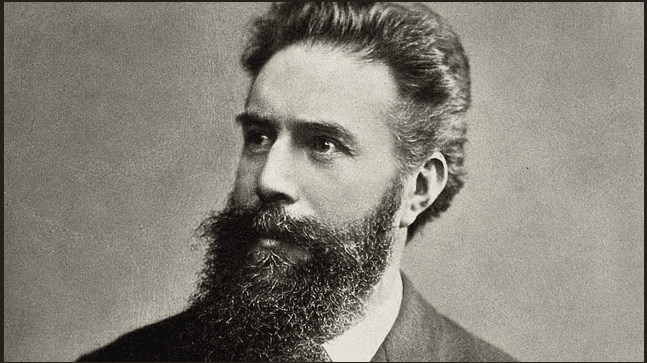

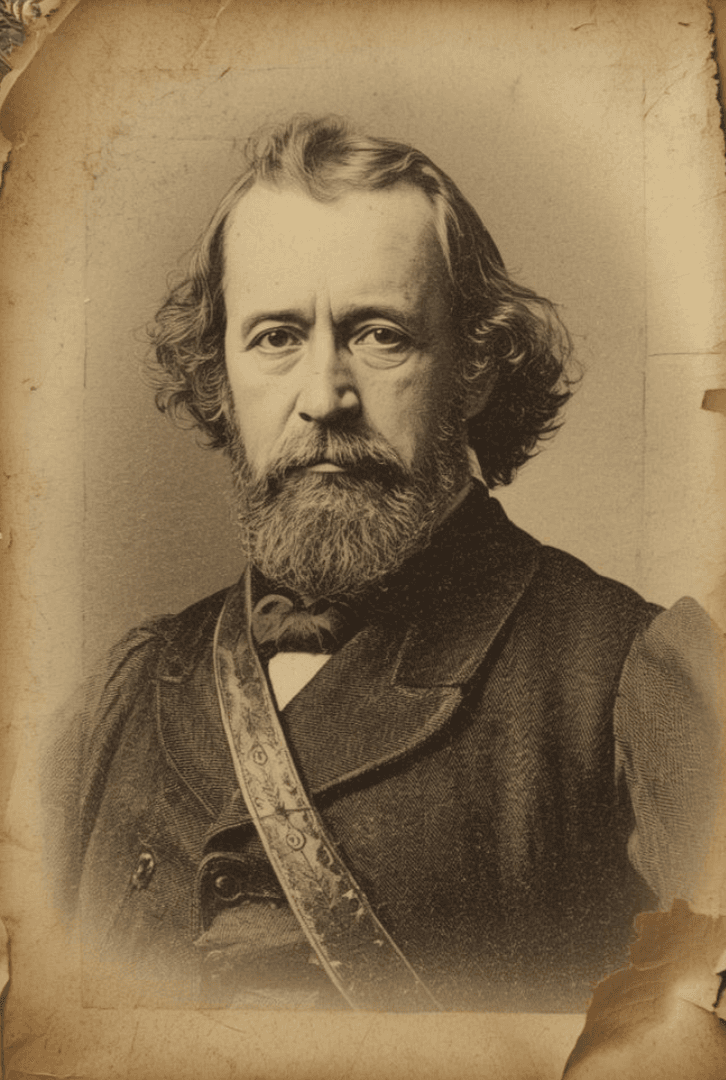
Giovanni Ceva (Yapay zeka ile oluşturulmuştur.)
Çocuk | Domitilla Francesca Costantino Innocenzo Maria Domitilla Pietro Antonio Massimo Cristoforo Carlo Francesco | ||||||||
|---|---|---|---|---|---|---|---|---|---|
Doğum tarihi | 1647-09-01 | ||||||||
Ölüm tarihi | 1734-05-13 | ||||||||
Babası | Carlo Francesco Ceva | ||||||||
Annesi | Paola Columbo | ||||||||
Eş | Cecilia Vecchi (from 15 January 1685) | ||||||||
Profession(s) | Mathematician State Official Hydraulic Engineer | ||||||||
Place of Death | Mantua, Habsburg Empire (Italy) | ||||||||
Place of Birth | Milan, Habsburg Empire (Italy) | ||||||||
Institutions Worked at | Duchy of Mantua (Gonzaga Palace) University of Mantua (1686–1734) | ||||||||
Major Works | De lineis rectis se invicem secantibus (1678) Geometria motus (1692) Opuscula mathematica (1682) | ||||||||
Education | Collegio di Brera (Milan) University of Pisa (from 1670) | ||||||||
Giovanni Benedetto Ceva was an Italian mathematician known for formulating the theorem that establishes the conditions under which lines drawn from the vertices of a triangle to the opposite sides intersect at a single point, and for independently rediscovering Menelaus’s theorem. In addition to his academic career, Ceva held high administrative posts in the Duchy of Mantua and conducted pioneering work in hydraulic engineering and mathematical economics.
Giovanni Benedetto Ceva was born on 1 September 1647 in Milan, then within the boundaries of the Habsburg Empire.【1】 His father, Carlo Francesco Ceva, was a wealthy merchant engaged in real estate transactions and collecting consumption taxes on behalf of the Duke of Milan. Carlo Francesco, who married Paola Columbo in 1639, had eight children, and most of Giovanni’s siblings joined the Jesuit order and pursued religious careers. Although detailed records of Ceva’s youth are scarce, he himself noted that this period was marked by various misfortunes and that his family opposed his academic inclinations.
Ceva received his early education at the Collegio di Brera, a Jesuit college in Milan, where he demonstrated exceptional talent in mathematics and science. In 1670 he entered the University of Pisa, where he became a student of logic professor Donato Rossetti, a proponent of atomic theory, and mathematics professor Alessandro Marchetti.【2】 During this time he adopted a scientific approach that prioritized empirical evidence over authority and rational reasoning over Aristotelian doctrines. While studying in Pisa, Ceva also interacted with members of the Accademia Romana di Matematica e Fisica and produced his first mathematical attempts on the problem of squaring the circle, though he quickly abandoned these flawed efforts.
After completing his studies in Pisa, Ceva held commercial and administrative posts in Milan, Genoa, and Mantua, eventually entering the service of Duke Ferdinando Carlo Gonzaga of Mantua. As a state official responsible for the economy of Mantua and Montferrat, he carried out duties inherited from his father, including those of auditor and commissioner. In 1686 he was appointed professor of mathematics at the University of Mantua, a title he held until his death. Following Mantua’s transfer to Austrian rule in 1707, he adapted to the new regime and was chosen by the public as a representative to swear allegiance. In later life he was honored with prestigious titles such as imperial mathematician, or “mathematico cesareo,” and general commissioner of waterworks.
Ceva’s most enduring legacy in the scientific world lies in his contributions to geometry. In his 1678 publication De lineis rectis se invicem secantibus statica constructio, he announced the theorem that determines the condition under which lines drawn from the vertices of a triangle to the opposite sides—known as cevians—concur at a single point.【3】 The theorem states that these lines intersect at a single point if and only if the product of the ratios of the divided segments equals one. In the same work, he also rediscovered and published the theorem of the ancient Greek mathematician Menelaus. Although Ceva’s discoveries were regarded as among the most important advances in synthetic geometry from antiquity to the 19th century, their full significance was not widely recognized until the 19th century, when Michel Chasles emphasized their importance.
Ceva’s scientific interests extended beyond pure theoretical mathematics to practical applications. His most comprehensive work in hydraulics was Opus hydrostaticum, published in 1728.【4】 In his official capacity in the Mantuan government, he prepared technical reports opposing the project to divert the Reno River into the Po River, successfully preventing its implementation. Additionally, in his 1711 publication De re nummeraria, he attempted a mathematical analysis of the equilibrium conditions of a small state’s monetary system, earning him recognition as one of the earliest pioneers in mathematical economics.【5】
Giovanni Ceva married Cecilia Vecchi on 15 January 1685, and the couple had seven children, some of whom died in infancy. Throughout his scientific career, he maintained continuous correspondence with leading scientists of his time to stay informed of contemporary developments. Ceva died in Mantua on 13 May 1734 at the age of 87. His death record in the court payroll registers lists him as both a commissioner and an imperial mathematician. His work on geometry remains one of the foundational pillars of modern triangle geometry.
O’Connor, J. J., and E. F. Robertson. “Giovanni Ceva.” MacTutor History of Mathematics Archive, University of St Andrews. Accessed April 1, 2026. https://mathshistory.st-andrews.ac.uk/Biographies/Ceva_Giovanni/
Rice University, Galileo Project. "Giovanni Ceva." Accessed April 1, 2026. https://galileo.library.rice.edu/Catalog/NewFiles/ceva_gio.html.
The Ohio State University. *The Theorems of Ceva and Menelaus*. Accessed April 1, 2026. https://math.osu.edu/sites/math.osu.edu/files/ceva-menelaus.pdf.
[1]
Rice University, Galileo Project, “Giovanni Ceva,” accessed 1 April 2026, https://galileo.library.rice.edu/Catalog/NewFiles/ceva_gio.html.
[2]
O’Connor, J. J., and E. F. Robertson. “Giovanni Ceva.” MacTutor History of Mathematics Archive, University of St Andrews. Accessed 1 April 2026. https://mathshistory.st-andrews.ac.uk/Biographies/Ceva_Giovanni/
[3]
O’Connor, J. J., and E. F. Robertson. “Giovanni Ceva.” MacTutor History of Mathematics Archive, University of St Andrews. Accessed 1 April 2026. https://mathshistory.st-andrews.ac.uk/Biographies/Ceva_Giovanni/
[4]
O’Connor, J. J., and E. F. Robertson. “Giovanni Ceva.” MacTutor History of Mathematics Archive, University of St Andrews. Accessed 1 April 2026. https://mathshistory.st-andrews.ac.uk/Biographies/Ceva_Giovanni/
[5]
Rice University, Galileo Project, “Giovanni Ceva,” accessed 1 April 2026, https://galileo.library.rice.edu/Catalog/NewFiles/ceva_gio.html.

Giovanni Ceva (Yapay zeka ile oluşturulmuştur.)
Çocuk | Domitilla Francesca Costantino Innocenzo Maria Domitilla Pietro Antonio Massimo Cristoforo Carlo Francesco | ||||||||
|---|---|---|---|---|---|---|---|---|---|
Doğum tarihi | 1647-09-01 | ||||||||
Ölüm tarihi | 1734-05-13 | ||||||||
Babası | Carlo Francesco Ceva | ||||||||
Annesi | Paola Columbo | ||||||||
Eş | Cecilia Vecchi (from 15 January 1685) | ||||||||
Profession(s) | Mathematician State Official Hydraulic Engineer | ||||||||
Place of Death | Mantua, Habsburg Empire (Italy) | ||||||||
Place of Birth | Milan, Habsburg Empire (Italy) | ||||||||
Institutions Worked at | Duchy of Mantua (Gonzaga Palace) University of Mantua (1686–1734) | ||||||||
Major Works | De lineis rectis se invicem secantibus (1678) Geometria motus (1692) Opuscula mathematica (1682) | ||||||||
Education | Collegio di Brera (Milan) University of Pisa (from 1670) | ||||||||
Origins and Early Life
Education and Development of Scientific Formation
Mantua Period and Administrative Service
Key Discoveries in Geometry and Ceva’s Theorem
Work in Hydraulics and Mathematical Economics
Personal Life, Later Years, and Death