


This article was automatically translated from the original Turkish version.
+1 More
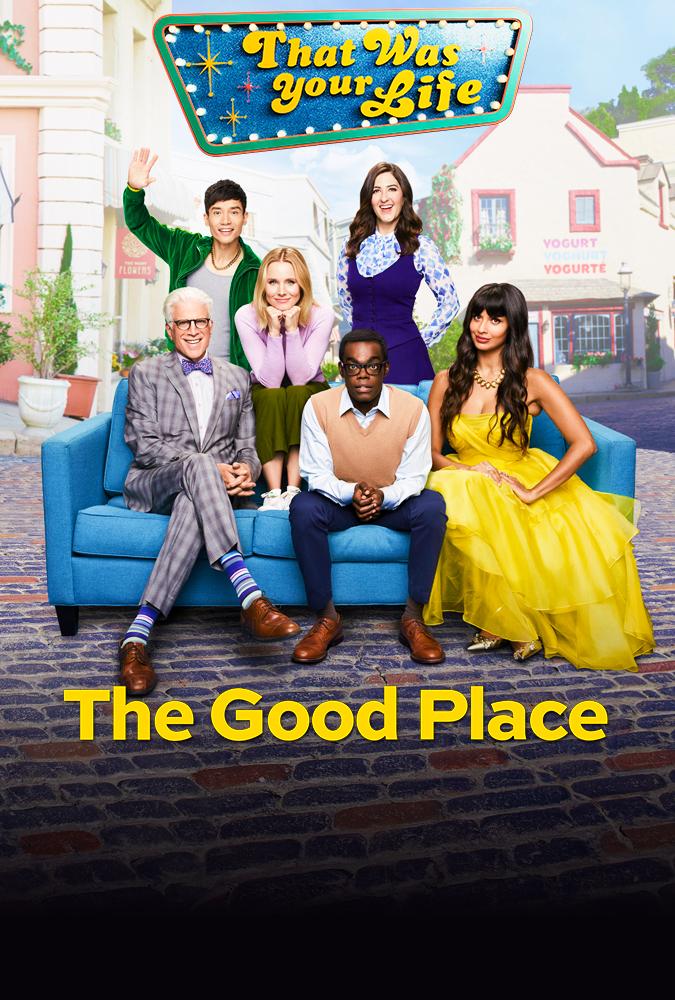
Good Place Series Poster
Type(s) | Situation Comedy | ||||||||
|---|---|---|---|---|---|---|---|---|---|
Number of Episodes | 53 (Season 4) | ||||||||
Creator | Michael Schur | ||||||||
Cast(s) | Ted Danson Manny Jacinto Jameela Jamil D'Arcy Carden William Jackson Harper Kristen Bell | ||||||||
Duration | 22 minutes | ||||||||
Release Date(s) | 19 September 2016 – 30 January 2020 | ||||||||
Broadcast Channel | NBC | ||||||||
Original Language | English | ||||||||
The Good Place is a television series that aired in the United States from 2016 to 2020, exploring themes of ethical philosophy and human nature through the comedy genre. Created by Michael Schur, the series is set in a fictional afterlife realm designated for “good people.” The show gained attention for integrating moral philosophy into a popular television format and was nominated for numerous national and international awards.
The series begins with Eleanor Shellstrop, a woman who discovers upon death that she has arrived in a place called the Good Place. Eleanor, who engaged in unethical behavior during her life, realizes she was mistakenly placed there. To prevent her true identity from being exposed, she seeks help from Chidi Anagonye, a professor of moral philosophy. As the series progresses, Eleanor and the other characters’ perceptions of this realm change, revealing that the system does not function as it appears.
The Good Place was produced by NBC as a joint production of Fremulon, 3 Arts Entertainment and Universal Television. Creator Michael Schur previously worked on series such as Parks and Recreation and Brooklyn Nine-Nine. The first episode aired on 19 September 2016 and the series concluded with its final episode on 30 January 2020. It consists of four seasons and 53 episodes. Episodes were directed by individuals including Dean Holland, Drew Goddard and Beth McCarthy-Miller.
Eleanor Shellstrop (Kristen Bell): The main character who seeks to uncover the true nature of the place that gives the series its name.
Michael (Ted Danson): A being introduced as the administrator of the Good Place; his role evolves as the story progresses.
Chidi Anagonye (William Jackson Harper): A professor of moral philosophy who attempts to teach Eleanor ethical principles.
Janet (D’Arcy Carden): An artificial being designed in human form capable of providing information on any subject.
Tahani Al-Jamil (Jameela Jamil) and Jason Mendoza (Manny Jacinto): Other characters who arrive in the Good Place, each with distinct pasts and personality traits.
The series addresses topics such as moral decision-making, the potential for personal transformation and the definability of ethical behavior. It directly references the ideas of philosophers including Immanuel Kant, Jeremy Bentham and Aristotle. Through its fictional narrative, the show examines questions such as “Can being good be learned?”, “What is moral responsibility?” and “How is justice achieved through punishment?”
Unlike traditional sitcom formats, the series distinguishes itself through multi-space design, time jumps and constructs of alternative realities. Locations such as the Good Place, the Bad Place and the Medium Place serve as concrete representations of abstract concepts. The use of music, transition effects and scene composition supports the narrative.
The Good Place received positive critical reception during its run due to its original premise and philosophical content. The series was recognized with awards such as the Peabody Award, AFI TV Program of the Year and the Critics’ Choice Television Award. In academic circles, it has been regarded as a reference material, particularly in the context of ethics education.
Some critiques have argued that the intense philosophical content in later seasons occasionally undermined dramatic balance. Nevertheless, overall, the series is regarded as a unique example among television shows for presenting ethical themes in an accessible and imaginative manner.
IMDb. "The Good Place (TV Series 2016–2020) - Full Cast & Crew." IMDb. Accessed May 9, 2025. https://www.imdb.com/title/tt4955642/fullcredits/.
IMDb. "The Good Place (TV Series 2016–2020) - Ratings." IMDb. Accessed May 9, 2025. https://www.imdb.com/title/tt4955642/ratings/.
IMDb. "The Good Place (TV Series 2016–2020)." IMDb. Accessed May 9, 2025. https://www.imdb.com/title/tt4955642/.
Netflix Türkiye. "The Good Place." Netflix. Accessed May 9, 2025. https://www.netflix.com/tr/title/80113701.

Good Place Series Poster
Type(s) | Situation Comedy | ||||||||
|---|---|---|---|---|---|---|---|---|---|
Number of Episodes | 53 (Season 4) | ||||||||
Creator | Michael Schur | ||||||||
Cast(s) | Ted Danson Manny Jacinto Jameela Jamil D'Arcy Carden William Jackson Harper Kristen Bell | ||||||||
Duration | 22 minutes | ||||||||
Release Date(s) | 19 September 2016 – 30 January 2020 | ||||||||
Broadcast Channel | NBC | ||||||||
Original Language | English | ||||||||
No Discussion Added Yet
Start discussion for "Good Place (TV Series)" article
Summary
Production and Broadcast History
Characters
Thematic Structure
Technical and Artistic Features
Criticism and Impact