

 Recently Added:
This article was automatically translated from the original Turkish version.
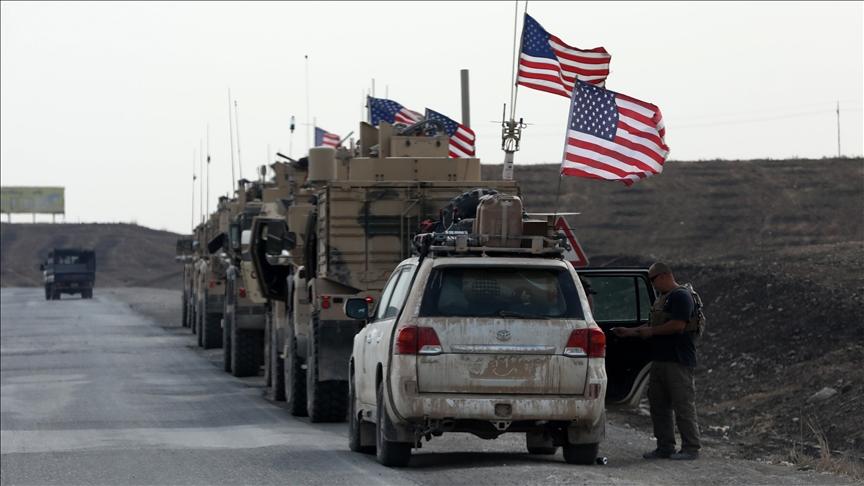
U.S. Soldiers Are Withdrawing from Syria
History | April 2025 | ||||||||
|---|---|---|---|---|---|---|---|---|---|
Region | Northeast Syria (Hasaka Raqqa Deir ez-Zor | ||||||||
Total Number of Soldiers | Reduced from 2,000 to 1,400 | ||||||||
The United States of America (USA), as of April 2025, is engaged in a process to reduce its military presence in Syria. The U.S. Department of Defense (Pentagon) has decided to withdraw from three of eight military bases located in northeastern Syria, withdrawing approximately 600 troops from the region. This step responds to changes in on-the-ground security conditions as well as the United States’ long-term military strategies.

【1】
The closed bases include the Support Site Green Village, M.S.S. Euphrates, and a smaller facility at a location known as Yer. As part of this withdrawal, U.S. military personnel and equipment stationed in the villages of Hadra and Fırat in Al-Hasakah Governorate have been relocated to the base in Rumeilan, while units in Deir ez-Zor have been moved to the vicinity of the Koniko gas field.
The U.S. military is implementing this withdrawal while maintaining operational capacity on the ground. U.S. Central Command (CENTCOM) has stated that remaining forces will continue conducting air strikes against Islamic State (ISIL) elements. At the same time, the current military structure is being consolidated into fewer and more concentrated bases.
The number of U.S. troops in Syria is expected to be reduced below 1,400 from the current level of approximately 2,000. Defense officials will conduct a new assessment within 60 days to discuss the feasibility of additional withdrawal plans. Some field commanders have recommended that at least 500 troops remain in the country.
Official statements from the Pentagon have emphasized that this process is being conducted in a “deliberate and condition-based” manner. The U.S. Department of Defense has underscored that threats in the region have been significantly reduced, particularly noting the degradation of ISIL’s operational capabilities.
The U.S. military presence in Syria began in 2015 as part of the campaign against ISIS and has been carried out primarily in cooperation with the Syrian Democratic Forces (SDF), whose core consists of the PYD/YPG, designated as a terrorist organization by Türkiye. However, following the collapse of Bashar al-Assad’s regime at the end of 2024 and the takeover of Damascus by opposition forces, the security balance has shifted. As a result of agreements between the SDF and the new Syrian administration, the SDF forces are planned to be integrated into the country’s new state structure.
As a result of these developments, the United States has moved to narrow its presence in Syria and close certain bases. However, stability on the ground has not yet been fully achieved. ISIL’s attempts to free detainees from prisons and its increasing attack activities continue to pose a serious security threat.
Israel has reacted negatively to the U.S. decision to withdraw from Syria, expressing concern that this could enhance the influence of Iran-aligned militias and Türkiye in the region. Türkiye’s potential approach toward strategic locations such as the T4 airbase and Palmyra has been labeled a “red line” by Israel. Meanwhile, Türkiye has long opposed the U.S. presence in areas where elements linked to the PKK/YPG terrorist organization operate and anticipates that the withdrawal process will alter these regional dynamics.
There are differing views within U.S. public opinion and decision-making circles regarding the sustainability of the military presence in Syria. Former President Donald Trump has previously argued for the complete withdrawal of troops, but the Pentagon has taken a cautious stance, advocating for the protection of local allies and the continuation of the fight against ISIL. It is anticipated that the new administration will initiate a comprehensive review of its Syria policy and evaluate various scenarios.
Anadolu Ajansı. "US to bring down forces in Syria to less than 1,000 in coming months: Pentagon." AA.com.tr, April 19, 2025.https://www.aa.com.tr/en/americas/us-to-bring-down-forces-in-syria-to-less-than-1-000-in-coming-months-pentagon/3542646.
Anadolu Ajansı. “NYT: ABD, Suriye'deki 3 askeri üssünü kapatarak yüzlerce askerini geri çekmeye başladı.” AA.com.tr, April 17, 2025.https://www.aa.com.tr/tr/dunya/nyt-abd-suriyedeki-3-askeri-ussunu-kapatarak-yuzlerce-askerini-geri-cekmeye-basladi/3541568.
Copp, Tara. “US to Withdraw 600 Troops from Syria.” Associated Press, April 18, 2025.https://apnews.com/article/6ebe8b39476240d194c57c7dbb54d43e.
Schmitt, Eric. “U.S. Is Withdrawing Hundreds of Troops From Syria.” *The New York Times*, April 17, 2025.https://www.nytimes.com/2025/04/17/us/politics/us-withdrawing-troops-syria.html.
TRT Haber. "ABD askerleri, Suriye'nin kuzeydoğusunda 3 askeri noktayı boşalttı." trthaber.com, April 18, 2025.https://www.trthaber.com/haber/dunya/abd-askerleri-suriyenin-kuzeydogusunda-3-askeri-noktayi-bosaltti-904492.html.
Türkiye Today. “US Troops Withdraw from 3 Outposts in PKK/YPG Terror Group-Controlled Areas in Syria.” turkiyetoday.com, April 18, 2025.https://www.turkiyetoday.com/region/us-troops-withdraw-from-3-outposts-in-pkk-ypg-terror-group-controlled-areas-in-syria-146683/.
[1]
https://www.trthaber.com/haber/dunya/abd-askerleri-suriyenin-kuzeydogusunda-3-askeri-noktayi-bosaltti-904492.html

U.S. Soldiers Are Withdrawing from Syria
History | April 2025 | ||||||||
|---|---|---|---|---|---|---|---|---|---|
Region | Northeast Syria (Hasaka Raqqa Deir ez-Zor | ||||||||
Total Number of Soldiers | Reduced from 2,000 to 1,400 | ||||||||
In April 2025, the United States entered a process to reduce its military presence in Syria. Three bases were closed and approximately 600 troops were withdrawn.
No Discussion Added Yet
Start discussion for "Gradual Reduction of the United States' Military Presence in Syria (April 2025)" article
April 19, 2025
Base Closures and Force Realignment
April 19, 2025
Numerical Reduction and Future Scenarios
April 19, 2025
Political and Geopolitical Context
April 19, 2025
Allies and Regional Impacts
April 19, 2025
Strategic Reassessment in U.S. Public Opinion and Leadership