

This article was automatically translated from the original Turkish version.
Location | Syrian Arab Republic | ||||||||
|---|---|---|---|---|---|---|---|---|---|
Overthrown Regime | Ba'ath Regime | ||||||||
Newly Established Government | Ahmad al-Sharaa Government | ||||||||
Key Dates | Bashar al-Assad leaves the country and the Ba'ath regime effectively ends the capital effectively falls under opposition control 8 December 2024: Regime forces withdraw from government institutions in Damascus Full control of Suwayda province and the provincial capital of Quneitra changes hands 7 December 2024: Opposition takes control of Homs city center 6 December 2024: Daraa provincial capital comes under opposition control 5 December 2024: Hama city center captured by opposition forces 29–30 November 2024: Large parts of Aleppo and the entirety of Idlib come under opposition control | ||||||||
The collapse of the Bashar al-Assad regime refers to a prolonged process of political, military, and social disintegration that effectively ended in December 2024 the authoritarian political order established by the Baath Party in Syria since 1963 and the leadership of Bashar al-Assad, who had governed the country since 2000. This process did not merely signify the overthrow of the incumbent government but also shattered the institutional continuity of the Baath regime, which for over six decades had become deeply intertwined with state apparatuses, security institutions, and social structures. Consequently, the resulting scenario reflects not a classic change of government but a fundamental regime transformation, in which core questions about who will govern the state, how, and with what instruments have been reopened.

Damascus after the Collapse of the Assad Regime (Anadolu Agency)
The collapse of the Assad regime is viewed as the final phase of a conflict cycle that began in 2011 with peaceful protests and quickly evolved into a complex civil war involving multiple actors, regional powers, and global actors. For over a decade, the regime managed to survive through severe allegations of human rights violations, forced displacements, siege and bombardment tactics, networks based on a war economy, and external military and political support. However, this resistance eroded both the functioning of state institutions and the socioeconomic fabric of society, generating lasting effects such as nationwide infrastructure destruction, demographic fragmentation, and mass refugee movements. The regime’s governance model, centered on the security apparatus, came to be defined by a climate of fear cultivated through intelligence agencies and prisons such as Sednaya; this legacy remains central to societal memory and debates on transitional justice following the regime’s collapse.
Control shifts in strategic cities such as Homs and Manbij in December 2024, the disintegration of military and security forces around Damascus, and ultimately the president’s departure from the capital and exit from the country, marked visible turning points in the regime’s collapse. International responses accompanying these developments—including Israel’s aerial strikes against specific military targets in Syria, Russia’s provision of asylum options for Bashar al-Assad and his family, and opposition groups’ attempts to establish de facto administrative structures within the country—revealed the regional and global dimensions of the collapse. During the same period, the restructuring of intelligence agencies under the new administration and appointments to key institutions such as the Defense bureaucracy and the Central Bank highlighted the tension between ensuring continuity of the state apparatus and the need for accountability during the transition.
The Baath Party seized power in Syria through a coup on 8 March 1963, fundamentally transforming the country’s political order. The state of emergency declared after the coup became the foundational legal framework shaping political life and remained in effect until 2011. Baath ideology, combining Arab nationalism, socialism, and anti-imperialism, played a decisive role in both foreign policy and domestic legitimacy narratives. During this period, the party functioned not merely as a political organization but as an overarching structure that administered all levels of the state apparatus and exercised hierarchical control over the bureaucracy.
The late 1960s and early 1970s were marked by intensified factional struggles within the Baath Party and the reorganization of military and party cadres. In 1970, the process known as the “Corrective Movement” (Haraka Tas’hihiyye) enabled Hafez al-Assad to consolidate dominance within both the Baath Party and the military, centralizing de facto power in his hands. Elected president in 1971, Assad endowed the presidency with extensive powers through the 1973 Constitution, making the executive branch dominant over both legislative and judicial institutions. Regional command structures of the party, along with unions, professional associations, and student organizations, were transformed into institutional mechanisms of social control with the character of a “front.”

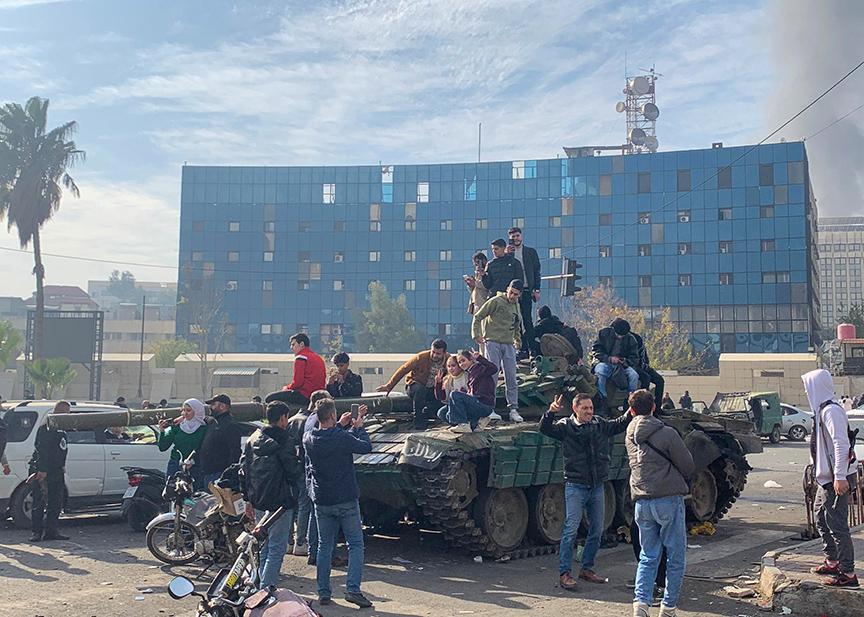
A Tank Seized after the Fall of the Baath (Anadolu Agency)
During this period, the military and security apparatus emerged as the two most critical pillars sustaining the regime. The General Staff was restructured through a recruitment policy that favored specific ethnic and sectarian groups; officers from certain rural areas were systematically placed in advantageous positions within promotion hierarchies, strengthening the regime’s loyalty networks. Intelligence agencies (al-muhaberat) were organized through multiple interlocking services and branches, tasked with suppressing political opposition and monitoring everyday life across society. Thus, the Baath regime evolved into a “security state” structure in which the party, the military, and intelligence agencies became deeply interwoven.
During Hafez al-Assad’s rule, political power increasingly became concentrated in a structure based on family ties, kinship, and narrow personal networks. The presidency, along with the party and military command structures, relied on a closed decision-making core composed of individuals belonging to or closely connected to the Assad family. In the economic sphere, alongside the statist model, patronage relationships established with specific business circles strengthened the regime’s influence over both urban middle classes and bureaucratic elites. Although formally operating within a republican framework, this system effectively transformed into a regime based on familial structures.
Bashar al-Assad’s ascension to the presidency following Hafez al-Assad’s death in 2000 appeared, from an external perspective, to signal a generational shift and raised hopes for partial reforms. The lowering of the constitutional age requirement for the presidency demonstrated the flexibility of the legal framework in response to political needs. The new president initially emphasized modernization and economic opening, promoting reforms in information technology, higher education, and the service sector.
Nevertheless, the central role of the security apparatus, repression of opposition, and the one-party political system remained unchanged. Elite military units and structures such as the Republican Guard played a critical role in ensuring both the regime’s continuity and the security of the presidential circle. This situation created a system in which major parts of the state apparatus were focused less on representing the country as a whole and more on safeguarding a specific center of power.
Before 2011, Syria presented an image of relative international stability but was marked by deep structural tensions. Politically, the dominance of a single party, the persistence of the state of emergency, and the inability of opposition groups to establish institutional presence were the primary factors intensifying societal strain.
Economically, partial liberalization policies, privatizations, and regulations encouraging foreign investment introduced from the 2000s boosted growth rates intermittently but deepened income inequality. Business circles with close ties to the Assad family gained priority access to large-scale projects, while populations in rural areas and urban poor neighborhoods benefited only marginally from this transformation. Periods of drought negatively impacting agricultural production and inadequate social policy tools further increased economic vulnerability, particularly in rural regions.
Socially, sectarian, ethnic, and regional differences formed tension zones that were officially denied but persisted in daily life. Significant asymmetries emerged in access to political and administrative positions, participation in the security apparatus, and opportunities for economic advancement among different identity groups. When combined with accumulated social discontent in urban suburbs, these asymmetries generated substantial pressure beneath the surface of society. The protest wave that began in 2011 was clearly rooted in these accumulated tensions and vulnerabilities.
The wave of protests that emerged in Syria in early 2011 gained momentum under the influence of popular movements in other regional countries such as Tunisia and Egypt, yet was shaped by local dynamics. In March 2011, the arrest and allegations of torture of children who had written anti-regime slogans on walls in Daraa triggered a local backlash. The regime’s harsh response quickly ignited nationwide demonstrations. Initially, demands focused on political reform, the lifting of the state of emergency, the release of political prisoners, and the fight against corruption. However, the regime’s characterization of the protests as a security threat and its use of live ammunition to disperse mass gatherings deepened the crisis.

A Destroyed Statue of Assad in Deir Atiyeh (Anadolu Agency)
By summer 2011, cities such as Hama, Homs, and Baniyas had become centers of intense protests, and clashes between state forces and demonstrators increasingly took on an armed character. The growing number of defectors from the military, some of whom organized under the banner of the Free Syrian Army (FSA), marked a critical threshold in the transformation of the crisis into a civil war. The emergence of opposition-controlled “fronts” in rural areas and urban peripheries eroded the regime’s de facto control across the country. At the same time, widespread reports of arbitrary arrests, disappearances in detention, and severe torture associated with the security apparatus further undermined the regime’s legitimacy in both domestic and international public opinion.
2012 and 2013 were periods during which the conflict took on a multifaceted and fragmented structure, particularly as Aleppo Homs and the surrounding areas of Damascus transformed into intense battlefields. On one hand the regime pursued a military strategy based on heavy weaponry and aerial bombardment; on the other hand numerous armed groups emerged within the opposition ranks characterized by ideological regional and organizational differences. This fragmentation prevented the formation of a centralized command structure against the regime and battlefield balances frequently shifted depending on relationships between local actors and external support.
With the weakening of the Baath regime the conflict in Syria quickly became an arena open to intervention by regional and global powers. Iran became a direct actor influencing the course of the war through political and economic support as well as through advisory activities and the deployment of allied militia groups. The participation of Lebanon’s Hezbollah on the regime’s side introduced new risks concerning Lebanon’s internal balances and its tension line with Israel. Gulf countries and some Western states intervened in the balance of power by providing political economic and at times military assistance to various opposition groups.
The emergence of ISIS which became active across territories in Iraq and Syria after 2014 further complicated the nature of the conflict. ISIS’s capture of large areas in eastern and northeastern Syria alongside Mosul posed a new security threat to both the regime and opposition groups and shifted the international community’s priorities from regime change to counterterrorism. Airstrikes conducted by a coalition led by the United States against ISIS effectively turned Syrian airspace into a multiactor conflict zone.
Russia’s direct military intervention in 2015 marked a decisive turning point in the course of the war. Russian air force bombardments in favor of the regime facilitated the repulsion of opposition positions particularly around Aleppo and its surroundings and enabled regime forces to recapture some lost territories. Russia’s deployment of air defense systems and bases also transformed Syria into a strategic forward outpost from Moscow’s perspective. This development transformed the conflict from a purely internal war into a theater of influence competition among major powers.
Türkiye’s operations driven by concerns over border security refugee influxes the fight against ISIS and other radical groups and the positioning of armed terrorist structures along the border further deepened the international dimension of the civil war. The occasional covert or open confrontation between different regional actors in Syria transformed the country into a battlefield where internal conflicts and external interventions became intertwined.
Despite the multidimensional crisis it faced since 2011 the Assad regime succeeded in maintaining power by pursuing strategies centered on sustaining its security apparatus based governance and preserving institutional continuity in areas under its control. One of the most notable elements of these strategies was the selective and intensive use of military force. The regime prioritized the defense of strategic zones such as the capital Damascus the coastal belt and key transportation corridors directing its resources toward securing these lines. It sought to isolate opposition-held areas through siege and heavy bombardment tactics while attempting to redirect opposition fighters and civilians to other regions via local reconciliation agreements and “evacuation corridors.”
The multilayered structure of the security apparatus played a crucial role in managing the regime’s perception of internal threats. Different intelligence services and special units formed a system in which they monitored each other while maintaining surveillance over society. This structure created a coordinated balance of fear and loyalty among the regime’s senior cadres and served as a deterrent against potential coup attempts within the military. Prisons such as Sednaya became symbols of the regime’s capacity for repression due to widespread allegations of severe torture and extrajudicial executions.

Immediately after the regime’s collapse Aleppo Center (Anadolu Agency)
Economically the regime sustained itself through a model describable as a “war economy.” State resources were distributed through a patronage system among warlords militia groups and business circles close to the regime. Channels such as border trade smuggling local taxes and fees and rents extracted from aid convoys played key roles in financing these networks. While this structure led to widespread impoverishment and vulnerability for large segments of society it enabled certain groups loyal to the regime to maintain relatively privileged positions even under wartime conditions.
External support was another factor enhancing the regime’s resilience. Military economic and diplomatic backing from Iran and Russia prevented the regime from being isolated both on the battlefield and on international platforms. Periods of negotiation and ceasefire initiatives served as “breathing spaces” allowing the regime to regroup militarily. The gradual shift in the international community’s priorities from regime change to counterterrorism created maneuvering room for the Assad administration; narratives emphasizing “stability” and “preventing state collapse” helped the regime present itself as an unavoidable interlocutor.
The convergence of all these factors enabled the Assad regime which had suffered serious legitimacy and capacity losses since 2011 to retain power until the early 2020s. However when viewed alongside the erosion of state institutions widespread societal trauma and fractures in the country’s demographic and social fabric this same process also laid the structural groundwork that would accelerate the regime’s eventual unraveling in subsequent years.
The prolonged duration of the Syrian civil war was one of the key factors eroding the Assad regime’s military capacity both quantitatively and qualitatively. After 2011 the army suffered severe manpower losses due to casualties in combat desertions and defections. The extension of mandatory military service repeated call-ups of reservists and the emigration of a significant portion of the young male population led to a shrinking recruitment base. This process not only weakened frontline combat strength but also strained relations between the military and society. Families experienced growing anxiety over military service becoming in effect an “indefinite obligation” and this discontent became one of the channels of opposition to the regime.
In terms of frontline organization the regime was unable to maintain uniform control across all areas of the country for most of the war. Strategic priorities were focused on defending Damascus the coastal belt and major transportation arteries; many rural areas and small settlements outside this framework were periodically left under the control of opposition groups or other armed actors. This fragmented control structure weakened the regime’s claim to national sovereignty and created conditions for the emergence of de facto “distinct zones of authority.” Indeed in later years of the conflict complex arrangements emerged in which the regime’s presence in certain areas was limited to bases control points and secure corridors while daily governance was carried out by local militias or opposition structures.
Another military turning point was the regime’s inability to conduct large-scale operations without external support. The maintenance ammunition and technical personnel requirements of the air force the dependence of ground forces on armored vehicles artillery and logistical support became impossible to meet without material training and advisory assistance from allies such as Iran and Russia. This situation caused the regime’s army to gradually transform into a structure sustained by external support and increased the influence of external actors in decision-making processes. While militia formations and local defense units filled gaps on the frontlines in the short term they also laid the groundwork for the fragmentation of the command chain and the weakening of central authority’s control over security after the war.
The prolonged civil war created a structural erosion that undermined the functionality of state institutions in Syria and damaged the legitimacy of the Assad regime. The central administration largely lost its capacity to collect taxes provide basic public services and maintain legal order in areas heavily affected by the conflict. Disruptions in the delivery of services such as electricity water healthcare and education combined with long-term infrastructure decay and the emigration of qualified personnel weakened the state’s regulatory role in daily life. In some regions populations were forced to meet their basic needs through humanitarian organizations local councils or de facto power holders; this eroded the perception of the state as the sole authority.

A Visual of One of the Collective Graves in Humus (Anadolu Agency)
War economy and widespread corruption became another factor accelerating institutional erosion. While state institutions directed their resources intensively toward financing the war and protecting circles close to the regime, bureaucratic mechanisms of bribery, commissions, and favoritism became part of daily life. The imposition of additional costs on goods and people passing through checkpoints under the guise of “informal taxes,” combined with the rapid erosion of state employees’ salaries, contributed to the defection of some public sector workers to opposition forces. Thus, the state apparatus became deeply intertwined with the war economy; certain institutions serving the regime became identified in public perception with economic exploitation and arbitrary practices.
This process rendered the regime’s legitimacy controversial both domestically and internationally. Domestically, large segments of the population began to perceive the state not as a provider of security and welfare but as an instrument of coercion and economic pressure. Abroad, reports on human rights violations, allegations of chemical weapons use, and forced displacements permanently damaged the Assad regime’s international image. Diplomatic efforts to partially soften relations with certain regional countries in specific periods were insufficient to alter this perception. In the long term, the weakening of institutional capacity became one of the fundamental factors undermining the regime’s ability to maintain full control over national unity and laid the groundwork for the collapse that followed.
International pressure mechanisms activated shortly after the outbreak of the civil war in Syria gradually narrowed the regime’s economic and diplomatic maneuvering space, increasing its vulnerability. Sanctions imposed by many countries, led by the United States and the European Union, targeted individuals and institutions linked to the Assad regime, the energy and financial sectors, specific companies, and banking channels. These sanctions limited the regime’s access to external financing and severely restricted Syria’s foreign trade, investment, and banking relationships. The most severe impact of the sanctions was felt by large segments of a population already worn down by war conditions, deepening anti-regime discontent.
Diplomatically, the Syrian regime appeared increasingly isolated on international platforms for much of the conflict. UN resolutions, discussions in the Human Rights Council, and reports from various independent investigative mechanisms strengthened allegations that the regime had committed war crimes and crimes against humanity. Negotiation processes and ceasefire initiatives conducted during certain periods temporarily constrained battlefield violence but failed to produce a lasting political solution, casting doubt on the Assad regime’s capacity to generate peace through compromise.
At the regional level, the Syria file became an inseparable part of neighboring countries’ security and domestic policy agendas. Transnational security threats, activities of radical groups along border areas, and competition among regional powers through their proxy actors in Syria kept the Assad regime under continuous external pressure.
Israel’s aerial strikes against specific military and security targets within Syria added further pressure on the regime’s heavy weapons capacity and regional alliances. At times, Syrian territory—particularly due to the activities of Iranian-linked structures—became a theater of regional power struggles, forcing the regime into a defensive posture both militarily and diplomatically. In the long term, the cumulative effect of these pressures restricted the regime’s maneuverability, increased its dependence on external support, and by the period leading to the collapse in December 2024, rendered it incapable of compensating for the internal military and institutional weaknesses it faced.
By the early 2020s, frontline positions in Syria presented a largely “frozen” picture compared to the rapid advances and retreats of the war’s early years. The country was effectively divided into distinct zones of influence: the regime retained control over Damascus, the coastal strip, significant parts of Homs, and key transportation corridors, while opposition groups were confined to a diminished but still existing enclave in the northwest. This apparent stagnation did not signify the end of conflict; low-intensity fighting, artillery shelling, and air strikes continued across various fronts.

One of the Commanders Behind the Operation That Toppled the Regime Gives an Interview (Anadolu Agency)
From the regime’s perspective, this relatively stable frontline configuration represented a military stalemate but presented a picture inconsistent with its claim of sovereignty over all Syrian territory. While the state continued to assert in official rhetoric that it exercised sovereignty over “all Syrian lands,” in practice it could only maintain symbolic presence in certain areas and was forced to delegate administrative and service provision authority to local actors or allied forces. Even within regime-controlled areas, settlements near the frontlines were frequently marked by the sound of clashes, and security barriers had become ordinary features of daily life.
The most significant change observed along the frontlines during this period was not direct large-scale territorial losses but a transformation in the nature of military presence. The number and effectiveness of regular army units declined due to the debilitating effects of prolonged warfare, while local defense units, militia networks, and pro-regime paramilitary formations became more visible on the frontlines. Some of these structures were closely tied to specific geographic regions, while others were linked to particular social groups and economic interest networks. Thus, the regime found itself embedded in a military structure based not on a centralized, unified army but on fragmented security arrangements anchored in divergent loyalties. This situation created favorable conditions for the rapid disintegration of frontline positions in later stages.
The security apparatus, long regarded as the regime’s strongest pillar during the Syrian civil war, began to show signs of erosion at both institutional and societal levels by the early 2020s. Years of conflict generated intense fatigue within intelligence agencies and special units; personnel faced constant alert status and the psychological burden of widespread violence on the ground. This situation intensified internal discipline problems and increased cases of desertion and corruption, weakening from within the apparatus’s image as an all-seeing and all-controlling structure.
Within security institutions, dissatisfaction with the course of the war and the regime’s policies became more frequently expressed, particularly among mid-level officers and staff. While this discontent did not always translate into open political opposition, it manifested through delays in implementing orders, flexible enforcement on the ground, or practices of deliberate neglect. In some regions, tensions emerged between security units and local militias over authority, resource allocation, and spheres of influence; these tensions occasionally escalated into clashes and even murders. Thus, the regime’s internal security architecture moved away from appearing as a closed, unified structure and instead fragmented into competing substructures.
Defections, though less visible and more fragmented than the mass desertions of the war’s early years, became an increasing strategic risk for the regime around 2023–2024, particularly in areas of critical importance. Some local commanders, seeking to protect their own militias and security networks, adopted de facto neutrality or even entered into tacit agreements with opposition elements, blurring the frontline equation. The regime’s central authority occasionally responded to such initiatives with harsh purges; however, each purge increased fear and mistrust within the security apparatus, prompting other personnel to question their loyalty to the regime. These fissures within the security institutions created a critical foundation for the rapid collapse in December 2024.
The regional dimension of the Syrian crisis entered a new phase by the early 2020s. Many regional actors who had long assumed the regime was on its way out now confronted a reality in which the conflict had become entrenched and the Assad regime maintained control over certain territories, prompting them to reassess their calculations. On one hand, gradual steps were taken toward normalizing diplomatic relations with the regime; on the other, efforts to gain influence over Syria’s future continued through alternative channels. Thus, a period emerged in which Damascus re-established contact with the Arab world, though these contacts remained fragile and conditional.
Throughout this period, the Syria file retained its weight on the security and domestic political agendas of neighboring countries. Refugee issues, border security, the mobility of radical groups, and transnational criminal networks became key determinants of relations with Syria. Some states viewed limited normalization with the regime as a means to achieve practical gains, particularly in areas such as border trade and security coordination; others tied political normalization to a “step-by-step” approach linked to humanitarian aid, reconstruction, and refugee returns.
From the perspective of major regime allies such as Russia and Iran, the 2023–2024 threshold marked a period in which the Syria file competed with other geopolitical priorities. Military and economic burdens elsewhere increased the cost of engagement in Syria while making the Damascus government’s dependence on these allies more visible. This dependence granted the Assad regime short-term survival but narrowed its autonomy in decision-making and rendered its internal balancing calculations more fragile. The divergent and sometimes conflicting objectives of regional actors transformed the Syrian theater into a multi-layered arena of competition, leaving the regime caught in a difficult equation requiring adaptation both internally and externally. All these developments generated signs that the mounting pressure on the regime before its sudden collapse in December 2024 was not confined to the military domain but had also reached a critical threshold on diplomatic and economic levels.
In the final weeks of autumn 2024, a front line that had remained relatively stable for years rapidly disintegrated. In the northwest, opposition forces organized under Hayat Tahrir al-Sham (HTS) had signaled “be ready” to southern groups approximately a year earlier and had begun preparing for a coordinated operation along the north-south axis. Clear indicators of this preparation emerged on 27 November with clashes against regime forces in the western countryside of Aleppo and the rapid territorial losses that followed.
On 29 November, units under HTS leadership captured a series of settlements along the periphery of Aleppo city, breaking the regime’s critical northwest defense line. This development meant the regime was forced to retreat on this scale for the first time in over five years. By 30 November, opposition groups had established control over much of Aleppo city center and had achieved de facto dominance throughout Idlib province. Thus, regime control along the Aleppo–Idlib axis dissolved within a short period.

After the Regime’s Fall, Damascus Square (Anadolu Agency)
The capture of Hama city center on 5 December led to the transfer of a city with special significance in the regime’s historical memory. The opposition’s dominance in Hama, long symbolized by the brutal suppression operations under Hafez al-Assad in 1982, was interpreted as the shaking of one of the symbolic foundations of the Assad family’s rule. During the same period, advances around Aleppo and Hama began threatening the internal transportation axes upon which the regime had relied for decades.
Simultaneous preparations were underway on the southern front. Active groups in the triangle formed by Damascus, Daraa, and Quneitra established a coordination structure under the name “Operation Room for the Liberation of Damascus,” uniting approximately 25 different opposition factions across the three southern governorates. Communication among commanders was largely conducted via encrypted messaging channels, and decisions were hierarchically transmitted to subordinate units. Thus, local groups that had long operated in fragmented fashion began to coalesce around shared political objectives and operational plans.
While opposition forces conducted conventional military assaults along the front lines, they also intensified psychological pressure on regime soldiers with appeals to surrender their weapons. A southern opposition commander reported receiving dozens of calls in a single night from soldiers expressing intent to surrender or defect, with a significant portion of them choosing to surrender due to family pressure. Such examples emerged as concrete indicators that by the end of 2024, the will to fight had been severely eroded among large segments of the regime army.
The most critical development following the rapid northern advance in early December 2024 was the loss of Homs and its surrounding areas in central Syria. Homs had long served as the logistical backbone of the regime, functioning as the junction connecting Damascus with Aleppo, Hama, and the coastal route. Opposition forces first made gains in several settlements within the province and then achieved full control of Homs city center on 7 December.
The anticipated “last stand” in Homs collapsed quickly; opposition forces gained control of the city within hours, not days. This revealed the collapse of the regime’s central defense strategy and its loss of capacity to mount large-scale, coordinated defense operations. The fall of Homs meant the loss of one of the final major rings encircling Damascus from the north.
Chronologically, the capture of large parts of Aleppo city center and the entirety of Idlib on 30 November, Hama city center on 5 December, and Homs on 7 December resulted in a broad belt along the Aleppo–Idlib–Hama–Homs axis falling out of regime control. This belt severely disrupted both the main roads leading into the capital from the north and the military supply lines connecting interior regions with the coast.
Significant advances also occurred on the southern front during the same days. On 6 December, the capture of Daraa city center near the Jordanian border effectively ended the regime’s attempt to reestablish control over the south since 2018. On 7 December, the entire Suwayda province and Quneitra city center fell into the hands of local opposition structures. In the north, the Syrian National Army conducted operations against PKK/YPG forces in several settlements in the Aleppo countryside, including Tel Rifat, meaning the balance on the ground was shifting not only along the regime–opposition axis but also in relation to other armed actors.
This multi-front advance meant for the regime not only territorial loss but also the unraveling of the country’s internal transportation network. After the fall of Aleppo and Hama, the possibility of reinforcements from the north was largely eliminated; with the loss of Homs, Damascus found itself encircled and logistically besieged from both north and south.
Immediately after opposition forces entered Homs city center on 7 December 2024, units advanced toward the southwestern suburbs of Damascus and reached the capital’s southern neighborhoods on the same day. As regime forces withdrew from within the city, anti-regime demonstrations intensified across various districts; with the disintegration of security units, armed opposition fighters and large crowds became visible on the streets.
By the morning of 8 December, opposition groups and demonstrators had effectively established control over many parts of the capital; regime forces had largely withdrawn from central areas housing government institutions and major arteries. Buildings belonging to the Defense and Interior Ministries, state television, and other official institutions quickly fell into opposition hands. Thus, with the loss of control over the capital, the Baathist regime that had endured since 1963 and the Assad family’s rule spanning nearly half a century effectively came to an end.

After Assad’s Departure from the Country, the Graffiti “The Doctor Fled” on the Wall (Anadolu Agency)
Individual testimonies during the fall of Damascus highlight how rapidly the security chain unraveled. A general with 37 years of service stationed in al-Nebek, north of the capital, recounted that he found no one else left in his barracks after a short time; upon hearing from civilians passing by at night that Assad had fled the country, he removed his uniform and abandoned his post. Such examples reveal the extent to which the will to fight for the regime had weakened among the upper and middle ranks of the military.
Media reports described how opposition forces seized the state television building just before dawn, entered the studio, and announced the end of Assad’s decades-long regime on air, subsequently lowering the regime’s flag and raising the three-star flag of the opposition. For decades the symbol of state power, state television briefly transformed into a platform proclaiming the dawn of a new era.
During the same period, official statements confirmed that Bashar Assad had left the capital and departed the country; it was stated that Assad had exited Syria. Russia was reported to have granted Assad and his family asylum, thereby marking the end of the family’s nearly 50-year rule.
Prime Minister of the regime, Muhammad Ghazi al-Jalali, in a video message posted on social media, declared his readiness to work with a new government chosen by the people and to transfer state files to the new leadership; he also called for no damage to public property. This statement indicated that the reality of the regime’s collapse had been accepted within the ruling elite and that at least some elements within the transition were focused on preserving state institutions.
The collapse of the Assad regime triggered rapid repercussions beyond Syria’s borders. On 8 December 2024, the day the regime lost control of Damascus, three air strikes were carried out against a security complex in the Kafr Susa district of the capital and a state research center linked to missile development. These attacks caused heavy damage to the main building of the customs administration and auxiliary buildings housing military intelligence units; the infrastructure within the research facility, where sensitive military data, equipment, and guided missile components were stored, was destroyed.
On the same day, at least seven additional targets in the southwestern part of the country were struck. Among these targets was the Khalkhala air base near the city of Suwayda. It was reported that the Syrian army had withdrawn from this base the previous night, leaving behind significant quantities of missiles, air defense systems, and ammunition. Other strikes targeted ammunition depots near the Mezzah military airfield, inflicting serious damage on the regime’s strategic weapons stockpiles.
On 9 December, a broader policy was announced with the aim of eliminating all “heavy strategic weapons” in Syria. It was declared that ground-to-air missile systems, long-range rockets and cruise missiles, coastal defense missiles, and similar heavy weaponry across the country would be systematically targeted by air strikes. It was also stated that a limited ground presence would be maintained within the 400-square-kilometer demilitarized zone established along the border between Syria and the occupied Golan Heights under the 1974 Disengagement Agreement.
This approach was justified as a means of preventing the uncontrolled transfer of Syria’s fragmented strategic weapons and potential chemical munitions into the hands of rogue actors following the regime’s fall. Thus, post-Assad Syria was defined as both a strategic blow to Iran’s influence in the region and a risk area requiring careful management due to uncontrolled arms mobility and emerging security threats.
The attacks and the subsequent doctrinal shift demonstrated that the collapse of the Assad regime was not merely an internal political event but a geopolitical rupture compelling regional states, foremost Israel, to redefine their security policies. The reinforcement of fortifications along the Golan border, the acceleration of mine-clearing operations, and the initiation of new barrier projects revealed that the change of power in Syria had quickly become central to the regional security agenda.
The events of December 2024 brought not only a military and institutional loss of power but also the rapid dismantling of the symbolic presence of the Baath regime and the Assad family’s rule. Across a vast geographic area stretching from Assad’s hometown of Latakia to Hama via Aleppo, statues of Hafez Assad and monuments associated with the regime were targeted. The public toppled statues seen as symbols of the Assad era; portraits and flags on streets were lowered and destroyed. Thus, the regime’s traces in public space began to be systematically erased.
In the capital, the presidential palace and other symbolic structures became targets for anti-regime crowds. In many neighborhoods of Damascus, particularly in mosques, the fall of the regime was celebrated after morning prayers with takbirs and slogans. On the same day, a representative speaking on behalf of the opposition on state television announced the overthrow of the regime, the release of all detainees from prisons, and the necessity of preserving the institutions of the “free Syrian state.”

The Day After the Definitive Defeat of the Baath Regime in Damascus (Anadolu Agency)
Shortly after the seizure of the state television building, the flag of the Assad era was lowered in the studio and replaced with the opposition’s three-star flag. Photographs taken by opposition members in front of historic watermills in Hama, along with images of abandoned tanks and military vehicles left along the roads leading to Damascus, documented how the regime’s presence in the visual and spatial fabric of daily life had irreversibly weakened.
This symbolic cleansing process also resonated among Syrians outside the country. Refugee communities in Lebanon, Türkiye, and other nations welcomed the fall of the regime with mass celebrations, interpreting this development as a sign of a new beginning after years of war and displacement. Thus, the collapse of the Baath regime marked not only a period of change in Syria’s memory spaces and official symbols but also the beginning of a reckoning with the past associated with the regime in the collective memory of Syrians abroad.
At the same time, the armed and political structures that overthrew the regime announced detailed measures to preserve public order in the capital. Penalties including imprisonment were prescribed for those who fired weapons randomly, damaged public or private property, or failed to surrender state-owned weapons; a curfew was imposed in Damascus from 16:00 to 05:00. HTS leader Ahmed al-Sharaa (Abu Muhammad al-Jolani) called for no approach to government institutions, stating that these institutions would remain under the supervision of the former prime minister until formally transferred. This approach reflected an effort to strike a balance: on one hand, dismantling the symbols of the old regime, and on the other, preventing the complete collapse of state apparatuses.
In conclusion, the December 2024 period constituted an era in which the military and institutional defeat of the Assad regime coincided with the rapid dissolution of the symbolic universe built around Baathist ideology and the Assad family. The simultaneous transformation of statues, flags, prisons, and state television within the same timeframe revealed that the end of the regime was not a routine change of power but a multi-layered process of regime dismantling.
The first challenge following Assad’s departure from the country was how to fill the power vacuum that emerged in the capital and former regime-controlled areas. The leadership of armed opposition groups, particularly Ahmed al-Sharaa (Abu Muhammad al-Jolani) of Hayat Tahrir al-Sham, moved swiftly to prevent this vacuum from descending into uncontrolled chaos. Initial announcements declared that the regime’s last prime minister, Muhammad Ghazi al-Jalali, would oversee state institutions “until transfer,” effectively assuming a civil custodial role. Thus, while the legitimacy of former regime figures came to an end, the goal was to ensure the bureaucratic apparatus, archives, and critical public services would transition smoothly to the new authority without abrupt collapse.
Al-Sharaa’s statement explicitly prohibited armed elements from approaching public buildings and criminalized the random firing of weapons and uncontrolled celebrations in the capital. This emphasis reflected both the new authority’s desire to position itself as a “restorer of order” and its effort to distinguish between the “militia logic” entrenched during years of war and the “state logic” it sought to reestablish. A similar approach was adopted for infrastructure and communication networks vital to daily life; for instance, telecommunications minister Iyad al-Hatib and representatives appointed by the opposition established direct contact to ensure uninterrupted telephone and internet services.

Ahmed al-Sharaa immediately after being declared President (Anadolu Agency)
Shortly after these initial arrangements, on 10 December, a statement broadcast on state television in Damascus announced that Muhammad al-Bashir would lead the interim government. Al-Bashir, a relatively unknown figure in public opinion, had previously gained administrative experience in a rebel-held enclave in northwestern Syria under the name “Salvation Government.” In his brief address, he stated he would serve as “interim prime minister” until 1 March, during which time a mixed cabinet would be formed from members drawn both from the old regime’s bureaucracy and from administrative personnel active around Idlib. The first cabinet meeting focused on the transfer of files and institutions, demonstrating that the new administration’s priority was the continuity of functioning governance rather than symbolic cleansing.
The opposition military command issued orders for fighters to gradually withdraw from within cities to reduce the presence of heavy armed elements. Parallel to this, police and internal security units linked to Hayat Tahrir al-Sham began patrolling major cities, starting with Damascus. This separation aimed to distinguish between armed groups that had operated on the frontlines during the conflict and a more “institutional” structure tasked with ensuring internal security. This distinction enabled the new authority to limit civilian contact with armed elements while presenting itself not as a “militia government” but as a “state core.”
Immediately following the change of power, the street scene in the capital rapidly transformed. Within days of Assad’s fall, banks reopened; shuttered shops lifted their gates, street cleaners returned to their duties, and traffic resumed on major arteries. Heavy armed checkpoints and armored vehicles that had been common during the war were replaced by lightly equipped security personnel and police patrols. Although numerous armed opposition fighters were visible on the streets in the first days, their numbers gradually decreased as the command’s withdrawal orders were implemented.
Economic indicators signaled at least a psychological sense of relief. The Syrian pound, which had suffered severe depreciation during the civil war, gained approximately 20 percent against the dollar in the first week after Assad’s flight. While this rise did not signify a structural economic recovery, it held symbolic importance for a population that had endured years of crisis, reflecting cautious optimism about the new era and expectations of future international financial support. A partial easing of oil and fuel shortages, accompanied by shorter queues at gas stations, marked a critical step toward restoring regular urban transportation.
Steps toward normalization were also taken in education. Schools in Damascus reopened about a week after Assad’s departure from the country; the previously intermittent education system became one of the new administration’s top priorities. In some schools, students’ faces were painted with the colors of the opposition’s three-star flag—a detail illustrating the penetration of new political symbols into everyday life.
Noticeable changes also occurred rapidly in the city’s social and cultural fabric. In the Christian neighborhood of Bab Tuma in the old city, restaurants reopened in the evening for the first time since the fall of Assad. The resumption of regular church services on Sundays reflected both the expectations of various religious communities for normalization in the new era and the opposition administration’s desire to generate legitimacy by refraining from exerting control over these domains.
One of the most prominent features of the first days after the regime’s fall was the mass celebrations observed on the streets. Thousands of people gathered for days in squares and main avenues in Damascus and other major cities following Assad’s overthrow. Large crowds of women, men, and children marched alongside armed and uniformed fighters after Friday prayers.
On the symbolic level, the process of reckoning with the regime also began rapidly. The statue of Hafez al-Assad near the campus of Damascus University was toppled and dragged along the ground by students; the crowd that gathered around it stamped on the statue and waved the new flag, expressing a collective rejection of the visual memory associated with the regime. The burning of Hafez al-Assad’s mausoleum in his hometown of Qardaha by armed individuals demonstrated that this symbolic reckoning extended geographically beyond the capital. Such acts were viewed by some opposition supporters as acts of retribution, while the new administration regarded them as a wave of anger requiring control.

Several Hours After the Fall of the Assad Regime (Anadolu Agency)
The sense of social uncertainty remained a significant factor overshadowing the atmosphere of celebration. Questions such as whether the old regime’s security apparatus had been fully dismantled, how inclusive the new administration would be, and how the safety of minority groups and those close to the former regime would be ensured were frequently raised in street discussions and private conversations. Statements made at the level of the United Nations special representative emphasized that the pursuit of justice must not devolve into “vengeance mechanisms,” reflecting the tension between the strong desire for accountability on the ground and the international community’s stance of “accountability without vengeance.”
This dual narrative—one side emphasizing victory, the other persistent fears and uncertainty about the future—became the defining characteristic of the first days after the regime’s collapse. While the transitional authority sought to maintain public order and services on one hand and manage the expectations of diverse social groups on the other, Syrian society began, for the first time since the end of thirteen years of war, to engage in open discussions about how the “next phase” would take shape.
One of the structures revealed after the fall of the Assad regime was Sednaya Prison, long known as a “human slaughterhouse.” This military-style complex became one of the central sites for systematic torture and killing practices during the rule of both Hafez and Bashar al-Assad, particularly after 2011 during the civil war. It was widely reported by multiple sources during the conflict that those detained in Sednaya were not limited to individuals accused of security-related offenses but also included political dissidents, protesters, journalists, and civilians arbitrarily arrested.
The prison complex contained two main detention facilities known as the “white building” and the “red building.” These structures reflected a hierarchical order beyond ordinary prison architecture. Detainees were transported to the prison in white trucks, referred to as “meat wagons,” and immediately subjected to severe beatings and humiliation upon arrival. Overcrowded cells, inadequate ventilation, and virtually nonexistent basic hygiene conditions transformed Sednaya into a site of both physical and psychological destruction.

Sednaya Prison After the Regime’s Fall (Anadolu Agency)
Post-regime investigations of the prison site uncovered tangible evidence of this system of violence. An “execution room” was identified within the complex, reportedly used for executions and mass killings; traces of severe violence and mass killing practices were documented on its walls and floors. It was also determined that different blocks within the complex were designed with functional distinctions between short-term interrogation centers and long-term isolation areas, ensuring that prisoners were subjected to varying regimes for the purposes of extracting information and collective punishment.
The opening of Sednaya’s doors did not merely entail the examination of a physical space; it also brought to light the policy at the heart of the regime’s security architecture. Former detainees described the forms of torture they endured, the years of uncertainty regarding the fate of their loved ones, and the psychological torment caused by the “disappeared” status. Research conducted within and around the prison compound revealed that many executed or torture-dead prisoners were often transferred to other regions without notification to their families, and in some cases their bodies were disposed of using vehicles as tools of destruction. Thus, Sednaya became a symbol of how the Assad regime’s security apparatus maintained control over society through specific mechanisms of repression.
Post-regime search and recovery operations, along with evidence collection efforts, were launched at the prison site. Search teams conducted systematic scans of collapsed structures, underground sections, and potential hidden compartments, attempting to locate individuals who might still be trapped and simultaneously aiming to preserve physical evidence for future legal proceedings. Given that Sednaya had functioned during the war as a “place of disappearance,” these efforts carried both humanitarian and legal significance, serving to protect the living and document the fate of the dead.
Following the collapse of the Assad regime, search and survey operations across the country led to the discovery of numerous mass graves, particularly in areas surrounding Damascus. One such site identified in the Baghdad Bridge region became a symbolic example of this process. Here, sacks containing human remains were found, and these remains were assessed to belong to civilians killed at different times during the conflict. The selection of this location suggested that bodies were not dumped randomly but moved systematically to locations relatively distant from populated areas yet accessible and under high surveillance.
Field observations indicated that this burial site reflected a mixed profile of individuals who died due to the harsh conditions in Sednaya Prison and other detention centers, those who disappeared while in custody, and those executed on the battlefield. The presence of bone fragments from different individuals within the same sack revealed that burials were carried out hastily and without any attempt at identification. Sacks stacked side by side, marked with numbers or symbols, alongside fragments of personal belongings, became indicators of a bureaucratic practice of death based on the dehumanization and anonymization of corpses.

The Execution Room in Sednaya Prison (Anadolu Agency)
Following the discovery of mass graves, local civil defense teams and volunteer groups began efforts to secure the sites and systematically document the evidence. Steps included opening the sacks, carefully extracting the remains, separating personal items, and recording photographic and video documentation. The goal was to establish both a physical and digital archive of evidence for future identification processes and potential trials, while also preventing looting or destruction of the sites.
The uncovering of mass graves also rekindled the efforts of families seeking information about their missing relatives. People were observed arriving at burial sites around Baghdad Bridge and other regions, hoping to learn the fate of their children, siblings, or spouses after years of silence. Some families examined clothing fragments, shoes, or personal items recovered from the sacks in search of identifying signs.
However, it remains unclear how many mass graves exist nationwide, how many individuals are buried within them, or to what extent identification processes can be completed. While it is known that numerous unregistered burial sites were established across various provinces during the course of the war, the systematic identification and forensic examination of these sites will require considerable time.
During the Syrian civil war, millions were displaced within the country or sought refuge in neighboring states, creating one of the largest forced migration movements of the 21st century. The fall of the Assad regime marked a turning point that directly affected the dynamics of return for this vast population. In the new phase, the cessation of hostilities in some of the most heavily affected areas raised the possibility of return for certain refugees; however, the physical destruction left by the war, economic uncertainty, and security concerns continued to constrain any scenario of “large-scale and rapid return.”
Among Syrians abroad, while some groups celebrated the collapse of the regime with mass festivities, others express concern about the risks of exclusion, reprisal, or renewed conflict in the new era. Individuals who have lived for many years in other countries and established new economic and social networks make decisions about returning not solely based on political and security criteria but by comparing these with the lives they have built in their host societies. Therefore, the trajectory of refugee movements in the post-Assad period has become closely linked not only to whether borders will be opened but also to how the new government defines citizenship relations and to what extent it concrete legal safeguards.
The collapse of the Assad regime brought to the forefront the question of how human rights violations committed during the war should be addressed. Torture practices in Sednaya Prison and other detention centers, mass graves discovered around Damascus and in the south of the country, and systematic attacks on civilians have become compelling evidence of the necessity for transitional justice mechanisms. Preserving evidence, recording witness testimonies, and identifying responsibility within the command chain are among the key issues debated at both national and international levels.
In this context, the fundamental tension emerges along the fine line between the demand for “justice” and the inclination toward “revenge.” For victims who have not learned the fate of their loved ones and who suffered torture and enforced disappearance, holding perpetrators accountable is not merely a legal process but also a personal and collective demand for recognition. However, it is considered critically important for the legitimacy of the transition that this demand does not devolve into collective punishment targeting broad communities or arbitrary detentions and executions in the new era.

The “White Building” in Sednaya Prison (Anadolu Agency)
Work conducted in mass graves and prisons can provide a technical foundation for a future truth commission or hybrid court. Identifying human remains, determining the circumstances of death, and systematically archiving this data are essential for establishing the chain of responsibility among command structures and field operatives.
In conclusion, the collapse of the Assad regime has not merely brought about a change of power in Syria but also initiated a process of confronting the humanitarian legacy of a thirteen-year war. The opening of Sednaya Prison’s doors, the uncovering of mass graves, the hesitations of refugees and displaced persons regarding the future, and the memories of different social segments constitute the core components of this process. How transitional justice is designed and implemented will emerge as a decisive factor directly affecting the legitimacy of the new state structure and the long-term prospects for peace and coexistence in Syrian society.
With the practical end of Bashar al-Assad’s regime in December 2024, international responses emerged rapidly and varied to some degree. Many states adopted an “optimistic but cautious” tone in their initial statements; Assad’s departure was seen as a significant threshold toward ending a conflict cycle lasting over a decade, while emphasis was placed on the need to prevent a security vacuum in the new era.
Statements from European capitals primarily highlighted the protection of civilians, the opening of humanitarian aid corridors, and the obligation of the new government to comply with international humanitarian law. Some countries indicated their readiness to support Syria’s political transition, linking this support to conditions such as an “inclusive political process,” “rule of law,” and “free elections.”
The United States and some Western actors welcomed Assad’s departure but immediately pointed to risks such as the strengthening of radical armed groups, the uncontrolled retention of strategic weapons and possible chemical capabilities, and transnational security threats. In this framework, it was stressed that the new government must demonstrate both the capacity to ensure internal security and clear adherence to international security norms.

Notes Left on the Walls of Sednaya (Anadolu Agency)
The United Nations Secretary-General and relevant representatives characterized the collapse of the Assad regime as an opportunity for the Syrian people to finally end years of suffering and called for the adoption of an “justice, not revenge” approach during the transition. Statements emphasized that all parties responsible for human rights violations must be held accountable and that this accountability cannot be limited solely to former regime officials, thereby serving as a warning to the new administration and armed groups on the ground.
Gulf countries and other actors in the Arab world associated Assad’s fall with the potential for a new chapter in regional diplomacy. Some capitals stated that Syria’s place within the Arab League could be redefined through a lasting and comprehensive political transition, while others favored a faster path toward normalization and economic cooperation. The common point was that Syria’s exclusion from the regional system is unsustainable, and the legitimacy of the new government must be strengthened through elections and institutional reforms.
For neighboring countries, the collapse of the Assad regime has been a development with direct implications not only for Syria’s internal balance but also for their own domestic politics and security priorities. Turkey, Lebanon, Jordan, and Iraq became the primary interlocutors of the Syrian crisis throughout the war, particularly concerning migration flows and border security. In the new era, their priorities are establishing a stable structure along the border, reducing the operational space of radical organizations, and placing the refugee issue within a manageable framework.
From Turkey’s perspective, the post-Assad period represents an era simultaneously fraught with risk and opportunity, due to the de facto situation in northern Syria and the size of the refugee population. On one hand, the possibility of a new wave of conflict along the national borders and the emergence of uncontrolled armed groups is a source of concern; on the other, the strengthening of a central political authority is viewed as a necessary precondition for the gradual normalization of cross-border trade and transportation routes.

A Note Left in Sednaya Prison (Anadolu Agency)
Lebanon and Jordan, due to their economic fragility and large refugee populations, closely monitor developments in Syria. For these two countries, the short-term priority is that the new government possesses the capacity to ensure uninterrupted border crossings and security coordination while limiting the mobility of radical elements. At the same time, it is expected that international community contributions to reconstruction and humanitarian assistance will be designed in a way that alleviates pressure on neighboring countries.
From the perspective of Iran and the Gulf monarchies, post-Assad Syria has become a new front in the struggle for regional influence. Iran had provided the regime with political, economic, and military support for many years, viewing Syria both as a link in the “Axis of Resistance” and as a geographic extension of its own regional influence. The fall of the regime has led to serious questioning of this strategy. The future of relations between the new government and Iran, as well as the fate of armed groups and logistical networks, remain critical uncertainties for this country.
The Gulf states have for some time adopted a dual approach to Syria: on one hand, pursuing limited diplomatic normalization with the Assad regime; on the other, maintaining political and economic channels that could serve as preparation for scenarios following Assad’s departure. With the regime change, economic support, energy projects, reconstruction tenders, and financial cooperation have come to the forefront in relations with the new administration; however, this process depends on how the new political leadership will define its foreign policy and to what extent it can stabilize internal balances.
The collapse of the Assad regime was viewed by Israel as a development containing both risks and opportunities. On one hand, the weakening of central authority in Syria raised the possibility of uncontrolled movement by Iran-linked groups and other armed entities; on the other hand, Assad’s downfall was interpreted as a severe blow to Iran’s military infrastructure built through Syria.
Israel’s short-term priority has been to prevent heavy strategic weapons—particularly long-range rocket and missile systems and air defense components—from falling into the hands of uncontrolled groups and to undermine the new regime’s potential threat to Israel. In this context, air strikes in the vicinity of the capital and in southern Syria targeted remaining arms depots, missile production and research facilities, radar installations, and air defense positions left behind by the former regime.
The security of the lines around the Golan Heights has retained its priority position in Israel’s doctrine. The separation and buffer zone arrangements established since 1974 have been reassessed following the fall of the Assad regime; steps such as mine clearance along the border, strengthening of new barriers, and enhancement of surveillance capacity have come to the fore.
Another prominent feature in Israel’s approach to the Syria file is the recognition of Syria not merely as a “threat source” but also as a diplomatic bargaining chip within the regional game. In the post-Assad era, key questions for Israel include whether the new government will limit its ties with Iran, how it will define its relationship with armed movements in Lebanon, and which purposes it will permit third parties to use Syrian territory for.
In this context, Syria continues to occupy a critical position in terms of regional power balances and security architecture. The fall of the old regime has weakened certain threat elements but has simultaneously generated new and uncertain risk domains. How Israel and other regional actors manage this uncertainty demonstrates that Syria’s transition process will be shaped not only by internal dynamics but also by external pressures and expectations.
Thus, the collapse of the Assad regime is not merely the final chapter of the civil war; it has also become the starting point for broader questions regarding how Syria will be reinserted into the regional system, which alliance networks will strengthen, and how regional security doctrines will be updated.
Anadolu Ajansı. "AA Ekipleri Sednaya Hapishanesi'ndeki İnfaz Odasını Tespit Etti." Accessed December 7, 2025. https://www.aa.com.tr/tr/dunya/aa-ekipleri-sednaya-hapishanesindeki-infaz-odasini-tespit-etti/3445089.
Anadolu Ajansı. "AFAD Ekipleri Sednaya Hapishanesinde Arama Kurtarma Çalışmalarına Başladı." Accessed December 7, 2025. https://www.aa.com.tr/tr/gundem/afad-ekipleri-sednaya-hapishanesinde-arama-kurtarma-calismalarina-basladi/3426039.
Anadolu Ajansı. "Suriye İstihbaratı Yeniden Yapılandırılacak." Accessed December 7, 2025. https://www.aa.com.tr/tr/dunya/suriye-istihbarati-yeniden-yapilandirilacak/3436939.
Anadolu Ajansı. “AA Ekibi Deyr Atiye Bölgesinde Yıkılan Hafız Esad Heykelini Görüntüledi.” Anadolu Ajansı. Accessed December 7, 2025. https://www.aa.com.tr/tr/pg/foto-galeri/aa-ekibi-deyr-atiye-bolgesinde-yikilan-hafiz-esad-heykelini-goruntuledi/0.
Anadolu Ajansı. “AA Şam’da Ceset Kalıntılarıyla Dolu Çuvalların Bulunduğu Yeni Toplu Mezarları Görüntüledi.” Accessed December 7, 2025. https://www.aa.com.tr/tr/dunya/aa-samda-ceset-kalintilariyla-dolu-cuvallarin-bulundugu-yeni-toplu-mezari-goruntuledi/3425597.
Anadolu Ajansı. “Bir Duvar Yazısıyla Suriye Devrimini Ateşleyen Gençler 'Doktor Kaçtı' Yazısıyla Hikayelerini Tamamladı.” Anadolu Ajansı, December 27, 2024. Accessed December 7, 2025. https://www.aa.com.tr/tr/yasam/bir-duvar-yazisiyla-suriye-devrimini-atesleyen-gencler-doktor-kacti-yazisiyla-hikayelerini-tamamladi/3435597.
Anadolu Ajansı. “Dünya Medyası Suriye'de 61 Yıllık Baas Rejiminin Çöküşünü Manşete Taşıdı.” Anadolu Ajansı, December 8, 2024. Accessed December 7, 2025. https://www.aa.com.tr/tr/dunya/dunya-medyasi-suriyede-61-yillik-baas-rejiminin-cokusunu-mansete-tasidi/3418247.
Anadolu Ajansı. “Esed Rejiminin İşkence Merkezi Sednaya: İnsan Mezbahası.” Accessed December 7, 2025. https://www.aa.com.tr/tr/analiz/esed-rejiminin-iskence-merkezi-sednaya-insan-mezbahasi/3424454.
Anadolu Ajansı. “Esed Sonrası Suriye’de Yeni Dönem Nasıl Şekillenecek?” Accessed December 7, 2025. https://www.aa.com.tr/tr/analiz/esed-sonrasi-suriyede-yeni-donem-nasil-sekillenecek/3418958.
Anadolu Ajansı. “Suriye Cumhurbaşkanı Ahmed Şara: Halep'le Birlikte Tüm Suriye Yeniden Doğdu.” Anadolu Ajansı, November 29, 2025. Accessed December 7, 2025. https://www.aa.com.tr/tr/dunya/suriye-cumhurbaskani-ahmed-sara-haleple-birlikte-tum-suriye-yeniden-dogdu/3757649.
Anadolu Ajansı. “Suriye Merkez Bankası Başkanlığına Meysa Sabrin Atandı.” Accessed December 7, 2025. https://www.aa.com.tr/tr/dunya/suriye-merkez-bankasi-baskanligina-meysa-sabrin-atandi/3438059.
Anadolu Ajansı. “Suriye'de Yeni Yönetimin Lideri Ahmed Şara Geçiş Döneminin Cumhurbaşkanı İlan Edildi.” Anadolu Ajansı, January 30, 2025. Accessed December 7, 2025. https://www.aa.com.tr/tr/dunya/suriyede-yeni-yonetimin-lideri-ahmed-sara-gecis-doneminin-cumhurbaskani-ilan-edildi/3466129.
Anadolu Ajansı. “Suriye'deki Sednaya Hapishanesi'nde Yer Alan Beyaz Bina.” Anadolu Ajansı. Accessed December 7, 2025. https://www.aa.com.tr/tr/pg/foto-galeri/suriyedeki-sednaya-hapishanesinde-yer-alan-beyaz-bina/146.
Anadolu Ajansı. “Suriye'nin Humus İlinde Dört Toplu Mezar Bulundu.” Anadolu Ajansı. Accessed December 7, 2025. https://www.aa.com.tr/tr/dunya/suriyenin-humus-ilinde-dort-toplu-mezar-bulundu/3753977.
Anadolu Ajansı. “Suriyeli Muhaliflerin Devrimle Sonuçlanan Şam Yürüyüşü Bir Yıl Önce Bugün Başlamıştı.” Accessed December 7, 2025. https://www.aa.com.tr/tr/dunya/suriyeli-muhaliflerin-devrimle-sonuclanan-sam-yuruyusu-bir-yil-once-bugun-baslamisti/3755449.
Anadolu Ajansı. “Suriyeyi Özgürleştirme Harekatı Komutanları Operasyonun Perde Arkasını AA'ya Anlattı.” Accessed December 7, 2025. https://www.aa.com.tr/tr/dunya/suriyeyi-ozgurlestirme-harekati-komutanlari-operasyonun-perde-arkasini-aa-ya-anlatti/3764286.
Anadolu Ajansı. “Suriye’de Savunma Bakanlığına Tümgeneral Murhef Ebu Kasra Atandı.” Anadolu Ajansı. Accessed December 7, 2025. https://www.aa.com.tr/tr/dunya/suriyede-savunma-bakanligina-tumgeneral-murhef-ebu-kasra-atandi/3438780.
Anadolu Ajansı. “Suriye’deki 61 Yıllık Baas Rejimi Çöktü.” Anadolu Ajansı. Accessed December 7, 2025. https://www.aa.com.tr/tr/dunya/suriye-deki-61-yillik-baas-rejimi-coktu/3417690.
Anadolu Ajansı. “Suriye’deki Yeni Yönetimde Bakanlık Görevleri Büyük Ölçüde Belli Oldu.” Accessed December 7, 2025. https://www.aa.com.tr/tr/dunya/suriyedeki-yeni-yonetimde-bakanlik-gorevleri-buyuk-olcude-belli-oldu/3432568.
Anadolu Ajansı. “İnfografik: Suriye’deki Son Durum.” Anadolu Ajansı. Accessed December 7, 2025. https://www.aa.com.tr/tr/info/infografik/42607.
Audiovisual Sources
Balanche, Fabrice. *Sectarianism in Syria’s Civil War*. Washington, DC: The Washington Institute for Near East Policy, 2018. Accessed December 7, 2025. https://www.academia.edu/35855218/SECTARIANISM_IN_SYRIAS_CIVIL_WAR.
Canyurt, Dilek. “Kazananı Olmayan Savaş ‘Suriye İç Savaşı’: Neden Bitmedi, Barış Nasıl Gelebilir?” *Uluslararası Yönetim İktisat ve İşletme Dergisi* 14, no. 4 (2018): 1103–1120. Accessed December 7, 2025. https://doi.org/10.17130/ijmeb.2018445672.
Council on Foreign Relations. “Syria’s Civil War.” *Council on Foreign Relations*. Accessed December 7, 2025. https://www.cfr.org/article/syrias-civil-war.
Ebrem, İlker Salih. “Suriye İç Savaşı’nın Türk Dış Politikasına ve Türkiye’nin Güvenliğine Etkileri.” PhD thesis, Bursa Uludağ Üniversitesi, 2019. Accessed December 7, 2025. https://acikerisim.uludag.edu.tr/entities/publication/53b9ed7e-af42-4c43-a5f5-43c2a1f892c3.
Holliday, Joseph. *The Assad Regime: From Counterinsurgency to Civil War*. Middle East Security Report 8. Washington, DC: Institute for the Study of War, March 2013. Accessed December 7, 2025. https://understandingwar.org/wp-content/uploads/2013/03/AssadRegime-web.pdf.
Lesch, David W. *Syria: The Fall of the House of Assad*. New Haven, Conn.: Yale University Press, 2012. Accessed December 7, 2025. https://archive.org/details/syriafallofhouse0000lesc.
Phillips, Christopher. *The Battle for Syria: International Rivalry in the New Middle East*. Revised and Updated Edition. New Haven and London: Yale University Press, 2016. Accessed December 7, 2025. https://archive.org/details/battleforsyriain0000phil.
Research Works
Reuters. "How Assad’s Government in Syria Fell." Reuters. Accessed December 7, 2025. https://www.reuters.com/graphics/SYRIA-SECURITY/MAPS/myvmbxdgwpr/2024-12-10/how-assads-government-in-syria-fell/.
Reuters. "Suspected Israeli Strikes Hit Part of Damascus, Two Security Sources Say." Accessed December 7, 2025. https://www.reuters.com/world/middle-east/suspected-israeli-strikes-hit-part-damascus-two-security-sources-say-2024-12-08/.
Reuters. "Syrian Rebels Enter Northern City of Manbij, Turkish Source Says." Reuters. Accessed December 7, 2025. https://www.reuters.com/world/middle-east/syrian-rebels-enter-northern-city-manbij-turkish-source-says-2024-12-08/.
Reuters. "World Reaction to the End of Assad Rule in Syria." Accessed December 7, 2025. https://www.reuters.com/world/middle-east/world-reaction-end-assad-rule-syria-2024-12-08/.
Reuters. “Assad’s Fall Followed Years of Bloodshed and Division.” Reuters. Accessed December 7, 2025. https://www.reuters.com/world/middle-east/assads-fall-followed-years-bloodshed-division-2024-12-08/.
Reuters. “Iron-Fisted Assad Never Quelled Syrian Rebels Who Came Back to Topple Him.” Reuters. Accessed December 7, 2025. https://www.reuters.com/world/middle-east/iron-fisted-assad-never-quelled-syrian-rebels-who-came-back-topple-him-2024-12-08/.
Reuters. “Israel Says It Will Destroy Syria’s Heavy Strategic Weaponry.” Reuters. Accessed December 7, 2025. https://www.reuters.com/world/middle-east/israel-says-it-will-destroy-syrias-heavy-strategic-weaponry-2024-12-09/.
Reuters. “Israeli Airstrikes Hit Security Complex and Research Centre in Damascus, Sources Say.” Reuters. Accessed December 7, 2025. https://www.reuters.com/world/middle-east/israeli-airstrikes-hit-security-complex-research-centre-damascus-sources-say-2024-12-08/.
Reuters. “Syria Rebels Celebrate Captured Homs, Set Sights on Damascus.” Reuters. Accessed December 7, 2025. https://www.reuters.com/world/middle-east/syria-rebels-celebrate-captured-homs-set-sights-damascus-2024-12-07/.
Reuters. “Syrian President Bashar al-Assad Has Left Damascus for an Unknown Destination, Sources Say.” Reuters. Accessed December 7, 2025. https://www.reuters.com/world/middle-east/syrian-president-bashar-al-assad-has-left-damascus-an-unknown-destination-say-2024-12-08/.
Reuters. “Syrian Rebel Chief, Former PM, Will Supervise State Bodies Until Hand Over.” Accessed December 7, 2025. https://www.reuters.com/world/middle-east/syrian-rebel-chief-former-pm-will-supervise-state-bodies-until-hand-over-2024-12-08/.
Reuters. “Syria’s Assad and His Family Are in Moscow after Russia Granted Them Asylum, Say Russian Sources.” Reuters. Accessed December 7, 2025. https://www.reuters.com/world/middle-east/syrias-assad-his-family-are-moscow-after-russia-granted-them-asylum-say-russian-2024-12-08/.
Reuters. “Syria’s De Facto Leader Says Holding Elections Could Take Up to Four Years.” Reuters. Accessed December 7, 2025. https://www.reuters.com/world/middle-east/syrias-de-facto-leader-says-holding-elections-could-take-up-four-years-2024-12-29/.
Reuters. “Syria’s New Rulers Confirm Appointment of Murhaf Abu Qasra as Defence Minister.” Reuters. Accessed December 7, 2025. https://www.reuters.com/world/middle-east/syrias-new-rulers-confirm-appointment-murhaf-abu-qasra-defence-minister-2024-12-31/.
Reuters. “Syria’s Rebels Work to Form Government, Restore Order after Assad’s Ouster.” Reuters. Accessed December 7, 2025. https://www.reuters.com/world/middle-east/syrias-rebels-work-form-government-restore-order-after-assad-ouster-2024-12-10/.
The Guardian. “Middle East Crisis Live: Syria, Gaza, Israel, Lebanon Latest Updates.” The Guardian. Accessed December 7, 2025. https://www.theguardian.com/world/live/2024/dec/13/middle-east-crisis-live-syria-gaza-israel-lebanon-latest-updates.
The Guardian. “Schools Reopen in Damascus as Celebrations over Bashar al-Assad Fleeing Syria Continue.” Accessed December 7, 2025. https://www.theguardian.com/world/2024/dec/15/schools-reopen-in-damascus-as-celebrations-over-bashar-al-assad-fleeing-syria-continue.
The Guardian. “The Army Just Ran Away: How Bashar al-Assad Lost His Brutal Grip on Syria.” The Guardian. Accessed December 7, 2025. https://www.theguardian.com/world/2024/dec/14/the-army-just-ran-away-how-bashar-al-assad-lost-his-brutal-grip-on-syria.
Tuncel, Gökhan, and Fatma Nur Özdemir. “Suriye İç Savaşı.” In *Küresel Sorunlar ve Türkiye: Göç, Terör, Yoksulluk, Çatışma, Rekabet*, edited by Abdulkadir Baharçiçek, Gökhan Tuncel, and Osman Ağır, Ankara: Nobel Akademik Yayıncılık, 2022. Accessed December 7, 2025. https://www.researchgate.net/publication/373989524_Suriye_Ic_Savasi.
Van Dam, Nikolaos. *Destroying a Nation: The Civil War in Syria*. London: I.B. Tauris, 2017. Accessed December 7, 2025. https://www.academia.edu/34031640/Destroying_a_Nation_The_Civil_War_in_Syria_2017.


Location | Syrian Arab Republic | ||||||||
|---|---|---|---|---|---|---|---|---|---|
Overthrown Regime | Ba'ath Regime | ||||||||
Newly Established Government | Ahmad al-Sharaa Government | ||||||||
Key Dates | Bashar al-Assad leaves the country and the Ba'ath regime effectively ends the capital effectively falls under opposition control 8 December 2024: Regime forces withdraw from government institutions in Damascus Full control of Suwayda province and the provincial capital of Quneitra changes hands 7 December 2024: Opposition takes control of Homs city center 6 December 2024: Daraa provincial capital comes under opposition control 5 December 2024: Hama city center captured by opposition forces 29–30 November 2024: Large parts of Aleppo and the entirety of Idlib come under opposition control | ||||||||
No Discussion Added Yet
Start discussion for "The Collapse of the Bashar al-Assad Regime" article
Historical Background
The Rise of the Baath Party and the Transformation of the State (1963–2000)
The Transition from Hafez al-Assad to Bashar al-Assad: Family-Based Leadership
Political, Economic, and Social Tensions Before 2011
The Course of the Syrian Civil War and the Assad Regime’s Resistance Mechanisms (2011–2023)
The 2011 Protests and the Transition to Armed Conflict
Internationalization of the Civil War
The Regime’s Survival Strategies
Turning Points: Medium and Long-Term Dynamics Weakening the Assad Regime
Wear and Tear in Military Balances and Frontline Degradation
Erosion of State Institutions and Legitimacy Crisis
Accumulation of International Pressure
Political and Military Developments Before 2024
Changes in the Frontline Configuration Around 2023–2024
Fissures and Defections in the Security Apparatus
Regional Actors’ Calculations
The Collapse of the Bashar al-Assad Regime (December 2025)
From Late November to Early December: Accelerated Opposition Advance
The Loss of Homs and Strategic Transit Corridors
The Fall of Damascus and Assad’s Departure from the Country
Israeli Air Strikes and the Shift in Regional Equilibria
The Symbolic Dissolution of the Baath Regime
First Days After the Regime
Construction of the Temporary Authority and Continuity of State Institutions
Resumption of Daily Life in Damascus
Social Response
The Human Dimension Memory and Transitional Justice
The Exposure of Sednaya Prison and Institutionalized Violence
The Emergence of Mass Graves and Tracing the Disappeared
Refugees Returns and Social Memory
Transitional Justice Debates and the Justice–Revenge Tension
International Reactions and Regional Equilibria
Initial Reactions to the End of the Assad Regime
Neighboring Countries and Regional Power Balances
Israel’s Security Doctrine and the Reframing of the Syria File