


This article was automatically translated from the original Turkish version.
+2 More
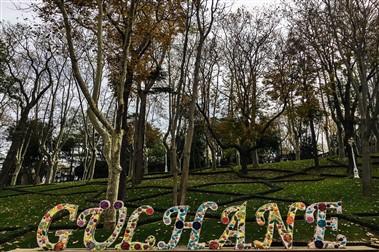
Gülhane Park
Origin of the Name | Gülhane comes from the Persian phrase meaning 'rose house'; during the Ottoman period, rose gardens existed here. | ||||||||
|---|---|---|---|---|---|---|---|---|---|
Area | It covers an area of more than 200 dunams (approximately 80 hectares). | ||||||||
Entry | It is free. | ||||||||
Gülhane Parkı, is a green space located on the historic peninsula in the Fatih district of Istanbul. Situated next to Topkapı Sarayı, the park is in close proximity to the Hagia Sophia Museum, Sultanahmet Square, and the Sea of Marmara. During the Ottoman period, roses were cultivated in the park area, giving it the name “Gülhane.” Today, the park covers an area of more than 200 dunams. It holds significance both for its natural structure and its historical heritage.

Gülhane Parkı (gulhanepark)
The history of Gülhane Parkı dates back to the 15th century during the Ottoman Empire. At that time, the park served as the outer garden of Topkapı Sarayı and was designated for use by palace personnel. The name “Gülhane” is derived from the Persian term meaning “house of roses.” Documented since 1806, the park was used for centuries in connection with the daily operations of the palace. In the 19th century, as a result of the modernization process within the Ottoman Empire, various changes were introduced to the park.
The year 1839 holds historical significance for the park, as it was here that the Tanzimat Fermanı was proclaimed. This event is regarded as the beginning of the reform movements in the Ottoman Empire. The area where the decree was announced is marked today by the “Tanzimat Monument” located within the park. In the late Ottoman period, due to the relocation of the sultans to Dolmabahçe Sarayı and the extension of the European railway line to Sirkeci, part of the park suffered damage; some trees were cut down and certain structures were removed. In the 1880s, with the permission of Sultan Abdülhamid II, the Museum-i Hümayun (today’s Istanbul Archaeology Museums) was constructed within the park. In 1912, following renovations carried out by Istanbul’s mayor at the time, Cemil Paşa, the park was officially opened to the public as a recreational area.
During the Republican period, Gülhane Parkı acquired new functions and meanings. On 24 November 1928, the ceremony in which Mustafa Kemal Atatürk introduced the Latin alphabet to the public was held in this park, marking its importance in Republican history. Additionally, in 1926, the first Atatürk statue in Türkiye, created by Austrian sculptor Heinrich Krippel, was installed in Gülhane Parkı.

Gülhane Parkı (T.C İstanbul Valiliği)
The vegetation of Gülhane Parkı consists of various tree species including plane, chestnut, linden, oak, and maple. Some of these trees have been alive for over a century. Seasonal ornamental plants such as hyacinth, tulip, and narcissus are also planted in the park, offering seasonal variety, especially during spring. The park’s natural structure is enhanced by tree-lined walking paths, grassy areas, and decorative fountains. Natural habitats for bird species are also present within the park. Located near sea level, the park features a sloping topography toward the Bosphorus.

Gülhane Parkı (T.C. İstanbul Valiliği)
In addition to its natural features, Gülhane Parkı stands out for its historical and cultural structures. The Goths’ Column, located within the park, is a structure dating back to the Roman period. This approximately 15-meter-high marble sütun was erected in commemoration of Emperor Justinian I’s victory over the Goths. The park also houses the Museum of the History of Islamic Science and Technology, designed by Professor Fuat Sezgin, which contains various artifacts related to the history of Islamic science.
Located at the entrance of the park, the Alay Köşkü was used during the Ottoman period as a pavilion for sultans to observe official processions. Today, this building serves as the Ahmet Hamdi Tanpınar Museum Library. Additionally, the Prof. Dr. Fuat Sezgin and Dr. Ursula Sezgin Library of the History of Science, opened in 2017, is among the cultural structures within the park and contributes to its information archive.
Gülhane Parkı offers recreational and relaxation areas accessible to diverse user groups for various purposes. The park includes walking paths, picnic areas, and open green spaces suitable for individual or group outdoor activities. Dedicated play areas for children are also available within the park. Due to its central location, Gülhane Parkı is easily accessible. It can be reached via the Gülhane stop on the Kabataş-Bağcılar tram line, and it is also possible to reach the park on foot from the Sirkeci station of Marmaray.

Gülhane Parkı (T.C. İstanbul Valiliği)
“Gülhane Parkı.” Gülhane Park. Accessed April 4, 2025.https://gulhanepark.org/.
“Gülhane Parkı.” İslam Bilim ve Teknoloji Tarihi Müzesi. Accessed April 4, 2025.http://ibttm.muzeler.gov.tr/TR-84343/gulhane-parki.html
“İstanbul’un Koru ve Parkları: Gülhane Parkı.” T.C. İstanbul Valiliği. Accessed April 4, 2025.http://www.istanbul.gov.tr/istanbulun-koru-ve-parklari-gulhane-parki.

Gülhane Park
Origin of the Name | Gülhane comes from the Persian phrase meaning 'rose house'; during the Ottoman period, rose gardens existed here. | ||||||||
|---|---|---|---|---|---|---|---|---|---|
Area | It covers an area of more than 200 dunams (approximately 80 hectares). | ||||||||
Entry | It is free. | ||||||||
Historical Development of the Park
Natural Structure and Surroundings
Cultural Significance
Visitor Experience and Accessibility