

This article was automatically translated from the original Turkish version.
+1 More
Conservation Status | 4 'EN' (Endangered) 6 'VU' (Vulnerable) Taxa | ||||||||
|---|---|---|---|---|---|---|---|---|---|
Characteristic Feature | Ice stalactites in winter, high discharge in summer | ||||||||
Phytogeographic Region | Predominantly Irano-Turanian (%35.1) | ||||||||
Endemism Rate | 8.07% (30 Endemic Taxa) | ||||||||
Flora Diversity | 57 Families, 225 Genera, 359 Taxa | ||||||||
Distance (District Center) | 27 km | ||||||||
Distance (Provincial Center) | 25 km | ||||||||
Elevation and Basin | Cliff valley structure, fed by snow and groundwater | ||||||||
Waterfall Width | Approximately 8 Metres | ||||||||
Height (Drop) | 56 - 60 Metres | ||||||||
Location (Province/District) | Bitlis / Mutki | ||||||||
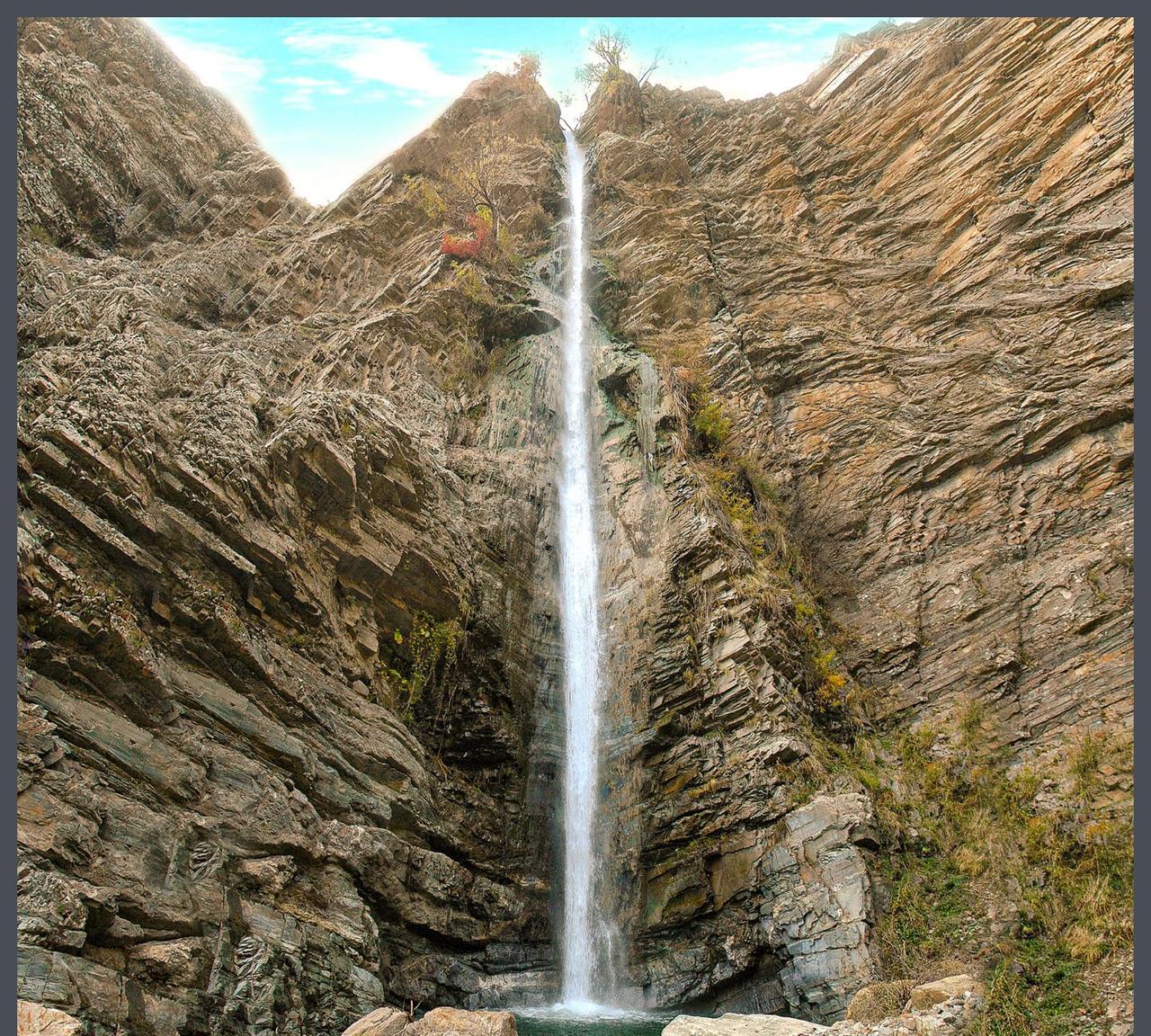
Gümüşkanat Waterfall is a natural water source located within the boundaries of Gümüşkanat village in the Mutki district of Bitlis province, with a drop of approximately 56 to 60 meters. The waterfall is situated 25 kilometers from the center of Bitlis province and 27 kilometers from the center of Mutki district. This formation, nestled within a steep valley, reflects the hydrological characteristics of the region through its topographic structure and water flow. According to measurements, the width of the upper edge from which the waterfall cascades is approximately 8 meters.【1】 Due to its natural structure and vertical drop, it creates a unique microclimate of moisture and water spray in its surroundings.

Gümüşkanat Waterfall(AA)
Gümüşkanat Waterfall has formed as a result of the mountainous and rugged terrain between Bitlis and Mutki. Its primary hydrological sources are snowmelt from higher elevations and groundwater recharge. The elevation of the waterfall’s drop point and the structure of its watershed allow for continuous water flow throughout the year. The waterfall descends vertically for approximately 56 to 60 meters to reach the valley floor.【2】 This significant vertical drop causes the water to accelerate and sustain erosive processes on the rocks it impacts. During winter months, low temperatures result in the formation of icicles along the surface and surrounding areas of the waterfall.
Scientific floristic studies conducted around the waterfall demonstrate that the region possesses high biological diversity. Field surveys have identified a total of 359 taxa belonging to 225 genera and 57 families.【3】 Among these taxa, 30 are endemic species, yielding an endemism rate of 8.07% for the area. The families with the highest number of taxa are Asteraceae (13.1%), Lamiaceae (9.4%), and Fabaceae (8.9%). Analysis of the phytogeographic distribution of the species reveals that 35.1% have an Iran-Turan origin, 4.7% an Europe-Siberian origin, and 3.3% a Mediterranean origin.【4】

Gümüşkanat Waterfall(AA)
Analysis of life forms of the taxa in the region shows that hemikryptophytes dominate, accounting for 55.2%. The ecological sensitivity of the area is closely linked to the presence of endemic and rare species. Assessments based on IUCN Red List categories indicate that several species in the region require conservation priority. For instance, four taxa are classified as "EN" (Endangered) and six as "VU" (Vulnerable).【5】 These data indicate that the area surrounding the waterfall is not merely a geomorphological feature but also serves as a refuge for sensitive species.
Adıyaman, Serdar. "Bitlis'te 56 Metre Yüksekten Akan Gümüşkanat Şelalesi Ziyaretçilerini Bekliyor." *Anadolu Ajansı*. Accessed February 18, 2026. https://www.aa.com.tr/tr/yasam/bitliste-56-metre-yuksekten-akan-gumuskanat-selalesi-ziyaretcilerini-bekliyor/3763734.
Mutki Kaymakamlığı. "Gümüşkanat Şelalesi." Accessed February 18, 2026. https://www.mutki.gov.tr/gumuskanat-selalesi.
Özabay, Yelda, and İbrahim Demir. "Gümüşkanat Şelalesi (Mutki/Bitlis) Çevresinin Florası." *Yüzüncü Yıl Üniversitesi Fen Bilimleri Enstitüsü Dergisi* 30, no. 2 (2025): 468-484. Accessed February 18, 2026. https://dergipark.org.tr/tr/download/article-file/4579164.
[1]
Serdar Adıyaman, "Gümüşkanat Waterfall with a 56-Meter Drop in Bitlis Awaits Visitors," Access date: 18 February 2026. https://www.aa.com.tr/tr/yasam/bitliste-56-metre-yuksekten-akan-gumuskanat-selalesi-ziyaretcilerini-bekliyor/3763734.
[2]
Mutki Subprovince, "Gümüşkanat Waterfall," Access date: 18 February 2026. https://www.mutki.gov.tr/gumuskanat-selalesi.
[3]
Yelda Özabay and İbrahim Demir. "The Flora of Gümüşkanat Waterfall (Mutki/Bitlis)." Yüzüncü Yıl University Journal of Natural Sciences 30, no. 2 (2025): 468-484. Access date: 18 February 2026. https://dergipark.org.tr/tr/download/article-file/4579164.
[4]
Özabay and Demir, "The Flora of Gümüşkanat Waterfall," 448.
[5]
Özabay and Demir, "The Flora of Gümüşkanat Waterfall," 451.


Conservation Status | 4 'EN' (Endangered) 6 'VU' (Vulnerable) Taxa | ||||||||
|---|---|---|---|---|---|---|---|---|---|
Characteristic Feature | Ice stalactites in winter, high discharge in summer | ||||||||
Phytogeographic Region | Predominantly Irano-Turanian (%35.1) | ||||||||
Endemism Rate | 8.07% (30 Endemic Taxa) | ||||||||
Flora Diversity | 57 Families, 225 Genera, 359 Taxa | ||||||||
Distance (District Center) | 27 km | ||||||||
Distance (Provincial Center) | 25 km | ||||||||
Elevation and Basin | Cliff valley structure, fed by snow and groundwater | ||||||||
Waterfall Width | Approximately 8 Metres | ||||||||
Height (Drop) | 56 - 60 Metres | ||||||||
Location (Province/District) | Bitlis / Mutki | ||||||||
No Discussion Added Yet
Start discussion for "Gümüşkanat Waterfall" article
Geographical and Hydrological Characteristics
Floristic Structure and Biodiversity
Conservation Status and Ecology