


This article was automatically translated from the original Turkish version.
+1 More
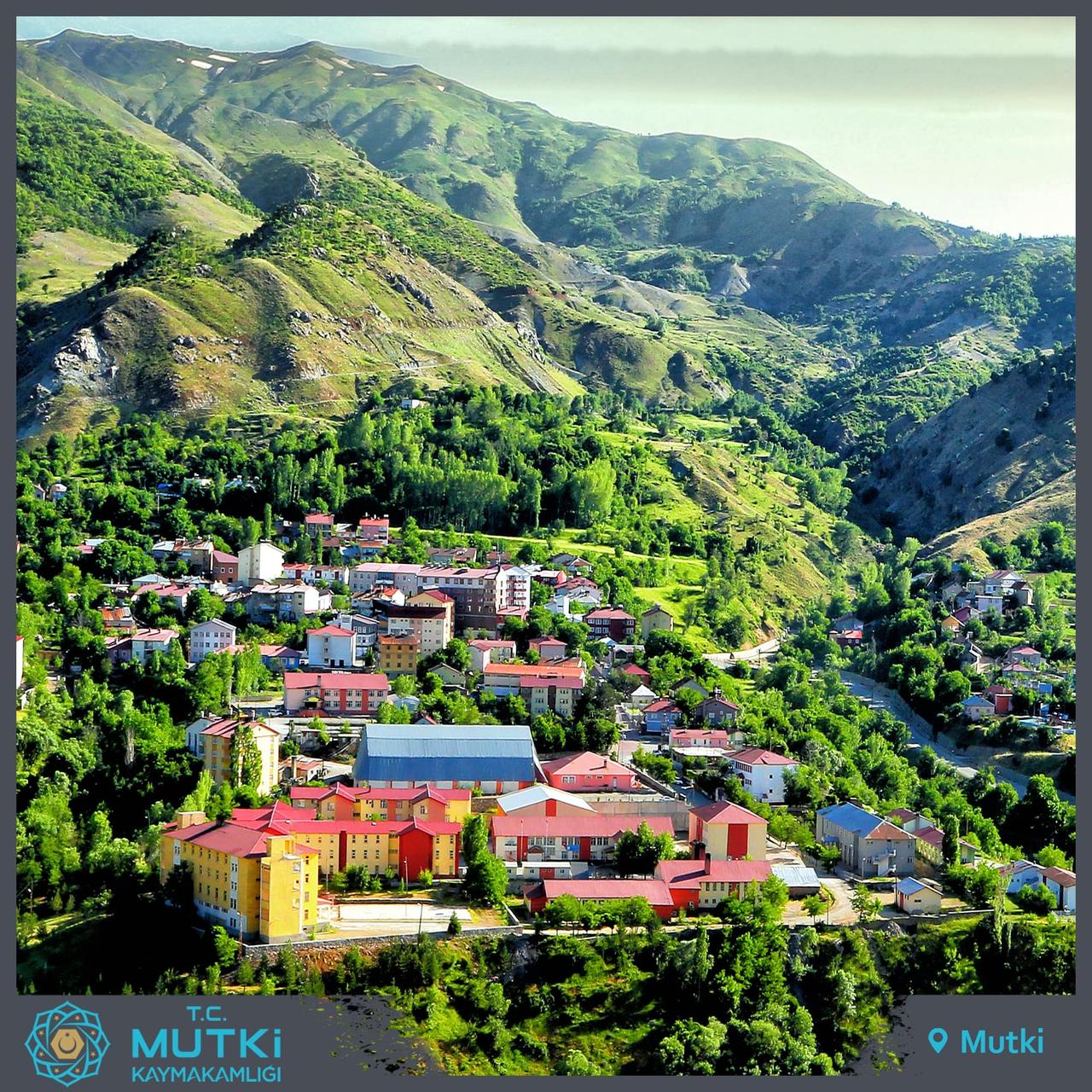
Mutki
Country | Türkiye | ||||||||
|---|---|---|---|---|---|---|---|---|---|
Province(s) | Bitlis | ||||||||
Area(s) | 1.069 km² | ||||||||
Elevation(s) | 1.500–3.200 metres | ||||||||
Postal Code | 13700 | ||||||||
Climate(s) | Continental | ||||||||
Mutki is a district of Bitlis Province in Türkiye’s Eastern Anatolia Region. It is a settlement that stands out in the regional context due to its historical development and socio-cultural structure.
Mutki District is located approximately 20–21 km southwest of the city center of Bitlis. The district covers an area of approximately 1,069 km². It features a mountainous terrain with elevations ranging from 1,500 meters to 2,017 meters. The highest point in the district is Kef Dağı, which is also one of the prominent elevations defining the region’s natural silhouette.
The main rivers flowing through the district include Bitlis Çayı, Zeydan Çayı, Kef Çayı, and Çermik Çayı. Additionally, Kef Gölü, located within the district, serves as an important water source for surrounding villages. Both the lake and the rivers play a decisive role in the district’s agricultural activities and natural landscape.
Mutki is bordered by Muş Merkez and Hasköy districts to the north, Sason and Kozluk districts of Batman to the west, Baykan district of Siirt to the south, and Bitlis Merkez and Güroymak districts to the east.
Mutki District consists of 1 central district municipality, 1 town (Kavakbaşı), 11 neighborhoods, and 60 villages. Due to the district’s mountainous terrain, these neighborhoods and villages are spread over a wide area, resulting in a notable rural population density.
According to 2024 data, the total population of Mutki District is 27,872, comprising 14,654 males and 13,218 females. The population of the district center amounts to 3,062, while the population residing in villages and the town is recorded as 24,810. The fact that the majority of the population lives in rural areas reflects Mutki’s reliance on an agricultural and livestock-based way of life.
Among the neighborhoods, Pınarbaşı Mahallesi (1,316 people) is the most populous, while among the villages, Çığır Köyü (1,567 people) stands out as the largest. Population data also indicate a declining trend in recent years: the population, which was 29,910 in 2022, decreased to 27,872 by 2024. This decline is primarily associated with youth migration in search of employment and education opportunities.

Mutki (Mutki Subdistrict Office))
Mutki has historically been influenced by numerous civilizations and political powers. There are two differing etymological interpretations regarding the origin of its name. One view holds that the name derives from the Iranian settlement of “Motkan,” meaning “unused land.” The other view suggests that the district takes its name from the Mutki tribe, which settled in the region.
Mutki was incorporated into the territories of the Ottoman State in 1514, and during this period it functioned administratively as a settlement under the Bitlis Beylik. The famous traveler Evliya Çelebi mentioned Mutki during his 17th-century journeys. During World War I, the district was occupied by Russian forces in 1915, but remained within the borders of Türkiye following the proclamation of the Republic.
Mutki attained district status in 1935 and was officially organized on January 4, 1936, with the appointment of its first district governor. Between 1938 and 1941, the district center was located in what is now the village of Miritağ, which is currently part of Mutki. It was later moved to its present location.
Mutki’s economy is largely based on agriculture and livestock farming. Due to the mountainous terrain, agricultural activity is limited, and livestock farming predominates. In addition, some villages continue traditional handicrafts. There are no industrial facilities in the district, and commercial activities are small-scale.
Socio-culturally, Mutki has a social structure rooted in a longstanding tribal system, where traditional values remain influential. The most prominent elements of local culture include traditional clothing, wedding ceremonies, and regional cuisine. However, due to youth migration, the preservation and transmission of these cultural elements are becoming increasingly difficult.
Mutki is accessible by road. Most roads leading to the district are asphalted, while some roads reaching rural areas are stabilized or dirt roads. Public transportation options are limited, and travel is generally conducted via private vehicles or minibuses. The district has basic educational and healthcare infrastructure; residents must travel to the provincial center for more advanced services.
Bitlis Valiliği. "Mutki." Accessed June 19, 2025. http://www.bitlis.gov.tr/mutki.
BitlisHaber13. “Bitlis’in İlçesi Mutki Hakkında Bilgi.” Accessed June 19, 2025. https://www.bitlishaber13.net/bitlisin-ilcesi-mutki-hakkinda-bilgi.
Nüfusune.com. "Mutki Mahalleleri ve Köyleri (Bitlis)." Accessed June 19, 2025. https://www.nufusune.com/mutki-mahalleleri-koyleri-bitlis.
Nüfusune.com. "Mutki İlçe Nüfusu (Bitlis)." Accessed June 19, 2025. https://www.nufusune.com/mutki-ilce-nufusu-bitlis.

Mutki
Country | Türkiye | ||||||||
|---|---|---|---|---|---|---|---|---|---|
Province(s) | Bitlis | ||||||||
Area(s) | 1.069 km² | ||||||||
Elevation(s) | 1.500–3.200 metres | ||||||||
Postal Code | 13700 | ||||||||
Climate(s) | Continental | ||||||||
Geographical Location and Physical Structure
Administrative Structure and Demographic Data
History
Economy and Socio-Cultural Structure
Transportation and Infrastructure