


This article was automatically translated from the original Turkish version.
+2 More
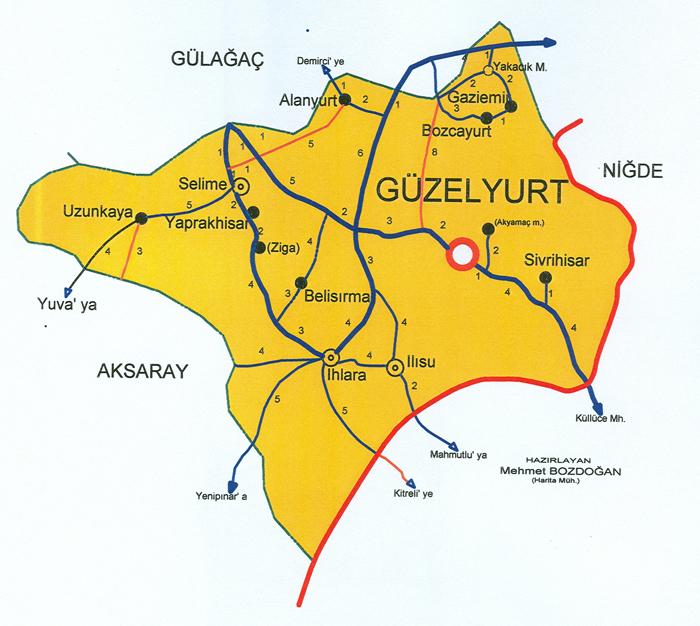
Güzelyurt
Province(s) | Aksaray | ||||||||
|---|---|---|---|---|---|---|---|---|---|
Geographical Region | Central Anatolia Region | ||||||||
Population | 10782 | ||||||||
District Governor | Muammer YETİŞ | ||||||||
Mayor(s) | Ünal DEMİRCİOĞLU | ||||||||
Güzelyurt is a district of Aksaray Province in Türkiye’s Central Anatolia Region, known for its historical and cultural heritage. Located in the southwest of the Cappadocia region and northeast of Hasan Dağı, Güzelyurt has served as a settlement for various civilizations throughout history and stands out as a rare center notable for its Christian history and stonemasonry.
The history of Güzelyurt extends back to prehistoric times. Surface surveys conducted at the Gelveri Höyüğü, approximately 1.5 km southwest of the district, have uncovered ceramic artifacts from the Chalcolithic, Bronze, Iron, Roman, and Byzantine periods. The region came under the rule of numerous civilizations including the Hittites, Phrygians, Lydians, Persians, the Kingdom of Cappadocia, the Romans, the Byzantines, the Anatolian Seljuks, the Karamanids, and the Ottoman State.
In antiquity, the settlement where Güzelyurt now stands was known as “Karballa.” Over time, this name evolved into “Karvala” and later “Gelveri.” During the Ottoman period, it appeared in records under the names “Gerfeli” and “Korveli.” In the early years of the Republic, following the 1924 population exchange between Türkiye and Greece, the Greek population of the district migrated to Greece and were replaced by Muslim communities from various parts of Anatolia. Güzelyurt attained district status in 1989 and has since been administered as part of Aksaray.
Güzelyurt lies within the historical boundaries of Cappadocia, situated between the provinces of Niğde, Nevşehir, Kayseri, and Aksaray. The district’s most striking natural feature is the Ihlara Valley, a deep canyon formed by the Melendiz River through volcanic activity. For centuries, this valley served as a retreat and place of worship for Christian monks. Numerous rock-cut churches and underground dwellings have been carved into the valley’s cliffs.
Additionally, Güzelyurt, built at the foot of Hasan Dağı, boasts a rich tradition of stonemasonry shaped from volcanic stones such as andesite and ignimbrite. Natural beauty and historical remnants are intricately intertwined throughout the district.
The Cappadocia region became an important religious center from the earliest centuries of Christianity. Güzelyurt shared in this development, serving as a settlement for Christian communities since the 2nd century CE. The birth of Saint Gregory the Theologian in this region further enhanced Güzelyurt’s religious importance. As Christianity spread, biblical texts and apocryphal stories were embraced by the local population; the events, characters, and symbols described in these texts were artistically rendered in the region’s architecture.
In this context, wall paintings, stone reliefs, carved decorations, and calligraphic inscriptions found in Güzelyurt’s churches and secular buildings reflect the religious life and belief system of the people through art. These works carry not only aesthetic value but also theological meaning.
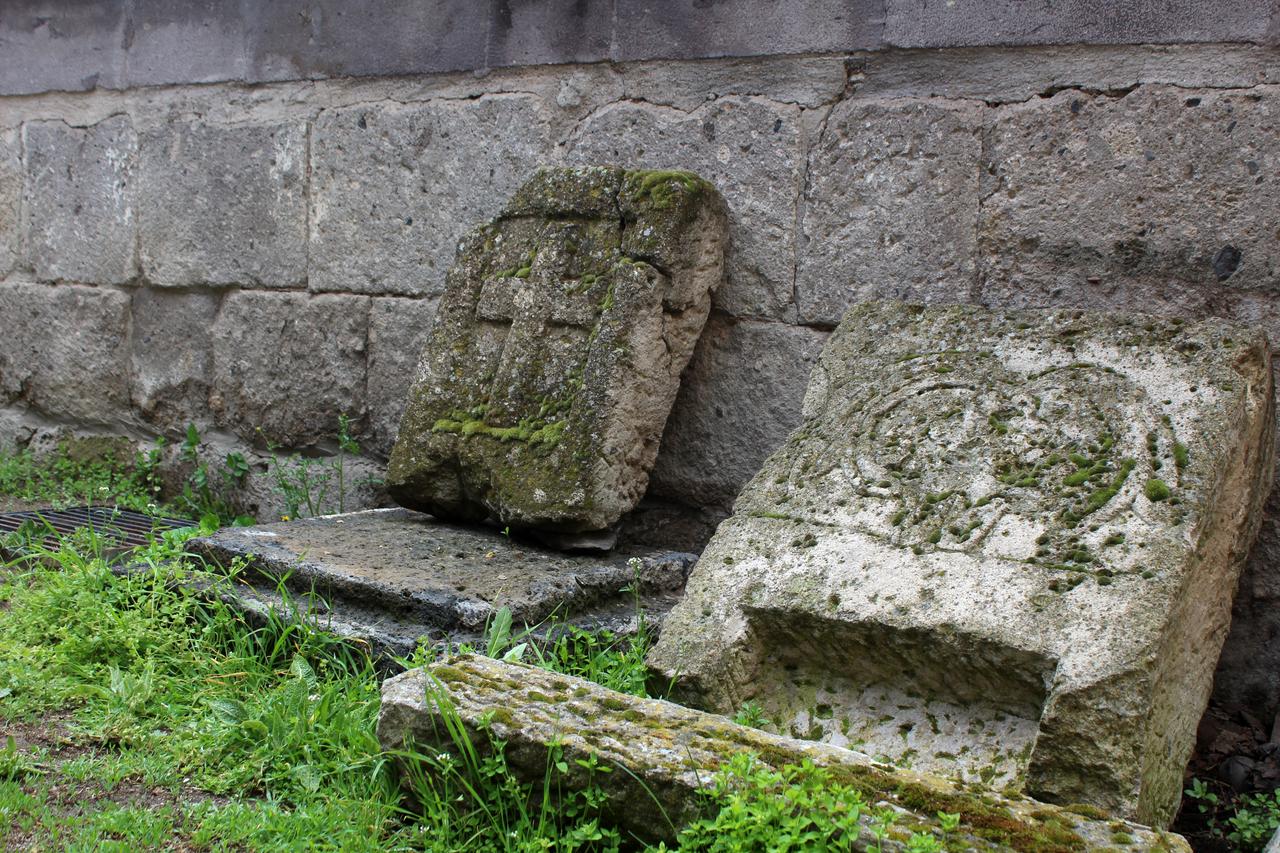
Kilise Camii Bahçesi – Historical Stones (Author’s Frame)
Güzelyurt District is renowned for its semi-rock-cut houses, monasteries, churches, and traditional stone mansions. The district contains 59 secular and 19 religious architectural structures that exemplify traditional Anatolian architecture, distinguished by their elaborately carved stone facades. The decorative elements in these buildings hold both artistic and symbolic significance.
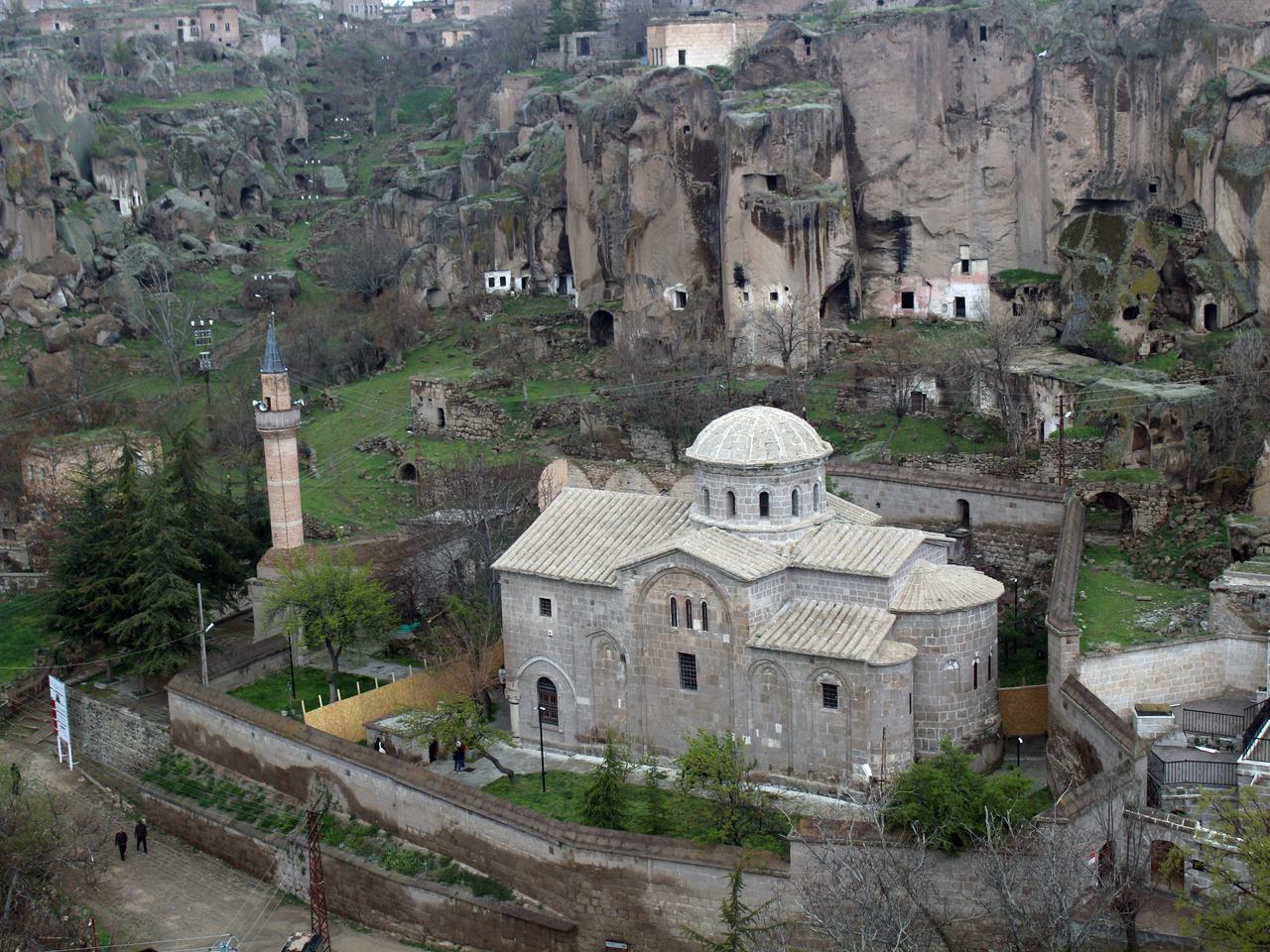
Kilise Camii (Central A. Mahalle Mosque) (Author’s Frame)
One of the most distinctive features of Güzelyurt’s architecture is its stone relief decorations depicting animals, plants, and human figures. These motifs contributed to the development of a concrete visual language in architecture, expressing religious beliefs and symbols.
These figures were carved into volcanic stones such as andesite by stonemasons using hammers, chisels, and gravers, creating works rich in both artistic and spiritual content.
The social structure established in Güzelyurt after the population exchange consists primarily of Muslim communities whose livelihoods are based on agriculture and animal husbandry. Thanks to the district’s tourist appeal and cultural heritage, rural tourism and cultural tourism have developed over time. Initiatives such as converting traditional stone houses into boutique hotels are currently underway.
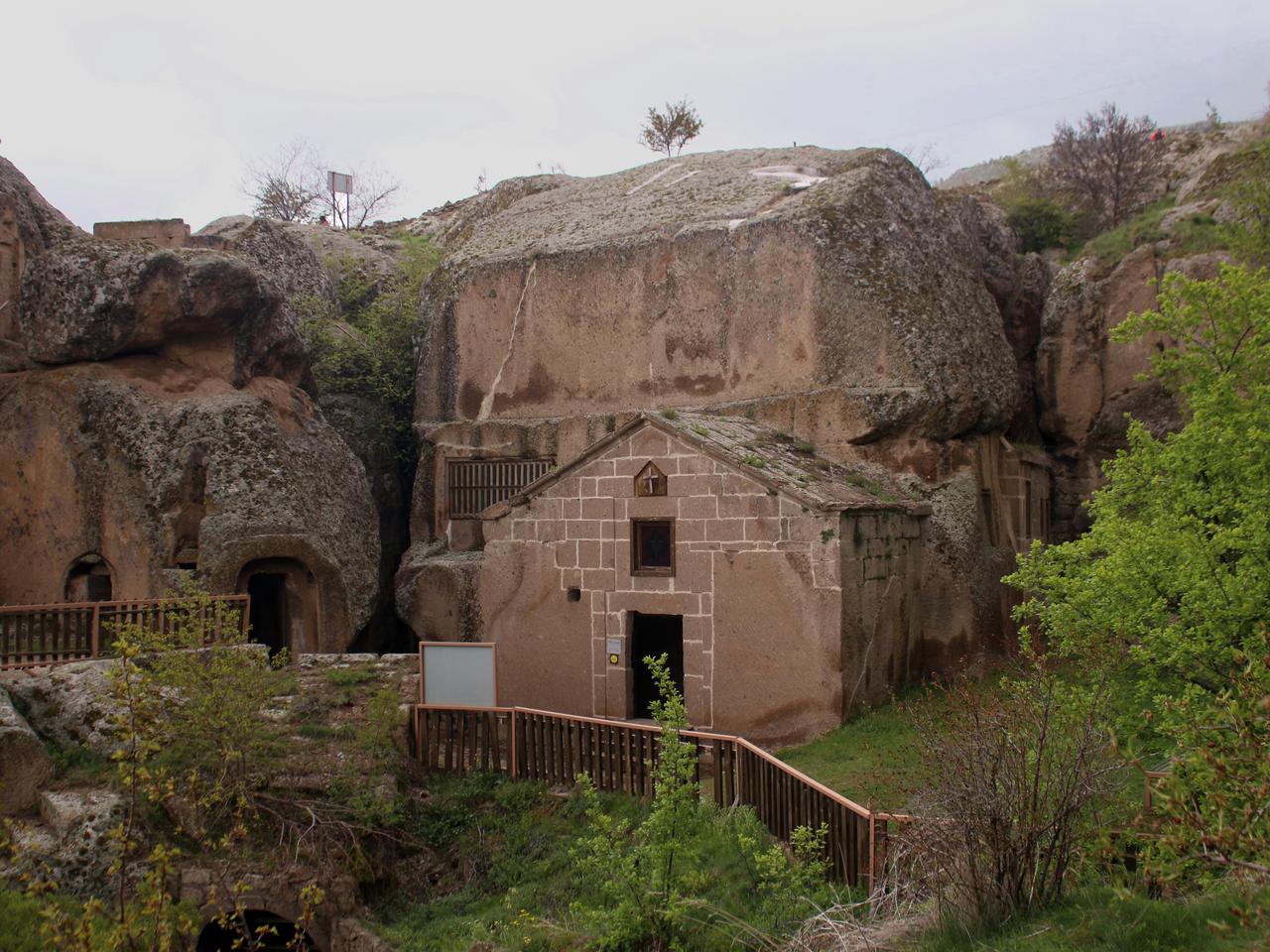
Sivişli Church (Author’s Frame)
Güzelyurt Belediyesi. "Tarihçe." Güzelyurt Municipality Official Website. Accessed May 14, 2025. https://www.guzelyurt.bel.tr/icerik/tarihce.
Güzelyurt Kaymakamlığı Governorship. "Güzelyurt." Güzelyurt District Governorship Official Website. Accessed May 14, 2025. http://www.guzelyurt.gov.tr/guzelyurt.
Turkish Ministry of Culture and Tourism, “Güzelyurt,”Aksaray İl Directorate of Culture and Tourism, Accessed May 14, 2025. https://aksaray.ktb.gov.tr/TR-327030/guzelyurt.html.
Veysel Arı, “Güzelyurt İlçesindeki Mimari Yapılarda Görülen Figürlü Taş Kabartma Süslemeler,” *Atatürk Üniversitesi Güzel Sanatlar Enstitüsü Dergisi* 21, no. 41 (2018): 177–198. https://dergipark.org.tr/tr/pub/ataunigsed/issue/44147/467957.
Güzelyurt
Province(s) | Aksaray | ||||||||
|---|---|---|---|---|---|---|---|---|---|
Geographical Region | Central Anatolia Region | ||||||||
Population | 10782 | ||||||||
District Governor | Muammer YETİŞ | ||||||||
Mayor(s) | Ünal DEMİRCİOĞLU | ||||||||
No Discussion Added Yet
Start discussion for "Güzelyurt (District)" article
History
Geographical Location and Natural Features
Religious and Cultural Significance
Architectural Structures and Stonemasonry
Stone Relief Figures
Economy and Population