


This article was automatically translated from the original Turkish version.
+2 More
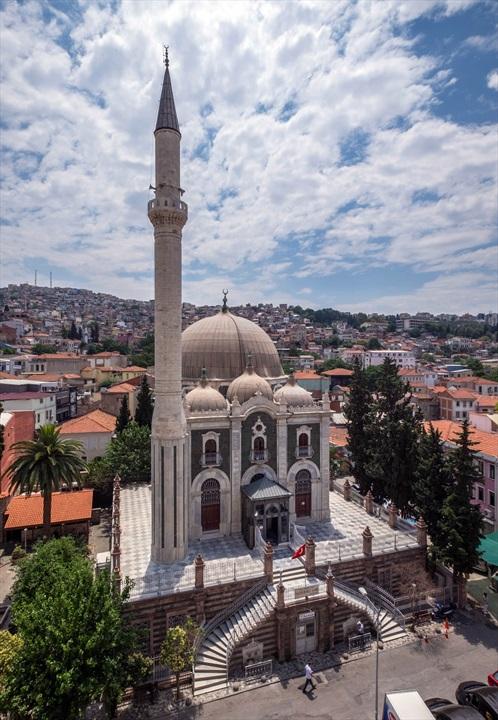
Salepçioğlu Camii
Location | İzmir Konak district | ||||||||
|---|---|---|---|---|---|---|---|---|---|
Construction Year | 1895–1906 | ||||||||
Opening Date(s) | 14 April 1906 | ||||||||
Builder | Salepçizade Hacı Ahmet Efendi | ||||||||
Restoration | 2012 (by İzmir Chamber of Commerce) | ||||||||
Architectural Style(s) | Baroque Ottoman period | ||||||||
Material(s) | Green cut stone white marble | ||||||||
Salepçioğlu Camii is located in the Konak district of İzmir, near the historic Kemeraltı Bazaar, and is an important structure among Ottoman-era mosques featuring Baroque elements. The mosque was constructed between 1897 and 1907 under the supervision of İzmir Qadi Mehmet Emin Efendi, in accordance with the will of Salepçizade Hacı Ahmet Efendi. Construction began on 15 October 1895 and was completed on 20 February 1906. The mosque was opened for worship on 14 April 1906 in the presence of İzmir Governor Mehmet Kamil Paşa and prominent figures of the era.
In the foundation deed established for the construction of the mosque, Salepçizade Hacı Ahmet Efendi stipulated that the revenues from approximately 80 shops and two large caravanserais be used for the maintenance and upkeep of the mosque. The deed also foresaw the construction of a school seven rooms and a medrese alongside the mosque. The mosque was designed with a medrese on the ground floor and the place of worship on the upper floor. This feature resembles the Hüdavendigar Mosque in Bursa; however in the Hüdavendigar Mosque the medrese is located on the upper floor while the mosque is on the lower floor. After the construction of Salepçioğlu Camii, books from the waqf libraries of İzmir were gathered here to form the Hisar Umumi Kütüphanesi.
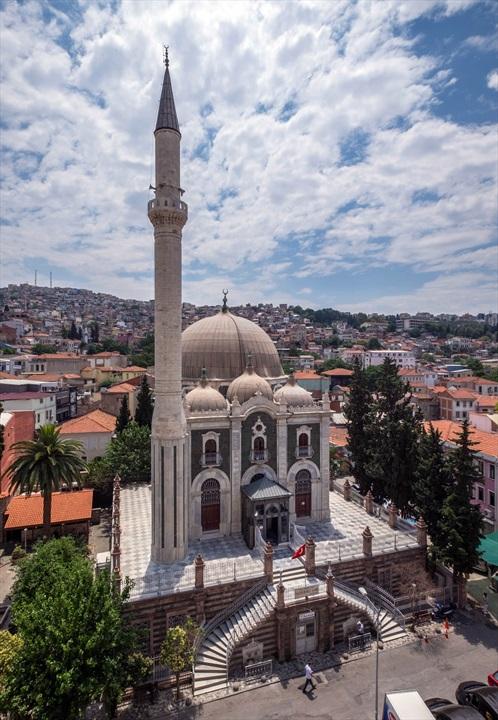
Hacı Ahmet Sait Salepçioğlu Camii(Visit İzmir)
Salepçioğlu Camii stands out among Ottoman mosques built at the beginning of the twentieth century due particularly to its architectural style. The use of green cut stone and white marble contributes significantly to the aesthetic character of the building. Architectural ornamentation incorporates elements characteristic of Greek Roman and Renaissance architecture alongside orientalist influences. This synthesis distinguishes the mosque from other mosques of its time.
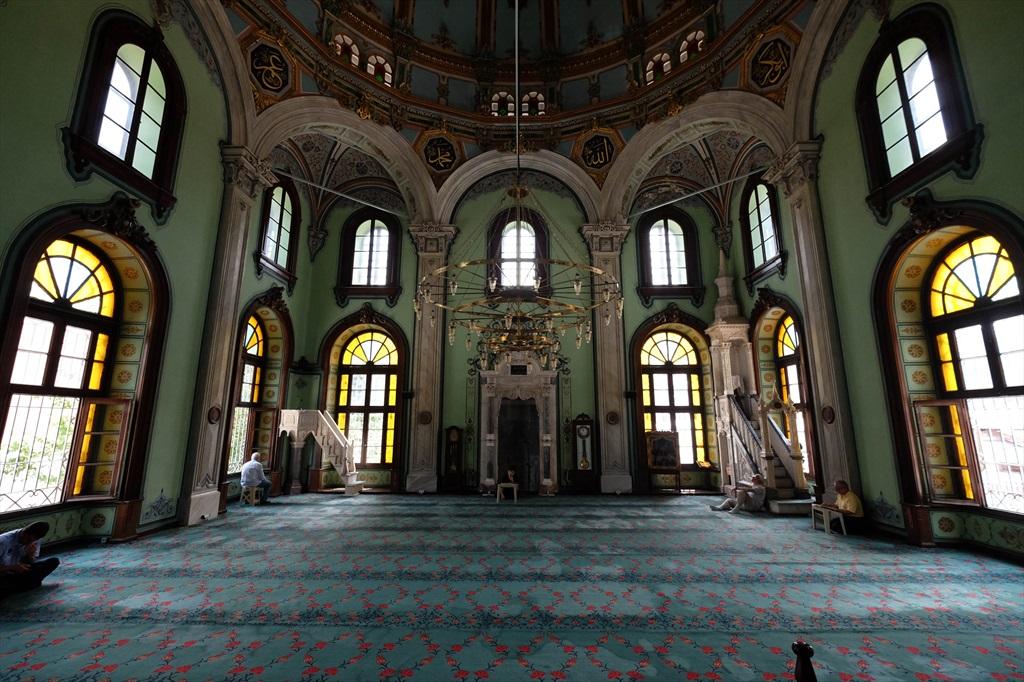
Hacı Ahmet Sait Salepçioğlu Camii(Visit İzmir)
The ground floor of the mosque was designed as a medrese and features four marble fountains on either side of the main entrance. Access to the upper floor is provided by twin staircases with Baroque-style curved balustrades. The courtyard on the upper floor is entirely paved with marble and features red stone pillars supporting iron railings. The courtyard is one of the most striking elements of the structure and one of the areas where Baroque influences are most clearly visible.
The dome covering the place of worship of Salepçioğlu Camii consists of sixteen segments each adorned with three-dimensional green plant motifs. The dome rests upon a square-plan space with an octagonal transition zone. The final congregation area was designed together with the mahfil gallery and is covered by domes. The mihrab minbar and pulpit are made of marble and feature Baroque-style decorations.
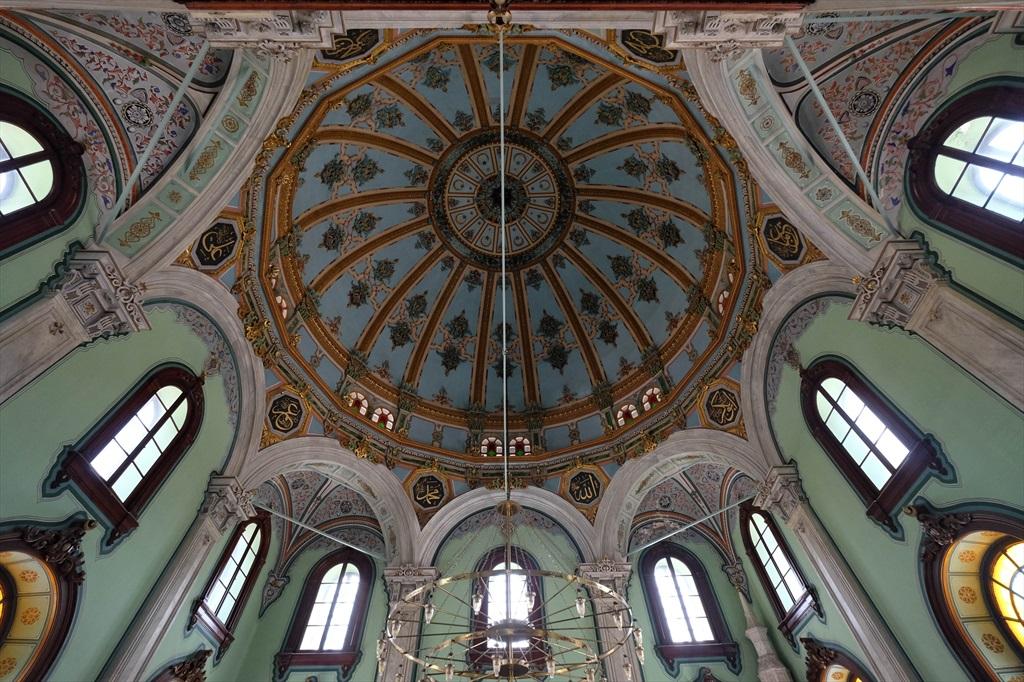
Hacı Ahmet Sait Salepçioğlu Camii(Visit İzmir)
The minaret was constructed independently from the main structure and stands on an octagonal base. It was renovated in 1927 by İzmir Governor Kazım Dirik but was destroyed in the 1974 earthquake. The current minaret was rebuilt in 1982.
In 2012 Salepçioğlu Camii underwent comprehensive restoration by the İzmir Chamber of Commerce. During the restoration cleaning and retouching were carried out on both the interior and exterior facades and structural reinforcement was performed while preserving architectural details. These efforts have safeguarded the historical integrity and architectural features of the mosque ensuring its preservation for future generations.
“Salepçioğlu Ailesinin İzmir’e Katkıları ve Salepçioğlu Camii.” Ege Üniversitesi Edebiyat Fakültesi Sanat Tarihi Bölümü, İzmir, 2002. Accessed May 14, 2025. https://isamveri.org/pdfdrg/D271565/2002/2002_ERSOYIK.pdf.
“Salepçioğlu Camisi.” Visit İzmir. Accessed May 14, 2025. https://www.visitizmir.org/tr/Destinasyon/14813.
“Salepçioğlu Camisi.” Visit İzmir. Accessed May 14, 2025. https://www.visitizmir.org/tr/Destinasyon/14819.
“Salepçioğlu Camisi.” Visit İzmir. Accessed May 14, 2025. https://www.visitizmir.org/tr/Destinasyon/9681.

Salepçioğlu Camii
Location | İzmir Konak district | ||||||||
|---|---|---|---|---|---|---|---|---|---|
Construction Year | 1895–1906 | ||||||||
Opening Date(s) | 14 April 1906 | ||||||||
Builder | Salepçizade Hacı Ahmet Efendi | ||||||||
Restoration | 2012 (by İzmir Chamber of Commerce) | ||||||||
Architectural Style(s) | Baroque Ottoman period | ||||||||
Material(s) | Green cut stone white marble | ||||||||
No Discussion Added Yet
Start discussion for "Hacı Ahmet Sait Salepçioğlu Camii" article
History
Architectural Features
Ground Floor and Courtyard
Place of Worship and Domes
Minaret
Restoration Works