

This article was automatically translated from the original Turkish version.
+2 More
Location | Hadim district Türkiye Konya | ||||||||
|---|---|---|---|---|---|---|---|---|---|
Water Source | Ermenek Creek (tributary of Göksu River) | ||||||||
Waterfall Height | Approximately 20 metres | ||||||||
Geological Features | Karstic structures, underground cave system, travertine formations | ||||||||
Ecosystem | Pine, juniper and cedar forests; various bird, reptile and small mammal species | ||||||||
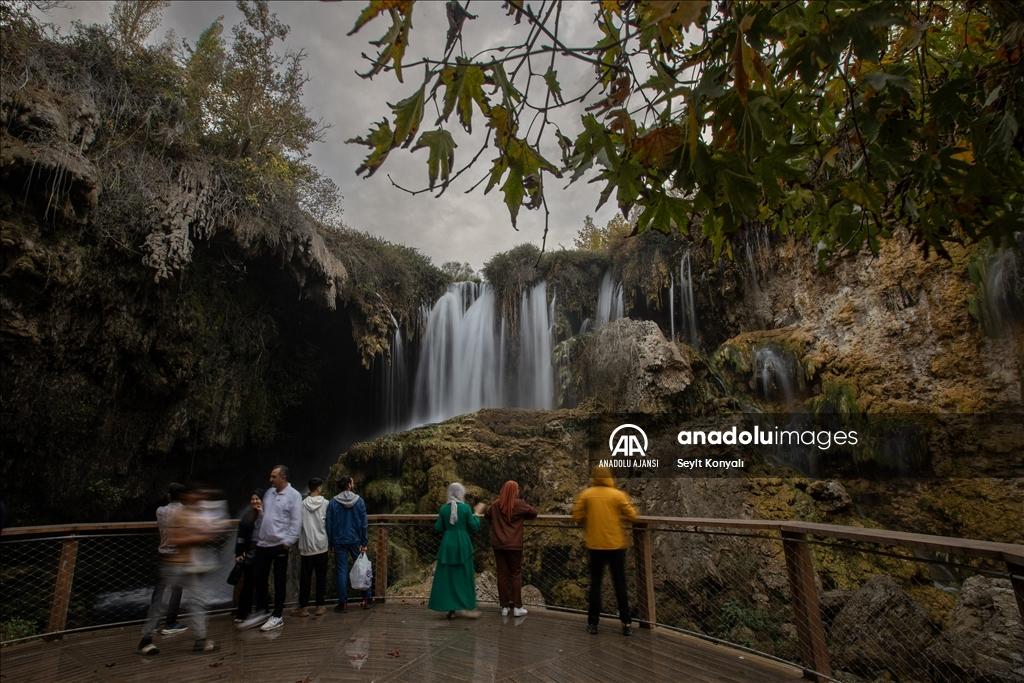
Yerköprü Waterfall is located within the boundaries of the Hadim district in the southeastern part of Konya Province, on the Ermenek Çayı River, one of the major tributaries of the Göksu River. The waterfall is approximately 20 kilometers from the Hadim district center. Accessible by road from Konya city center, it is about 110 kilometers away. The region features a terrain shaped by the Taurus Mountains, characterized by steep slopes, deep valleys, and high plateau surfaces.
The Yerköprü Waterfall has formed under the influence of a karstic landscape, resulting from the dissolution of limestone rocks in the area, which created cave systems and travertine deposits. The water of the waterfall flows underground in the mountainous region, passing through a natural tunnel approximately 200 meters in length, during which it encounters stalactite formations within the cave. After emerging from the cave, the water cascades down a height of about 20 meters, producing a景观 that is the result of the combined effects of geological and hydrological processes. The name “Yerköprü,” meaning “earth bridge,” derives from the combination of this underground passage and the natural stone bridge it forms.
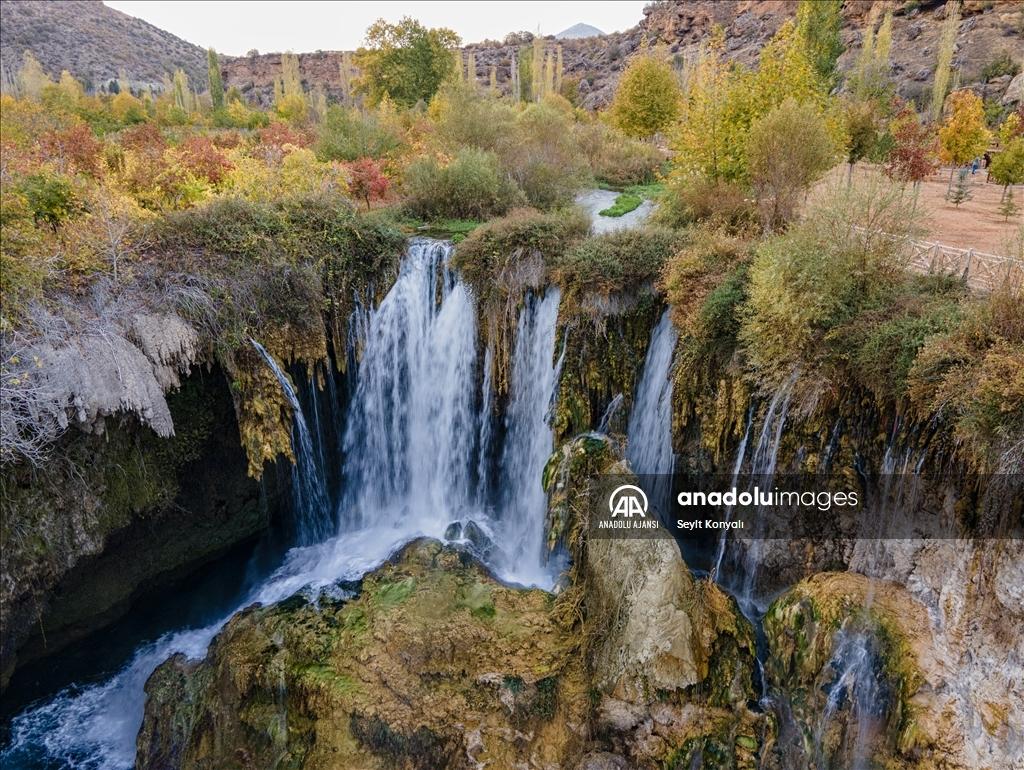
Aerial view of Yerköprü Waterfall. (Anadolu Agency)
The Yerköprü Waterfall lies within the catchment area of the Göksu River and marks the convergence point of surface and subsurface water systems in the region. The natural flow of the Ermenek Çayı has, over time, expanded karstic voids, allowing water to infiltrate underground and forming a natural siphon system. This system sustains the micro-ecosystem within the cave and, upon emerging at the surface, reconnects surface waters through its cascading structure.
The travertine structures observed around the waterfall have developed through the deposition of calcium carbonate-rich waters. These travertine terraces provide both an aesthetic appearance and contribute to the scientific analysis of landform evolution. The karstic structures in the region have facilitated the development of cave features such as stalactites, stalagmites, and columns, clearly illustrating the relationship between subsurface karst processes and surface morphology. These characteristics have rendered the Yerköprü Waterfall not only a visually striking natural phenomenon but also a site of significant scientific value.
The area surrounding the Yerköprü Waterfall is characterized by the forested structure of the Taurus Mountains, dominated by coniferous species such as Turkish pine, juniper, and cedar. Additionally, in the valley floors, where humid microclimatic conditions prevail, ferns, mosses, and various herbaceous plants are widespread. Reptiles, small mammals, and numerous bird species have also been observed in the region. The ecosystem diversity is of importance both for the conservation of biological diversity and for maintaining ecological balance in a sustainable context.
As a result of infrastructure projects implemented by the Konya Metropolitan Municipality in 2020, the Yerköprü Waterfall was opened to controlled tourism activities. Walking paths, viewing platforms, directional signage, and rest areas have been constructed. These interventions were carried out without disturbing the natural environment, with the goal of enabling visitors to explore the area in harmony with nature. Visitor numbers increase significantly during the summer months, and the site is increasingly favored for day-trip nature walks, photography, and wildlife observation.
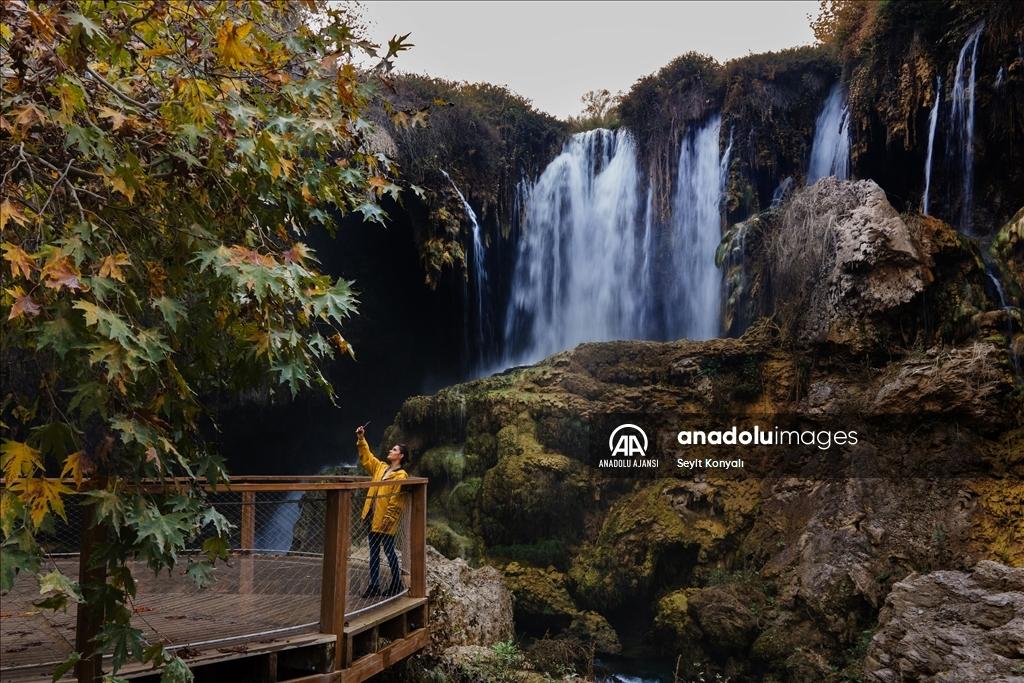
Yerköprü Waterfall and Viewing Platform. (Anadolu Agency)
Academic studies conducted by Selçuk University have focused on the travertine formations, karst landforms, and hydrological systems of the Yerköprü Waterfall. Research has established a direct relationship between the dynamic nature of the waterfall and subsurface water movements in the region. Furthermore, long-term monitoring of travertine deposition rates and microclimatic conditions within the cave has been recommended. In this regard, the waterfall and its surroundings constitute an interdisciplinary site open to research in geography, geology, and environmental sciences.
Conservation approaches for the Yerköprü Waterfall have been developed within the framework of sustainable nature tourism principles. Local authorities have implemented environmental regulations that take into account the area’s carrying capacity and prevent uncontrolled development. Informational panels and warning systems have been installed to ensure that visitors do not negatively impact the natural environment. Additionally, continuous monitoring programs for flora and fauna are underway as part of conservation measures aimed at preserving biological diversity.
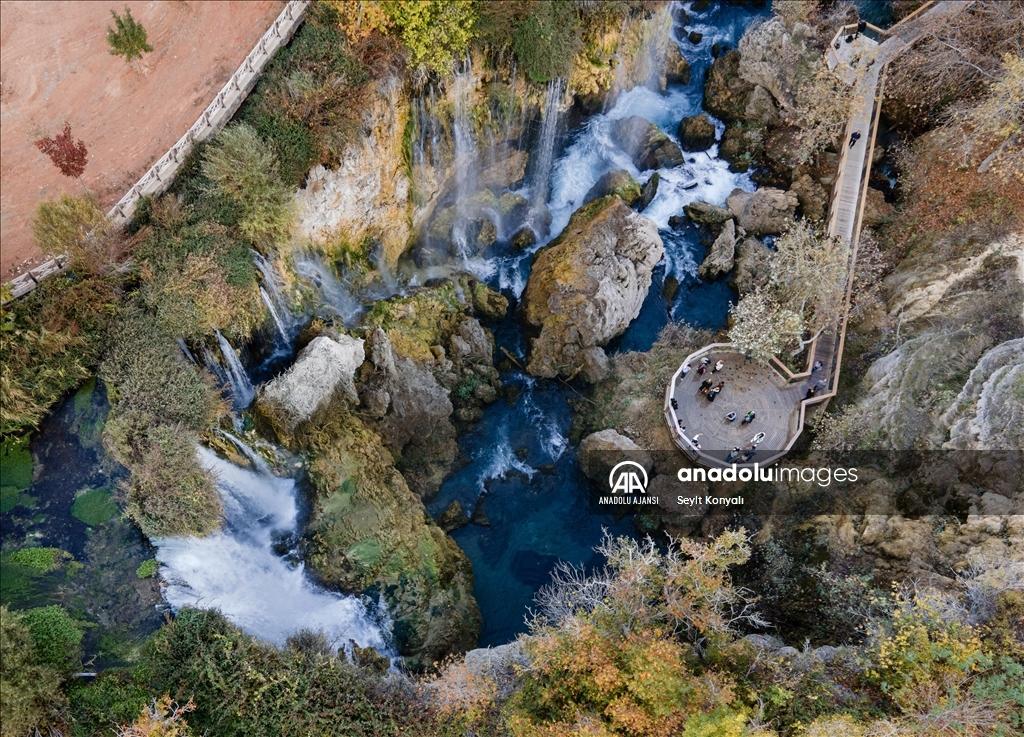
Aerial view of Yerköprü Waterfall. (Anadolu Agency)
Yerköprü Waterfall is a natural formation distinguished by its geological, hydrological, and ecological characteristics, located in the Hadim district of Konya. The waterfall, notable for its karstic structure, travertine deposits, and subsurface water systems, has been integrated into tourism while prioritizing the preservation of the natural landscape. With its rich biological diversity, sustainable environmental policies, and scientific potential, Yerköprü Waterfall holds a significant position in both the conservation of natural heritage and the enhancement of public awareness.
Anadolu Ajansı. "Yerköprü Şelalesi - Foto Galeri." Accessed July 12, 2025. https://www.aa.com.tr/tr/pg/foto-galeri/yerkopru-selalesi/0.
Anadolu Ajansı. “Doğasıyla Cezbeden Yerköprü Şelalesi Misafirlerini Ağırlamaya Başladı.” Anadolu Ajansı, June 2, 2020. Accessed July 12, 2025. https://www.aa.com.tr/tr/yasam/dogasiyla-cezbeden-yerkopru-selalesi-misafirlerini-agirlamaya-basladi/1881255.
Hadim Kaymakamlığı Governorship. "Yerköprü Şelalesi." Accessed July 12, 2025. http://www.hadim.gov.tr/yerkopru-selalesi.
Konya Büyükşehir Municipality. "Hadim Yerköprü Şelalesi Projesi." Accessed July 12, 2025. https://www.konya.bel.tr/proje/hadim-yerkopru-selalesi.
Konya Valiliği. *Konya Yerköprü Şelalesi*. Accessed July 12, 2025. http://www.konya.gov.tr/konya-yerkopru-selalesi.
Mert, Mehmet. “Yerköprü Şelalesi (Hadim, Konya) ve Yakın Çevresindeki Güncel Tufa Oluşumlarının Sedimantolojisi.” Selçuk ÜniversitesiAçık Erişim Sistemi, 2021. Accessed July 12, 2025. https://acikerisim.selcuk.edu.tr/items/9e5fe35d-30f3-49ce-bfc4-1f0408f16e32.

Location | Hadim district Türkiye Konya | ||||||||
|---|---|---|---|---|---|---|---|---|---|
Water Source | Ermenek Creek (tributary of Göksu River) | ||||||||
Waterfall Height | Approximately 20 metres | ||||||||
Geological Features | Karstic structures, underground cave system, travertine formations | ||||||||
Ecosystem | Pine, juniper and cedar forests; various bird, reptile and small mammal species | ||||||||
No Discussion Added Yet
Start discussion for "Hadim Yerköprü Waterfall" article
Formation Process and Geological Characteristics
Hydrographic System and Dynamics of Water Resources
Travertine Formations and Surface Effects of Karst Morphology
Vegetation, Ecosystem Characteristics, and Biological Species
Tourism Infrastructure and Development Shaping Visitor Experience
Scientific Research Findings on the Waterfall and Its Surroundings
Conservation Policies and Natural Area Management Strategies