
Babası | Hasan Cemil Çambel | ||||||||
|---|---|---|---|---|---|---|---|---|---|
Eş | Nail Çakırhan | ||||||||
Annesi | Remziye Hanım | ||||||||
Doğum tarihi | 1916-08-27 | ||||||||
Ölüm tarihi | 2014-01-12 | ||||||||
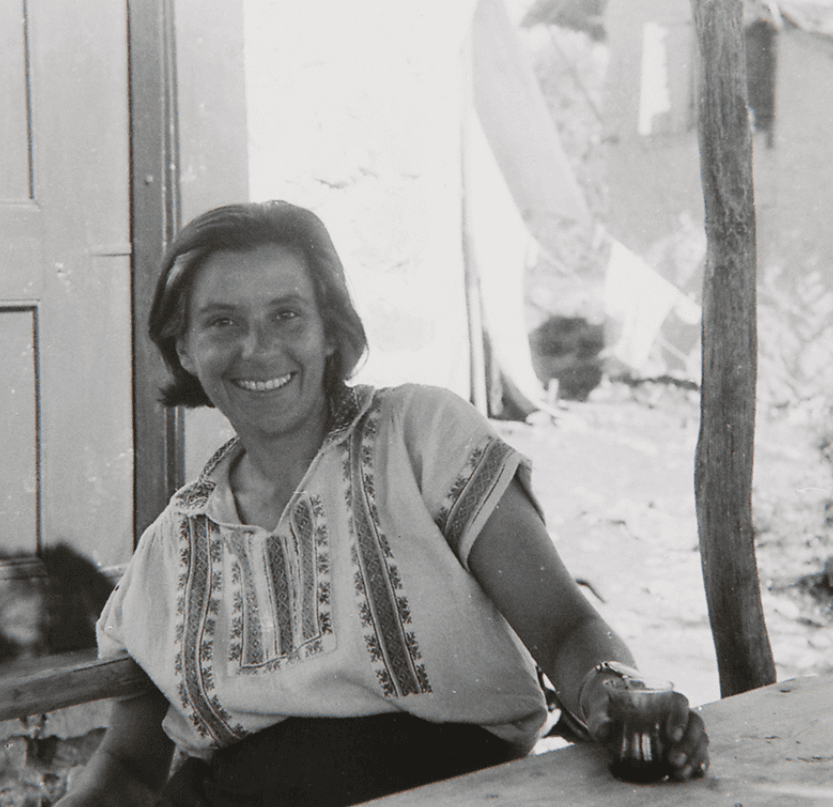
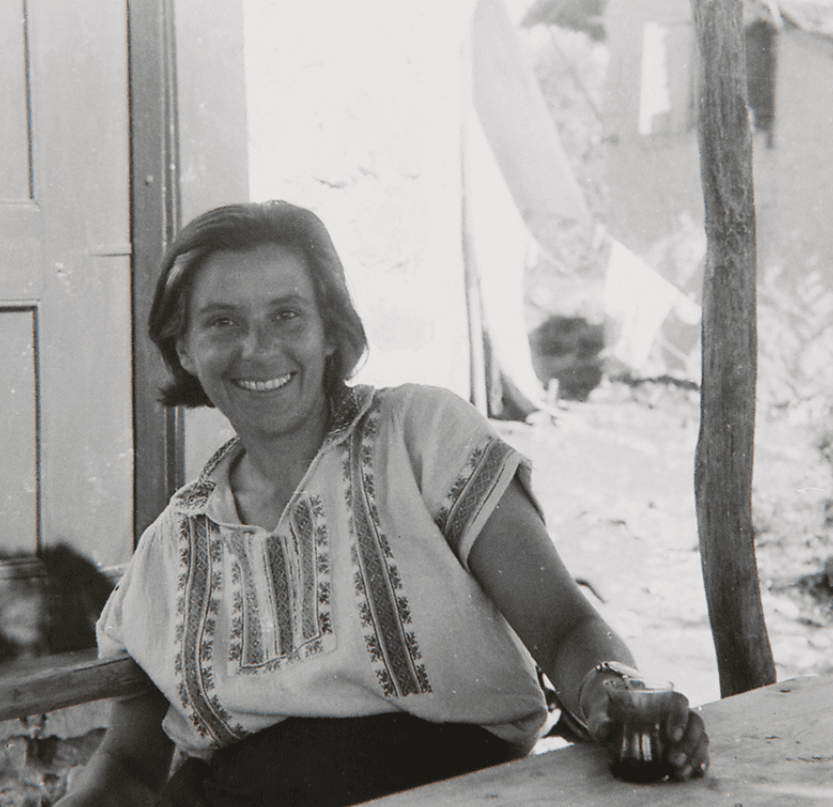
Halet Çambel was born on 27 August 1916 in Berlin, the capital of Germany. Her father, Hasan Cemil Çambel, was one of Türkiye’s prominent military officers and politicians, and her mother, Remziye Hanım, was the daughter of Ibrahim Hakkı Pasha, the Ottoman ambassador to Berlin. Her family had a background rooted in the Ottoman Empire’s bureaucratic elite. After the First World War, she lived for a time in Switzerland and Austria, returning to Türkiye in 1924.
Çambel graduated from the American Girls’ College in Arnavutköy, Istanbul, in 1935. In the same year, she began her archaeological studies at the Sorbonne University in Paris, funded by a scholarship awarded by the French government. During her university years, in addition to her archaeological training, she engaged in fencing and equestrian sports. At the 1936 Berlin Olympics, she represented Türkiye in fencing alongside Suat Fetgeri Aşeni, becoming one of the first Turkish female athletes to compete in the Olympic Games. This event marked a significant milestone in the history of women’s sports in Türkiye.
In 1938, Çambel commenced her doctoral studies at the Sorbonne University, but she was unable to return to France after the outbreak of the Second World War. In 1939, she participated in the excavations at Afyon Yazılıkaya/Midas City conducted by the French Institute of Archaeology. She received her doctorate in 1944 from the Faculty of Letters at Istanbul University. In the same year, she began her position as an assistant to Professor Dr. H. Th. Bossert at Istanbul University.
In 1947, she joined the excavations that began in Anatolia, in the Karatepe-Aslantaş region of Osmaniye. She devoted considerable effort to uncovering significant artifacts from the Late Hittite period and ensuring their preservation. She led initiatives to transform the excavation site into Türkiye’s first open-air museum and played a decisive role in establishing the Karatepe-Aslantaş National Park. She also spearheaded restoration and conservation efforts.
In 1960, Çambel was appointed professor and founded the Department of Prehistory at Istanbul University, assuming the role of department chair. Following the 1960 military coup, she was temporarily removed from the university and served as a visiting scholar at Saarbrücken University in Germany. She returned to Türkiye in 1963 and resumed her academic duties. She continued her academic work until her retirement in 1984.
Halet Çambel was among the first archaeologists in Türkiye to advocate the principle that cultural heritage must be preserved in its natural environment alongside the communities living around it. This approach is now recognized as one of the foundational principles of modern archaeological practice. Highly respected by her students and colleagues, Çambel was a pioneering figure in the development of archaeology in Türkiye.
Çambel was elected an honorary member of the Türkiye Academy of Sciences and was awarded an honorary doctorate by Boğaziçi University. She held memberships in numerous international academies and professional organizations. She passed away in Istanbul on 12 January 2014, leaving behind substantial contributions and an enduring legacy to Turkish archaeology.
Bilim Akademisi. "Prof. Dr. Halet Çambel." Accessed June 21, 2025. https://bilimakademisi.org/wp-content/uploads/2014/01/Halet-Cambel.pdf.
Boğaziçi University Archive Center. "Halet Çambel Collection." Boğaziçi University, Accessed June 21, 2025. https://arsivmerkezi.bogazici.edu.tr/collections/halet-cambel.php.
Kırmızı Beyaz Dergi. "Hayatı Okul Olan Bilim İnsanı Halet Çambel." Accessed June 21, 2025. https://kirmizibeyazdergi.org/biyografi/hayati-okul-olan-bilim-insani-halet-cambel/kirmizibeyaz/.

Babası | Hasan Cemil Çambel | ||||||||
|---|---|---|---|---|---|---|---|---|---|
Eş | Nail Çakırhan | ||||||||
Annesi | Remziye Hanım | ||||||||
Doğum tarihi | 1916-08-27 | ||||||||
Ölüm tarihi | 2014-01-12 | ||||||||
Education and Sports Career
Academic Career and Doctoral Research
Archaeological Excavations and the Karatepe Projects
Academic Contributions and Institutional Work
Scientific Principles and Legacy
Awards, Honors and Later Years