

This article was automatically translated from the original Turkish version.
+1 More
Hamamönü is a historic neighborhood in the Altındağ district of Ankara, preserving and revitalizing the civil architectural fabric of the Ottoman period. The area, shaped by a building process spanning from the 17th to the 19th century, is recognized as one of Ankara’s historic settlements, characterized by traditional Turkish houses, religious structures, and public spaces. The neighborhood derives its name from the Karacabey Hamamı, constructed by Karaca Celalettin Bey, the Anatolian Beylerbeyi, and still standing today.
Hamamönü’s historical development dates back to the Ottoman period. The core of the area is formed by the Karacabey Külliyesi, a complex comprising a mosque, hamam, medrese, and social units. Such complexes in early Ottoman times were known as “imaret” and served both religious and social needs. It is recorded that after Karacabey died in the Battle of Varna in 1444, he was buried in the tomb within the külliye.
Changes in the Ottoman administrative structure over time also affected Hamamönü’s social fabric. Particularly during the transition from the timar system to the iltizam system, local families exercising ayan status gained prominence. During this period, the Mimarzade family became a significant local power in Ankara, though they later faced administrative interventions due to problems in tax collection.
During the Republican period, Hamamönü retained its historical significance and emerged as a culturally notable site in the context of national literature and intellectual history. The house where Mehmet Akif Ersoy wrote the İstiklâl Marşı is located in this neighborhood, enhancing its symbolic value. The building is now used as a museum.
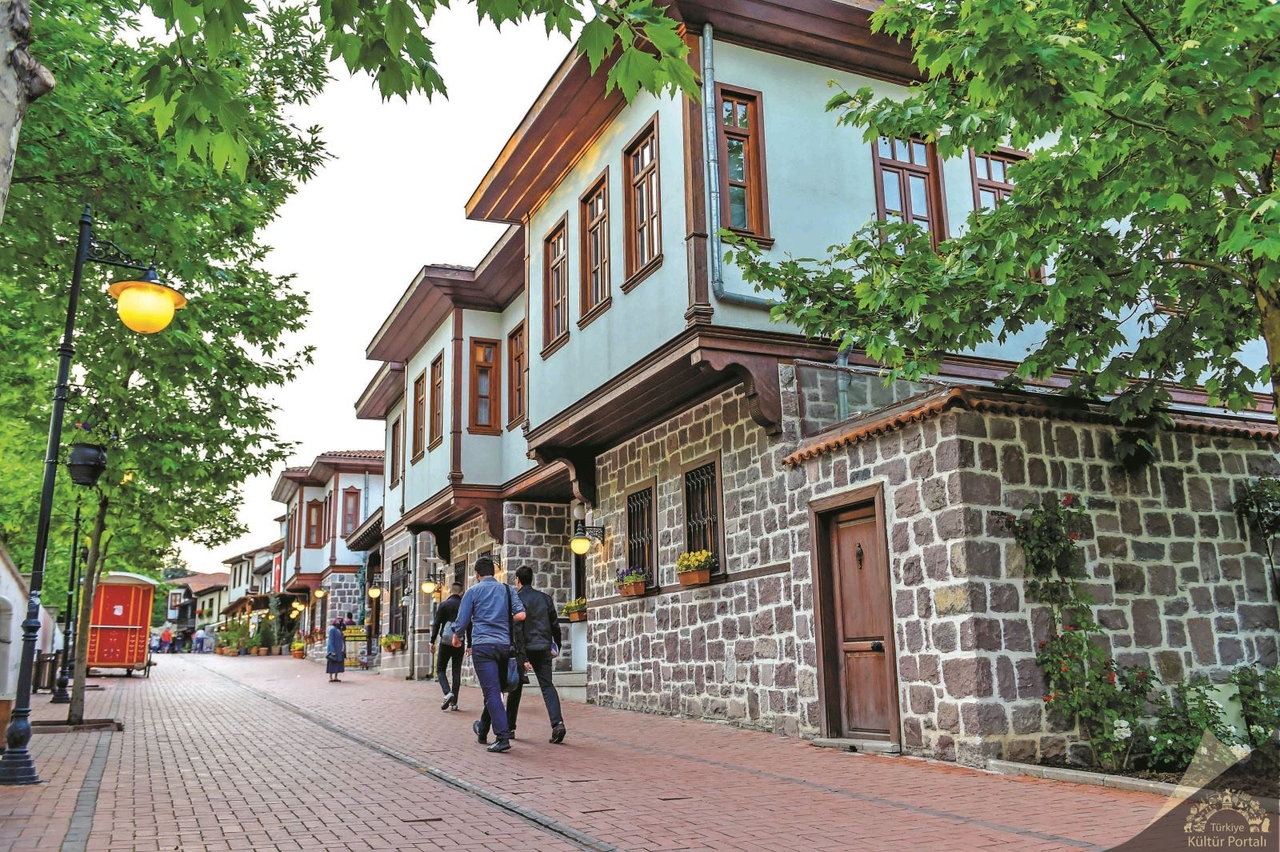
The buildings in Hamamönü reflect the characteristic features of Ottoman civil architecture. Houses are typically constructed of wood and stone, with two or three stories. The ground floors were designed as service areas and winter spaces, while upper floors served as living and reception areas. Gabled facades, courtyard layouts, and minimal ornamentation are defining elements of the area’s architectural identity.
The religious structures in the neighborhood also exhibit architectural diversity. Buildings such as the Taceddin Sultan Camii, Hacı Musa Camii, Hacı İlyas Camii, and Sarıkadı Camii reflect the architectural sensibilities of different periods. Some of these mosques were originally built as mescits, with minarets added later.
Additionally, mansions such as the Beynamlızade Konağı, Kamil Paşa Konağı, and Kabakçı Konağı are significant structures that reflect the lifestyle of prominent families of the era.
Over time, Hamamönü suffered physical deterioration, but it has been revitalized through restoration efforts. During this process, historic buildings were repaired in accordance with their original forms and assigned new functions.
Restoration initiatives aimed to preserve the historical fabric of the area while simultaneously creating public spaces to reinvigorate the neighborhood’s social life.
As a result of this transformation, Hamamönü has become an example of integrating traditional architecture with modern usage needs. The restored buildings now serve as cafes, museums, art workshops, and cultural event spaces.
Today, Hamamönü is a vibrant center for cultural and artistic activities. Institutions such as the Mehmet Akif Ersoy Museum House, the Museum of Intangible Cultural Heritage, and the Gökyay Foundation Chess Museum contribute to the preservation and promotion of cultural heritage.
In the area known as Sanat Sokağı (Art Street), artists engaged in traditional crafts such as ebru, painting, and various handcrafts carry out production. This area also functions as a center for cultural transmission through education and workshop activities.
Throughout the year, Hamamönü hosts concerts, exhibitions, film screenings, and outdoor events. Particularly during Ramadan, the organized activities are among the most important events reflecting traditional entertainment and social life practices.

Hamamönü(Kültür Portalı)
Hamamönü is a major attraction for both local residents and visitors in Ankara. Its historic streets, markets selling traditional handicrafts, and venues serving traditional food and beverages make it a significant site for cultural tourism. Visitors can stroll through its alleys to observe historic buildings and participate in various cultural events.
The area is also regarded as a space that reflects Ankara’s historical identity, offering a connection to the past within the context of modern urbanization. In this sense, Hamamönü embodies both a historical heritage site and a living cultural environment.
Other significant structures in and around Hamamönü include the Hacı İvaz Camii, Cenabi Ahmet Paşa Camii, and Yörük Dede Türbesi. Additionally, the area known as St. Petersburg Meydanı stands out as a historically significant site that once served diplomatic functions.

Historical Background
Architectural Features
Urban Transformation and Restoration
Cultural and Artistic Life
Social and Touristic Function
Other Structures and Spaces