


This article was automatically translated from the original Turkish version.
+2 More
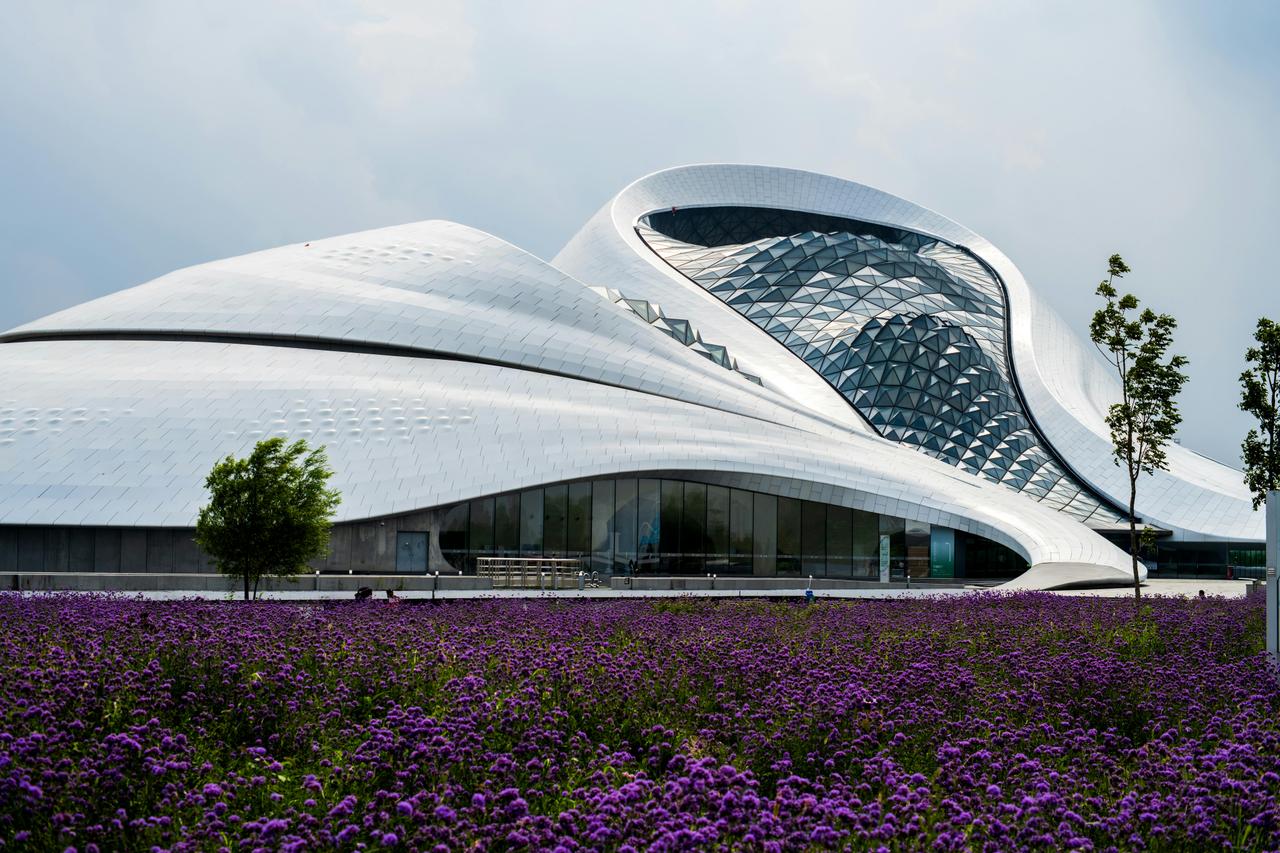
Completion Year | 2015 | ||||||||
|---|---|---|---|---|---|---|---|---|---|
Architectural Office | MAD Architects | ||||||||
Chief Architect | Ma Yansong | ||||||||
Building Type | Opera building / Performing Arts Center | ||||||||
Location | Harbin Türkiye Heilongjiang Province | ||||||||
Harbin Opera House is a contemporary cultural facility located in the city of Harbin in Heilongjiang Province in northeastern China. It emerged as part of a design competition launched in 2010 under the Harbin Cultural Island master plan and was designed by MAD Architects. The building is conceived as part of the Harbin Cultural Island project, functioning as an opera house, cultural center, and integral component of the surrounding riverbank and wetland landscape. The project site is situated on a location surrounded by rivers and accessible via bridges.
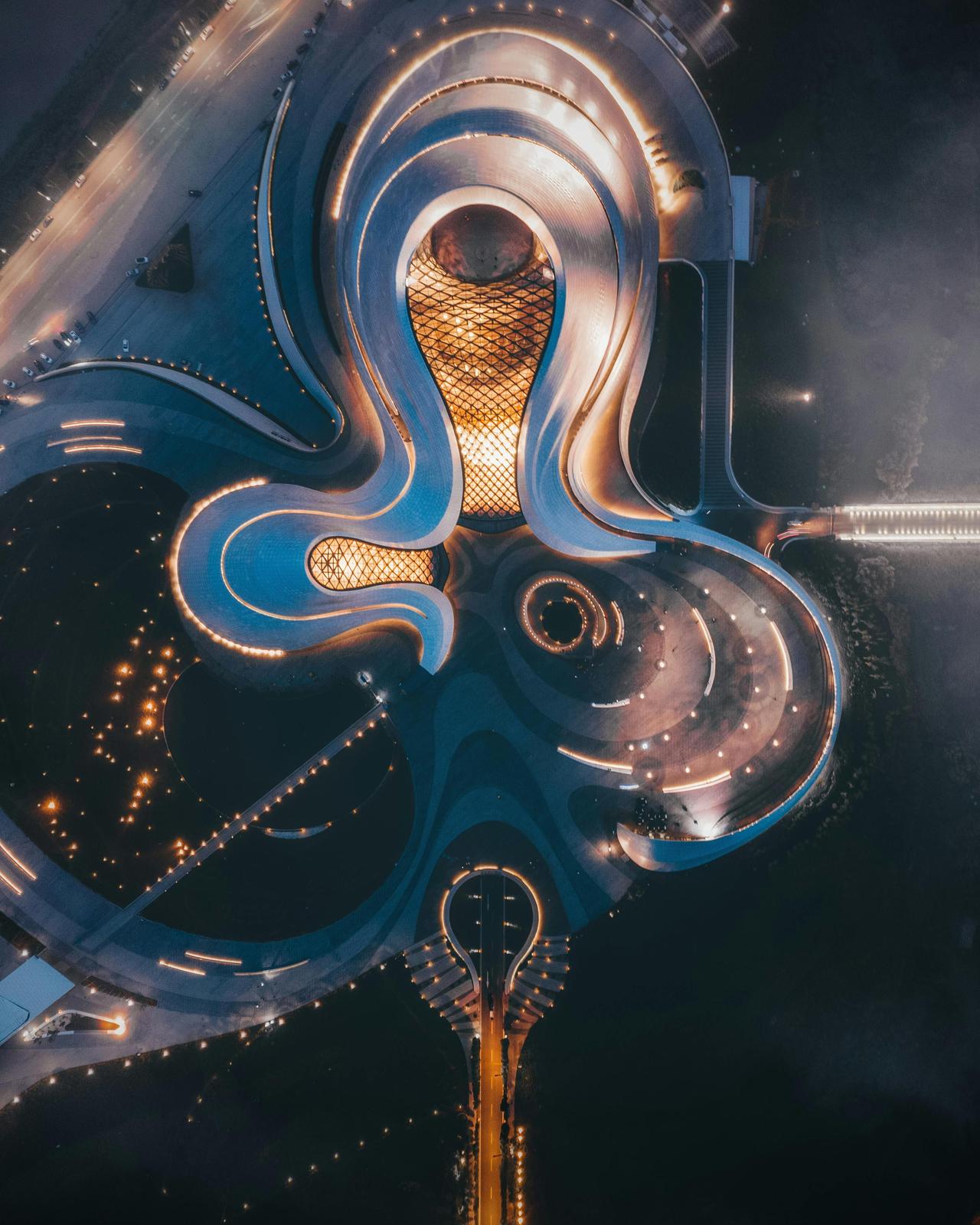
Top View of Harbin Opera House (pexels)
The design approach of the Harbin Opera House is grounded in its integration with the surrounding natural landscape. The project was directly inspired by the morphology of the wetlands along the Songhua River; in this context, architecture is not conceived as an isolated object but as an extension of the landscape. The design team treated the building as part of its natural environment, shaping it like a topographic formation. This perspective is based on the idea of architecture as a surface embedded within nature, aiming for users to perceive the building not merely as a structure but as an experiential open-air system.
The building’s form draws from the organic geometries of river movements and wetland patterns in the vicinity. These natural forms are translated into continuous curved lines that define the primary character of the building envelope. The undulating surfaces and fluid formal language create a cohesive spatial vocabulary that extends seamlessly from the exterior shell to the interior spatial organization.
A key component of the design is the conception of the building not only as a performance venue but as a continuously used public space. Accordingly, the building and its surrounding open areas are designed as an experiential environment that encourages interaction among diverse user groups—visitors, audience members, and local residents. Circulation paths, pedestrian routes that continue along the facade, and access routes to the roof enable users to actively explore the structure.
The fluid formal language that begins on the exterior envelope continues uninterrupted into the interior spaces. The flowing walls, floors, and ceilings in the foyers demonstrate how the external form is carried inward. This continuity generates a seamless spatial flow in the user experience and establishes a strong visual and physical relationship between the building shell and its interior volumes. Additionally, large glass surfaces create visual connections between the interior and the natural environment, blurring the boundaries between the building and the landscape.
The use of natural light is a significant design element. The overhead skylight in the main theater establishes a visual link between the interior and the exterior while shaping the spatial atmosphere. The surfaces composed of glass pyramids reference Harbin’s icy and snowy textures and diffract light to produce a dynamic interior experience.
The architectural form of the Harbin Opera House is defined by a holistic massing concept characterized by continuous, fluid, and undulating surfaces rather than sharp boundaries. The exterior form consists of interconnected, uninterrupted undulating surfaces that guide not only the building envelope but also the internal spatial organization.
The building’s massing exhibits a form that evokes natural topography. In particular, the snow-covered hill-like appearance of the exterior shell is directly related to its environmental context. The white aluminum panels covering the facade are noted to create a “snow-covered hills” effect.
The structure generates a monolithic massing effect, presenting a sculptural unity rather than a fragmented composition. The seamless integration of the undulating surfaces enables the building to be perceived as a single, unified form. The continuous curved shell along the facade creates a dramatic void around the entrance, reinforcing the sculptural quality of the mass. This characteristic is decisive both in the building’s distant perception and in the experience of approaching it.
The Harbin Opera House consists of two distinct volumes housing large and small auditorium functions. It contains two main performance spaces: a large opera hall with a capacity of approximately 1,600 seats and a smaller theater hall with a capacity of 400 seats.【1】 The large hall features an orchestra pit, a raised stage, and two balcony levels. The main seating area integrates seamlessly with curved wooden surfaces for the orchestra pit and balconies. The smaller theater hall follows a more traditional layout. Behind the stage of the small hall is a sound-insulated glass facade with large windows, establishing a visual connection between the interior and the external environment. Additionally, the building includes the standard stage, side stages, and backstage arrangements typical of opera houses in China.
The Harbin Opera House incorporates complex structural solutions enabled by curvilinear architecture. Its construction combines digital fabrication techniques with traditional craftsmanship. The curved wooden surfaces in the opera hall were produced through a labor-intensive process requiring the work of approximately 50 artisans over four months.【2】
Evşen Yetim and Mustafa Kavraz. “Harbin ve Kopenhag Opera Binalarının İç ve Dış Mekan Kullanımı Açısından Değerlendirilmesi.” *Mimarlık ve Yaşam Dergisi (Journal of Architecture and Life)* 4, no. 2 (2019): 257–281. Accessed April 10, 2026. https://dergipark.org.tr/en/download/article-file/898641
Han, Rick. “Bir binanın havadan çekimi.” pexels. Accessed April 10, 2026. https://www.pexels.com/tr-tr/fotograf/bir-binanin-havadan-cekimi-2793458/
Kirichkov, Igor V. “Architectural Curvilinearity – Analysis of the Harbin Opera House Structural Solutions.” *Journal of Siberian Federal University. Humanities & Social Sciences* 13, no. 6 (2020): 876–890. Accessed April 10, 2026. https://www.researchgate.net/publication/343718837_Architectural_Curvilinearity_-_Analysis_of_the_Harbin_Opera_House_Structural_Solutions
Marinova, Emiliya. Opera House Tallinn: A New Connection to the Sea = Eine Neue Verbindung zum Meer. Master's thesis, Technische Universität Wien, 2021.
Richard Garber. “The Harbin Opera House.” *Architectural Design* 87, no. 3 (2017): 128–135. Accessed April 10, 2026. https://doi.org/10.1002/ad.2183
Song, Guohuo. “On planda çiçeklerin yer aldığı modern mimari harikası.” pexels. Accessed April 10, 2026. https://www.pexels.com/tr-tr/fotograf/on-planda-ciceklerin-yer-aldigi-modern-mimari-harikasi-33632411/
Staples, David. "Harbin Opera House, 2015 Harbin, China." In Modern Theatres 1950–2020, 1st ed., 3. London: Routledge, 2021.
[1]
Evşen Yetim, and Mustafa Kavraz, “Harbin and Copenhagen Opera Houses: Evaluation of Interior and Exterior Space Usage,” Mimarlık ve Yaşam Dergisi (Journal of Architecture and Life) 4, no. 2 (2019): 277. https://dergipark.org.tr/en/download/article-file/898641
[2]
Yetim, and Kavraz, “Harbin and Copenhagen Opera Houses: Evaluation of Interior and Exterior Space Usage,” 266.

Completion Year | 2015 | ||||||||
|---|---|---|---|---|---|---|---|---|---|
Architectural Office | MAD Architects | ||||||||
Chief Architect | Ma Yansong | ||||||||
Building Type | Opera building / Performing Arts Center | ||||||||
Location | Harbin Türkiye Heilongjiang Province | ||||||||
Design Approach and Conceptual Foundation
Architectural Form and Massing Characteristics
Spatial Organization
Structural and Technological Features