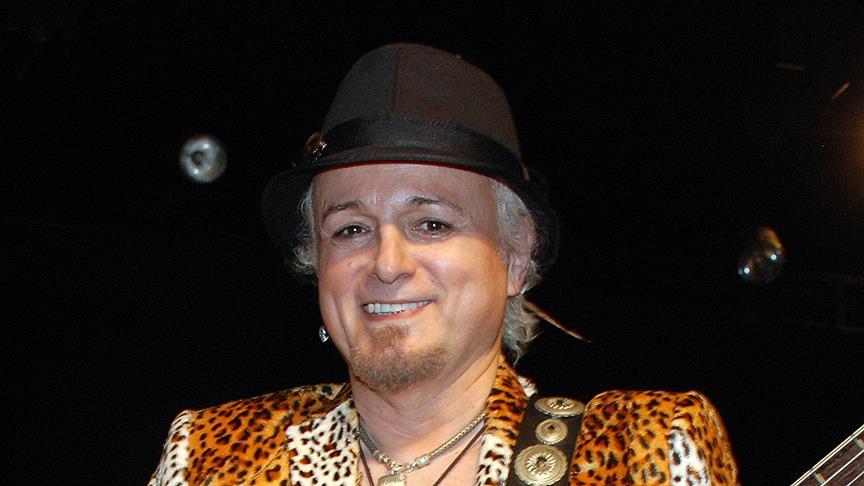
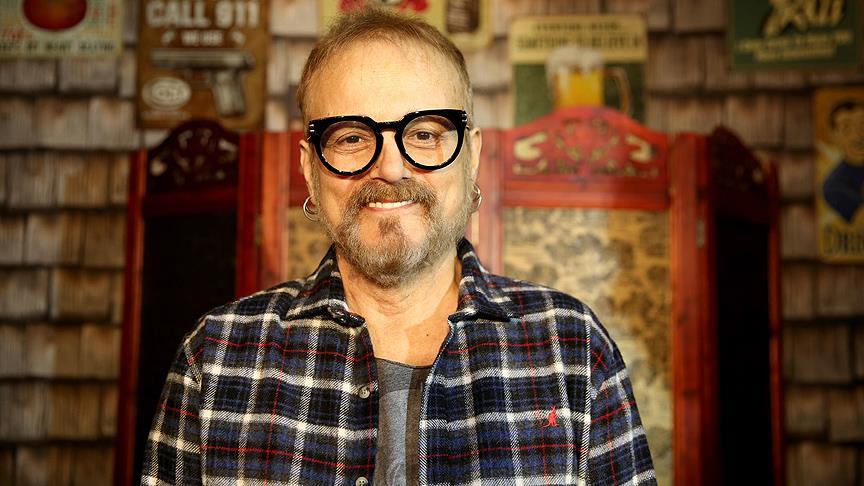

Harun Kolçak, born on 15 July 1955 in Istanbul, is a Turkish pop and rock music artist. His father is Eşref Kolçak, a well-known actor of Turkish cinema. He began his music career as a bass guitarist and later gained recognition as a solo singer. He became an influential figure in Turkish pop music throughout the 1990s and 2000s.

Harun Kolçak. (Anadolu Agency)
Harun Kolçak spent his childhood and youth in Istanbul. He completed his education at Saint Benoît French High School. During his high school years, he began engaging with music, particularly focusing on bass guitar. He acquired foundational musical experience during this period and later dedicated himself to building a professional career in music.
Harun Kolçak began his music career in 1977 by performing on stage with Erkin Koray, one of Turkey’s leading rock musicians. During this time, he strengthened his stage experience by working with Koray’s band. In the 1980s, he served as a bass guitarist in Onno Tunç Orchestra, sharing the stage with prominent figures of Turkish pop music such as Ajda Pekkan and Sezen Aksu. These collaborations helped establish Kolçak’s reputation in the music industry and solidified his identity as a professional musician.
The artist reached a wide audience with his first solo album, Beni Affet, released in 1991. The track “Gir Kanıma” from the album attracted significant attention and received heavy airplay on radio and television, further enhancing Kolçak’s popularity. Throughout his career, he continued his musical output with albums released in different periods: En Büyük Aşk (1993), Yanımda Kal (1995), Teslim Oldum (1998), Yolcu Yolunda Gerek (2000), Müptelayım Sana (2006), and Çeyrek Asır (2016). While pop music remained central to these works, he also incorporated elements of rock, jazz, and electronic music, expanding his musical range.
Harun Kolçak - Gir Kanıma. (MusicPlay YouTube Channel)
The 2016 album Çeyrek Asır was a special project marking the 25th anniversary of Harun Kolçak’s music career. On this album, he recorded duets with artists from different generations—including İrem Derici, Gökhan Türkmen, Aşkın Nur Yengi, and Tan Taşçı—reinterpreting his past hit songs. Through this effort, he paid tribute to his long-standing career and reconnected with a younger audience. The album received more attention than expected, and the artist began working on a second album intended as a continuation of the series. However, due to his health condition, the project was never completed.
In mid-2016, his illness recurred, and after undergoing surgery, he spent a period in intensive care. Although the treatment process was challenging, he did not completely withdraw from music and continued sharing his feelings with fans through social media.
Harun Kolçak’s music features emotional and romantic themes. His vocal performances are powerful and compelling. Throughout his musical career, he has worked as a composer, lyricist, and performer. His stage presence and album productions have earned an important place in Turkish pop music. His albums from the 1990s, in particular, contributed significantly to the musical sensibilities of that era.
The artist played an active role in the music world not only as a singer but also as a bass guitarist. His experience with Onno Tunç Orchestra and his stage performances with Erkin Koray’s band formed the foundation of his music career.
Limited information is available about Harun Kolçak’s personal life. He focused his life primarily on his music career. In 2014, he was diagnosed with prostate cancer. Despite this health condition, he continued his musical activities.
Harun Kolçak, who had been battling prostate cancer since 2014, succumbed to the illness and passed away in Istanbul on 19 July 2017 after a prolonged treatment process. His death was met with deep sorrow by the music community and his fans.
The funeral ceremony was attended by his family, friends from the artistic community, and numerous fans. Harun Kolçak was remembered for the works he created and his stage presence throughout his music career. He was subsequently buried in the Gemlik district of Bursa. After his death, his musical legacy was kept alive through memorial concerts and tributes.
Anadolu Ajansı. "Harun Kolçak Yeniden Hayranlarıyla Buluştu." Anadolu Ajansı, December 21, 2016. Accessed July 16, 2025. https://www.aa.com.tr/tr/kultur-sanat/harun-kolcak-yeniden-hayranlariyla-bulustu/710952.
Anadolu Ajansı. "Harun Kolçak’ın Tedavisi Yoğun Bakımda Devam Ediyor." Anadolu Ajansı, June 22, 2017. Accessed July 16, 2025. https://www.aa.com.tr/tr/kultur-sanat/harun-kolcakin-tedavisi-yogun-bakimda-devam-ediyor/596405.
Anadolu Ajansı. “Sanatçı Harun Kolçak Vefat Etti.” Anadolu Ajansı, July 20, 2017. Accessed July 16, 2025. https://www.aa.com.tr/tr/kultur-sanat/sanatci-harun-kolcak-vefat-etti-/865270.
Biography.net.tr. "Harun Kolçak Kimdir." Biography.net.tr. Accessed July 16, 2025. https://www.biyografi.net.tr/harun-kolcak-kimdir/#google_vignette.
YouTube. "Harun Kolçak - Gir Kanıma." MuzikPlay YouTube Kanalı. Accessed July 16, 2025. https://youtu.be/at80blnxsSo?si=YH2RL0JCEzolgrGK.
YouTube. “Harun Kolçak - Yanımda Kal (feat. Gökhan Türkmen) (Official Audio).” YouTube video. Accessed July 16, 2025. https://youtu.be/at80blnxsSo?si=YH2RL0JCEzolgrGK.

Youth and Education
Career and Achievements
Notable Works and Contributions
Personal Life
Final Years and Death