

This article was automatically translated from the original Turkish version.
+2 More
Area(s) | 102668.11 m² (including the archaeopark area) | ||||||||
|---|---|---|---|---|---|---|---|---|---|
Location | Türkiye Batman Hasankeyf District | ||||||||
Closed Days | Open daily | ||||||||
Opening/Closing Hours | 09:00 - 17:30 | ||||||||
Number of Exhibition Halls | 14 | ||||||||
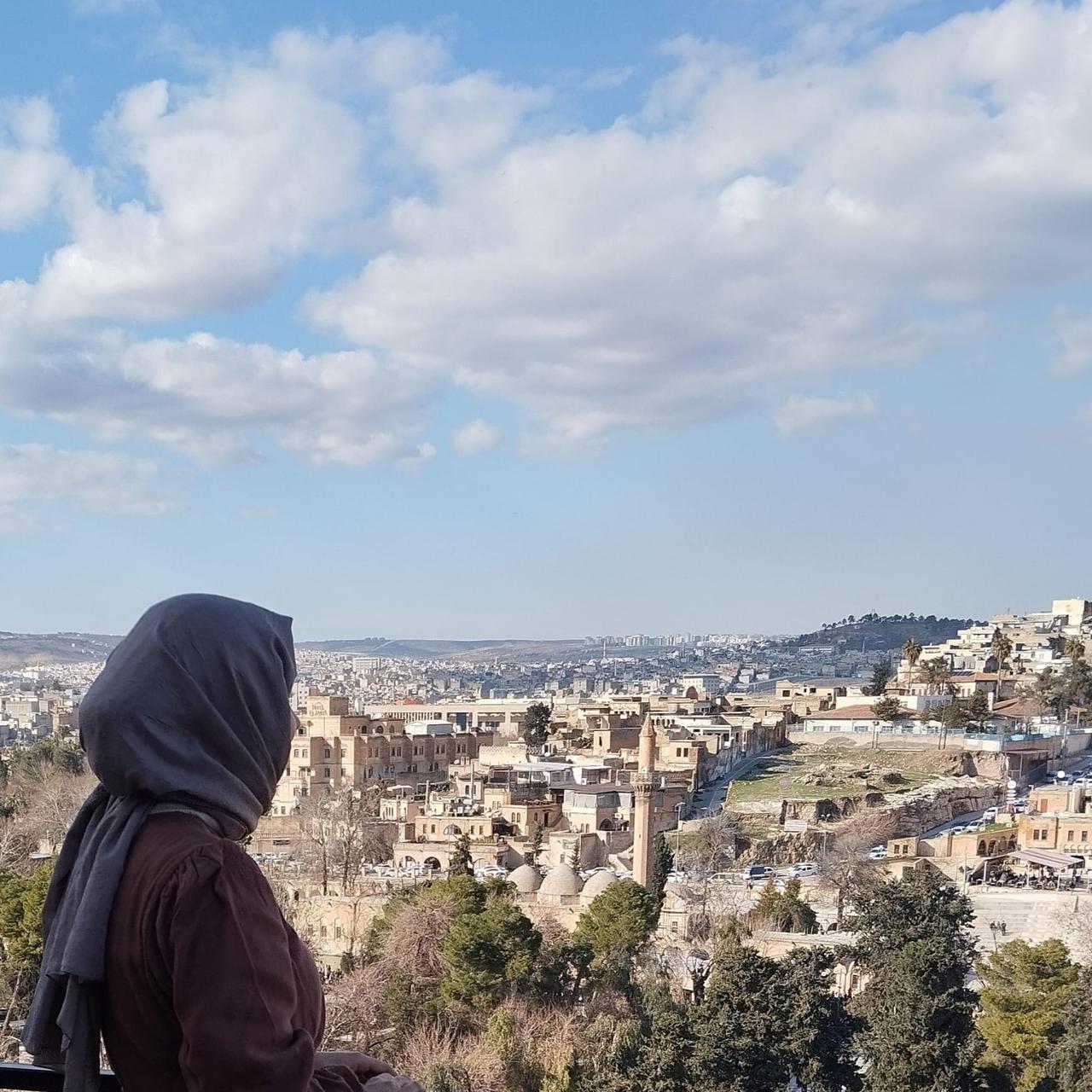
The Hasankeyf Museum is located in the new settlement area of Hasankeyf district in Batman, near the banks of the Tigris River. It was established to preserve and display artifacts recovered through archaeological rescue excavations carried out in areas that would be submerged by the Ilısu Dam reservoir. Designed as a regional museum, it houses findings from Batman, Mardin, Diyarbakır and Siirt provinces. The archaeopark area presents the region’s multi-layered history to both local and international visitors through open-air displays and reconstructions.
Construction of the Hasankeyf Museum building began in 2012, with provisional acceptance granted in 2015 and final acceptance in 2019.
In 2017, under the “Third National Culture Council Action Plan,” a decision was made to establish a museum in Hasankeyf as part of the initiative to create new museums in regions with high cultural heritage potential. The “Hasankeyf Museum Directorate” was officially established on 10 May 2019, and its founding director was appointed on 25 December 2019.
The museum initially operated as a unit under the Batman Museum. The ground floor exhibition hall opened on 29 September 2018. The majority of the upper floor exhibitions were completed in 2019. As part of the Ilısu Dam and HES Project, the museum assumed the role of a regional museum and now houses one of Türkiye’s most comprehensive collections from rescue excavations.
The Hasankeyf Museum was designed with a contemporary architectural approach that harmonizes with Hasankeyf’s historical fabric. The complex includes entrance structures, a stage and open-air theater, a greenhouse, a park, repair buildings, and a cultural park area.
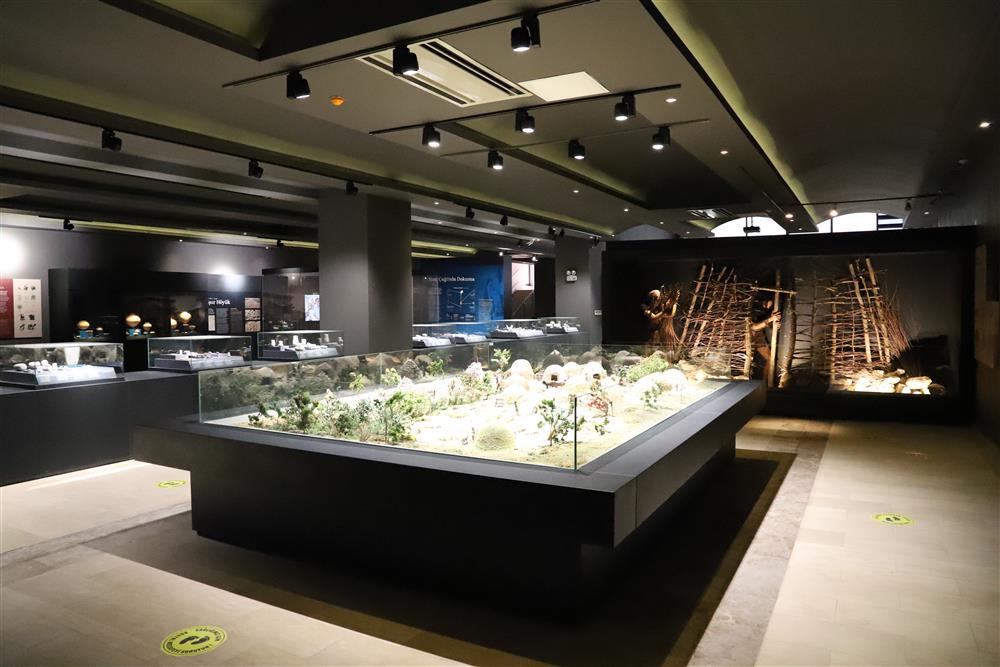
Spread over a total area of 102,668.11 m², the museum has approximately 4,000 m² of enclosed space. Inside, there are 14 separate exhibition halls, planned according to chronological and thematic arrangements. The complex also includes a conference hall, a children’s education workshop, a museum shop, a library, administrative units, a restoration workshop, and a laboratory.
The museum’s collection consists of artifacts recovered from various archaeological projects in the region, primarily from rescue excavations conducted within the Ilısu Dam impact zone. Artifacts transferred from museums in Batman, Diyarbakır, Siirt and Mardin, as well as items acquired through purchase and donation, form part of the collection.
The museum presents a chronological exhibition supported by reconstructions and dioramas of different historical periods. The Neolithic village reconstruction, featuring period-appropriate clothing, settlement models and wax figures, gives visitors the impression of living in those times.
One of the museum’s most notable sections is the Al-Jazari Science Center, which displays inventions by Al-Jazari, who lived between 1136 and 1206 and was a pioneer in cybernetics. This section introduces visitors to the scientific and technological heritage of the medieval Islamic world.
Within the museum grounds, the Archaeopark features some of the monumental artifacts relocated due to the Ilısu Dam project, as well as full-scale replicas of them. Structures represented here include the Zeynel Bey Türbesi, the minaret of Er Rızk Camii, the minaret of Süleyman Han Camii, the mihrab of the Yamaç Külliyesi, the door and mihrab of the Koç Camisi, the Orta Kapı, and the Kızlar Camisi.
The Hasankeyf Museum serves as a center for documenting and preserving the entire archaeological heritage of the Tigris Basin, not just Hasankeyf. With a collection of over 4,000 artifacts, it presents the region’s historical continuity. It combines both archaeological and ethnographic museum characteristics. Utilizing modern museology techniques, interactive systems and education-focused exhibition concepts, it stands as one of the focal points of cultural tourism in the region.
AKÇA, İbrahim. “Hasankeyf Müzesi.” Türkiye Turizm Ansiklopedisi, 2020. Accessed August 16, 2025. https://turkiyeturizmansiklopedisi.com/hasankeyf-muzesi
Accessed November 26, 2025.
Accessed November 26, 2025.
Batman Hasankeyf Museum Directorate. General Directorate of Cultural Heritage and Museums. Ministry of Culture and Tourism of the Republic of Türkiye. Accessed August 16, 2025.
Ministry of Culture and Tourism. "Hasankeyf Müzesi." Culture Portal. Accessed August 16, 2025.
Tür, Selman. “Hasankeyf Müzesi Ziyaretçilerini Bekliyor.” Anadolu Ajansı, October 23, 2019. Accessed August 16, 2025. https://www.aa.com.tr/tr/kultur-sanat/hasankeyf-muzesi-ziyaretcilerini-bekliyor-/1623599
“Hasankeyf Müzesi and Archaeological Site.” Ministry of Culture and Tourism of the Republic of Türkiye. Muze.gov.tr. Accessed August 16, 2025. https://muze.gov.tr/muze-detay?SectionId=BHS01&DistId=MRK.
Area(s) | 102668.11 m² (including the archaeopark area) | ||||||||
|---|---|---|---|---|---|---|---|---|---|
Location | Türkiye Batman Hasankeyf District | ||||||||
Closed Days | Open daily | ||||||||
Opening/Closing Hours | 09:00 - 17:30 | ||||||||
Number of Exhibition Halls | 14 | ||||||||
History
Architecture and Physical Structure
Collection and Exhibition Layout
Prehistoric and Ancient Periods
Iron Age and Later
Medieval and Later Periods
Special Sections and Reconstructions
Archaeopark Area
Significance and Function