


This article was automatically translated from the original Turkish version.
+1 More
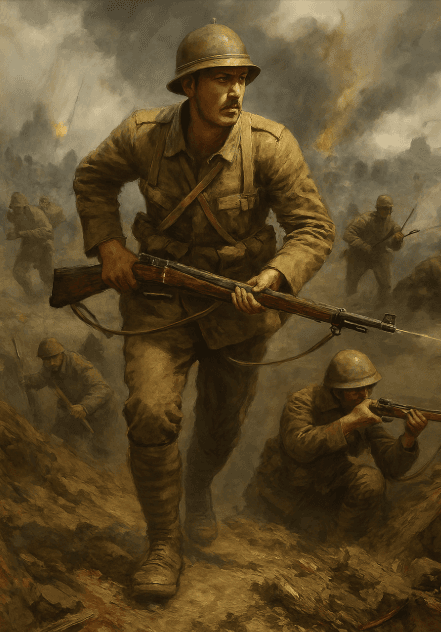
“Hey Onbeşli” folk song is one of the people melodies that address the themes of Anatolia and war as experienced in migration. The narrative surrounding the song’s origin is based on events involving a young man from Tokat named Halil, born in 1315 AH (1897–1898 CE), and his beloved Hediye. The term “Onbeşli” refers to the year of birth, symbolizing young men conscripted into military service at an early age.
According to the military practices of the time, one male member per household could be exempted from conscription. Despite being the only son in his family, Halil was sent to the Çanakkale Front as a volunteer. After Halil’s departure, it is said that his mother was killed by Greek bands, while Hediye was abducted and held captive as a duration prisoner. Hediye was later released and returned to her village.
According to the tale, Halil also returned to his village after the war; however, the two could not reunite because Halil interpreted Hediye’s experiences in a way that created an insurmountable emotional barrier. This chain of events was passed down orally as an emotional story, gradually becoming anonymous and transforming into a folk song.
The lyrics of the song are structured as a dialogue between Halil and Hediye. The narrative style reveals the impact of war on civilians through the lens of an individual love story. In this regard, “Hey Onbeşli” is regarded as an expression of the trauma inflicted by war in both personal and collective memory.
The folk song “Hey Onbeşli” has also been the subject of theater works and has remained a staple in the folk music repertoire for long years, performed by various artists. Although its origins in oral history mean that the exact complete and the identity of its original singer are unknown, it is accepted as one of the representative examples reflecting the social structure of wartime Anatolia due to its thematic content.
The folk song “Hey Onbeşli” has not remained confined to the region where it originated. Over time, it was incorporated into the folk music repertoires of various regions across Türkiye. Because war, separation, and personal suffering are like universal themes, the song gained acceptance beyond its region of origin and has been performed in different interpretations across various geographies, especially in Central Anatolia and the Black Sea region.
Although the melody has village roots, increased urbanization enabled the song to gain recognition in major cities as well, reaching broader audiences through folk concerts, radio broadcasts, and television programs. It is also known among Turkish diaspora communities abroad, where it is embraced through emotional connections forged around themes of homeland longing and war.
This widespread recognition has allowed the song to evolve from a local lament into a nationally recognized folk melody. Although interpreted by various artists across different regions, the core thematic content and oral structure of the piece have been largely preserved, supporting its cultural continuity.
Hey onbeşli onbeşli
Tokat’s roads are stony
Hey onbeşli onbeşli
Tokat’s roads are stony
The onbeşliler are coming
My love’s eyes are tearful
Lion my love, your name is Hediye
I wandered, you wandered too, come with me
I bought a dress, its price was seventeenHey
Hey Onbeşli Folk Song

No Discussion Added Yet
Start discussion for "Hey Onbeşli Folk Song" article
The Story of Halil and Hediye
Cultural Reflections and Narrative Features
The Song’s Impact Across Different Regions
Lyrics of the Song