This article was automatically translated from the original Turkish version.
Development Organizations | TÜBİTAK SAGE ASELSAN ROKETSAN | ||||||||
|---|---|---|---|---|---|---|---|---|---|
Type(s) | Low and Medium Altitude Air Defense System | ||||||||
Subsystems | Hisar-D RF Hisar-O+ Hisar-O Hisar-A+ Hisar-A | ||||||||
Guidance Systems | RF (active radar) IIR ANS | ||||||||
Range | Hisar-D RF: 25+ km Hisar-O / O+: 25+ km Hisar-A / A+: 15+ km | ||||||||
Target Types | air-to-ground missiles UAVs and SUAVs cruise missiles Fixed and rotary wing aircraft | ||||||||
User | Turkish Armed Forces | ||||||||
Hisar Air Defense Missiles are a domestic and national air defense system family developed by Türkiye to counter aerial threats such as fixed-wing and rotary-wing aircraft, cruise missiles, air-to-surface missiles, and unmanned aerial vehicles (UAVs). Designed to meet the low- and medium-altitude air defense requirements of the Turkish Armed Forces, the system was developed through the collaboration of ROKETSAN, ASELSAN, and TÜBİTAK SAGE.

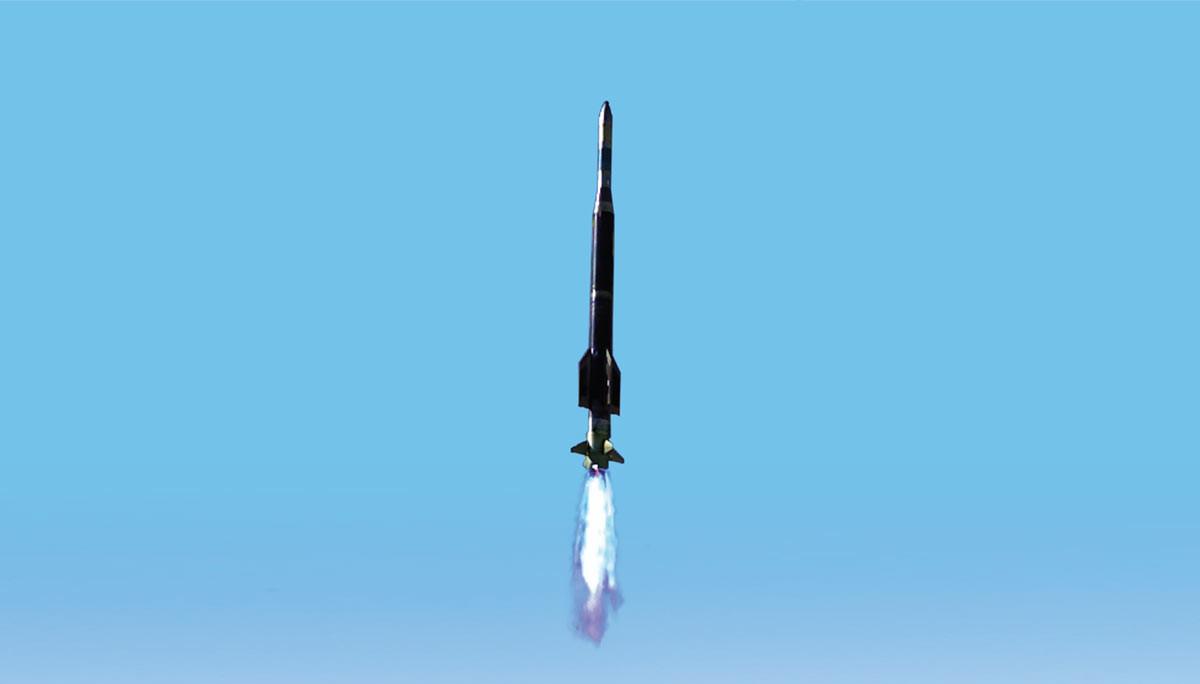
Hisar Air Defense Missiles (ROKETSAN)
The Hisar systems feature a modular architecture that allows integration into various platforms and compatibility with multiple command and control infrastructures. The system’s design enables 360° coverage through vertical launch capability. It is equipped with a dual-pulse solid-fuel motor and a bidirectional platform integration interface. The Hisar systems incorporate technical features such as thrust vector control, impact and proximity fuses, common canisters, and umbilical interfaces.
Hisar Air Defense Missile (DefenseIndustryST)
The Hisar Air Defense Missile System is a layered air defense solution developed against fixed-wing and rotary-wing aircraft, cruise missiles, air-to-surface missiles, and unmanned aerial vehicles (UAVs). The system family comprises Hisar-A/A+, Hisar-O/O+, and the advanced Hisar-D RF components, all designed for low- and medium-altitude operations.
The system stands out with its vertical launch capability, enabling 360° engagement coverage. Its modular and distributed architecture ensures compatibility with fire control and command and control infrastructures, allowing integration onto diverse platforms. Launchers can be deployed in either mobile or fixed configurations.
The missiles are powered by dual-pulse solid-fuel motors, enhancing both range and maneuverability. The warheads are designed for high fragmentation and blast effects and are supported by impact and proximity fuses.
In the Hisar-A and Hisar-O systems, guidance is achieved using an Inertial Navigation System (INS) and an Infrared Imaging Seeker (IIR). With the introduction of Hisar O+, the system gained the capability to use a Radio Frequency (RF) seeker. Hisar-D RF features active radar guidance and operates with a fire-and-forget capability.
The Hisar systems can engage multiple targets simultaneously. They possess the ability to engage at least nine targets concurrently. The tactical deployment time is under ten minutes. The system is designed to operate under all weather conditions and features resistance to electronic warfare.
Hisar-A is designed to counter low-altitude aerial threats and has a range of over 15 km. It is equipped with a high-fragmentation and blast-effect warhead. Guidance is achieved using an Inertial Navigation System (INS) and an Infrared Imaging Seeker (IIR). Target types include fixed-wing and rotary-wing aircraft, cruise missiles, UAVs, and air-to-surface missiles. Hisar-A missiles are guided via a one-way data link.
Hisar-O, developed for medium-altitude air defense, has a range of over 25 km. It is also equipped with a high-fragmentation and blast-effect warhead. Guidance is achieved using INS and IIR technologies and it is effective against the same target spectrum. Its dual-pulse solid-fuel motor ensures high effectiveness against threats at varying altitudes.
Hisar O+ is an upgraded variant of Hisar-O, delivered to the Turkish Armed Forces by the end of 2021. Initially equipped with an infrared seeker, the system successfully tested a Radio Frequency (RF) seeker missile in 2022, thereby acquiring this capability. The system provides 360° coverage and can simultaneously engage and fire at a minimum of nine targets. It is capable of operating under all weather conditions. The system integrates components including a Fire Control Center, Missile Launch System, Medium Altitude Air Defense Radar, Electro-Optical System, and missiles with IIR and RF seekers.
Hisar-D RF is designed as an active radar-guided long-range air defense missile. It is an advanced evolution of the Hisar-O system with a range of over 25 km and optimized for high-speed targets (Mach 3+). Thanks to its fire-and-forget capability, it autonomously tracks targets after launch. It can engage multiple targets simultaneously. The system features electronic warfare resistance, enabling operation in noisy and dense electronic warfare environments. It is compatible with both mobile launchers and fixed batteries.
As the Hisar missile family approached the product and production line qualification phase, live-fire tests against real targets using tactical configuration prototypes were conducted. These tests evaluated system-level integration of radar, command and control/fire control, electro-optical, and communication elements. The tests confirmed the effectiveness of the dual-pulse motor structure and vertical launch capability.
The Hisar systems are configured with a flexible and distributed architecture capable of performing both point and area air defense missions. They can be organized into battery and battalion-level structures. The systems have been actively deployed and operated in air defense exercises conducted by the Land Forces Command.
Anadolu Ajansı. “Hisar Hava Savunma Sistemine Yeni Kabiliyet.” AA, February 19, 2022. Accessed July 18, 2025. https://www.aa.com.tr/tr/bilim-teknoloji/hisar-hava-savunma-sistemine-yeni-kabiliyet/2507099.
Anadolu Ajansı. “Milli Füze Hisar Canlı Hedef Sınavında.” *AA*, April 25, 2019. Accessed July 18, 2025. https://www.aa.com.tr/tr/bilim-teknoloji/milli-fuze-hisar-canli-hedef-sinavinda/1462263.
Roketsan. "Hisar Hava Savunma Füzeleri." ROKETSAN Resmi Web Sitesi. Accessed July 18, 2025. https://www.roketsan.com.tr/tr/urunler/hisar-hava-savunma-fuzeleri.
TSKGV. "Hisar Görevde." Türk Silahlı Kuvvetlerini Güçlendirme Vakfı. Accessed July 18, 2025. https://tskgv.org.tr/hisar-gorevde.
TSKGV. "Hisar-D RF: Mavi Vatandan Gök Vatana Üstün, Yüksek ve Etkili Savunma." Türk Silahlı Kuvvetlerini Güçlendirme Vakfı. Accessed July 18, 2025. https://tskgv.org.tr/savunmasanayiigundem/hisar-d-rf-mavi-vatandan-gok-vatana-ustun-yuksek-ve-etkili-savunma.
YouTube. “HİSAR Hava Savunma Sistemleri | ASELSAN & ROKETSAN.” YouTube Video, 0:58. Accessed July 18, 2025. https://youtu.be/cdjbEviZqto?si=HLl0nLkIgpIWgv-L.

Development Organizations | TÜBİTAK SAGE ASELSAN ROKETSAN | ||||||||
|---|---|---|---|---|---|---|---|---|---|
Type(s) | Low and Medium Altitude Air Defense System | ||||||||
Subsystems | Hisar-D RF Hisar-O+ Hisar-O Hisar-A+ Hisar-A | ||||||||
Guidance Systems | RF (active radar) IIR ANS | ||||||||
Range | Hisar-D RF: 25+ km Hisar-O / O+: 25+ km Hisar-A / A+: 15+ km | ||||||||
Target Types | air-to-ground missiles UAVs and SUAVs cruise missiles Fixed and rotary wing aircraft | ||||||||
User | Turkish Armed Forces | ||||||||
No Discussion Added Yet
Start discussion for "Hisar Air Defense Missiles" article
General Structure and Modularity
Product Features
Hisar Missile Types
Hisar-A (Low Altitude)
Hisar-O (Medium Altitude)
Hisar O+
Hisar-D RF
Testing and Integration Process
Usage and Operational Structure