

This article was automatically translated from the original Turkish version.
+2 More
Historical Customs House is located within the city center, in the Şahinbey district of Gaziantep Province, Türkiye. The caravanserai holds a significant position within the chain of commercial structures in the city and is one of the buildings reflecting Gaziantep’s commercial function along the historic Silk Road caravanserais.

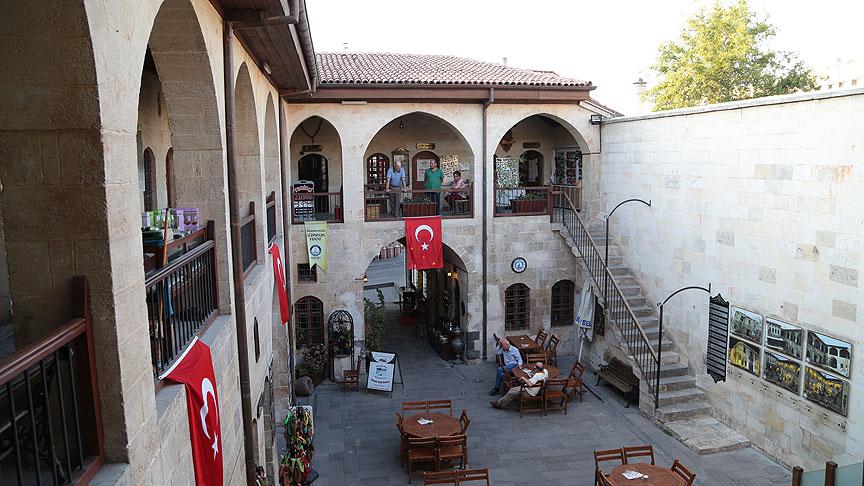
Historical Customs House (Anadolu Agency)
The Customs House was constructed during the Ottoman period. Although its exact construction date is not specified, it exhibits characteristic features of classical Ottoman caravanserai architecture. The building derives its name from its customs function during its time and served as one of the key centers for controlling and distributing both local and long-distance trade.
The Customs House was built as a two-story structure. The ground floor contains shops and storage areas, while the upper floor consists of accommodation units. These buildings are arranged around a central courtyard and are characterized by the use of stone materials and arched openings. A fountain is located at the center of the courtyard. The structure is planned in a closed layout consistent with traditional caravanserai architecture.
Once used for trade and accommodation, the caravanserai has been restored and is now utilized for tourism and cultural purposes. It houses shops selling handicrafts, cafes, and resting areas. During the restoration, efforts were made to preserve the original structure.
The Historical Customs House is one of the important structures reflecting Gaziantep’s historical commercial fabric. Due to its architectural features and central location within the city, it has become a site of interest for both local and international tourists. Moreover, its position within the area of Gaziantep known as the caravanserai district plays a vital role in preserving the city’s caravanserai culture.

No Discussion Added Yet
Start discussion for "Historical Customs House" article
Historical Development
Architectural Features
Usage and Restoration
Cultural and Touristic Significance