

This article was automatically translated from the original Turkish version.
In 1938, the hydrogen-filled LZ4 airship designed by Count Ferdinand von Zeppelin was forced to make an emergency landing at Echterdingen near Stuttgart due to engine problems on flight 5. This apparent mishap, however, marked the beginning of a century-long success story in engine manufacturing.
Wilhelm Maybach, who had previously worked as a designer at Daimler-Motoren-Gesellschaft and was familiar with Count Zeppelin, recognized the need for more reliable, powerful, and continuously operable engines for airships. He therefore proposed a new engine designed by his son Karl to Count Zeppelin.
Count Zeppelin embraced the idea, and on 23 September 1909, the company Luftfahrzeug-Motorenbau GmbH was founded with its headquarters in Bissingen an der Enz.
The company entered into a partnership with Daimler-Benz in 1960.
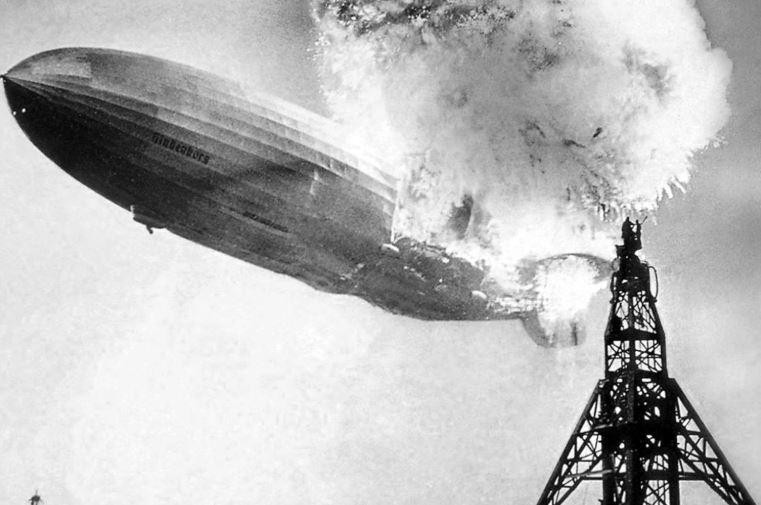
https://www.airships.net/blog/today-history-lz4-miracle-echterdingen/
The first airship engine was tested on a test stand in the autumn of 1909. It was the AZ, a six-cylinder unit specifically designed for aviation needs with an exceptional power-to-weight ratio, delivering 107 kW (145 HP). Its pistons, cylinders, and valves were engineered to be easily replaced during flight while the engine was shut down. The engine first entered service in 1910 on the LZ 6. The first Zeppelin to fly with three AZ engines was the LZ 10 Schwaben (1911).
Karl Maybach’s engine was constructed to be lightweight while maintaining durability. Thanks to a novel floatless lubrication system, it operated more effectively under the inclined angles typical of airships. The inline six-cylinder, four-stroke design delivered 145 hp (107 kW) and offered an outstanding power-to-weight ratio for its time. The first Zeppelin powered exclusively by Maybach engines was the LZ 10 Schwaben, and by the late 1920s, all Zeppelin airships used these engines.
Between 1911 and 1912, the company relocated to the site of today’s Friedrichshafen, Facility 1. In 1912, it changed its name to Motorenbau GmbH but continued producing airship engines.
In 1916, Motorenbau GmbH developed the first high-altitude engine capable of producing 184 kW (250 hp), designated Type Mb IVa. This six-cylinder, inline, gasoline engine was tested at an altitude of 1,800 meters on the Wendelstein mountain in Bavaria. Power loss due to reduced air density at high altitudes was compensated by increased cylinder capacity and higher compression. Until 1918, this high-altitude engine was primarily installed in aircraft, reconnaissance planes, and airships.
The company’s name was changed to Maybach-Motorenbau on 18 May 1918. Sustained demand for aircraft engines led to significant growth by the end of World War I, with the facility expanding to employ nearly 3,600 workers and producing numerous new designs.
Following the death of
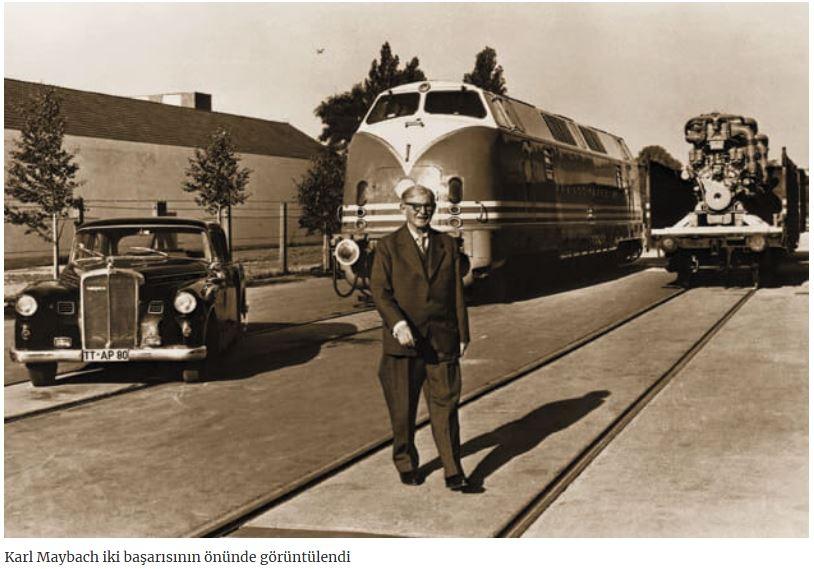
https://maybach.org/maybach-history/
From 1943 onward, Friedrichshafen became a constant target of Allied bombing raids that severely disrupted production at Maybach-Motorenbau. During this period, production was sustained by forced laborers and prisoners of war from various countries. In 1943, the design office was relocated to Wangen in the Allgäu region.
By 1945, more than 70 percent of the company’s production facilities had been destroyed.
The Treaty of Versailles prohibited German companies from manufacturing aircraft and aviation equipment. Maybach-Motorenbau GmbH was forced to completely restructure its production program overnight and shifted focus to developing diesel engines for trains and automotive applications.
Karl Maybach saved the company in 1946 by undertaking the design of both a diesel and a gasoline engine. He also renewed his work on diesel engines and developed the MD 650 design, which entered mass production for the German railways in the early 1950s.
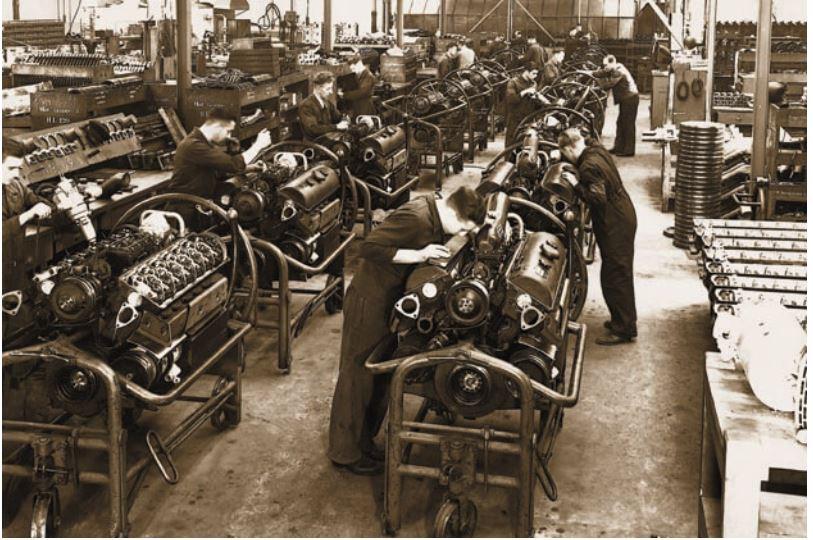
This year saw the birth of the first Maybach series, the MD series (Maybach Diesel). Originally designed for rail traction, MD engines were also adopted by customers to power construction machinery and especially high-speed yachts. As early as 1949/50, these engines laid the foundation for future production at the Friedrichshafen plant. Units featuring high-performance air cooling, pressure-oil-cooled pistons, and three inlet and exhaust valves per cylinder achieved performance and efficiency levels previously unattainable.
Until then, large diesel engines operated only at around 600 rpm, but the Maybach 1,300 rpm power unit more than doubled this speed. When the German railways decided in the 1930s to adopt diesel engines on main lines, this advanced design became the best-selling product.
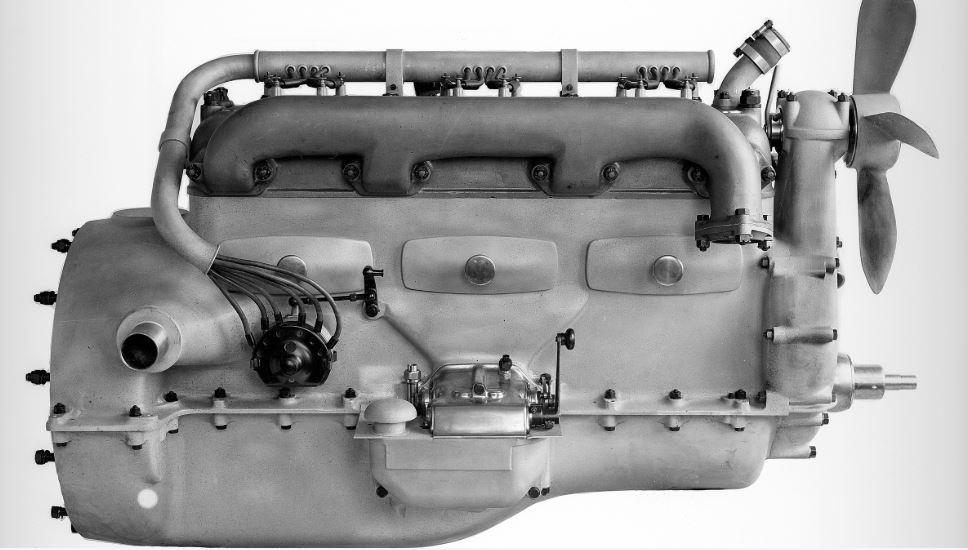
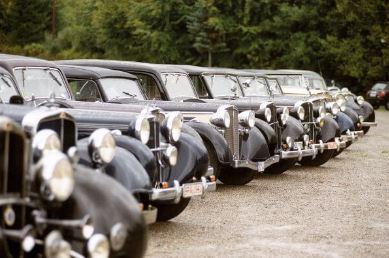
Maybach-Motorenbau GmbH introduced the Maybach Type W 3 at the Berlin Motor Show, featuring an engine producing 51.5 kW (70 hp). It was among the most luxurious vehicles of its time. Maybach manufactured the chassis, engine, transmission, and steering, while specialized firms built the bodywork to the customer’s specifications. However, ultimately, the high cost of development and low production volumes (only about 1,800 units were produced) made the venture unprofitable — although the cars greatly contributed to Maybach’s global reputation.
https://maybach.org/maybach-history/
https://maybach.org/maybach-history/
https://maybach.org/maybach-history/
In 1969, a major milestone was reached when Maybach, Daimler-Benz, and MAN merged their large engine and aircraft turbine operations to form Motoren- und Turbinen-Union (MTU). Diesel engine production was assigned to the Friedrichshafen plant, while aircraft engines were assigned to the Munich facility. The plan was to standardize the diesel engine series of the three companies and increase the maximum output of the portfolio to 7,400 kW (10,000 hp). This was effectively achieved through the 331/396 Series, 538 Series, and 956/1163 Series engines.
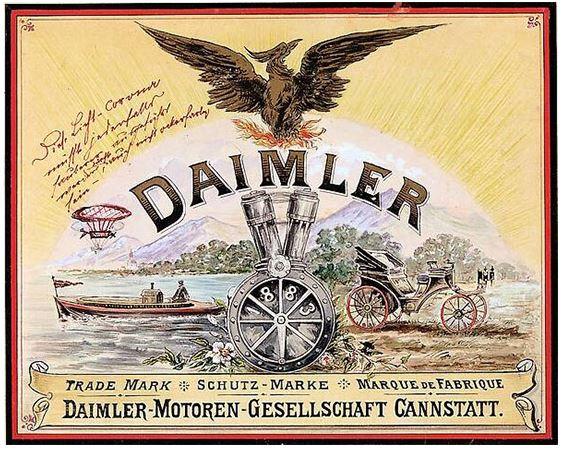
In 1985, MAN AG withdrew from the MTU group, making Daimler-Benz the majority shareholder.
The following year and in 1992, MTU engines broke world records.
The companies that founded MTU had achieved some success in exporting larger engines during the 1950s and 1960s, but the core business remained domestic.
The first foreign subsidiary was established in 1974, becoming the predecessor of today’s MTU Singapore. Other overseas companies in Brazil, Argentina, North America, Türkiye, and Italy followed between the late 1970s and mid-1990s.
Mercedes-Benz assumed full responsibility for the sales of its industrial engines in 1987, ensuring MTU supplied diesel engines with power outputs ranging from 35 kW to 735 kW.
The end of the Cold War and MTU’s growing international presence required adaptation to global markets, necessitating a review of the engine range and reorganization of production.
In 1994, MTU entered into a cooperation agreement with Detroit Diesel Corporation (DDC). The two companies strengthened their presence in commercial markets, particularly in North America. The development of two new engine designs — the 135 mm bore Series 2000 and the 165 mm bore Series 4000 — along with enhancements to DDC engines, expanded MTU’s overall product portfolio.

In 2000, MTU introduced the world’s largest and fastest engine, the 8000 Series, capable of generating up to 9,100 kW and weighing approximately 45 tons. The V20 design with a 265 mm bore became the preferred choice for large, high-speed vehicle/passenger ferries.
In 2014, Rolls-Royce Power Systems Company acquired Daimler-Benz’s 50 percent stake in MTU, incorporating it into its own structure.
On 10 August 1960, Daimler-Benz’s subsidiary Industriemotorenbau GmbH and Maybach-Motorenbau began collaborating in the production of large, high-speed engines.
After World War II, Maybach had been absent from the market and was acquired by Daimler-Benz in 1960. By 2002, the companies announced they would jointly produce vehicles under separate brands, sharing components with Mercedes-Benz.
While Mercedes-Benz vehicles sold in the thousands, Maybach consistently fell far below sales targets. According to most analyses, the reason was its inability to fully differentiate itself from Mercedes. In 2012, Daimler discontinued Maybach production to focus resources on the Mercedes-Benz S-Class.
Accessed November 26, 2025.
Accessed November 26, 2025.
Accessed November 26, 2025.
Accessed November 26, 2025.
Accessed November 26, 2025.

No Discussion Added Yet
Start discussion for "HISTORY OF MAYBACH ENGINES" article
The Convergence of Zeppelin, Daimler-Benz, MAN, and Maybach
Airship Engine Production
Establishment of MTU (Motoren- und Turbinen-Union)
Maybach’s Relationship with Mercedes