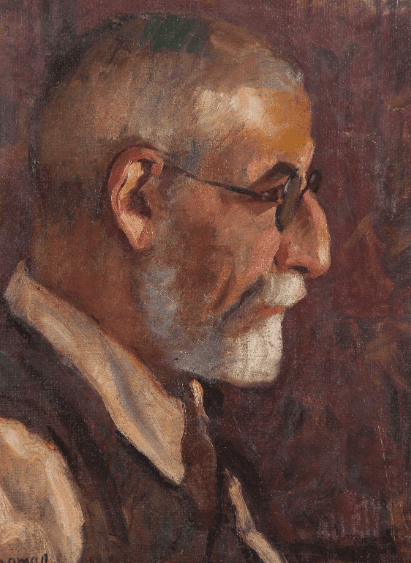



Hoca Ali Rıza (1858, Üsküdar – 20 March 1930, Üsküdar) was a Turkish painter of military origin who was active during the final years of the Ottoman Empire and the early years of the Republic, renowned especially for his landscapes and decorative works. His style, which reflected local and national elements, and his depictions of urban and natural scenes of Istanbul and its surroundings hold a significant place in the history of Turkish painting.
Hoca Ali Rıza was born in the Ahmediye neighborhood of Üsküdar. His father was Süvari Binbaşı Mehmed Rüşdü Bey. After completing his primary and secondary education in Üsküdar, he entered the Kuleli Military Preparatory School in 1879. During this period his interest in painting became evident; together with his classmates he petitioned Edhem Pasha, the Minister of Military Schools, to establish an art studio at the school. There he received instruction from Osman Nuri Paşa, followed by Süleyman Seyyid, a student of Alexandre Cabanel, and the Western painter M. Kess (Mösyö Pierre Guès).
In 1883 he graduated from the Military Academy with the rank of second lieutenant. His artworks during his student years were admired by Sultan Abdülhamid II, who awarded him the Mecidiye Medal in 1881. After graduation he was appointed as an assistant to Osman Nuri Paşa as a painting instructor at the Military Academy. In 1885/1886 he was scheduled to be sent to Italy, but this plan was abandoned due to a cholera outbreak in Naples. He soon rose to the position of studio chief.
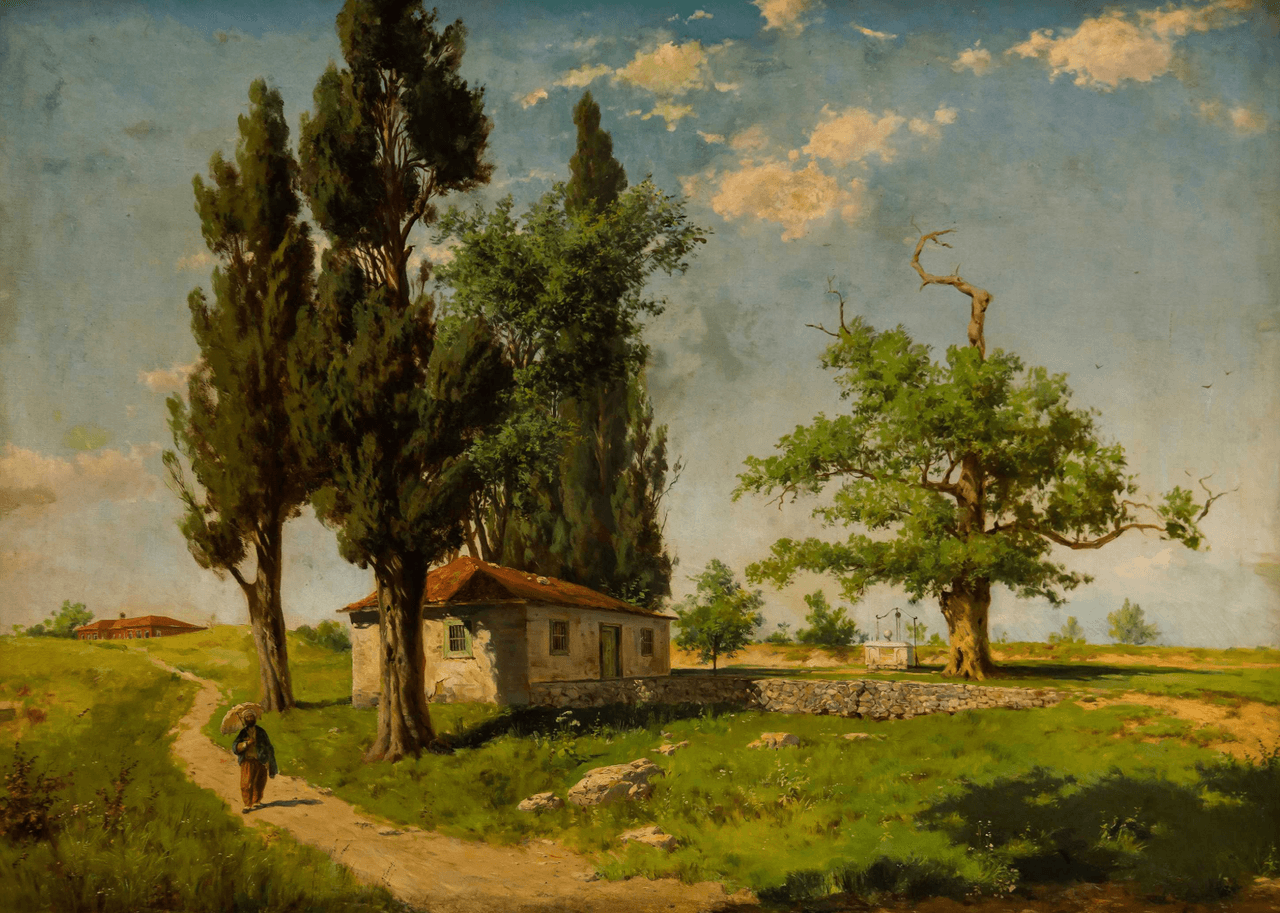
Landscape / Hoca Ali Rıza (Ankara Museum of Painting and Sculpture)
In 1886 he was appointed assistant to Osman Nuri Paşa at the Kuleli Military Preparatory School, a position he held until 1908. In 1891 he participated in a military commission organized to document the Ottoman Empire’s first capitals, during which he drew Turkish-Islamic monuments in Söğüt, Bilecik, Eskişehir, Bursa and Yenişehir. In 1895 he worked at the Yıldız Porcelain Factory art studio. In 1903 he served on a commission led by Mahmud Şevket Paşa that compiled an album documenting Ottoman costumes and prepared the groundwork for the establishment of the Turkish Museum of Antiquities.
In 1909 he was appointed chief artist at the Harbiye Press, and in 1910 he was assigned as a painting instructor for the Şehzadegân classes. In 1911, while holding the rank of lieutenant colonel, he retired by his own request. After retirement he taught landscape painting at the İnâs Sanayi-i Nefise Mektebi in 1914, at the Çamlıca İnâs Sultanisi in 1918, at the Üsküdar Kız Sanayi Mektebi in 1921, and at the Sultan Ahmed Erkek Ameli Hayat Okulu in 1929.
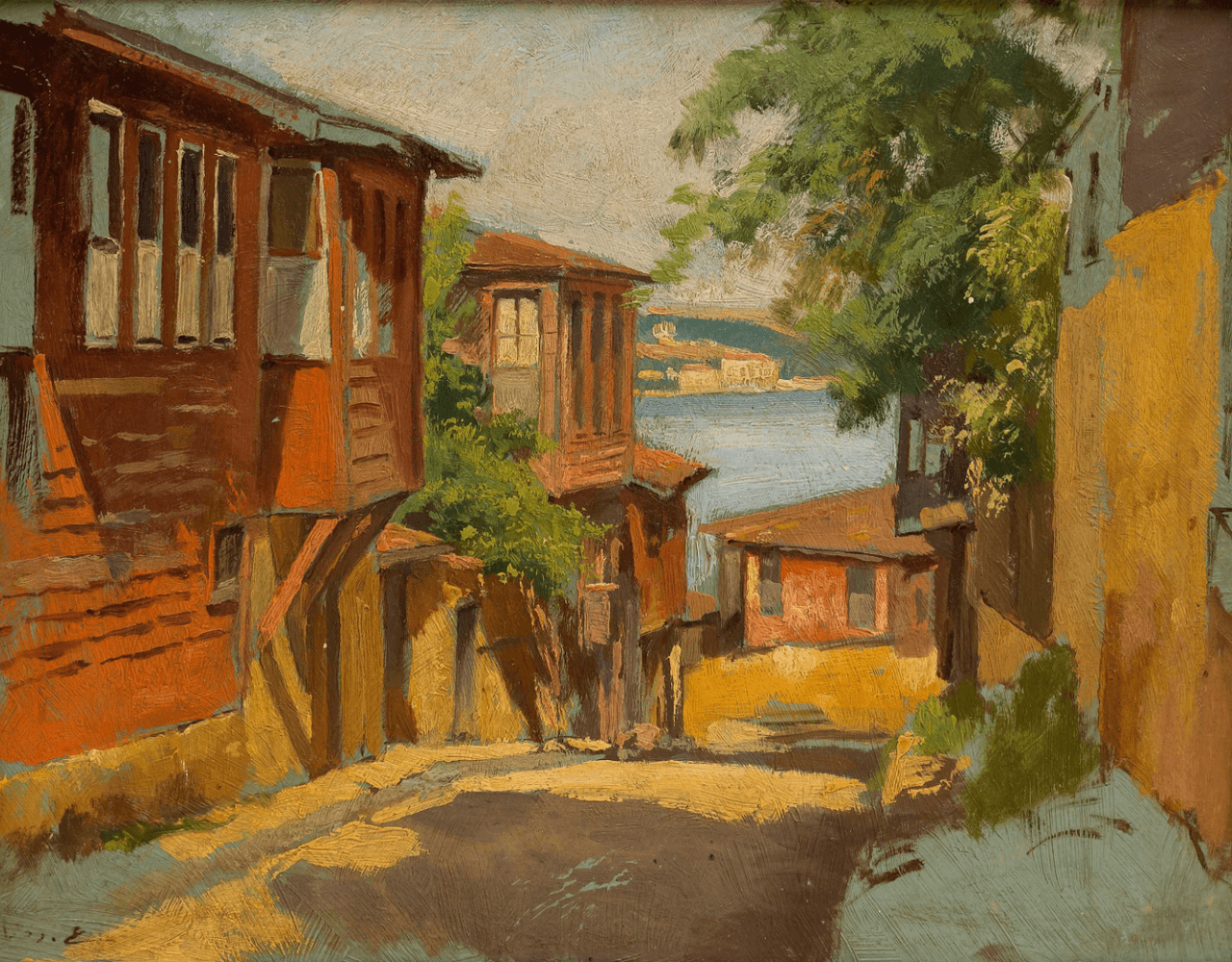
Steep Road in the Bosphorus / Hoca Ali Rıza (Ankara Museum of Painting and Sculpture)
Hoca Ali Rıza is particularly recognized in Turkish painting history for his decoratively oriented works, landscapes, and documentary depictions of Istanbul. The perspective knowledge, light and shadow discipline, and prominent contour lines acquired through his military education dominate his works. His interpretation of nature shows affinities with the Barbizon School; rather than copying nature directly, he aimed to convey an expression filtered through his own observations.
His works feature themes such as Üsküdar, Ahmediye, Karacaahmet, Çamlıca, Bosphorus waterfront mansions, Istanbul neighborhoods, coffeehouses, wooden houses, coastal villages, mosques and tombs, street vendors, hills, groves, seas and skies. He produced works in watercolor, oil paint, pastel and charcoal. He rendered nature, the city and architecture with a warm and intimate atmosphere, paying close attention to detail.
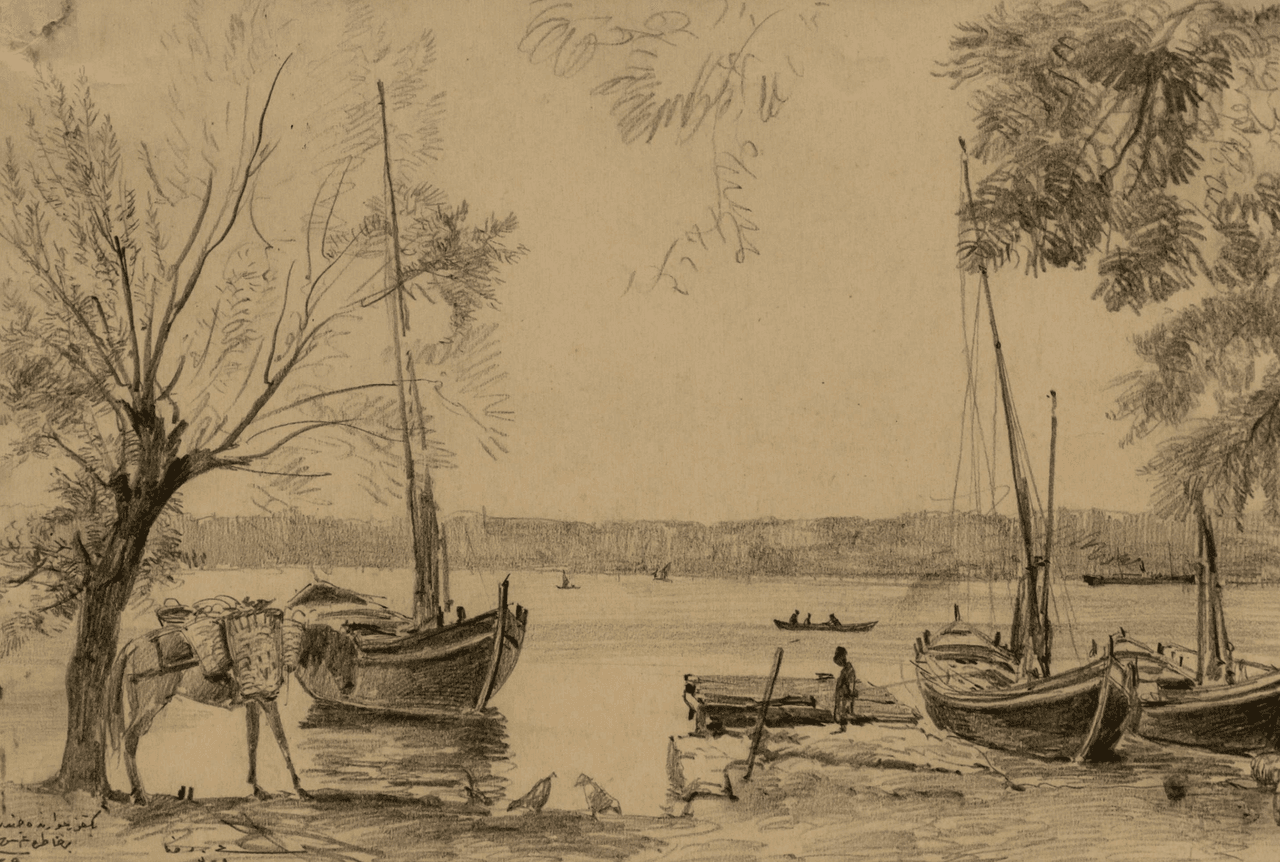
Seascape / Hoca Ali Rıza (Ankara Sculpture and Sculpture Museum)
Hoca Ali Rıza favored balanced and clean tones in his use of color; in his decorative works, rhythmic and dynamic lines, hatching and volume-creating techniques stand out. In addition to landscapes, he produced interior scenes, still lifes and figure studies. His interior depictions document details of Turkish domestic culture of the period, such as carpets, kilims, curtains and woodwork. In his figure studies he defined forms through clear contours and emphasized movement and posture.
He served as president of the Ottoman Painters Society between 1909 and 1912 and led the publication of its official journal, Osmanlı Ressamlar Cemiyeti Gazetesi. He participated in exhibitions such as the Galatasaray Exhibitions, Halkevleri Exhibitions and the 1928 Paris Exhibition. In 1909 he organized an exhibition at the Üsküdar İskele Gazino. His first solo exhibition was held three years after his death, in 1933, at the Eminönü Halkevi.
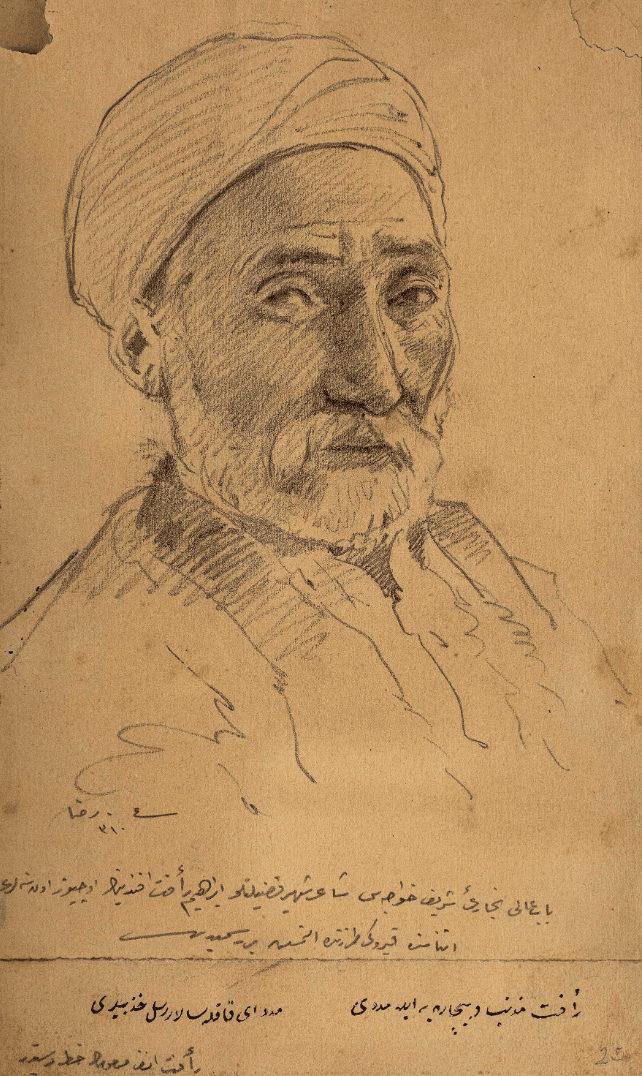
Portrait of Poet İbn-i Rafet / Hoca Ali Rıza (Ankara Museum of Painting and Sculpture)
It is estimated that Hoca Ali Rıza produced approximately five thousand works. His artworks are scattered across various collections, with a significant collection housed at the National Library in Ankara. Some of his works belonging to his son Nâsır Çizer and his close friend Fuat Şemsi İnan were transferred to the Kemal Erhan collection. His notebooks, titled “Kırk Ambar,” containing sketches, small paintings, ornamental motifs, idea notes and literary quotations, along with various preparatory drawings, were donated by his student Dr. Süheyl Ünver to the Süleymaniye Library.
Hoca Ali Rıza died on 20 March 1930 in Üsküdar and was buried in the Karacaahmet Cemetery.

Life and Education
Military and Artistic Appointments
Artistic Approach
Decorative Elements and Subject Variety
Artistic Associations and Exhibitions
Legacy
Death