This article was automatically translated from the original Turkish version.
+1 More
Service Areas | Medical Device Support Oral and Dental Health Psychological Support Physical Therapy Wound Care infusion) Medication Administration (injection Patient Examination | ||||||||
|---|---|---|---|---|---|---|---|---|---|
Home-based health services refer to medical and care-oriented health services provided by healthcare teams to individuals in non-hospital settings, particularly in their own homes. These services may include preventive, curative, rehabilitative and, when necessary, palliative care components. The primary objective of home-based health services is to improve the individual’s health status, maintain or enhance quality of life, and reduce hospital admissions and inpatient rates. The World Health Organization defines home-based health services as care provided in the patient’s home by professional healthcare workers or trained caregivers.
Home-based health practices began in the West in the late 19th century in the form of home nursing services. In 1883, home nursing activities were initiated in the United States, and in 1893, the Henry Street Nursing Settlement institutionalized home nursing practices. In 1909, the Metropolitan Life Insurance Company included home-based services within its insurance coverage. These developments enabled home-based health services to evolve beyond nursing into a comprehensive model encompassing other healthcare professionals.
In Europe, home-based health services were first implemented in Denmark in 1937 and later became state-supported in countries such as the Netherlands, Sweden, and the United Kingdom. In Germany, these services are delivered through collaboration between the state, municipalities, NGOs, and insurance companies.
The history of home-based health services in Türkiye dates back to the 15th century during the Ottoman period. Records indicate that physicians visited patients door-to-door on designated days under the reign of Fatih Sultan Mehmet.
The first legal regulation during the Republican era was enacted in 1930 with Law No. 1593 on Public Health Protection. This regulation covered practices such as home visits and physician consultations at home.
Modern home-based health services gained official status with the “Regulation on the Provision of Home Care Services” published in the Official Gazette No. 25751 on 10 March 2005. This was followed by the “Guideline on the Procedures and Principles of Home-based Health Services Provided by the Ministry of Health,” issued in 2010.
Home-based health services are delivered by a multidisciplinary team that may include physicians, nurses, physiotherapists, psychologists, social workers, dietitians, health administrators, and patient transport personnel. Services provided include patient examinations, injections, wound dressings, oxygen therapy, physical therapy, psychological support, medical device assistance, and home-based oral and dental health services. In Türkiye, these services are delivered through mobile teams, home-based health units, and oral and dental health teams.
The legal foundation for home-based health services in Türkiye dates to 2005. The “Regulation on the Provision of Home Care Services”, published in the Official Gazette No. 25751 on 10 March 2005, is the first regulatory text in this field. This regulation defined the scope of services, implementation principles, and responsibilities of service-providing institutions.
Subsequently, on 1 February 2010, the “Guideline on the Procedures and Principles of Home-based Health Services Provided by the Ministry of Health” came into effect following official approval. This guideline mandated that all home-based health services be carried out by institutions under the Ministry of Health and provided detailed provisions on application, assessment, and service scope.
The most recent legislative update is the “Regulation on the Provision of Home-based Health Services by the Ministry of Health and Its Affiliated Institutions”, published in the Official Gazette No. 29280 on 27 February 2015. This regulation defines both the mode of service delivery and the principles of inter-institutional coordination.

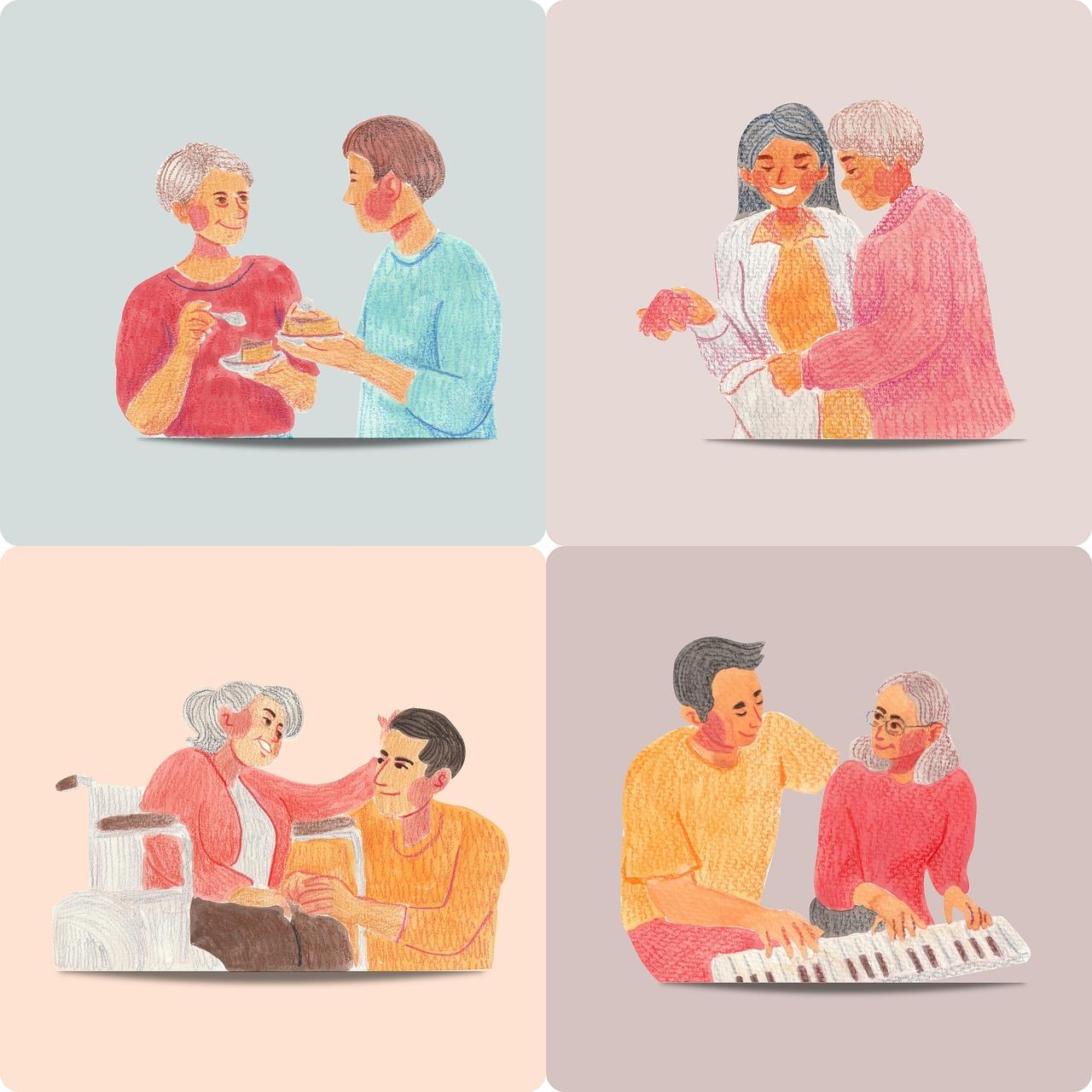
A visual representing Home-based Health Services.Pıxabay)
In Türkiye, home-based health services are delivered through three models:
Requests for home-based health services can be made through various channels. Applications may be submitted via:
Applications are evaluated at the provincial coordination center. Based on the patient’s health condition, place of residence, and accessibility to services, the patient is referred to the appropriate unit. A home assessment is then conducted, and the patient is either enrolled in the service or rejected with notification sent to the family physician.
The groups eligible to benefit from home-based health services are as follows:
Services may be terminated for the following reasons:
An analysis of home-based health services provided across Türkiye between 2012 and 2017 revealed the following key activities:
A total of 3,702 medical devices have been allocated to patients for home use. The most common include functional hospital beds, air mattresses, oxygen cylinders, pulse oximeters, and glucose meters.
In Türkiye, financing for home-based health services is primarily provided through the social security system and public resources. The financial sustainability of these services has become increasingly important due to the growing elderly population and the rising prevalence of chronic diseases. Individuals not covered by the Social Services and Child Protection Agency may access services by paying a specified fee.
Following amendments to the Health Implementation Circular (SUT) on 1 March 2011, certain treatment and material costs associated with home-based health services began to be covered by the Social Security Institution (SSI). Under this framework, injections, dressings, medications, and necessary medical supplies provided through hospital-affiliated home-based health units are invoiced to the SSI for payment. For this arrangement to be valid, services must be recorded through the relevant health institution’s automated system and processed as day-care treatments.
Globally, three primary financing models for home-based health services are prominent:
Türkiye employs a mixed system combining general tax revenue and social insurance mechanisms. However, compared to developed countries, an independent and institutionalized financing structure specifically for home-based care and health services has yet to be fully established.
When delivering home-based health services, fundamental principles of medical ethics must be observed:
Providing care in the home environment necessitates special attention to the privacy of the patient and their family.
Challenges in implementing home-based health services can be grouped into four main categories:
Additional practical limitations include the unsuitability of home environments for medical interventions, technical errors in the use of medical devices, and the inability of patients to maintain continuous contact with healthcare personnel, all of which can negatively impact service quality.
Home-based health services offer multifaceted benefits for both individuals and the healthcare system:
However, home-based health services also present certain risks and constraints:
In Türkiye, home-based health services have been institutionalized both legislatively and operationally. Services are delivered under the coordination of the Ministry of Health by family physicians, hospitals, and mobile teams. The system, shaped by regulations and guidelines since 2005, offers a comprehensive approach tailored to the needs of elderly and chronically ill individuals. However, challenges in human resources, financing, quality, and coordination continue to limit service effectiveness. For long-term success, the following improvements are essential:
Home-based health services function as a complementary and supportive component within Türkiye’s healthcare system, offering a patient-centered, cost-effective, and efficient alternative model of care.
Anadolu Ajansı. "Sağlık Bakanlığı Yaklaşık 2,8 Milyon Hastaya Evde Sağlık Hizmeti Sundu." AA.com.tr, September 2020. https://www.aa.com.tr/tr/saglik/saglik-bakanligi-yaklasik-2-8-milyon-hastaya-evde-saglik-hizmeti-sundu/3513054.
Aslan, Şebnem, Seda Uyar, and Şerife Güzel. “Evde Sağlık Hizmetleri Uygulamasında Türkiye.” *Sosyal Araştırmalar ve Yönetim Dergisi* 1, no. 1 (2018): 45–56. https://dergipark.org.tr/tr/pub/sayod/issue/43205/520957.
Kıran, İldan, and Abdulkadir Güçlü. “Türkiye’de Evde Sağlık Hizmetlerinin Değerlendirilmesi.” *Selçuk Üniversitesi Akşehir Meslek Yüksekokulu Sosyal Bilimler Dergisi* 13 (2022): 107–114. https://dergipark.org.tr/tr/pub/akmyosb/issue/71096/1128108.
Pixabay. "Yaşlı, Bakımı, Emeklilik, Ev." Photograph. Pixabay. Accessed June 19, 2025. https://pixabay.com/tr/photos/ya%C5%9Fl%C4%B1-bak%C4%B1m%C4%B1-emeklilik-ev-7380108/.
Pixabay. “Hemşirelik, Ev, Bakım, Hemşire, Yaşlı.” Graphic. Pixabay. Accessed June 19, 2025. https://pixabay.com/tr/vectors/hem%C5%9Firelik-ev-bak%C4%B1m-hem%C5%9Fire-ya%C5%9Fl%C4%B1-7197237/.
Çelik Güzel, Eda, and Dilek Toprak. “Home-Care Services in Turkey.” Klinik Tıp Aile Hekimliği Dergisi 10, no. 5 (2018): 13–17. https://dergipark.org.tr/tr/pub/ktah/issue/47240/593652.

Service Areas | Medical Device Support Oral and Dental Health Psychological Support Physical Therapy Wound Care infusion) Medication Administration (injection Patient Examination | ||||||||
|---|---|---|---|---|---|---|---|---|---|
No Discussion Added Yet
Start discussion for "Home Health Services" article
Historical Development
Home-based Health Services Worldwide
Home-based Health Services in Türkiye
Structure and Components of the Service
Legislation and Institutional Structure in Türkiye
Legislative Process
Service Delivery Models
Service Process and Application
Eligibility and Termination Criteria
Scope of Services and Activities Provided
Financing of Home-based Health Services
General Framework
Health Implementation Circular (SUT) Regulations
Comparison with International Financing Models
Ethical Principles and Implementation Challenges
Ethical Principles
Challenges Encountered
Advantages and Disadvantages of Home-based Health Services
Advantages
Disadvantages and Limitations
Overall Evaluation