
This article was automatically translated from the original Turkish version.
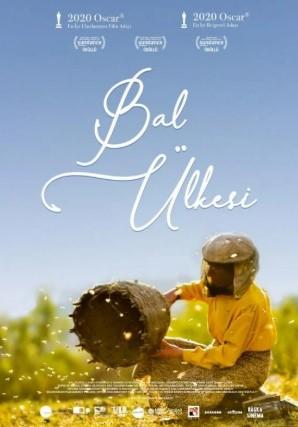
Land of Honey (Honeyland)
Duration | 1s 26dk | ||||||||
|---|---|---|---|---|---|---|---|---|---|
Actors | Hatidze Muratova, Nazife Muratova, Hussein Sam | ||||||||
Screenwriter(s) | Ljubomir Stefanov Tamara Kotevska | ||||||||
Director(s) | Tamara Kotevska Ljubomir Stefanov | ||||||||
Honeyland is a 2019 documentary film set in North Macedonia. Directed by Tamara Kotevska and Ljubomir Stefanov, the film focuses on the rural life of Hatidze Muratova, a traditional beekeeper. The documentary explores themes such as harmonious coexistence with nature, environmental balance, sustainability, and the impact of modernization on traditional ways of life. Shot entirely with natural light and without professional actors, the film stands out for its observational camera approach rather than dialogue.
Official trailer of the documentary - YouTube
The documentary centers on Hatidze Muratova, who lives in a remote mountain village in North Macedonia without electricity or running water. She lives with her elderly mother and earns her livelihood by producing honey using traditional methods. Muratova follows the principle of “take half, leave half,” ensuring her production does not harm the natural environment. However, one day a nomadic family settles in the village. Their commercial approach to beekeeping disrupts the ecological balance and begins to affect Muratova’s way of life. The film presents the human-nature relationship through a simple yet powerful narrative.
Filming took place over approximately three years in Bekirlija, a remote village in North Macedonia. The small size of the crew helped maintain the documentary’s intimate and unobtrusive atmosphere. Only natural light was used during filming, and scenes were recorded chronologically. The languages used in the film are Turkish and Macedonian.
Honeyland won the Grand Jury Prize for World Cinema Documentary, the Award for Best Documentary Directing, and a Special Jury Award for Impact at the 2019 Sundance Film Festival. It was also the first film ever to be nominated simultaneously for Best International Feature Film and Best Documentary at the 92nd Academy Awards. Critics praised the film’s poetic storytelling, visual beauty, and environmental message. Hatidze Muratova’s sincerity and philosophy of life have left a profound impression on audiences.
Honeyland is significant for demonstrating the powerful narrative potential of ecological approaches, ethical production, and observational cinematography in documentary filmmaking. It offers a critical perspective on the modern human relationship with nature. It is also regarded by environmental scientists and anthropologists as one of the rare films to document sustainable living practices. The film serves as an exemplary work in contemporary documentary cinema, combining artistic and sociological dimensions.
Beyazperde. "Bal Ülkesi." Beyazperde. Accessed April 22, 2025. https://www.beyazperde.com/filmler/film-270321/
Dergipark. "Bal Ülkesi (Honeyland) Belgeselinde Sürdürülebilir Yaşam ve Ekolojik Denge." Dergipark Akademik. Accessed April 22, 2025. https://dergipark.org.tr/tr/download/article-file/4287959
Neon. Honeyland [Official Trailer] – In Theaters July 26, 2019. YouTube video. Accessed April 22, 2025. Link

Land of Honey (Honeyland)
Duration | 1s 26dk | ||||||||
|---|---|---|---|---|---|---|---|---|---|
Actors | Hatidze Muratova, Nazife Muratova, Hussein Sam | ||||||||
Screenwriter(s) | Ljubomir Stefanov Tamara Kotevska | ||||||||
Director(s) | Tamara Kotevska Ljubomir Stefanov | ||||||||
No Discussion Added Yet
Start discussion for "Honey Country (Documentary)" article
Synopsis
Production Process
Reception
Significance
Cast (Participants)