


This article was automatically translated from the original Turkish version.
+2 More
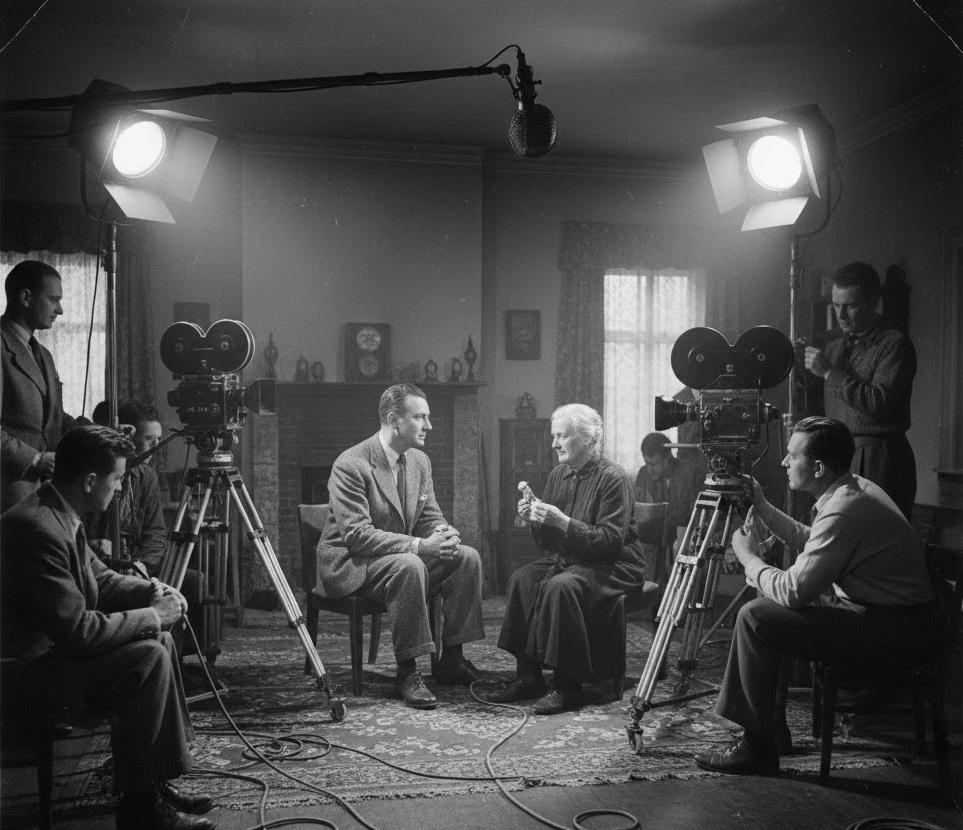
(Generated by Artificial Intelligence)
Documentary Cinema
New Forms | Docu-Game | ||||||||
|---|---|---|---|---|---|---|---|---|---|
First International Success in Türkiye | Hittite Sun | ||||||||
First Institutional Structure in Türkiye | Army Central Cinema Office | ||||||||
Official Start in Türkiye | Demolition of the Ayastefanos Monastery (1914) | ||||||||
First Ottoman Record | Grandmother Despina | ||||||||
First Long Documentary | Nanook of the North (1922) | ||||||||
Conceptualization | John Grierson (1920s) | ||||||||
First Real-Life Documentary Films | Lumière Brothers - Workers Leaving the Lumière Factory | ||||||||
Documentary cinema is a narrative form defined in theoretical literature not merely as a direct record of reality but as the “creative treatment of actuality” 【1】. This definition indicates that documentary cinema is not limited to the mere production of visual documentation; rather, it involves the structuring of data derived from real events, people, and situations according to specific aesthetic, intellectual, and ethical principles. In this context, documentary cinema is understood as a cinematic genre constructed through the processing of reality-based material via specific narrative and formal procedures.
The origins of documentary cinema emerged alongside the birth of cinema itself. Short recording films such as Workers Leaving the Lumière Factory(La Sortie de l’Usine Lumière à Lyon) and Arrival of a Train at La Ciotat Station (L’Arrivée d’un train en gare de La Ciotat), shot by the Lumière Brothers in 1895, documented moving images of real events and everyday life during the early period of cinema and are regarded as the beginning of the “actuality” documentary tradition.
Workers Leaving the Lumière Factory (This is Silent Film)
The term “documentary” was first introduced into theoretical literature in the 1920s by John Grierson. Grierson defined documentary cinema as the “creative treatment of actuality” and established a theoretical framework distinguishing documentaries from simple news recordings and raw visual footage.

Nanook of the North Poster (IMDb)
Among the pioneering early examples of documentary cinema is Nanook of the North, directed by Robert Flaherty in 1922. This was followed by Dziga Vertov’s Man with a Movie Camera (Chelovek s kinoapparatom, 1929) in the Soviet Union, Alberto Cavalcanti’s Nothing but the Hours (Rien que les heures, 1926) in France, and Grierson’s own Drifters (1929) in the United Kingdom. These works contributed to the development of documentary cinema’s aesthetic, formal, and ideological dimensions within different national contexts.
Literature on the origins of documentary cinema in Türkiye presents various historical approaches. The earliest moving image recordings in the Ottoman period are generally accepted to have been made in 1905 by the Manaki Brothers in Manastır. These recordings are among the earliest examples of cinematographic practices in Ottoman territories.
In Turkish film historiography, the official beginning of documentary cinema is most commonly dated to 1914, based on the film The Demolition of the Ayastefanos Monastery, assumed to have been shot by Fuat Uzkınay. Although no surviving copy of the film exists, it is symbolically regarded as the starting point of documentary film production in Türkiye.
Grandmother Despina (La boite verte)
Film theorist Bill Nichols evaluates cinema primarily through two fundamental tendencies: the fulfillment of desire and social representation. This distinction reveals clear differences in terms of the world each film engages with, its relationship to the viewer, and its core functions.
Fiction cinema, according to Nichols, is situated within the realm of desire fulfillment. Such films make visible dreams, fears, and imaginary narratives through constructed fictional worlds. The viewer participates in these narratives by accepting them as if they were real.
Documentary cinema, by contrast, belongs to the sphere of social representation and is grounded in the historical world shared by all viewers. It constructs narratives based on real people, events, and situations, engaging directly with lived reality.
In documentary cinema, the foundation of the narrative lies in documents that exist independently of and prior to the filmmaker’s intervention. The concept of “document” encompasses a collection of elements—written texts, oral testimonies, images, spaces, and events—that bear witness to a specific reality. In this sense, documentary cinema builds its narrative on data from the historical world rather than on imagined or fictionalized imagery.
Documentary cinema is not understood as a direct replication of reality but as a form of representation created through the selection, organization, and structuring of such data. Meaning emerges from how these documents are presented within a particular contextual and narrative framework.
In documentary cinema, individuals appearing before the camera are referred to as social actors rather than professional performers. These individuals participate in the narrative not by portraying fictional characters but by embodying their own social positions, roles, and everyday practices.
The position of social actors within the documentary narrative necessitates adherence to specific ethical principles during production. In this context, informed consent, protection of personal rights, and consideration of the potential consequences of documentary production are fundamental criteria in documentary cinema literature.
In documentary cinema, the term “narrative voice” refers to the conceptual framework that defines the film’s mode of narration, discursive structure, and approach to reality. It is shaped through elements such as visual editing, montage, sound design, choices of narrator, and the filmmaker’s degree of介入 in the text.
As a form of representation of events, situations, and phenomena in the historical world, documentary cinema relies on processes of selection and structuring. This process demonstrates that documentaries do not merely serve a recording function but also generate a discourse about reality. Therefore, documentary production must be evaluated in conjunction with ethical principles that govern the relationship established with the individuals and events portrayed.
The earliest examples of cinema in Türkiye emerged during the Ottoman period. The first film recording was the short work Grandmother Despina (Büyükanne Despina), shot by the Manaki Brothers in Manastır in 1905. Nevertheless, the official beginning of Turkish cinema history is associated with the 1914 film The Demolition of the Ayastefanos Monastery, attributed to Fuat Uzkınay.
The Demolition of the Ayastefanos Monastery (Rocky Johnson)
These early productions, rather than offering creative interpretations, focused on the direct recording of reality and thus possessed the characteristics of “actuality” films. Beginning in 1915, the Army Central Cinema Office produced military newsreels and films on official ceremonies, front-line footage, and battle scenes, leading documentary cinema to develop for decades within a military and official framework.
Documentary cinema in Türkiye transitioned from its military and official framework to acquire an academic identity in the 1950s. The establishment of the Istanbul University Film Center (İÜFM) in 1956 provided the institutional foundation for this transformation.
In the same year, The Hittite Sun, directed by Sabahattin Eyuboğlu and Mazhar Şevket İpşiroğlu, contributed significantly to the development of documentary cinema as an academic school and is recognized as Turkish cinema’s first major international success.
The Hittite Sun (Baha Bal)
In the 1930s, Nâzım Hikmet Ran, influenced by the European “city symphony” movement, worked on projects such as Istanbul Symphony and Bursa Symphony. These initiatives are considered among the early documentary experiments that centered on the daily rhythms and spatial organization of urban life.
From the 1950s onward, documentary production in Türkiye experienced thematic and aesthetic expansion. During this period, Sabahattin Eyuboğlu and Mazhar Şevket İpşiroğlu produced works such as Siyah Kalem (1957) and Surname (1959), which focused on Anatolian civilizations and traditional arts. These works generated visual records of Turkey’s historical and cultural heritage and strengthened the academic and cultural orientation of documentary cinema.
From the 1970s onward, the work of Suha Arın gained a defining position. Films such as Zaman in Safranbolu (1976) and When the Euphrates Becomes a Lake (1985) are regarded as exemplary of a documentary approach dedicated to documenting and preserving cultural heritage. These works became key reference points in the institutionalization of documentary cinema in Türkiye.
In the 1980s, Ertuğrul Karslıoğlu contributed to the visibility of cinematic explorations in visual composition and narrative structure through various works, notably The Skin of the Wool (1987).
The massification and thematic diversification of documentary cinema in Türkiye occurred in two main phases. The first phase emerged with the launch of TRT broadcasts after 1968, enabling documentaries to reach broad audiences. During this period, productions focused on social issues gradually adopted a more instructional and didactic narrative style.
The second phase emerged after the 1990s with globalization and the widespread adoption of digital video technologies. This period witnessed a significant increase in documentary production, with micro-themes such as human rights and the environment becoming central to narrative focus.
Contemporary documentary cinema, influenced by digital technologies and new media environments, has moved beyond traditional linear narrative forms toward interactive storytelling. This transformation has redefined the viewer-text relationship: the passive role of the viewer has been replaced by a user-centered experience in which the audience actively participates in the narrative process. In this context, the docu-game genre represents a distinct field where documentary narrative intersects with digital gaming practices.
A docu-game is an interactive narrative form that addresses events verifiable through documentary evidence. In this genre, narrative acquires an experiential structure through game mechanics, placing the user in a position to directly influence the narrative process.
Docu-games combine the documentary principle of representation grounded in evidence with the principles of interactivity, choice, and simulation inherent in digital games. The foundational content of docu-games is thus derived from historical, human, or literary documents that can be verified. Theoretical approaches argue that when users experience a historical event within a context resembling its original conditions, such works can legitimately claim documentary status. Therefore, docu-games aim not to construct a fictional universe but to transport a document-based reality into an experiential representational space.
Docu-games are also categorized as “serious games.” In this context, their primary function extends beyond entertainment to include pedagogical and political objectives such as informing, educating, raising awareness, and drawing attention to social issues. In this way, docu-games sustain the public and critical functions of documentary cinema within digital environments.
In terms of narrative structure, docu-games are predominantly non-linear. Users shape their own experience by navigating multiple pathways within the narrative. Open-world designs further expand the interactive field, granting users greater freedom of movement and decision-making. Thus, documentary narrative transforms from a fixed viewing practice into a dynamic experiential process.
Among the pioneering examples of docu-games in international literature are JFK Reloaded, which addresses the Kennedy assassination; 9-11 Survivor, which engages with the 11 September attacks; Waco Resurrection; and Project Syria, which uses virtual reality technology to immerse users in the refugee crisis. These works demonstrate that documentary narrative can be reimagined through interactive and experiential forms and that documentary cinema can adapt and persist within new media environments.

Docu-game Poster (IMDb)
Although the docu-game field in Türkiye occupies the intersection between documentary cinema and digital game studies, it has not yet developed into a formalized production domain. To date, no locally developed docu-game has emerged within the Turkish game industry, and academic research remains limited. However, academic interest in the relationship between documentary cinema and new media gained visibility with the 17th Visible Evidence Conference held in Istanbul in 2010, leading to the inclusion of interactive documentaries and digital narrative forms in Turkish academic discourse.
Within the historical development of documentary cinema in Türkiye, the docu-game is associated with the accelerated digitalization process since the 1990s. During this period, documentary narrative has moved beyond traditional cinematic and televisual platforms toward digital, interactive, and user-centered environments.
In place of the international term “docu-game,” various Turkish expressions have been proposed, including “belge-oyun,” “belgesel oyun,” “oyunsal,” “oyunlaştırılmış belge,” and “film/oyun.” These terms are subject to academic debate concerning the localization and theoretical adaptation of the concept in the Turkish context.
A central ethical debate surrounding docu-games concerns the representation of traumatic and political events within game mechanics. Although docu-games aim to generate empathy by immersing users in the experiential dimension of such events, the reimagining of historical suffering through game formats carries the risk of instrumentalizing victimhood. Therefore, in docu-game production, adherence to principles of verifiability, transparency, and ethical responsibility regarding the events portrayed is considered essential.
Arda, Özlem, and Oğuz Şentürk. “Dijital Oyunun Belge Anlatıya Dayalı ve Açık Dünya Tasarımı: Docu-Game.” *Erciyes İletişim Dergisi* 7, no. 2 (July 2020): 1367–1382. Accessed January 26, 2026. https://dergipark.org.tr/tr/pub/erciyesiletisim/article/689211.
Aytekin, Hakan. *Türkiye’de Toplumsal Değişme ve Belgesel Sinema*. PhD thesis, Maltepe Üniversitesi Sosyal Bilimler Enstitüsü, 2013. Accessed January 26, 2026. https://openaccess.maltepe.edu.tr/entities/publication/ebc9d353-4c74-4360-89f3-53e8e9289581.
Bruzzi, Stella. *New Documentary*. 2nd ed. London and New York: Routledge, 2006. Accessed January 26, 2026. https://api.pageplace.de/preview/DT0400.9781134172948_A24555469/preview-9781134172948_A24555469.pdf.
Candan, Can. “Bir 'Türkiye'de Belgesel Sinema' Dersi”. Paper presented at the 17th Visible Evidence Conference, 2010. Accessed January 26, 2026. https://www.academia.edu/3168389/Bir_T%C3%BCrkiyede_Belgesel_Sinema_Dersi.
Hakverdi, Cem. “Türkiye’de Belgesel Sinemada Arşiv Kullanımı: Olanaklar ve Güçlükler”. *ARTS Artuklu Sanat ve Beşeri Bilimler Dergisi*, no. 11 (February 2024). Accessed January 26, 2026. https://www.researchgate.net/publication/378512858_Turkiye'de_belgesel_sinemada_arsiv_kullanimi_Olanaklar_ve_guclukler.
IMDb. "Allakariallak in Nanook of the North (1922)." Accessed January 26, 2026. https://www.imdb.com/title/tt0013427/mediaviewer/rm798005504/.
IMDb. "JFK Reloaded (2004)." Accessed January 26, 2026. https://www.imdb.com/title/tt0439638/mediaviewer/rm4226850818/?ref_=tt_ov_i
La boite verte. "Yanaki et Milton Manaki - Grand-mère Despina - 1905." YouTube, 0:15. Accessed January 26, 2026. https://www.youtube.com/watch?v=vCxkADaZHd4.
Nichols, Bill. *Introduction to Documentary*. Bloomington: Indiana University Press, 2001. Accessed January 26, 2026. https://www.kufunda.net/publicdocs/Bill_Nichols___Introduction_to_documentary-1-3and6.pdf.
Rocky Johnson. “Ayastefanos'taki Rus Abidesinin Yıkılışı-İlk Türk Filmi.” YouTube, 0:09. Accessed January 26, 2026. https://www.youtube.com/watch?v=tgm4tbWE4iY.
Tağ Kalafatoğlu, Şermin. “Dijital Oyunların Belgesel Niteliği Üzerine Bir Değerlendirme”. *Avrasya Sosyal ve Ekonomi Araştırmaları Dergisi* 6, no. 6 (June 2019): 193–204. Accessed January 26, 2026. https://dergipark.org.tr/tr/pub/asead/article/595422.
This is Silent Film. "La Sortie de l'Usine Lumière à Lyon (Workers Leaving the Lumière Factory) 2 (1895)Louis Lumiere." YouTube, 0:48. Accessed January 26, 2026. https://www.youtube.com/watch?v=DfY0mRn-NT0.
Çelikcan, Peyami. “Türkiye’de Belgesel Sinemanın Kısa Bir Tarihçesi”. *Türkiye Araştırmaları Literatür Dergisi* 18, no. 36 (December 2020): 529–542. Accessed January 26, 2026. https://dergipark.org.tr/tr/pub/talid/article/842106.
[1]
Çelikcan, Peyami. “Türkiye’de Belgesel Sinemanın Kısa Bir Tarihçesi”. Türkiye Araştırmaları Literatür Dergisi 18, sy. 36 (December 2020), p. 532.


(Generated by Artificial Intelligence)
Documentary Cinema
New Forms | Docu-Game | ||||||||
|---|---|---|---|---|---|---|---|---|---|
First International Success in Türkiye | Hittite Sun | ||||||||
First Institutional Structure in Türkiye | Army Central Cinema Office | ||||||||
Official Start in Türkiye | Demolition of the Ayastefanos Monastery (1914) | ||||||||
First Ottoman Record | Grandmother Despina | ||||||||
First Long Documentary | Nanook of the North (1922) | ||||||||
Conceptualization | John Grierson (1920s) | ||||||||
First Real-Life Documentary Films | Lumière Brothers - Workers Leaving the Lumière Factory | ||||||||
The Origins and Early Examples of Documentary Cinema
The Origins of Documentary Cinema in Türkiye
Theoretical Framework and Key Concepts
The Distinction Between Fiction and Documentary
The Relationship Between Document and Representation
The Concept of the Social Actor
Narrative Voice and Ethical Dimensions
Documentary Cinema in Türkiye
Emergence and Institutional Framework (1905–1950)
Turning Point and the Birth of the Academic School (1950–1970)
Key Figures and Works
Development and Massification Periods (Post-1970)
Contemporary Approaches and New Forms
Docu-game (Documentary Game)
Docu-game in the Context of Turkish Cinema
Ethical Debates