


This article was automatically translated from the original Turkish version.
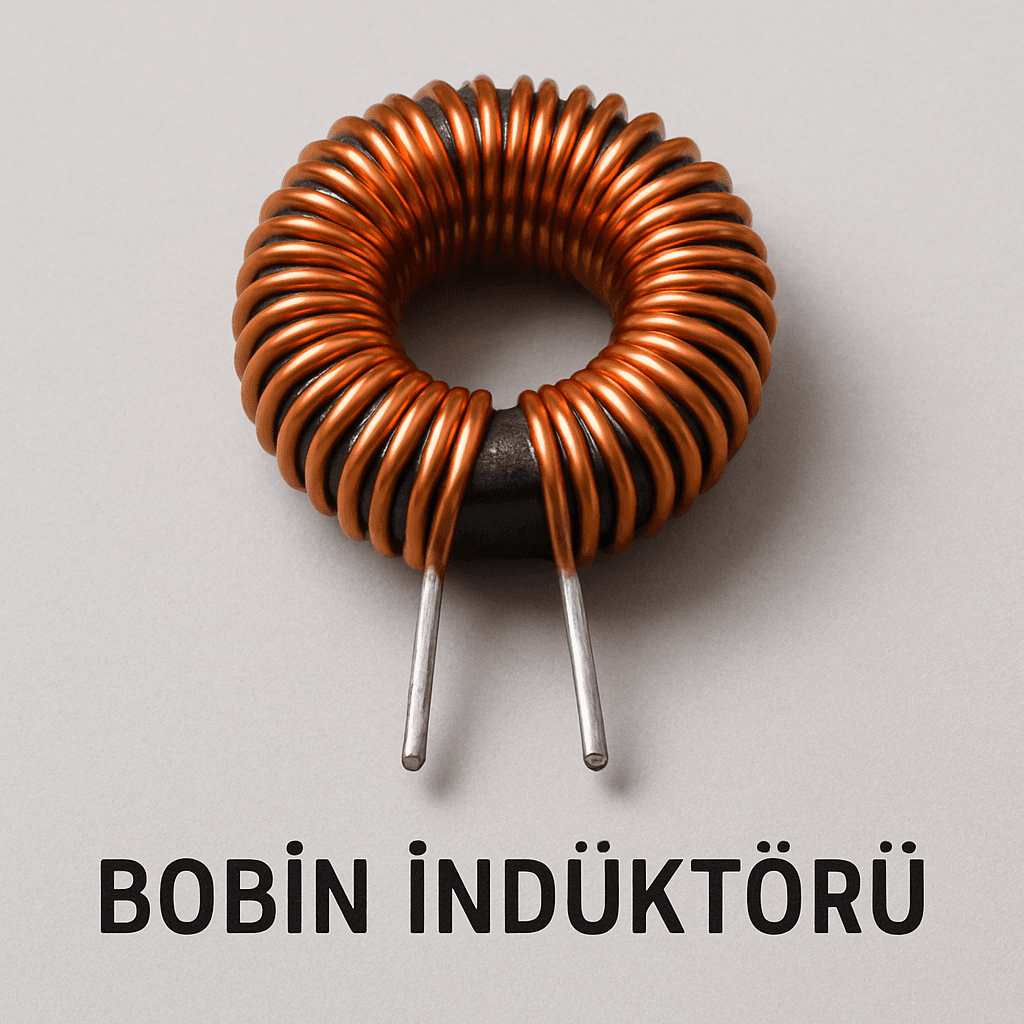
Inductors, also known as coils, are fundamental passive components in electrical and electronic systems that play a vital role in various applications through functions such as magnetic field generation and energy storage.
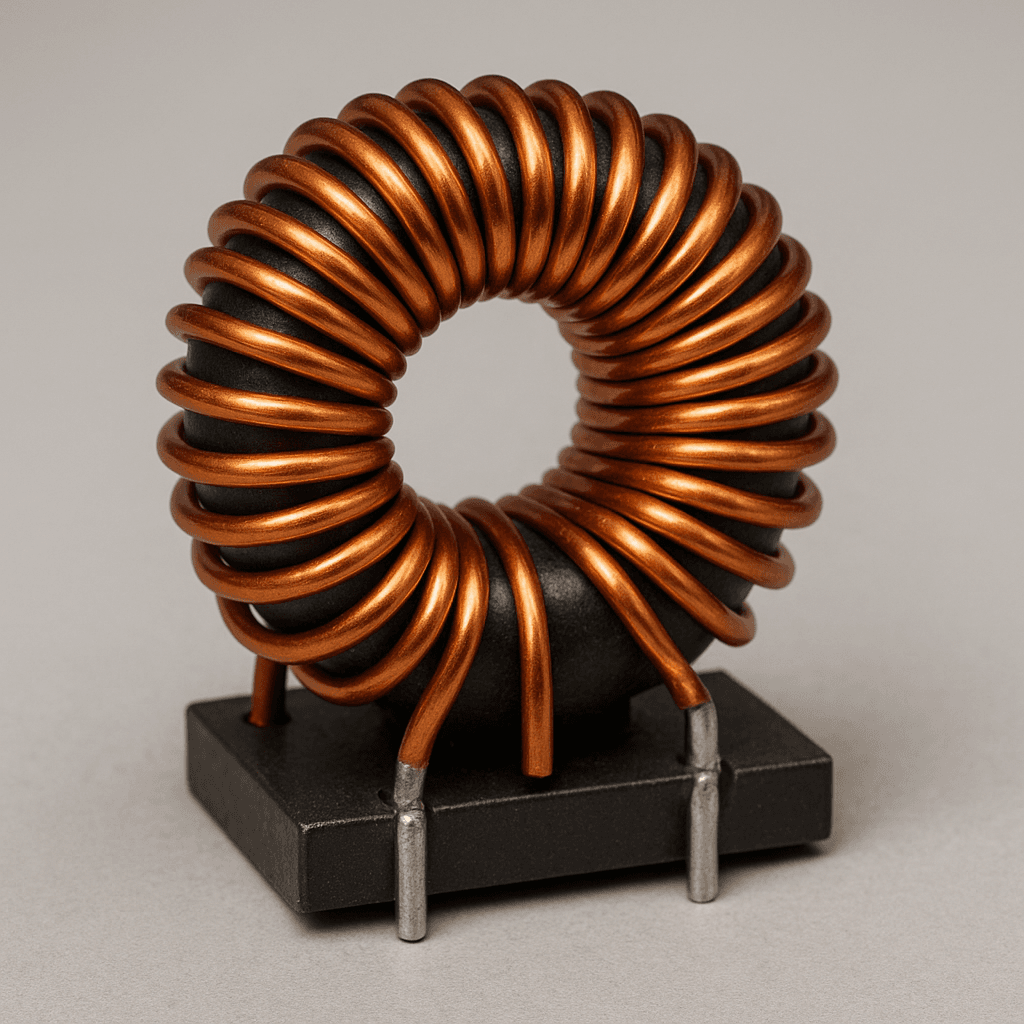
Coil (Inductor) (Generated by artificial intelligence.)
A coil or inductor is a passive electronic component used in electrical circuits to generate a magnetic field. It is typically constructed by winding an insulated conductive wire in a specific pattern. When an electric current flows through the coil, a magnetic field is created around it, and this field produces an electromagnetic resistance against changes in current within the circuit.
A coil essentially consists of a conductive wire, a core material, and a supporting structure. The conductive wire is usually made from low-resistance materials such as copper or aluminum. The core may be manufactured using materials with high magnetic permeability such as ferrite, iron, or composite materials. The presence and type of core directly affect the coil’s inductance value and operating frequency. When no core is used, air-core coils are obtained, and these are preferred in high-frequency applications.
Coils operate based on Faraday’s law of electromagnetic induction. When the electric current flowing through a coil changes, the resulting magnetic field also changes, inducing a voltage within the coil itself. This induced voltage generates a counter electromotive force (EMF) that opposes the change in current. As a result, coils serve to limit sudden current variations and store energy within circuits.
Induction heating coils are specialized types of coils designed to convert electrical energy into thermal energy within a target material. These coils use high-frequency alternating current to generate eddy currents in the material, which produce heat. Parameters such as the number of layers, winding shape, and geometric configuration in the design of induction coils directly influence heat distribution and efficiency.
Multilayer coils are preferred to optimize heat distribution and inductance values. Layered designs enhance thermal performance by equalizing heat density and preventing excessive localized heating.
The core material is one of the most critical factors determining a coil’s inductive properties. High-permeability cores increase inductance, while low-permeability or air-gapped structures affect energy storage capacity and frequency response. The size of the core and air gap significantly influence performance, particularly in medium-frequency high-power applications.
The shape of the coil winding has a decisive impact on thermal performance. Circular, helical, and spiral configurations produce different temperature distributions. Spiral-shaped coils have been shown to distribute heat more uniformly.
Planar coils are compact coils capable of providing high inductance in small-scale applications. They are typically fabricated by printing onto multilayer printed circuit boards (PCBs). Planar design offers significant advantages in modern electronic circuits where space is limited.
In recent years, high-energy-density coils have been designed using materials such as copper foil, and optimization studies have been conducted using genetic algorithms. These techniques enhance the energy efficiency of coils and improve the volume-to-cost ratio.
The reliability of induction coils is closely related to their resistance to manufacturing defects and mechanical fatigue. Optimizing material selection and winding techniques during production directly affects coil lifespan and performance.
Coils are fundamental electronic components used in a wide range of functions including energy storage, signal filtering, induction heating, and magnetic field generation. The materials, geometry, and manufacturing techniques used in their design are carefully selected according to the application. Scientific research continues to develop new methods to improve coil efficiency and reliability.
"Comparative Analysis of the Effects of Core Material and Air Gap Sizing on the Performance of High-Power Medium-Frequency Inductors." ScienceDirect, 2025. https://www.sciencedirect.com/science/article/pii/S2215098625000564.
"Design and Manufacture of High-Inductance Planar Coils for Small-Scale Applications." ScienceDirect, 2016. https://www.sciencedirect.com/science/article/pii/S1877705816336827.
"Design, manufacture, and validation of a coil developed for induction heating applications." ScienceDirect, 2020. https://www.sciencedirect.com/science/article/pii/S0040603120300939.
"Effect of Coil Shapes on Temperature Distribution in Induction Heating." ScienceDirect, 2022. https://www.sciencedirect.com/science/article/pii/S2214785322055559.
"Induction coil - overview."ScienceDirect Konuları. Accessed April 27, 2025. https://www.sciencedirect.com/topics/engineering/induction-coil.
"Induction heating coil - overview."ScienceDirect Konuları. Accessed April 27, 2025. https://www.sciencedirect.com/topics/engineering/induction-heating-coil.
"İndüksiyon Bobini Güvenilirliğini Artırma." *Malzeme Mühendisliği ve Performans Dergisi* 23, no. 10 (2014): 3617–3623. https://link.springer.com/article/10.1007/s11665-014-1249-4.
Barman, Bhaskaran, and Mainak Sengupta. "Çok Katmanlı İndüksiyonlu Isıtma Bobininin Parametre Tayini: Analitik, Simülasyon ve Deneysel Çalışmalar." *Mühendisler Enstitüsü Dergisi (Hindistan): Seri B* 105 (2024): 1299–1317. https://link.springer.com/article/10.1007/s40031-024-01000-7.
Yun, J. O., and Young-Soo Yang. "Hareketli İndüktör Bobini için İndüksiyonla Isıtmanın Analizi." *Makine Bilimi ve Teknolojisi Dergisi* 20, no. 8 (2006): 1217–1223. https://link.springer.com/article/10.1007/BF02916020.
Zhang, Yuchen, Ling Dai, Shengting Fan, and Fuchang Lin. "Genetic Algorithm-Based Optimal Design of Copper Foil Inductors with High Energy Storage Density." *Proceedings of the 18th Annual Conference of the Chinese Society for Electrical Engineering*, 80–89. Spring, 2024. https://link.springer.com/chapter/10.1007/978-981-97-1068-3_9.

Definition
Structural Properties
Working Principle
Induction Heating Coils
Factors Influencing Coil Design
Layered Structures
Core Material and Air Gap
Winding Geometry
Planar Coils
Advanced Coil Optimization
Reliability of Coils