


This article was automatically translated from the original Turkish version.
+1 More
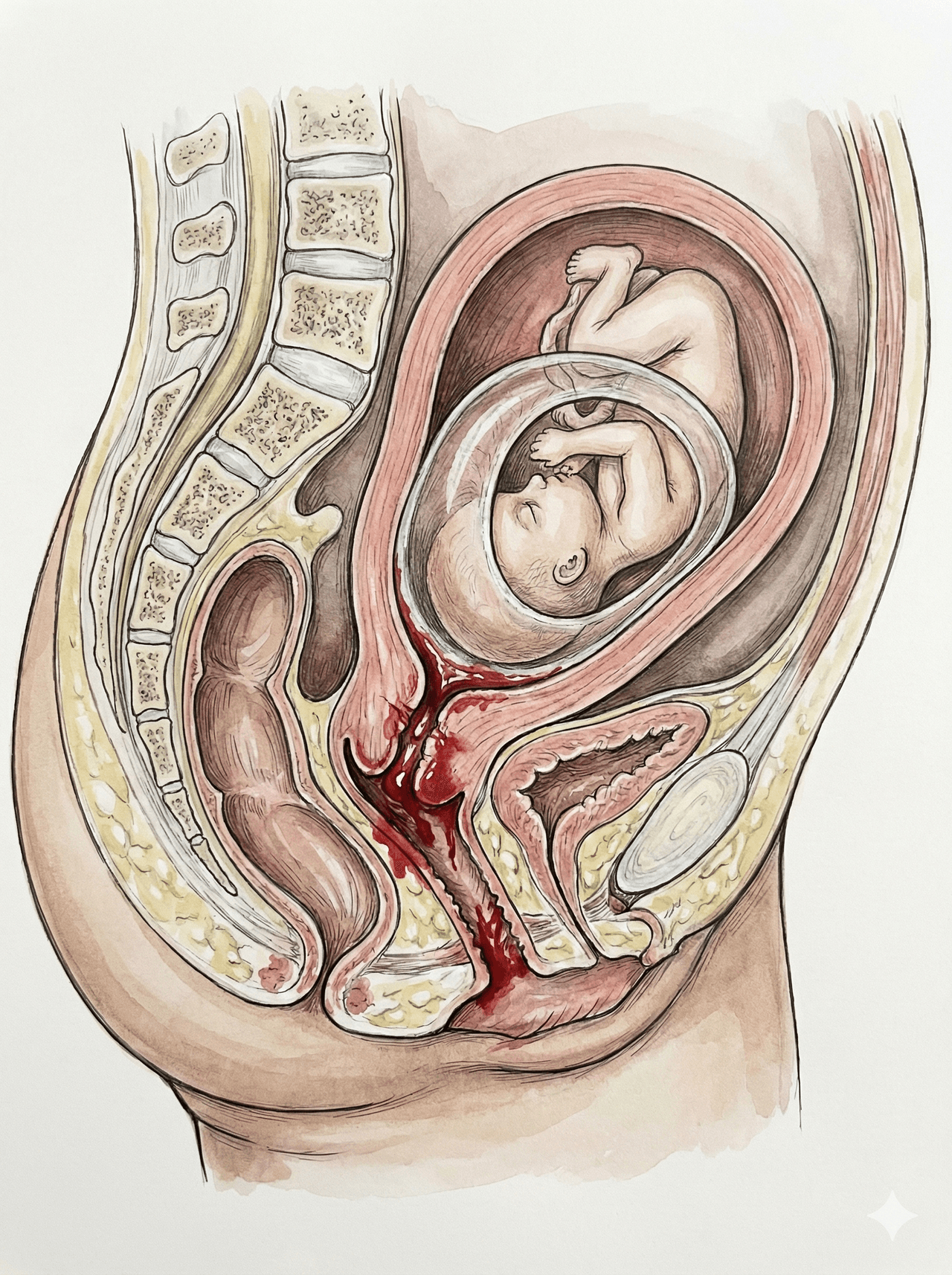
Kaçınılmaz Düşük Süreci
(Yapay Zeka ile Oluşturulmuştur)
Inevitable Miscarriage(Abortus insipiens) is a clinical condition in which pregnancy ends before the twentieth week and retention of the pregnancy product within the uterus is no longer possible.
This condition is characterized by the addition of cervical dilation (cervical dilatation) to the signs of threatened miscarriage, namely bleeding and pain. Pregnancy continuation is no longer possible at this stage and the process progresses toward the natural expulsion of the pregnancy material. This clinical picture, often accompanied by rupture of the amniotic sac (membrane rupture), is recognized as a clinical stage of spontaneous abortion.
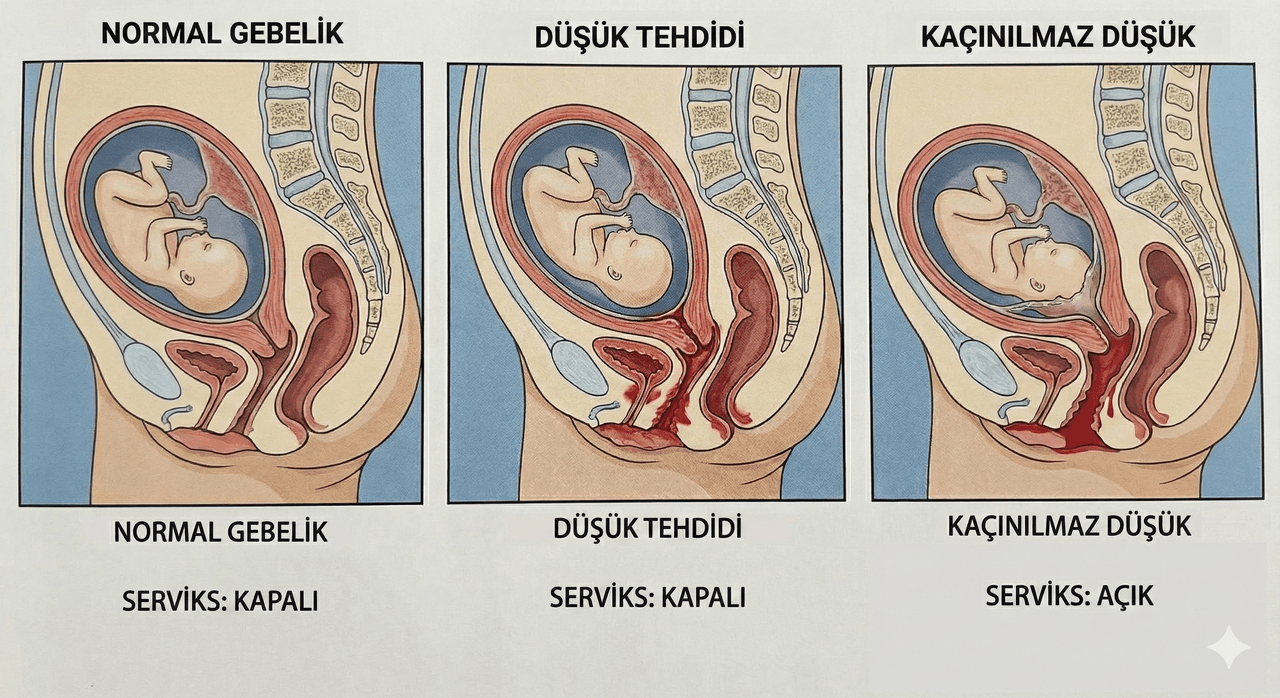
Normal Pregnancy and Inevitable Miscarriage Symptoms
(Generated by Artificial Intelligence)
Inevitable miscarriage and other types of miscarriage have evolved diagnostically with the discovery of biochemical substances secreted by the pregnancy product. In the early twentieth century, the concept was proposed that the fertilized ovum secretes specific substances; in 1927–1928, Ascheim and Zondek successfully identified human chorionic gonadotropin (hCG), laying the foundation for pregnancy tests.
In subsequent years, other proteins reflecting placental function were identified. In 1936, Ehrhardt detected lactogenic activity in the placenta, and in 1961, Ito and Higashi isolated hPL.
Another pregnancy-specific protein, SP1, was discovered by Tatarinov and Masyukevich in 1970 and isolated by Bohn in 1971. The discovery of these markers has played a significant role in the biochemical monitoring of processes that begin as threatened miscarriage and may progress to inevitable miscarriage.【1】
Approximately 10–15% of pregnancies in the general population end in spontaneous miscarriage. Studies based on hospital data show that inevitable miscarriage accounts for a significant proportion of all miscarriage cases. One study reported that 38.5% of miscarriage cases were diagnosed as inevitable miscarriage.【2】
Data from another center observed that cases diagnosed with threatened miscarriage or inevitable miscarriage accounted for 76.8% of all miscarriage referrals. Maternal age is a prominent risk factor; the rate of early miscarriage is 9–17% among women aged 20–30, but can rise to 75–80% in women aged 45.【3】
The most common cause of progression to inevitable miscarriage is chromosomal abnormalities. Chromosomal disorders underlie approximately 55% of spontaneous miscarriages. Other contributing factors include hormonal, metabolic, infectious, placental, chemical, and anatomical causes.
Among hormonal causes, progesterone insufficiency (luteal phase defect) is most prominent. Research has reported that advanced maternal age may increase risk, but no definitive profile has been established linking parity or prior miscarriage history directly to the condition.
The fundamental pathophysiological mechanism involves uterine contractions aimed at expelling the pregnancy product and cervical dilation resulting from these contractions or structural changes. In threatened miscarriage, the cervix remains closed; as the process progresses, cervical canal dilation occurs, leading to inevitable miscarriage. Mechanical disruption of intrauterine decidual cells during placental separation or abortion can elevate maternal serum CA-125 levels, indicating degeneration of the decidua and amniotic membranes.【4】
In patients diagnosed with inevitable miscarriage, vaginal bleeding and pain symptoms are significantly more severe and pronounced than in threatened miscarriage. Pain is typically cramp-like and felt in the lower abdomen or back.
The most distinctive finding on physical examination is an open cervical os. In most cases, rupture of membranes (water breaking) also accompanies the clinical picture. At this stage, part of the pregnancy product may be visible or palpable within the cervical canal.
Diagnosis is established through clinical examination and ultrasonographic evaluation. Pelvic examination confirms the diagnosis when the cervix is open and pregnancy material is observed within the cervical canal. Ultrasonography may reveal disruption of the gestational sac, its displacement toward the cervical canal, or absence of fetal cardiac activity.
Biochemically, failure of expected increases or a decline in serial measurements of placental proteins such as hCG, hPL, and SP1 is a strong indicator of pregnancy loss. Particularly, SP1 levels below 10% of normal values reliably predict miscarriage. Additionally, elevated CA-125 levels, indicating decidual breakdown, can serve as a supportive diagnostic parameter.【5】
Since continuation of the pregnancy is no longer possible, treatment aims to safely empty the uterus. Both medical and surgical interventions may be applied.
The most common method is uterine evacuation via suction curettage or sharp curettage after cervical dilation. Prior to the procedure, prostaglandin analogs such as misoprostol may be used to mature and dilate the cervix. Studies have shown that vaginal misoprostol effectively promotes cervical maturation, reduces intraoperative blood loss, and facilitates the procedure.
A diagnosis of inevitable miscarriage signifies the loss of the pregnancy and carries a negative prognosis. Biochemical tests performed during the threatened miscarriage phase, showing low levels of hPL and SP1, reliably predict progression to inevitable miscarriage. In these cases, pregnancy loss is certain; without intervention, the condition may progress to incomplete (incomplete) miscarriage or infection.
Various complications may arise during the process and treatment. The most common are hemorrhage and infection. Inadequate uterine contraction can lead to severe bleeding. During surgical evacuation, there is a risk of cervical injury or uterine perforation.
In cases not managed or performed under nonsterile conditions, the risk of infection increases, potentially leading to “abortus infeksiyozus,” characterized by pelvic pain, fever, and foul-smelling discharge. Additionally, the presence of a subchorionic hematoma is a factor that increases the risk of pregnancy loss and complicates the course.【6】
Warning: The content in this article is provided solely for general encyclopedic informational purposes. The information herein should not be used for diagnosis, treatment, or referral. Before making any decisions regarding health matters, you must consult a physician or qualified healthcare professional. The author and KÜRE Encyclopedia assume no responsibility for any consequences arising from the use of this information for diagnostic or therapeutic purposes.
Akarsu, Durdu, Hatice Işık, Ali Seven, Hakan Timur, Gülenay Gençosmanoğlu Türkmen, and Sertaç Batıoğlu. “Maternal Serum CA-125 ve Alfa Feto Protein Düzeylerinin Birinci Trimester Abortuslarıyla İlişkisi.” *The Journal of Gynecology - Obstetrics and Neonatology* 9, no. 35 (2012): 1451–1455. Accessed February 21, 2026. https://dergipark.org.tr/en/download/article-file/934364
Altınboğa, Orhan, Betül Yakıştıran, Seyit Ahmet Erol, Ali Taner Anuk, Emre Başer, Yüksel Oğuz, and Ali Turhan Çağlar. “Abortus İmminens Tanılı Hastalarda Subkoryonik Hematom Varlığının Gebelik Sonuçlarına Etkisi.” *Jinekoloji - Obstetrik ve Neonatoloji Tıp Dergisi* 17, no. 3 (2020): 416–419. Accessed February 21, 2026. https://dergipark.org.tr/en/download/article-file/1128505
Koç, Acar. *Düşük Tehdidi Vakalarında, Maternal Serum Human Placental Lactogen (hPL), Human Chorionic Gonadotropin (hCG), ve Pregnancy Specific Beta-1 Glycoprotein (SP1) Seviyelerinin Diagnostic ve Prognostic Önemi*. Master's thesis, Ankara Üniversitesi, 1988. ProQuest (31566524). Accessed February 21, 2026. https://dspace.ankara.edu.tr/server/api/core/bitstreams/0f81ed78-6063-4675-851f-4b1c62372167/content
Mariza, Ana, Rosmiyati, and Novi Sulistyowati. “Karakteristik Ibu yang Mengalami Kejadian Abortus Insipiens di RSUD. Dr. A. Dadi Tjokrodipo Kota Bandar Lampung Tahun 2014.” *Jurnal Kebidanan* 1, no. 3 (October 2015): 139–142. Accessed February 21, 2026. https://www.ejurnalmalahayati.ac.id/index.php/kebidanan/article/view/559/493
Musyarof, Disa Fadil, Lu’lu Al Fatina Zahira, Ahmad Nur Rifa’i, Aisya Yafis Iqlima, Zirly Vera Aziri, Anak Agung Gede Agung Difa Agusta Pramana Putra, Sabila Izzatina Azmy Mujahid, and Decky Aditya Zulkarnaen. “Comprehensive Analysis of Abortion: Risk Factors, and Management in Reproductive Health.” *Jurnal Biologi Tropis* 24, no. 4 (2024): 139–146. Accessed February 21, 2026. https://jurnalfkip.unram.ac.id/index.php/JBT/article/view/7915/4576
Sapmaz, Ekrem, Bilgin Gürateş, and Esra Bulgan. “İlk Trimesterdeki Suction Küretaj Vakalarında Serviksin Olgunlaştırılması İçin Vajinal Mizoprostol Kullanımı.” *T Klin Jinekoloji Obstetrik* 11, no. 3 (2001): 204–208. Accessed February 21, 2026. https://www.jcog.com.tr/pdf/?pdf=670fee8b743b508b0f1a6d128a104ef5
Shariff, Fonda Octarianingsih, and Diana Hermawati. “Abortus Infeksiosa.” *The Journal of Mother and Child Health Concerns* 4, no. 4 (April 2025): 139–146. Accessed February 21, 2026. https://www.e-jurnal.iphorr.com/index.php/mchc/article/view/856/938
Sulistyaningrum, Nourma. “Faktor yang Mempengaruhi Abortus Imminens atau Insipiens di RS Koesnadi Bondowoso.” *Journal of Dharma Praja* 3, no. 1 (2017): 36–37. Accessed February 21, 2026. http://www.jurnaldharmapraja.ac.id/index.php/ojs/article/view/35/31
[1]
Acar Koç, Düşük Tehdidi Vakalarında, Maternal Serum Human Placental Lactogen (hPL), Human Chorionic Gonadotropin (hCG), ve Pregnancy Specific Beta-1 Glycoprotein (SP1) Seviyelerinin Diagnostic ve Prognostic Önemi (Specialization Thesis, Ankara University, 1988), Access date: 21 February 2026, https://dspace.ankara.edu.tr/server/api/core/bitstreams/0f81ed78-6063-4675-851f-4b1c62372167/content
[2]
Ana Mariza, Rosmiyati ve Novi Sulistyowati, “Karakteristik Ibu yang Mengalami Kejadian Abortus Insipiens di RSUD. Dr. A. Dadi Tjokrodipo Kota Bandar Lampung Tahun 2014,” Jurnal Kebidanan 1, no. 3 (October 2015), Access date: 21 February 2026, https://www.ejurnalmalahayati.ac.id/index.php/kebidanan/article/view/559/493
[3]
Ana Mariza, Rosmiyati ve Novi Sulistyowati, “Karakteristik Ibu yang Mengalami Kejadian Abortus Insipiens di RSUD. Dr. A. Dadi Tjokrodipo Kota Bandar Lampung Tahun 2014,” Jurnal Kebidanan 1, no. 3 (October 2015), Access date: 21 February 2026, https://www.ejurnalmalahayati.ac.id/index.php/kebidanan/article/view/559/493
[4]
Durdu Akarsu vd., “Maternal Serum CA-125 ve Alfa Feto Protein Düzeylerinin Birinci Trimester Abortuslarıyla İlişkisi,” The Journal of Gynecology - Obstetrics and Neonatology 9, no. 35 (2012), Access date: 21 February 2026, https://dergipark.org.tr/en/download/article-file/934364
[5]
Acar Koç, Düşük Tehdidi Vakalarında, Maternal Serum Human Placental Lactogen (hPL), Human Chorionic Gonadotropin (hCG), ve Pregnancy Specific Beta-1 Glycoprotein (SP1) Seviyelerinin Diagnostic ve Prognostic Önemi (Specialization Thesis, Ankara University, 1988), Access date: 21 February 2026, https://dspace.ankara.edu.tr/server/api/core/bitstreams/0f81ed78-6063-4675-851f-4b1c62372167/content
[6]
Orhan Altınboğa vd., “Abortus İmminens Tanılı Hastalarda Subkoryonik Hematom Varlığının Gebelik Sonuçlarına Etkisi,” Jinekoloji - Obstetrik ve Neonatoloji Tıp Dergisi 17, no. 3 (2020), Access date: 21 February 2026, https://dergipark.org.tr/en/download/article-file/1128505

Kaçınılmaz Düşük Süreci
(Yapay Zeka ile Oluşturulmuştur)
No Discussion Added Yet
Start discussion for "Inevitable Abortion (Abortus insipiens)" article
History
Epidemiology
Etiology
Pathophysiology
Clinical Findings
Diagnosis
Treatment
Prognosis
Complications