
This article was automatically translated from the original Turkish version.
Mission | Mars surface research | ||||||||
|---|---|---|---|---|---|---|---|---|---|
Executive | NASA JPL | ||||||||
Producer(s) | Lockheed Martin Space | ||||||||
Launch Date | 2018-05-05 | ||||||||
Entry into Service Date | 2018-11-26 | ||||||||
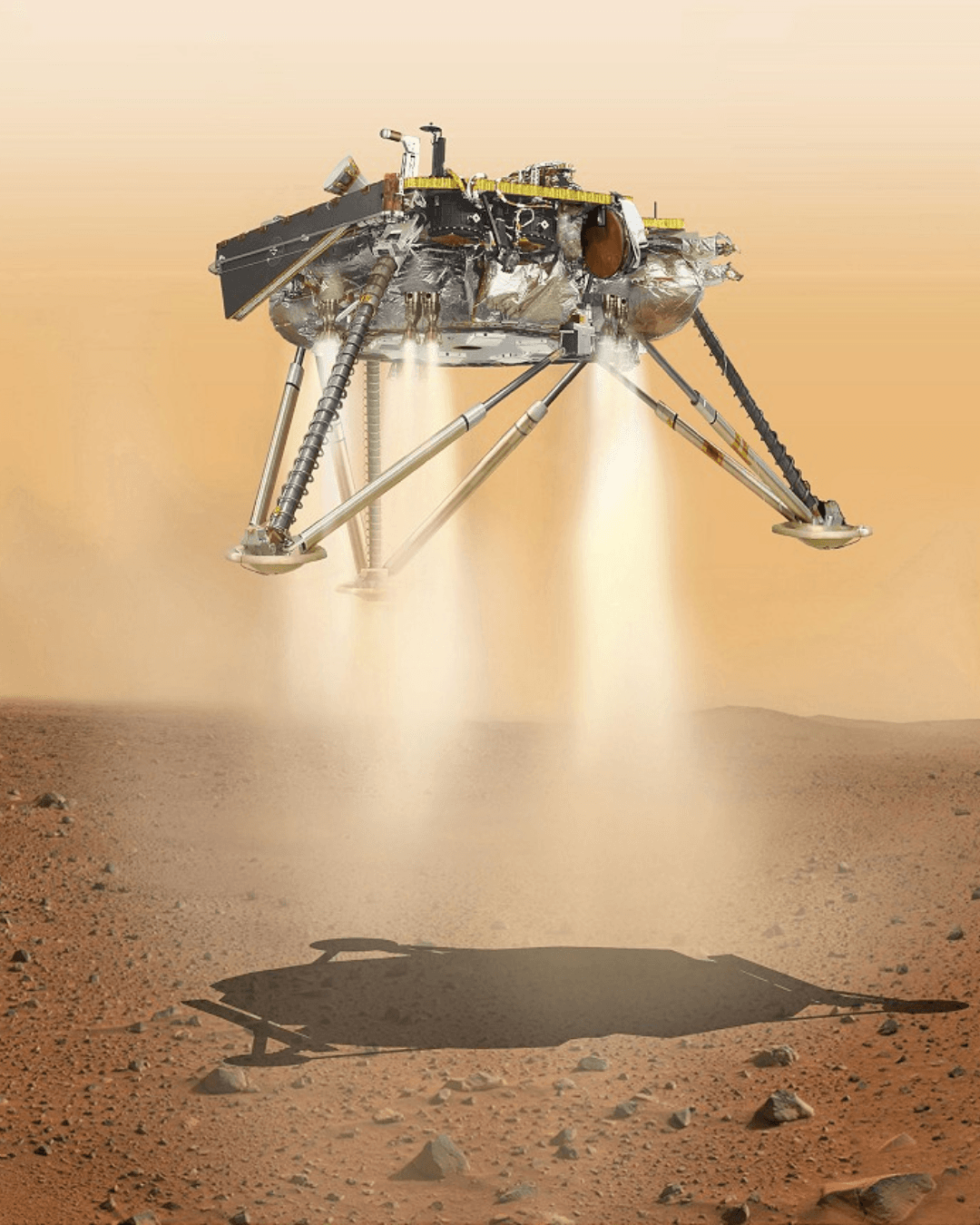
InSight (Interior Exploration using Seismic Investigations, Geodesy and Heat Transport) is a robotic NASA spacecraft designed to study the deep interior structure of Mars. InSight, the first rover specifically equipped to “look beneath” Mars’ surface, aimed to measure the planet’s vital signs—its pulse (seismology), temperature (heat flow), and reflexes (geodesy). Launched on 5 May 2018, the spacecraft successfully landed on Mars on 26 November 2018 and concluded its mission in December 2022.
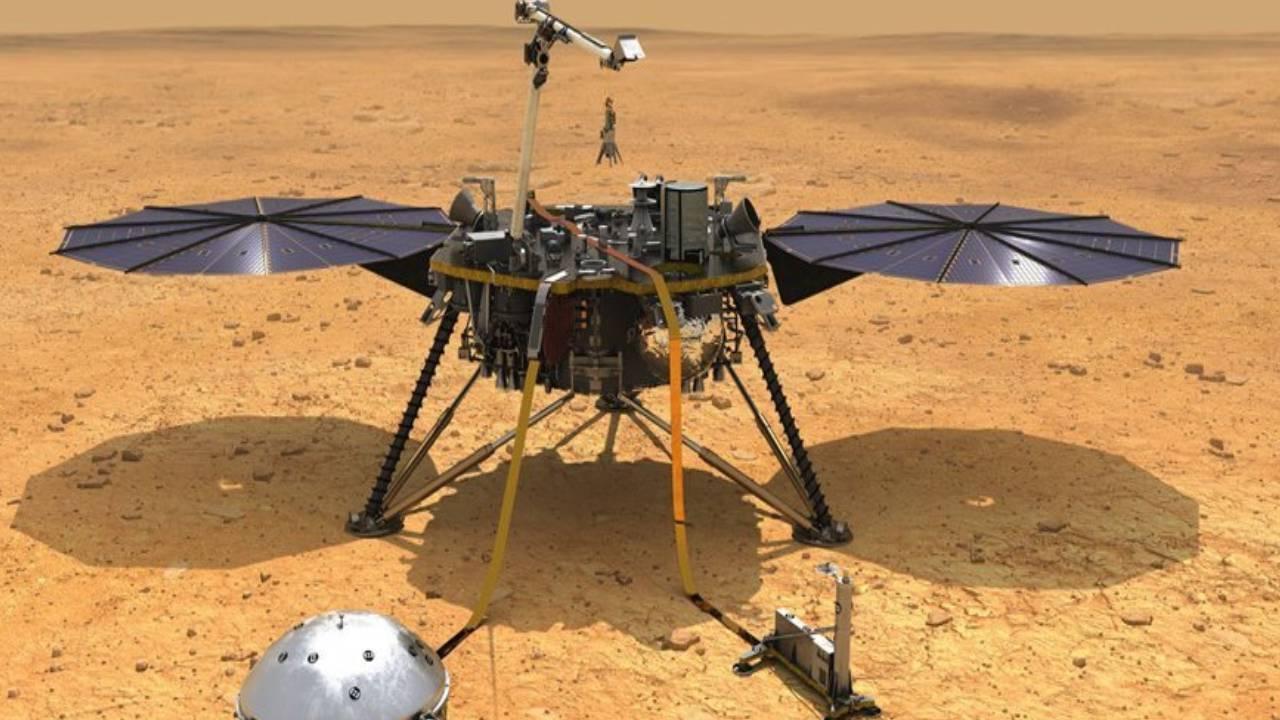
InSight (TRT News)
InSight’s primary goal was to answer fundamental questions about how terrestrial planets like Earth formed 4.5 billion years ago. To achieve this, it focused on Mars’ internal structure:
InSight (Youtube-Nasa)
Overall Structure InSight’s design was based on the successful Phoenix lander, which landed on Mars in 2008. The spacecraft was equipped with two circular solar panels and featured a robotic arm (Instrument Deployment Arm) to place its scientific instruments onto the surface.
Main Scientific Instruments InSight carried three primary scientific instruments to achieve its objectives:

InSight (Anadolu Agency)
Launch and Landing InSight was launched on 5 May 2018 from Vandenberg Air Force Base in California. This marked the first interplanetary launch from the west coast of the United States. After a seven-month journey, it successfully landed on 26 November 2018 on Elysium Planitia, a flat and expansive plain on Mars.
Surface Operations and Mission End Following landing, InSight carefully deployed its SEIS and HP³ instruments onto the Martian surface using its robotic arm. While the SEIS seismometer became operational, the HP³ probe’s failure to penetrate the soil triggered an extended troubleshooting effort. Over the course of its four-year mission, InSight collected valuable scientific data. However, over time, dust accumulating on its solar panels significantly reduced the spacecraft’s power generation capacity. As InSight’s power dwindled, communication was lost in December 2022, and NASA officially declared the mission concluded.
Despite the failure of its heat probe, the InSight mission made revolutionary contributions to Martian science:
InSight transformed Mars from a world known only by its surface features into a planet whose internal dynamics and structure are now characterized.
NASA Jet Propulsion Laboratory. "InSight." Accessed July 5, 2025. https://www.jpl.nasa.gov/missions/insight
NASA Mars Exploration Program. "Seismic Experiment for Interior Structure (SEIS)." Accessed July 5, 2025. https://mars.nasa.gov/insight/spacecraft/instruments/seis/
NASA. "InSight Mars Lander." Accessed July 5, 2025. https://science.nasa.gov/mission/insight/
NASA. "NASA Retires InSight Mars Lander After More Than Four Years of Science." Accessed July 5, 2025. https://www.nasa.gov/missions/insight/nasa-retires-insight-mars-lander-mission-after-years-of-science/

Mission | Mars surface research | ||||||||
|---|---|---|---|---|---|---|---|---|---|
Executive | NASA JPL | ||||||||
Producer(s) | Lockheed Martin Space | ||||||||
Launch Date | 2018-05-05 | ||||||||
Entry into Service Date | 2018-11-26 | ||||||||
Scientific Objectives
Design and Scientific Instruments
Mission Timeline
Key Discoveries and Legacy