


This article was automatically translated from the original Turkish version.
+2 More
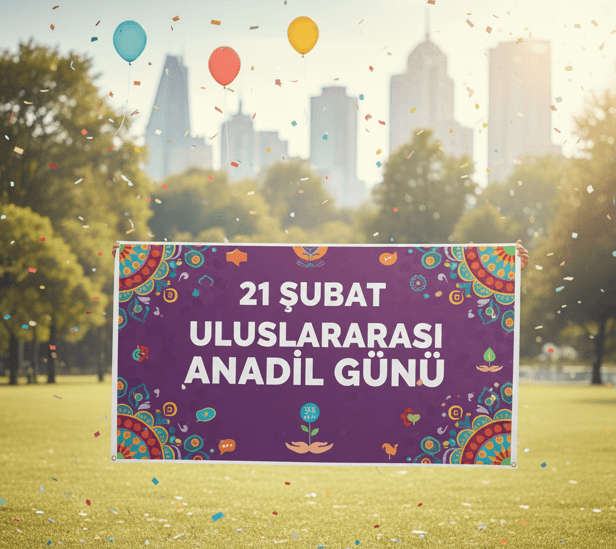
International Mother Language Day
(Generated by Artificial Intelligence)
History | 21 February | ||||||||
|---|---|---|---|---|---|---|---|---|---|
Foundation of the Day | through the initiative of Bangladesh | ||||||||
Year of Acceptance | 1999, (UNESCO General Conference) | ||||||||
Year Celebrated Worldwide | 2000 | ||||||||
Official Recognition | in 2002 by the United Nations General Assembly | ||||||||
International Mother Language Day is an international observance aimed at preserving linguistic diversity, promoting multilingualism, and sustaining cultural heritage. It is celebrated annually on 21 February and supported by UNESCO. The day seeks to raise awareness of the importance of mother tongues in education and public life and to contribute to the protection of cultural identity.
The primary objectives of International Mother Language Day are the preservation of cultural and linguistic diversity, the promotion of mother tongues in education and public life, the encouragement of multilingualism, and the strengthening of social cohesion and peace. The day aims to recognize the cultural cognitive and social value of languages and to raise awareness about social sustainability inclusive knowledge societies and the protection of cultural heritage.
International Mother Language Day originated from the initiative of Bangladesh. It was adopted by the UNESCO General Conference in 1999 and has been observed worldwide since 2000. In 2002 the United Nations General Assembly officially recognized the day and designated UNESCO as the leading organization. United Nations General Assembly resolution A/RES/61/266 dated 16 May 2007 called on member states to take action to protect and support languages used globally. Within the same framework the year 2008 was proclaimed the International Year of Languages and UNESCO assumed the role of leading organization in promoting multilingualism cultural diversity and international understanding. As of 2025 International Mother Language Day was commemorated with a silver jubilee marking its 25th anniversary.
Languages are more than tools of communication; they shape thought convey knowledge and express identity. According to UNESCO approximately 8324 languages are spoken worldwide. Many of these are at risk of extinction due to globalization and social change. Providing learners with education in their mother tongue is crucial for improving learning outcomes because students who are taught in a language they fully understand demonstrate better comprehension participation and critical thinking skills. Multilingual education not only supports learners of minority and indigenous languages but also establishes a vital link between education and culture.
Approximately 40 percent of the world’s population receives education in a language other than the one spoken at home. Research shows that education in the mother tongue at an early age enhances fundamental reading and writing skills facilitates the learning of additional languages and improves overall educational achievement. Children educated in their mother tongue feel more accepted and parents can participate more actively in their children’s education. UNESCO promotes policies that support multilingualism and collaborates with countries to implement them.
UNESCO implements programs worldwide to preserve approximately 7000 languages and integrate indigenous languages into education systems. Acting as the leading organization within the framework of the International Decade of Indigenous Languages 2022–2032 UNESCO ensures that multilingualism is prioritized in education culture and public policy. UNESCO views languages as instruments of knowledge and cultural transmission and as shapers of identity emphasizing that their preservation is essential for sustainable development at both individual and societal levels.
Anadolu Ajansı. “Dünyada 2 Bin 500 Dil Yok Olma Tehlikesiyle Karşı Karşıya.” Accessed October 24, 2025. https://www.aa.com.tr/tr/dunya/dunyada-2-bin-500-dil-yok-olma-tehlikesiyle-karsi-karsiya/2151940
UNESCO. “International Mother Language Day 21 February.” UNESCO. Accessed October 24, 2025. https://www.unesco.org/en/days/mother-language
UNESCO. “Message from Ms Audrey Azoulay, Director-General of UNESCO, on the occasion of International Mother Language Day, 21 February 2025.” *UNESCO Digital Library.* Accessed October 24, 2025. https://unesdoc.unesco.org/ark:/48223/pf0000392824_eng
United Nations. “International Mother Language Day 21 February.” United Nations. Accessed October 24, 2025. https://www.un.org/en/observances/mother-language-day

International Mother Language Day
(Generated by Artificial Intelligence)
History | 21 February | ||||||||
|---|---|---|---|---|---|---|---|---|---|
Foundation of the Day | through the initiative of Bangladesh | ||||||||
Year of Acceptance | 1999, (UNESCO General Conference) | ||||||||
Year Celebrated Worldwide | 2000 | ||||||||
Official Recognition | in 2002 by the United Nations General Assembly | ||||||||
No Discussion Added Yet
Start discussion for "International Mother Language Day" article
Purpose and Significance
History
Linguistic Diversity and Threats
Education in the Mother Tongue and Multilingualism
Current Status and UNESCO Initiatives