 Recently Added:
This article was automatically translated from the original Turkish version.
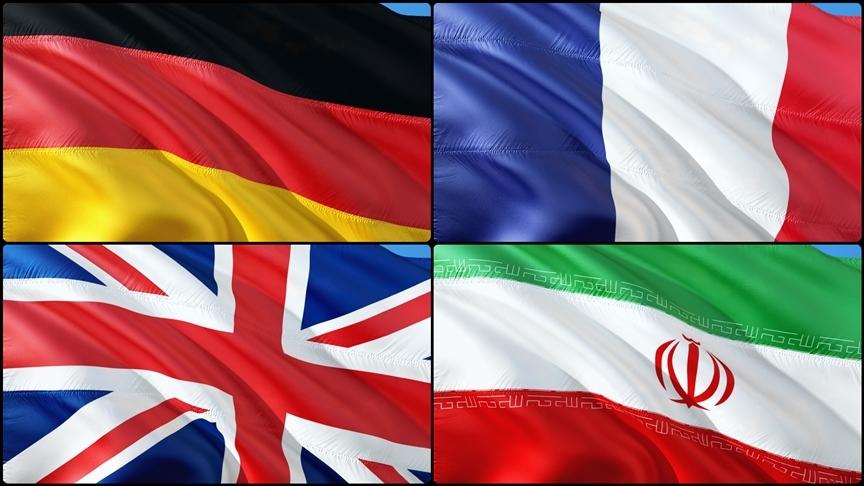
The Iran-Europe Nuclear Talks are a diplomatic negotiation process conducted between Iran and the European parties to the 2015 nuclear agreement—namely the United Kingdom, France, and Germany (E3)—with the second round held in Istanbul on 25 July 2025. The process continues from the first round, which took place in Istanbul on 16 May 2025 and established a platform for consultation on nuclear activities, sanctions, and the implementation of international agreements. The talks occurred at a time when the possibility of activating the snapback mechanism was on the agenda.

Vehicles carrying delegations for nuclear talks between Iran and the United Kingdom, France, and Germany enter the Iranian Consulate General in Istanbul, 25 July 2025 – (Anadolu Agency)
A prior meeting at the level of deputy foreign ministers between Iran and the United Kingdom, France, and Germany took place in Istanbul on 16 May 2025. This meeting was held in parallel with indirect nuclear negotiations between Iran and the United States facilitated by Oman. The parties agreed to continue these contacts.
On 13 June 2025, military operations launched by Israel against Iran brought the Iran-US and Iran-Europe negotiation processes to an end. Israel’s attacks triggered a 12-day military confrontation, during which the United States conducted air strikes on three of Iran’s main nuclear facilities. On 24 June 2025, the United States declared a ceasefire.
In the aftermath of these attacks and the diplomatic breakdown, the European side announced that it would activate the snapback mechanism if nuclear talks with Iran did not resume. Iran, however, argued that the European parties had failed to fulfill their obligations under the agreement due to the United States’ withdrawal from it in 2018 and therefore lacked the authority to invoke the mechanism.
The snapback mechanism is a provision under United Nations Security Council Resolution 2231, which endorsed the 2015 nuclear agreement. According to this provision, any participant state may claim that Iran has committed a serious violation of its obligations, refer the matter to the Security Council, and trigger the automatic reinstatement of sanctions within 30 days if no resolution is adopted to block it.
The deadline for invoking this mechanism is 18 October 2025. The European countries have declared that they will activate the mechanism if no diplomatic solution regarding Iran’s nuclear activities is reached before that date. If triggered, the mechanism will reinstate a series of UN Security Council resolutions adopted between 2006 and 2010 targeting Iran, including Resolutions 1696, 1737, 1747, 1803, 1835, and 1929.
These sanctions include the re-imposition of an arms embargo, the prohibition of missile systems capable of delivering nuclear warheads, enhanced monitoring of shipments to and from Iran, and the imposition of financial and travel restrictions on numerous individuals and entities. In particular, under Resolution 1929, UN member states are granted the authority to inspect and seize Iranian vessels.
Iran’s uranium enrichment activities have been one of the most contentious issues in the negotiations. Western countries have demanded that Iran reduce its enrichment levels to zero, arguing that current activities could open the door to nuclear weapons development. This demand was also raised during the indirect Iran-US talks mediated by Oman throughout 2025 but was rejected by Iran.
Iran maintains that its nuclear program is exclusively for peaceful purposes, such as energy production and medical applications. On 23 July 2025, Iranian President Masoud Pezeshkian stated that Iran has no intention of acquiring nuclear weapons and emphasized that this position is a political, religious, humanitarian, and strategic principle for the country.
Following Israel’s and the United States’ attacks on Iran’s nuclear facilities, the Iranian Parliament passed a law limiting cooperation with the IAEA. The law introduces new security conditions for information sharing and inspections by the Agency. Iran stated that these measures are in line with its sovereign rights.
Iran’s Ministry of Foreign Affairs spokesperson, Ismail Bekayi, expressed dissatisfaction with the stance of IAEA Director General Rafael Grossi and noted that this discontent has provoked strong public reaction within Iran. Some Iranian media outlets have called for legal proceedings against Grossi. The United Kingdom, France, and Germany issued a joint statement condemning these threats.
Al Jazeera. “Iran to Hold Nuclear Talks with 3 European Powers on Friday.” Al Jazeera English, Accessed July 21, 2025. https://www.aljazeera.com/news/2025/7/20/iran-to-hold-nuclear-talks-with-3-european-powers-on-friday
Anadolu Ajansı. “Iran, E3 Countries Agree to Resume Nuclear Talks on Friday in Istanbul.” Anadolu Ajansı (English), Accessed July 21, 2025. https://www.aa.com.tr/en/world/iran-e3-countries-agree-to-resume-nuclear-talks-on-friday-in-istanbul/3636912
Anadolu Ajansı. “İran ile Avrupa, Nükleer Görüşmelere Başlama Konusunda Anlaştı.” Accessed July 21, 2025. https://www.aa.com.tr/tr/dunya/iran-ile-avrupa-nukleer-gorusmelere-baslama-konusunda-anlasti-/3636738
Anadolu Ajansı. “İran ile İngiltere, Fransa ve Almanya Arasındaki Nükleer Görüşmeleri 25 Temmuz’da İstanbul’da Yapılacak.” Accessed July 21, 2025. https://www.aa.com.tr/tr/dunya/iran-ile-ingiltere-fransa-ve-almanya-arasindaki-nukleer-gorusmeleri-25-temmuzda-istanbulda-yapilacak/3636888
Reuters. "Iran to Hold Nuclear Talks with European Powers on Friday." Reuters, Accessed July 21, 2025. https://www.reuters.com/world/middle-east/iran-hold-nuclear-talks-with-european-powers-friday-2025-07-20/
On 23 July 2025, Iran met with senior diplomatic officials from Russia and China in its capital Tehran to discuss the trajectory of nuclear negotiations and Western-imposed sanctions. The meeting was held ahead of Iran’s upcoming negotiations with European countries in Istanbul.
The talks were conducted at the level of directors general of foreign ministries, and all three parties agreed to continue such consultations in the coming weeks. During the discussions, Iran’s nuclear program, the diplomatic process under the 2015 agreement, and the potential impacts of sanctions were assessed.
On 24 July 2025, following the talks, Chinese Foreign Ministry Spokesperson Guo Jiakun held a press conference in Beijing, stating that the legitimate concerns of all parties regarding Iran’s nuclear issue must be resolved through diplomatic and political means.
Jiakun emphasized that China maintains open channels of communication with all parties and reaffirmed its support for solutions based on dialogue and negotiation ahead of the new round of talks in Istanbul. He also stressed that all actors support a constructive approach leading to a formula that addresses legitimate demands.
On 20 July 2025, Ali Larijani, Iran’s top advisor on nuclear matters to Supreme Leader Ayatollah Ali Khamenei, met with Russian President Vladimir Putin at the Kremlin in Moscow. According to a statement by Kremlin Spokesperson Dmitry Peskov, the meeting included assessments of the situation regarding Iran’s nuclear program as well as developments in the Middle East.
It was noted that Putin reiterated Russia’s long-standing political commitment to a solution on the Iranian nuclear file. Russia’s close diplomatic ties with Iran and its role as one of the parties to the JCPOA process have led diplomatic sources to link this meeting to strategic evaluations ahead of the Istanbul negotiations.
Iranian Foreign Ministry Spokesperson Baghaei accused European countries of failing to respond to recent military attacks and of aligning themselves with the United States and Israel. He stated that this stance is unacceptable and that European nations must assume their responsibilities.
On 23 July 2025, during a press conference, Iranian Foreign Ministry Spokesperson Ismail Baghaei stated that there are currently no plans for direct negotiations with the United States. He recalled that previous indirect talks, facilitated by Oman, ended following the attacks in June.
Baghaei affirmed that diplomatic channels remain a tool for Iran to defend its national interests and can be utilized when necessary. He also rejected statements by U.S. President Donald Trump claiming that Iran is being pressured to return to negotiations. Iran further declined to accept U.S. official claims regarding enrichment levels and disarmament commitments.
Anadolu Ajansı. "Iran Discusses Nuclear Program, Western Sanctions with Russia, China." Anadolu Ajansı (English), Accessed July 23, 2025. https://www.aa.com.tr/en/world/iran-discusses-nuclear-program-western-sanctions-with-russia-china/3639410
Anadolu Ajansı. “China Urges Dialogue to Address ‘Legitimate Concerns of All Parties’ on Iranian Nuclear Issue.” Anadolu Ajansı (English), Accessed July 23, 2025. https://www.aa.com.tr/en/asia-pacific/china-urges-dialogue-to-address-legitimate-concerns-of-all-parties-on-iranian-nuclear-issue/3639524
Iran International. “Iran Holds Talks with Russia, China on Nuclear Programme and Sanctions.” Accessed July 23, 2025. https://www.iranintl.com/en/202507213245
The second round of nuclear negotiations between Iran and the United Kingdom, France and Germany took place on Friday 25 July 2025 in Istanbul, Türkiye. The meeting began around 10:00 at the Iranian Consulate General in Istanbul and concluded at 13:30. The negotiations were conducted at the level of deputy foreign ministers and held behind closed doors. The Iranian delegation included Deputy Foreign Ministers Mecid Tahtrevançi and Kazım Garibabadi.

Media representatives waiting outside the Iranian Consulate General in Istanbul, 25 July 2025 – (Anadolu Agency)
The main agenda items of the meeting in Istanbul were Iran’s nuclear activities, uranium enrichment levels, imposed sanctions and the future of the 2015 nuclear agreement. The discussions specifically addressed the renewed UN sanctions against Iran and the snapback mechanism.
The Iranian side emphasized that the lifting of sanctions must be prioritized and shared with the European parties the latest developments regarding the nuclear issue. It also raised during the meeting the stance of certain European countries in supporting Israel’s attacks on Iran.
Kazım Garibabadi noted during the meeting that the parties arrived with specific positions and that these positions were examined from various angles in a reciprocal manner. Iran presented its legal stance on the snapback mechanism and outlined its principles opposing its application.
Following the meeting, Iranian Deputy Foreign Minister Kazım Garibabadi stated on the X social media platform that the talks had taken place in a serious, open and detailed atmosphere. He indicated that the lifting of sanctions and developments concerning the nuclear issue had been put on the table.
It was reported that both sides had come to the meeting with specific proposals for solutions and that these proposals had been discussed in their various dimensions. The parties reached a mutual agreement to continue the negotiations. No official joint statement was issued regarding the meeting, but a commitment to continue the talks was expressed.
Anadolu Ajansı. "İran ile Avrupa Ülkeleri, Nükleer Faaliyetlere İlişkin Görüşmeler İçin Yeniden İstanbul’da Bir Araya Geldi." Accessed July 24, 2025. https://www.aa.com.tr/tr/gundem/iran-ile-avrupa-ulkeleri-nukleer-faaliyetlere-iliskin-gorusmeler-icin-yeniden-istanbulda-bir-araya-geldi/3641542#

The second round of nuclear negotiations between Iran and the United Kingdom, France and Germany took place in Istanbul on 25 July 2025. The talks, which followed up on the first round held on 16 May 2025, addressed issues such as uranium enrichment sanctions and the snapback mechanism. The parties agreed to continue consultations. Prior to the talks Iran met in Tehran with Russia and China and called on China and Russia for a diplomatic solution.
No Discussion Added Yet
Start discussion for "Iran-Europe Nuclear Talks (25 July 2025)" article
July 21, 2025
Background of the Istanbul Talks
July 21, 2025
Controversial Issues
July 23, 2025
Iran-Russia-China Consultations
July 23, 2025
Statement on Negotiations with the United States
July 25, 2025
25 July 2025 Istanbul Meeting