


This article was automatically translated from the original Turkish version.
+2 More
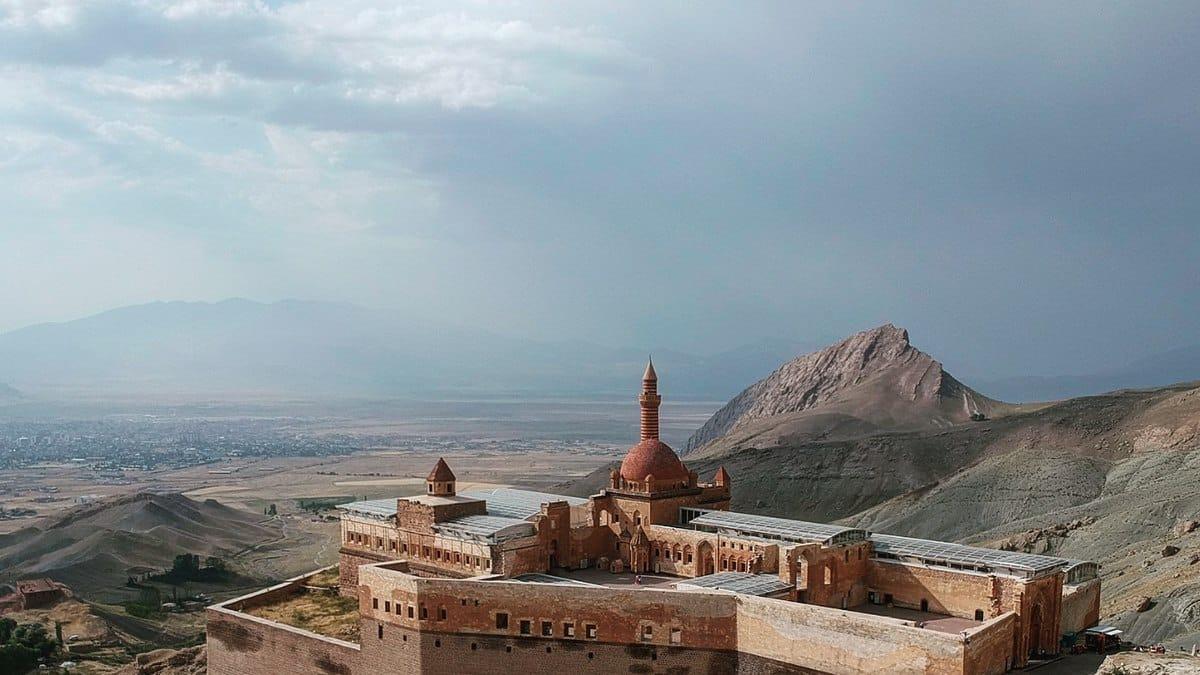
İshak Pasha Palace is a historical structure located on a hill overlooking Eski Beyazıt and its surroundings in the Doğubayazıt district of Ağrı province. place One of the architectural works of the Ottoman Empire, palace was begun in 1685 by Çolak Abdi Pasha of the Çıldır Atabeks and completed in 1784 by his son Small İshak Pasha. The palace possesses a rich historical heritage and an impressive architectural design.
İshak Pasha Palace is a structure that incorporates characteristics of Ottoman and Seljuk architecture while also reflecting influences of Europe Baroque art. Spanning approximately 7600 square meters in a 115 by 50 meter footprint, the palace extends in a East-West orientation. The palace is three-storied, comprising a ground floor, a second floor, and Bodrum floor. together It is a vast complex consisting of various functional sections.
The palace contains harem, a mosque, a soup kitchen, bathhouse, meeting halls, entertainment areas, court hall, an armory, servant rooms, seyis rooms and many other sections. Unlike other Ottoman palaces, İshak Pasha Palace introduces some innovative features in its architectural style. Notable elements within the rooms include fireplaces, closet niches, and various service rooms.

İshak Pasha Palace - aslinda.com
The construction of İshak Pasha Palace was carried out using the most advanced techniques and engineering knowledge of its time. The architects were Ahiska masters. During the construction process, numerous legends emerged and many stories were told about the palace’s building between people. Although the palace remained unfinished for many long years, it was finally completed during the time of Küçük İshak Pasha.
In subsequent years, many parts of the palace fell into ruin, with ceilings removed and walls demolished. However, recent restoration efforts have repaired certain sections. Today, the mosque section of the palace is the best-preserved area.
The palace attracts attention not only for its architectural style but also for its artistic richness. The monumental portal on the eastern facade is notable for its decoration with Seljuk artistic relief ornamentation and plant motifs. On the northern facade, four wood consoles feature winged dragon, lion and human figures. These figures reflect the artistic value of the structure and the aesthetic sensibilities of the period.
The palace also adheres to a layout consistent with Ottoman palace traditions and was designed using the most advanced technologies of its time. The heating system within the palace symbolizes a centralized heating system used for warming the building. This feature demonstrates that the structure was built in accordance with modern architectural principles.
The mosque within İshak Pasha Palace holds a significant place. The mosque section is distinguished by its single-dome structure and a minaret constructed with two color stones. The qibla wall of the mosque features geometric and vegetal motifs and is likely constructed as the tomb of Abdi Çolak Pasha and İshak Pasha.
The palace is a structure that accommodates both religious and social functions. Numerous sections such as the harem, court halls, sitting rooms, and entertainment areas reveal the richness and grandeur of the palace’s social structure.
İshak Pasha Palace is regarded as one of the largest and most important architectural works of the Ottoman period. The structure holds great historical importance in addition to its architectural value. As the administrative center of the Bayazıt Sanjak, the palace served as the political and administrative hub of its era. İshak Pasha’s palace stands as a symbol of power and grandeur, offering a significant message to its surroundings and to the Ottoman Empire.
İshak Pasha Palace is a structure notable for its majestic architecture, artistic richness, and historical significance. Incorporating elements of Ottoman and Seljuk architecture as well as influences of European Baroque art, the palace has been preserved in history as an example reflecting the richness and power of Turkish culture. Today, the palace is open to visitors both as a historical monument and as an integral part of art history.

Architectural Features
Construction and Restoration
Artistic and Cultural Value
Religious and Social Spaces
Historical and Cultural Significance
Conclusion