This article was automatically translated from the original Turkish version.
Original Name(s) | Islam our future | ||||||||
|---|---|---|---|---|---|---|---|---|---|
Author(s) | Roger Garaudy | ||||||||
Publisher(s) | Timas Publications | ||||||||
Number of Pages | 264 | ||||||||
Translator(s) | Cemal Aydın | ||||||||
First Publication Date(s) | 1981 | ||||||||
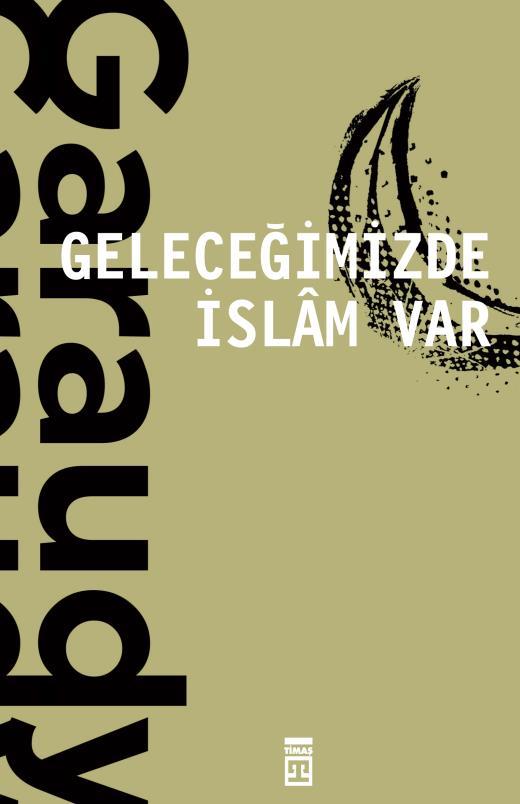
The Future Belongs to Islam is a work by Roger Garaudy, written in the 1980s, which examines the role of Islamic civilization in humanity’s future. The original title of the work is L’Islam habite notre avenir, and it explores the meaning of Islam within a philosophical and cultural framework for the modern world.
The work is based on the idea that the moral and social values shaping humanity’s future can be redefined through the fundamental principles of Islam. Garaudy argues that despite its scientific progress, Western civilization has experienced moral decline and a crisis of meaning. According to him, the West has reduced the human being to an entity defined by production and consumption, thereby losing its spiritual balance.
In this context, the author notes that Islamic principles such as tawhid, justice, solidarity, and moderation offer a holistic understanding of balance against the fragmented structure of the modern world. According to this perspective, ownership belongs to God, and human beings are merely stewards. Economic activities must be linked to moral responsibility, social justice, and awareness of humanity’s place on earth. Within this framework, an economic ethics is proposed that prioritizes human responsibility toward nature and society over the individualistic structure of capitalism. The concepts of production, consumption, and ownership are redefined; emphasis is placed on directing wealth toward social benefit and maintaining economic balance in accordance with moral principles. This approach treats Islamic economics as a holistic worldview that reorders humanity’s relationship with existence.【1】
The book also dedicates extensive attention to the historical contributions of Islamic civilization in the fields of science, art, philosophy, and social organization. The intellectual legacy developed in centers such as Al-Andalus, Baghdad, and Samarkand is analyzed for its influence on the formation of European thought. The author connects these historical examples to the spiritual measure that the modern world has lost.
The main themes of the work include intercivilizational dialogue, criticism of Western modernity, the universal values of Islam, and human moral responsibility. Garaudy rejects Samuel Huntington’s “clash of civilizations” paradigm and draws attention to the complementary dimensions of cultures.
This perspective is also evident in his understanding of economy and society: Islamic civilization is not merely a religious system but a civilization model centered on justice. Karadağ and Yazoğlu, who evaluate Garaudy’s view of Islamic economics, emphasize the same point: Islam represents a moral balance between the selfishness of capitalism and the collectivism of socialism; it places society, not the individual, at its center.
The book is organized into thematic sections. Each section addresses different aspects of Islam, such as belief, worship, law, art, and philosophy. Throughout the text, verses from the Qur’an, insights from Islamic thinkers, and historical examples are employed. The language and style are philosophical, explanatory, and systematic.
Roger Garaudy was born on 17 July 1913 in Marseille, France. He is known as a French philosopher, politician, and thinker. During World War II, he participated in the French Resistance and after the war engaged in academic and political activities. He worked for many years as a member of the French Communist Party and produced works in the field of Marxist thought. In 1982, he embraced Islam. Throughout his intellectual life, he focused on philosophy, religion, art, and intercivilizational dialogue.
Garaudy, Roger. Geleceğimizde İslam Var. Translated by Cemal Aydın. Istanbul: Timaş Yayınları, May 2018.
Karadağ, Fırat, and Ruhattin Yazoğlu. “Roger Garaudy Düşüncesinde İslâm İktisadının Kapitalizm ve Sosyalizm Sistemleriyle Mukayesesi.” *Universal Journal of Theology* 9, no. 1 (June 2024): 70–94. Accessed October 20, 2025. https://doi.org/10.56108/ujte.1423003.
King Faisal Prize. "Dr. Roger Garaudy." King Faisal Prize Official Website. Accessed October 30, 2025. https://kingfaisalprize.org/dr-roger-garaudy/.
Timaş Yayınları. "Geleceğimizde İslam Var." Accessed October 20, 2025. https://timas.com.tr/gelecegimizde-islam-var-9786050828634
[1]
Karadağ, Fırat, ve Ruhattin Yazoğlu. “Roger Garaudy Düşüncesinde İslâm İktisadının Kapitalizm ve Sosyalizm Sistemleriyle Mukayesesi.” Universal Journal of Theology 9, no. 1 (Haziran 2024): 70–94. Erişim Tarihi: 20 Ekim 2025. https://doi.org/10.56108/ujte.1423003.

Original Name(s) | Islam our future | ||||||||
|---|---|---|---|---|---|---|---|---|---|
Author(s) | Roger Garaudy | ||||||||
Publisher(s) | Timas Publications | ||||||||
Number of Pages | 264 | ||||||||
Translator(s) | Cemal Aydın | ||||||||
First Publication Date(s) | 1981 | ||||||||
No Discussion Added Yet
Start discussion for "Islam Will Exist in Our Future (Book)" article
Content and Subject
Themes
Structure of the Work
About the Author