


This article was automatically translated from the original Turkish version.
+2 More
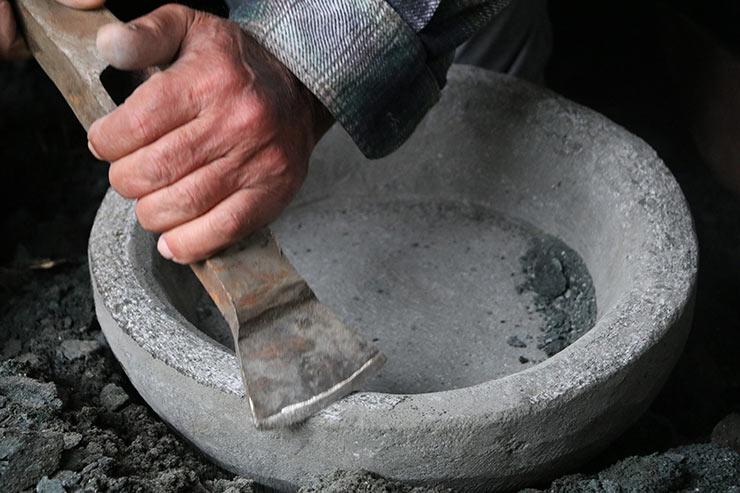
Iyidere Pileki Stone
Registration Number | 1618 | ||||||||
|---|---|---|---|---|---|---|---|---|---|
Registration Date | 24.07.2024 | ||||||||
Application Number | C2021/000179 | ||||||||
Application Date | 12.04.2021 | ||||||||
Name of the Geographical Indication | İyidere Pileki Taşı | ||||||||
Product / Product Group(s) | Stone / Other | ||||||||
Type of Geographical Indication | Mahreç Mark | ||||||||
Applicant/Registrant(s) | İyidere Subprovince | ||||||||
Address of the Registrant | Fethiye Neighborhood, Yalıboyu Street No: 5/A İyidere RIZE | ||||||||
Geographical Boundary | İyidere District Rize Province | ||||||||
Iyidere Pileki Stone is a type of volcanic stone extracted from the Iyidere Cave, located within the boundaries of the Iyidere district in Rize Province, Türkiye. It has a basaltic origin, a porphyritic texture, and high heat resistance. It was officially registered as a geographical indication on 24 July 2024, with the registration type designated as a geographical indication mark. The application was submitted on 12 April 2021 and assigned registration number 1618. The application was filed by the Iyidere Subgovernorship, and the geographical indication registration is limited exclusively to the Iyidere district.

The Cave Where Iyidere Pileki Stone Is Extracted (Black Sea Culture Inventory)
Iyidere pileki stone is a magmatic rock classified as basaltic-andesitic tuff, characterized by a gray color and porphyritic texture. After extraction from the cave, it is manually carved and shaped into various cooking utensils according to its intended use. This stone type is distinguished by its resistance to high temperatures and is subjected to heating and hardening at elevated temperatures prior to use.
Iyidere pileki stone is processed into different forms depending on its intended use. The main product types are as follows:
The stone blocks used in production are classified by thickness as quarter (25 cm), full (40 cm), and kotluk (50 cm).

Iyidere Pileki Stone Pot (Ministry of Culture and Tourism of the Republic of Türkiye)
The chemical and mineralogical properties of Iyidere pileki stone are as follows:
The dominant minerals include zeolite group minerals (particularly analcime and klinoptilolite), K-feldspar, plagioclase, and diopside. Minor amounts of vermiculite and volcanic glass are also present.
The production of Iyidere pileki stone is carried out from basalt units embedded in a pillow lava structure within the Iyidere Cave. The process is performed by experienced master craftsmen under expert supervision.
Traditional tools used include:
The master identifies stones of appropriate thickness, marks their outline, and extracts them using the rimit with balanced force. Once removed from the cave, the stone is shaped using the külünk. Each master leaves a personal mark (craftsman’s signature) on the underside of the stone they produce.
The entire production process must take place within the boundaries of the Iyidere district, specifically in the Iyidere Cave. The extraction, shaping, and heat-hardening of the stone require specialized local knowledge, techniques, and craftsmanship. A direct link exists between the product’s reputation and its geographical origin.
The production process is monitored under a system coordinated by the Iyidere Subgovernorship. The monitoring board consists of one representative from each of the following institutions:
Inspections are conducted at least once annually. Additional inspections may be carried out as needed or upon complaint. Inspection criteria include extraction from the cave, compliance of product dimensions and thicknesses, adherence to traditional production methods, and correct application of the marking system (logo, inscription, geographical indication emblem). External experts or service providers may be engaged when necessary.
The product or its packaging must bear the inscription "Iyidere Pileki Stone", the product logo, and the geographical indication emblem. When direct application to the stone or packaging is not feasible, these elements must be prominently displayed within the production facility for easy visibility.
The Professional Journey of Iyidere Pileki Stone Carver Mustafa Yılmaz (İmdat DEMİR)
Culture and Tourism MinistryRize İl Directorate of Culture and Tourism. "Pileki Taşı." Accessed May 20, 2025. https://rize.ktb.gov.tr/Resim/472009,whatsapp-image-2025-02-26-at-112337jpeg.png?0.
Karadeniz Turizm Portalı. "Pileki Mağarası." Accessed May 2025. https://karadeniz.gov.tr///d_galeri/784x523/PILEKI-MAGARASI-38-IMG_2454.JPG.
Turkish Patent and Trademark Office. "İyidere Pileki Taşı Coğrafi İşaret Tescil Belgesi." Accessed May 20, 2025. https://ci.turkpatent.gov.tr/Files/GeographicalSigns/ff7448a7-66a2-4cb1-816a-e3d676cbeaf1.pdf.
Türk Patent ve Marka Kurumu. “İyidere Pileki Taşı.” Coğrafi İşaretler. Accessed May 20, 2025. https://ci.turkpatent.gov.tr/cografi-isaretler/detay/4062.
İmdat Demir. "Usta Eller Senin Hikayen: Pileki Taşı Yontma Ustası Mustafa Yılmaz – YouTube." İmdat Demir Youtube Kanalı. Accessed May 20, 2025. https://www.youtube.com/watch?v=MBFZ8R_0bKI.

Iyidere Pileki Stone
Registration Number | 1618 | ||||||||
|---|---|---|---|---|---|---|---|---|---|
Registration Date | 24.07.2024 | ||||||||
Application Number | C2021/000179 | ||||||||
Application Date | 12.04.2021 | ||||||||
Name of the Geographical Indication | İyidere Pileki Taşı | ||||||||
Product / Product Group(s) | Stone / Other | ||||||||
Type of Geographical Indication | Mahreç Mark | ||||||||
Applicant/Registrant(s) | İyidere Subprovince | ||||||||
Address of the Registrant | Fethiye Neighborhood, Yalıboyu Street No: 5/A İyidere RIZE | ||||||||
Geographical Boundary | İyidere District Rize Province | ||||||||
No Discussion Added Yet
Start discussion for "Iyidere Pileki Stone" article
Morphological Characteristics
Applications and Product Types
Mineralogy and Chemical Composition
Chemical Components
Mineralogical Composition
Production Process
Geographical Boundary
Monitoring and Protection
Labeling and Use