This article was automatically translated from the original Turkish version.
+2 More
Location | İyidere Türkiye Rize | ||||||||
|---|---|---|---|---|---|---|---|---|---|
Type(s) | Artificial cave (stone quarry) | ||||||||
Purpose(s) | Pileki stone extraction (bread baking stone) | ||||||||
Period(s) | Used from 2300 BCE until the 1990s | ||||||||
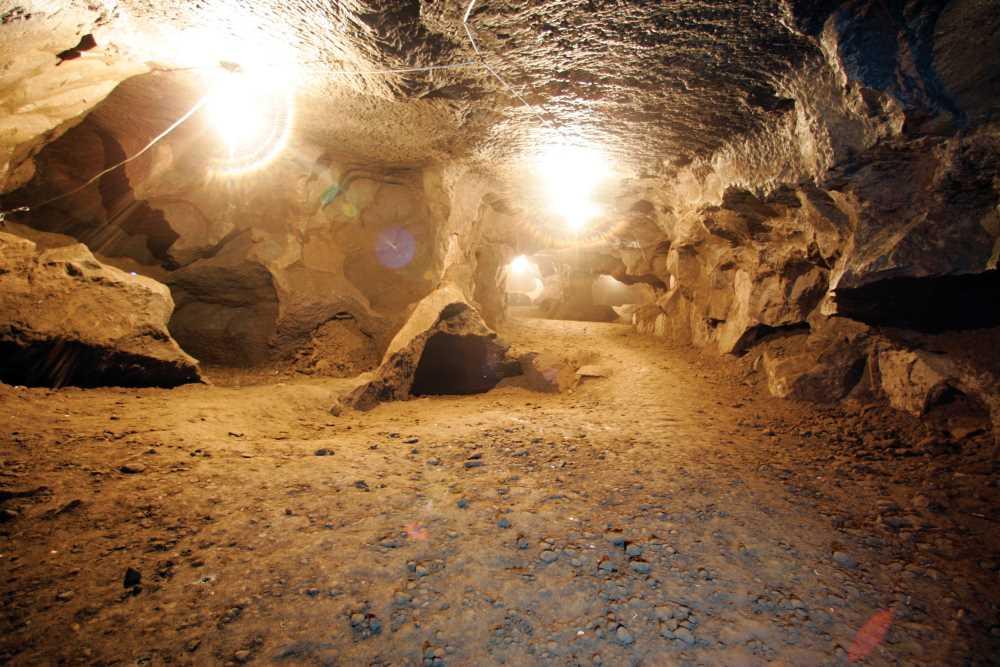
Pileki Cave is an artificial cave located within the boundaries of Çiftlik Village, in the İyidere district of Rize Province, in Türkiye’s Black Sea Region. It was formed through the extraction of a special stone used as the raw material for the “pileki,” a traditional cooking tool unique to the Black Sea region. This stone, known for its ability to retain heat for extended periods, was particularly used in the preparation of corn bread and hamsikoli (hamsi bread). The cave is one of the rare surviving examples of local stone quarrying activities in the area.

Pileki Cave ( Rize Provincial Directorate of Culture and Tourism)
The formation of the cave began with local residents extracting pileki stone. This stone quarry functioned continuously from around 2300 BCE until approximately thirty years ago. Its use as a quarry ceased due to technological advancements and changes in cooking practices. During this period, pileki stone was produced both for local use and for marketing to surrounding regions.

Pileki Cave ( Rize Provincial Directorate of Culture and Tourism)
The interior of the cave, entirely carved by human hands, consists of two large chambers at the entrance followed by numerous tunnels extending behind them. Within the cave are various shafts and small pools. This structure gives the cave the appearance of both a functional stone quarry and a complex subterranean system.

Pileki Cave ( Rize Provincial Directorate of Culture and Tourism)
Soil and debris inside Pileki Cave have been cleared to open the site for tourism. With the installation of lighting systems and improved access, a 1500-meter section of the cave is now accessible to visitors. Future projects plan to establish a museum within the cave displaying tools used in pileki stone production and utensils used in bread making, as well as a restaurant serving regional dishes. The goal is to position the cave as a cultural and gastronomic center.
Karadeniz Kültür Envarteri. "Pileki Mağarası." Karadeniz Kültür Envarteri. Accessed August 16, 2025. https://karadeniz.gov.tr/pileki-magarasi/?amp=evet.
Ministry of Culture and Tourism of the Republic of Türkiye. "Pileki Cave." *Culture Portal*. Accessed August 16, 2025.
T.C. Ministry of Culture and Tourism. "Pileki Mağarası." *Rize Provincial Directorate of Culture and Tourism*. Accessed August 16, 2025. https://rize.ktb.gov.tr/TR-347105/pileki-magarasi.html.
İyidere Belediyesi. “Pileki Mağarası.” *İyidere Belediyesi Resmî Web Sitesi*. Accessed August 16, 2025. https://www.iyidere.bel.tr/Sayfa/pileki_magarasi-181.html.

Location | İyidere Türkiye Rize | ||||||||
|---|---|---|---|---|---|---|---|---|---|
Type(s) | Artificial cave (stone quarry) | ||||||||
Purpose(s) | Pileki stone extraction (bread baking stone) | ||||||||
Period(s) | Used from 2300 BCE until the 1990s | ||||||||
History
Architectural Features
Restoration Efforts