

+2 More

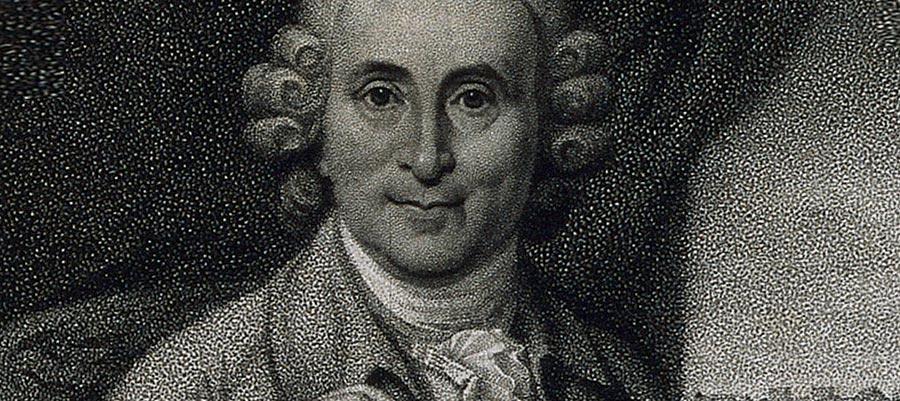
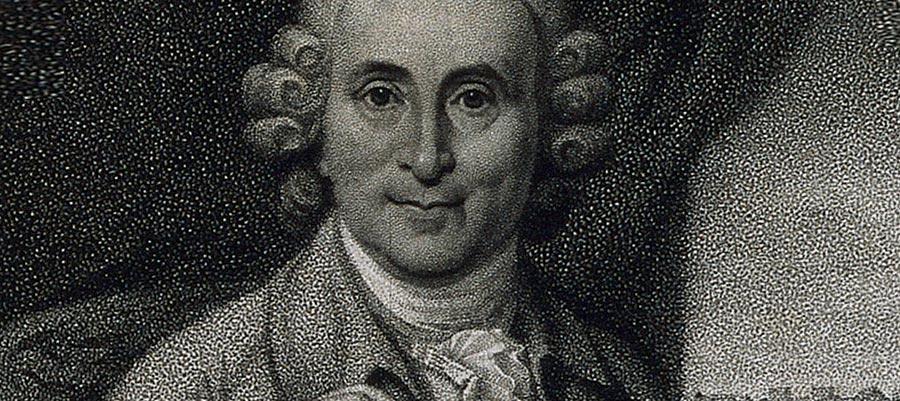
Lind conducted one of the first controlled clinical trials in history, demonstrating that citrus consumption both prevented and cured scurvy. This finding marked a pivotal moment in maritime history and in the broader history of medicine.
James Lind was born on 4 October 1716 in Edinburgh, Scotland. He began his medical training as an apprentice to a surgeon in Edinburgh. In 1739, he joined the Royal Navy as a surgeon’s mate and served in the Mediterranean, West Africa and the West Indies. During these naval voyages, he had the opportunity to closely observe the health problems faced by sailors, particularly scurvy. In 1748, he left the navy and earned his Doctor of Medicine (MD) degree from the University of Edinburgh, after which he opened a private practice in Edinburgh.
Lind’s most famous and historically significant work was the experiment he conducted in 1747 aboard HMS Salisbury on the treatment of scurvy. At the time, the cause of scurvy was unknown and various theories had been proposed. Lind designed an experiment to test these theories and identify an effective treatment.
Lind divided twelve sailors suffering from scurvy into six groups. All groups received the same basic diet, but each group received a different supplementary treatment.
After only six days, sailors in the fifth group, who received oranges and lemons, showed marked improvement in their condition. One sailor recovered sufficiently to return to duty, while the other was rapidly improving. No significant improvement was observed in the other groups. This experiment clearly demonstrated the effectiveness of citrus fruits in treating scurvy.
Lind detailed the results of this experiment and his other observations on scurvy in his 1753 book A Treatise of the Scurvy. This work is a comprehensive study of the nature, causes and treatment of scurvy and is regarded as a classic in medical literature.

Cover of James Lind’s book A Treatise of the Scurvy
In addition to his work on scurvy, James Lind made other important contributions to improving the health of sailors:
In 1758, Lind was appointed physician-in-chief at the Haslar Royal Naval Hospital in Portsmouth, where he continued his efforts to improve the health conditions of sailors. However, it took many years for the Royal Navy to widely accept and implement his findings regarding the preventive effect of citrus fruits. Captain James Cook adopted some of Lind’s recommendations and successfully prevented scurvy on long voyages, but it was not until after Lind’s death, in 1795, that citrus fruits were routinely included in sailors’ rations.
James Lind died on 13 July 1794 in Gosport, Hampshire. His contributions to clinical trial methodology and his discovery of the cure for scurvy left an indelible mark on the history of medicine. His pioneering use of controlled experiments is recognized as an early example of evidence-based medicine, which forms the foundation of modern medical research. Lind’s work significantly improved the health of sailors and made long sea voyages safer. The discovery of vitamin C in the 1930s further validated the scientific basis of Lind’s observations.
"James Lind." The University of Edinburgh Alumni. Accessed May 13, 2025. https://alumni.ed.ac.uk/services/notable-alumni/alumni-in-history/james-lind
Lind, James. A Treatise of the Scurvy, in Three Parts: Containing an Inquiry into the Nature, Causes, and Cure, of that Disease. of Cambridge Library Collection - History of Medicine. Cambridge: Cambridge University Press, 2014.
Milne, Iain. "Who Was James Lind, and What Exactly Did He Achieve?" *James Lind Library*, 2012. Accessed May 13, 2025. https://www.jameslindlibrary.org/articles/who-was-james-lind-and-what-exactly-did-he-achieve/.
Wieringa, Sietse, Neal Maskrey, and Trisha Greenhalgh. "Clinical Uncertainty and the Limits of Shared Decision Making." *British Journal of General Practice* 63, no. 606 (2013): e513–e515. https://www.ncbi.nlm.nih.gov/pmc/articles/PMC3536506/.

Life and Education
Career and Research on Scurvy
The Scurvy Experiment (1747)
Other Contributions and Later Life
Legacy
Major Publications